Persians in North Africa, Phoenicians in North Africa

Red gold: saffron, a thousand-year-old cultivation

Français – عربي – ⵜⴰⵎⴰⵣⵉⵖⵜ – English

Saffron, recognizable at its red color and strong flavor, is a highly popular spice in North Africa. Saffron, cultivated entirely by hand, is also known as “red gold” because it is the most expensive spice in the world. Originally from Iran, saffron was introduced into North Africa by the Phoenicians. Nowadays, Moroccan saffron, produced mostly in the area around Taliouine, is famous for its quality. It also plays an important role in traditional Moroccan cuisine, adding a golden color and a delicate flavor to couscous, tajine and pastries.

Saffron: a thousand-year-old cultivation

Saffron harvest – Source

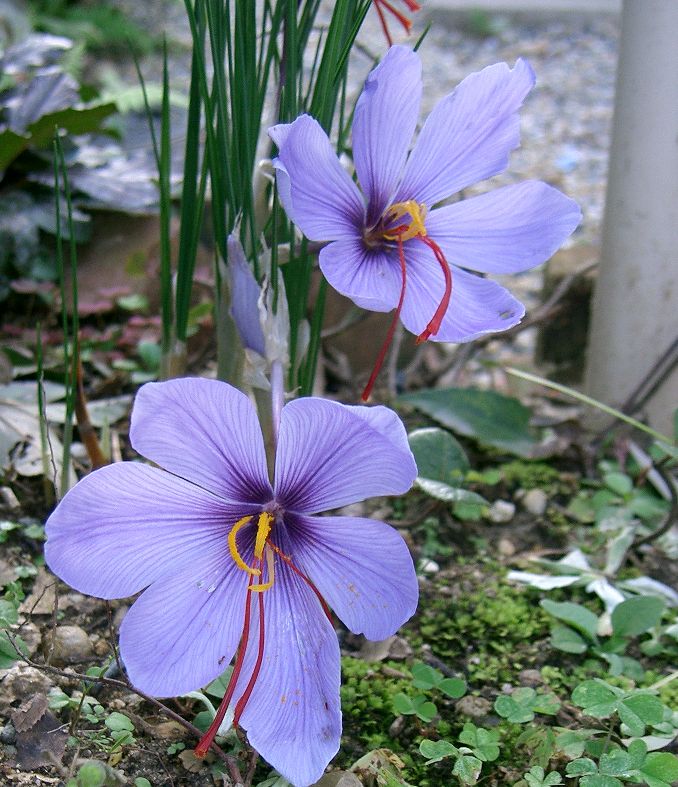
Saffron is produced from a flower: saffron crocus. To make the spice, the saffron crocus stigma (red filament at the heart of the flower) is extracted and dried.

Traditionally, saffron is harvested entirely by hand. In the harvest season – around October-December – producers – usually women – go out into the fields in the early morning hours, to harvest the flowers before they fully open in the sun, which helps preserving the delicate quality of the stigma. The three stigmas of each flower are separated from the flower by hand, and then dried in the sun for 3-5 days. The stigma loses around 80% of its volume when dried: each 100g of stigma yield only 20g of dried saffron. Finally, the saffron is stored up in a closed place, away from sunlight and heat, to preserve its quality.

In Morocco, the price of saffron usually varies between 35 and 175 dirham per gram, depending on the quality. The reason why saffron is so expensive, to the point of being called “red gold”, is precisely because it is so long and hard to produce: the production of only 1 kilogram of quality saffron can require up to 40 hours of strenuous manual labor! Also, only a tiny part of the plant is used: the stigma. Taking into account the loss of volume when the stigma is dried, it takes between 150 and 200 flowers to produce one gram of dried saffron!

Origins

Crocus cartwrightianus, the likely ancestor of the saffron crocus

The saffron crocus, the plant used to produce saffron, is believed to originate from Greece, maybe from the island of Crete. Crocus cartwrightianus, a crocus species that can be found nowadays in Greece, is considered as the ancestor of the modern-day saffron crocus.
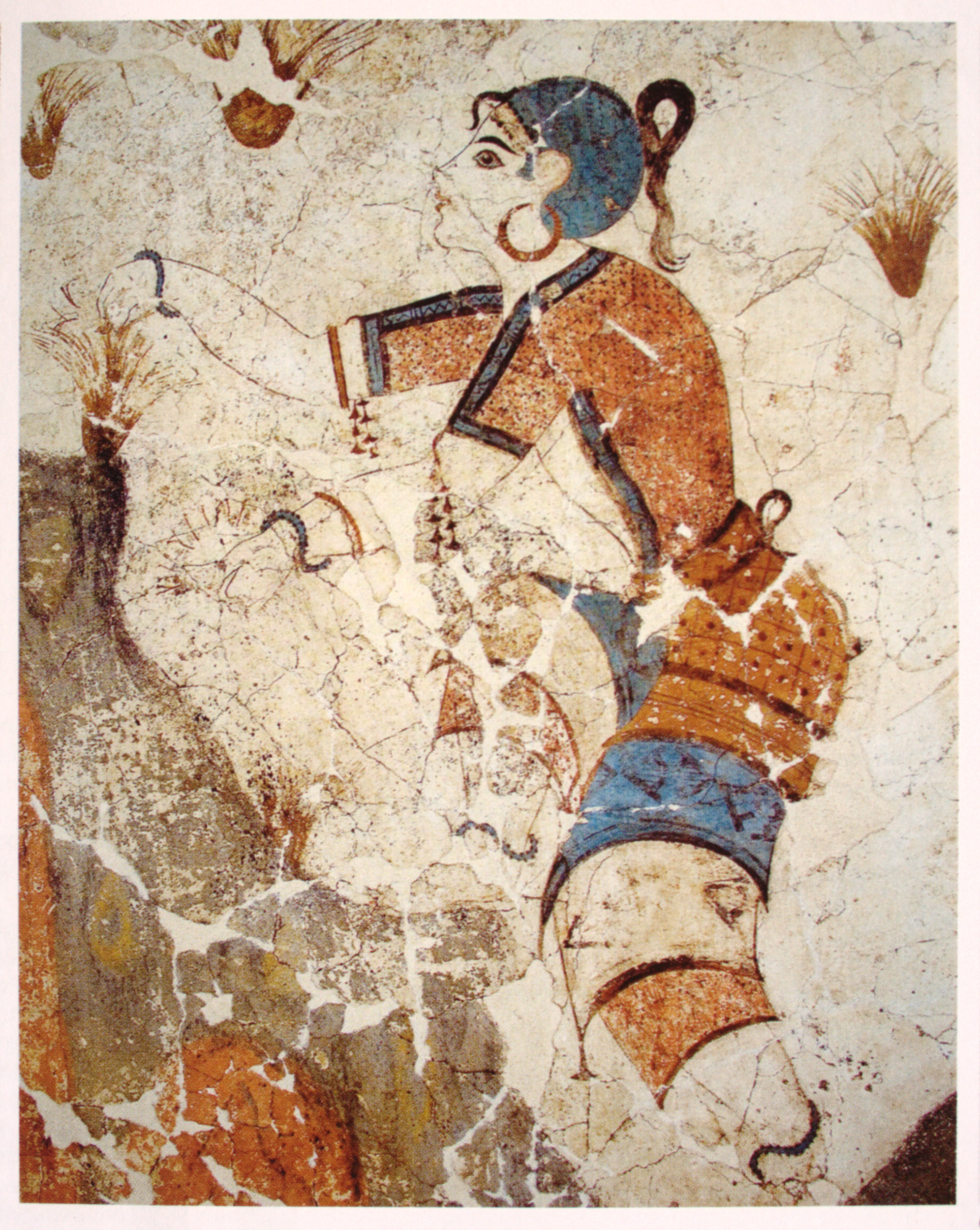
Woman harvesting saffron, Minoan fresco, Santorini

Saffron crocus has been cultivated by man for 3500 years. It was probably domesticated by the Minoan civilisation, a Bronze Age civilisation that appeared in Crete around 3000 BCE. The oldest artistic representations of saffron, Minoan frescoes found in Knossos, Crete, and on the island of Santorini, date back to the 16th or 17th Century BCE.

From Greece, saffron spread throughout the Middle-East, and then into Asia, all the way to India. The Sumerians gathered wild saffron flowers, while the Egyptian Pharaohs imported saffron from Greece.

At this ancient time, men only used the saffron flower. The production of spice from the dried stigma of the flower started later, around 1500 BCE, in modern-day Iran, possibly in the Khorasan region. Saffron was so popular in the ancient Persian Empire that it became an emblematic product of the Persian civilisation until today. Its name, زَعْفَرَان (zaferan) in Persian, comes from زرپران (zarparan), “gold-strung”.

Through the centuries, saffron was exported throughout the Mediterranean basin by the Phoenician trade ships. This is how saffron reached the North African coasts, especially Carthage.

Use

The Greeks of the Minoan era used saffron as a perfume, cosmetic, and dye. There is no indication that they also used it for cooking. Later, however, the Greeks of the Classical era (5-4th Centuries BCE) used saffron as a seasoning, and to flavour wine.

The Sumerians gathered and used wild saffron to produce remedies and magical potions. The Phoenicians developed the fabrication of flavored oil.

The ancient Hebrews used saffron as an ingredient of the incense they burned in the Temple of Jerusalem. Saffron is even mentioned in the Bible, in the Song of Songs of Solomon.

Egyptian cosmetics made of saffron – Source

In Egypt, where saffron was not grown locally, but imported from Greece, it was considered a luxury, and used to make perfumes and cosmetics. Egyptian medical doctors also used it for medical applications. Finally, is was probably used in the temples, for religious rituals. In Egyptian mythology, the golden saffron color evoked Ra, the sun god.

Saffron production and use in Persian Antiquity – Image created by Stable Diffusion Web
Persian Emperor holding a saffron offering – Source

The use of saffron was very much diversified in the Persian Empire. For cooking, the Persians used saffron as seasoning for rice and meat, and as an ingredient for pastries and desserts. The also made saffron perfumes and cosmetics, including hair dye. Emperor Darius was famous for bathing in saffron-infused milk, to soften his skin and perfume his body. Persian medicine also discovered the many medical virtues of saffron.

Buddhist monks in saffron robes

While the ritual use of saffron in temples certainly existed before, saffron played an especially important role in the official Persian religion. The ancient Persians made saffron offerings to their gods, and used saffron for various festivities, like Nowruz (Persian New Year), and for funerals. Priests used it in the fire temples. Finally, the ritual garments of priests were dyed with saffron. The saffron color, a lively tone of yellow-orange, was considered sacred, a symbol of purity and prosperity. This symbolic still remains in Buddhist, Hindu and Sikh traditions.

In Carthage, purple, the city’s emblematic tissue, was sometimes associated with saffron.

Cleopatra having a saffron bath – Image created by ChatGPT

Queen Cleopatra of Egypt was famous for her saffron baths. She bathed in water or mare milk infused with saffron, to nourish her skin and better her complexion. She also appreciated the spice’s aphrodisiac virtues, and always took a saffron bath before meeting one of her lovers, to grow her sex drive.

In the Roman world, saffron was a luxury product, a sign of wealth and extravagance. The Roman elite used it as a cooking ingredient and to perfume their bath and their wine. The Romans imported high quantities of saffron to perfume their public buildings, like baths and theaters.

Saffron cultivation today

Various types of saffron

Nowadays, Iran remains the first saffron producer, with a share of over 90% of world production, especially in the Khorasan region. The second producer is Afghanistan, with around 3-5% of world production. In Afghanistan, saffron cultivation is promoted as a healthy alternative to opium. India is third, with around 2%, mostly in the Kashmir region. (Source)

After those three Asian countries, which together count for over 95% of world production, three Mediterranean countries each produce around 1% of the world saffron production: Spain, Greece and Morocco. In Morocco, the national saffron production is mostly concentrated in the High Atlas, around the rura communities of Taliouine (Taroudant province) and Taznakht (Ouarzazate province). (Source)

Moroccan Chebakia

While Moroccan saffron production is quite low on a worldwide scale, Moroccan saffron is known for its quality. Its color is usually lighter, and is flavor less intense, more delicate, and more floral than Iranian saffron, providing the user with a unique, subtle experience. (Source) Moroccan saffron is also very much used in Moroccan cuisine: it is part of the ingredients of many traditional pastries, like briouat and chebakia.

Phoenicians in North Africa

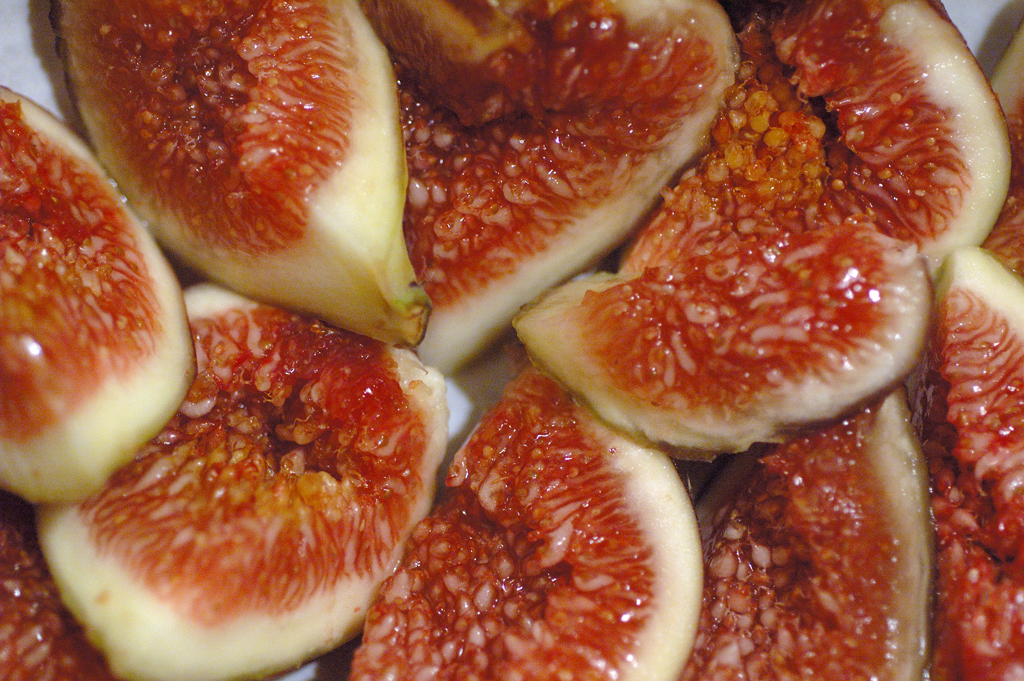
Figs and pomegranates: two fruits brought to North Africa by the Phoenicians

Français – عربي – ⵜⴰⵎⴰⵣⵉⵖⵜ – English

Several emblematic North African plants and fruits do actually not originate from the region, but were brought there 3000 years ago on the Phoenician ships. Next to olive trees and vines, which we already mentioned, we will discover today two other Phoenician contributions to our countries’ agricultural production: figs and pomegranates.

Figs : the fruit of Paradise

The fig tree is probably native to Central Asia, and was the first fruit tree to be domesticated by man: around 4500 BCE, long before olive trees. Fig cultivation started in the Middle East, the world region where sedentary agriculture first appeared, in the famous “Fertile Crescent”.

The fig tree was an ideal candidate for domestication, as it is very easy to reproduce: to plant a new tree, all that is needed is a grain, a cut branch, or a piece of fruit. Figs are also highly resistant both to heat and cold, enabling them to survive in highly diverse climate conditions. Finally, the fig tree produces up to three harvests per year.

Fig trees were spread through the Mediterranean world by the Phoenician traders. In North Africa, fig cultivation started in Carthage and the other Phoenician colonies. Through the centuries, the new tree was so well acclimated to its new shoreline that it became one of the most cultivated in the region. A hadith describes the fig as a fruit that originates from Paradise.

Pomegranates: Punic apples

Pomegranate flower

The pomegranate tree is originally from modern-day Iran, where it has been cultivated for around 5000 years. In the Persian Empire, the pomegranate flower was considered sacred, a symbol of abundance, fertility and royalty.

From its native region, pomegranate cultivation spread through the Middle East, including Phoenicia. Like olive trees, vines and fig trees, pomegranate trees were spread throughout the Mediterranean world by the Phoenicians, through their colonial empire.

In Roman Antiquity, pomegranates were strongly associated with Carthage. The Romans called them Malum punicum, Punic apple. The English name of pomegranates refers to the Kingdom of Granada, the last Muslim kingdom in Spain. The Arabic name, romman (رمان), derives from a Semitic root meanig “high” or “exalted”.

Today, the North African nations are important pomegranate producers. In 1986, Tunisia offered China plants a local variety of soft-seed pomegranates, which were very successful on the Chinese market.

What about Barbary figs?
This strange cactus carries a highly popular fruit in North Africa: the Barbary fig, also called prickly pear. It comes from even further away: it is originally from the Mexican desert. Unknown in the Ancient World before the discovery of America, it was introduced into the Mediterranean world, where it spread rapidly. It is especially common in the semi-desert areas of North Africa, so that in the colonial era, is was called “Barbary fig” (Barbary = Berbery, the land of the Berbers). Its Darija Arabic name, “karmouss ennasara”, fig of the Christians, gives a better account of it origins.
Phoenicians in North Africa

Bread of the desert: date cultivation in North Africa

Français – عربي – ⵜⴰⵎⴰⵣⵉⵖⵜ – English

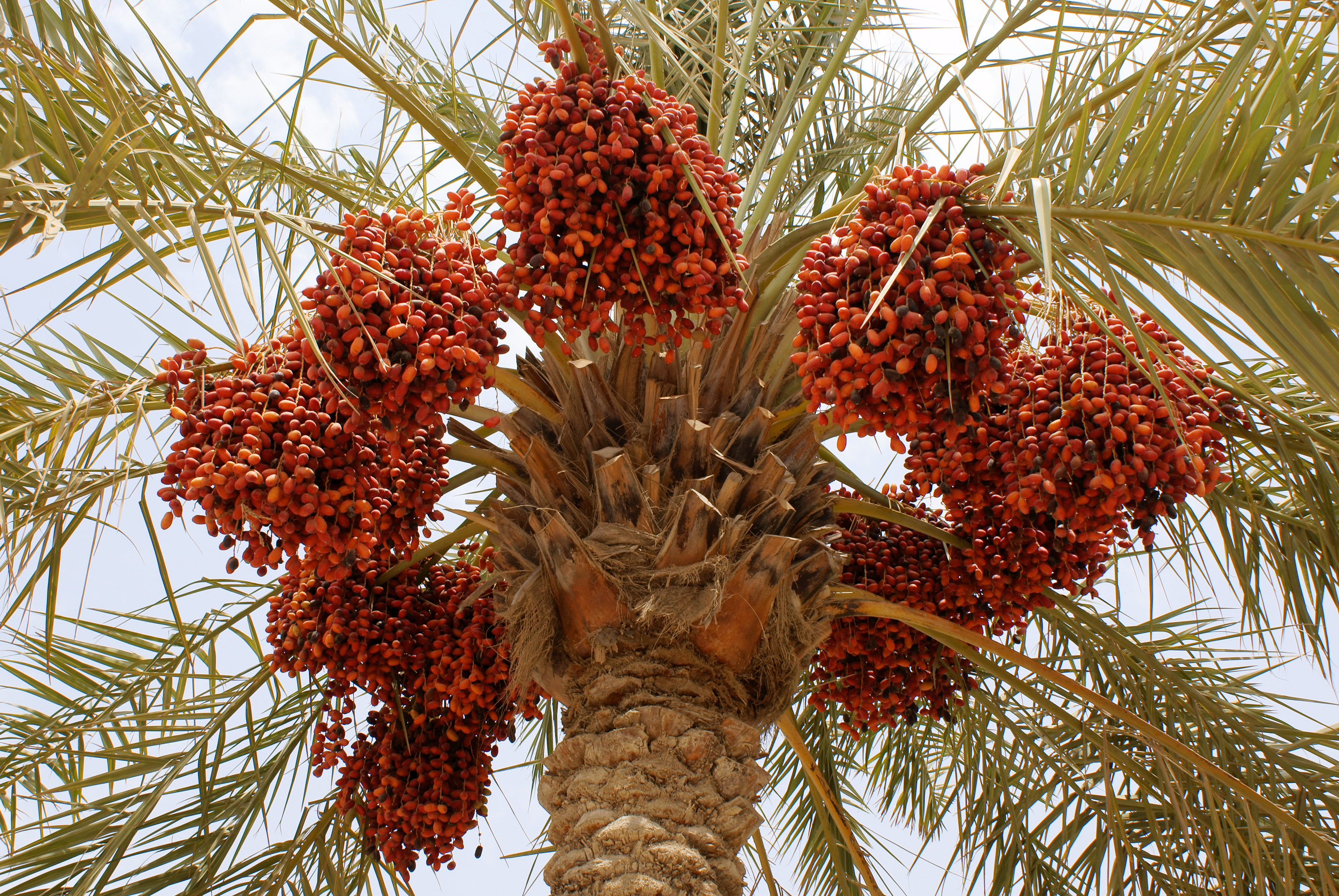
Originally from the desert of Arabia, dates have been cultivated in the Middle East for thousands of years. Their arrival in North Africa is much more recent: the first date palms arrived in Egypt about 6000 years ago, and then Libya about 3000 years ago. When it started spreading in the region, the Arabian date palm crossed with local wild date palm species, giving birth to the North African date palm. While the Phoenicians are not the originators of date cultivation in North Africa, they certainly played a role in its spread.

Date palms are a type of palm trees, originally from Arabia and the Indus Valley. Their deep roots, which enable them to reach underground waters that are inaccessible to other plants, and their resistance to heat, make them ideally adapted to life in desert regions. Their naturally sweet fruit is emblematic of oasis agriculture.

The oldest archaeological traces of date cultivation go back to 7000 BCE in modern-day Pakistan, and 5500 BCE in Arabia. Date cultivation spread to Egypt around 4000 BCE. In the rest of North Africa, it started much later: around 1000 BCE in Libya, from where it spread to the whole region. The Greek historian Herodotus mentioned that the Nasamon Amazigh cultivated dates in the Awjila oasis.

On its arrival in North Africa, the Arabian date palm (Phoenix dactylifera) met another wild variety of date palm: Phoenix theophrasti, originally from Crete, which was already living in the region. A crossing between the two species happened around 3000 years ago, giving birth to the modern-day North African date palm.

What role did the Phoenicians play in the spread of date cultivation? Their role is not well-known, but it cannot be a coincidence that the time when date palms started spreading in North Africa corresponds to the establishment of the first Phoenician colonies. The Latin name of the date, Phoenix, refers to the Phoenicians.

The Phoenicians certainly didn’t import the first dates on their ships: this desert fruit spread by land, from Egypt to Libya. The crossing between the Arabian date palm and the local wild date palm was probably a natural hybrid, but the Phoenicians certainly selected the best plants in order to obtain new varieties. What is certain is that the Phoenicians largely contributed to the spread of dates produced in North Africa, especially the new hybrid form, throughout the Mediterranean world.

Carthaginian coin showing a date palm

Later on, date cultivation developed a lot in Carthage, where dates played a crucial role in the economy of the Carthaginian Empire: they served as basic food, natural sweetener, exchange money, and trade resource. The Carthaginians developed sophisticated agricultural and irrigation techniques to optimize their date production, exploiting the fertile land in their territory. Carthaginian dates were sold throughout the Mediterranean world. Date palms were a strong symbol of the power and fertility of Carthage, and were often represented on coins.

Date cultivation in Carthage and its zone of influence continued in the Roman era. In the Roman world, date palm branches were used for military processions, as a symbol of victory.

Dates also play an important symbolic role in the Jewish, Christian and Muslim religions: they are mentioned over 50 times in the Bible and 20 times in the Quran. The Jews eat dates for their religious celebrations. In Christianity, date palm branches are used on Palm Sunday, to celebrate Christ’s triumphant entry into Jerusalem, one week before his crucifixion.

Nowadays, date cultivation still has an important place in the North African socioeconomic landscape, especially in the desert oases. Despite its traditional importance, date cultivation is threatened by drought and disease. The North African nations, from Egypt to Morocco, still produce over 1.9 million tons of dates per year.

Phoenicians in North Africa

Vine cultivation: from the Phoenician shores to the North African terroir

Français – عربي – ⵜⴰⵎⴰⵣⵉⵖⵜ – English

The Phoenicians were one of the first civilisations to develop vine cultivation and winemaking. While wild vine was already growing in North Africa long before the first Phoenician ships arrived, it was the Phoenicians, in Carthage and their other colonies, who taught the indigenous populations how to cultivate vine. Mago’s agricultural treaties, exposing the ancient Carthaginian viticulture techniques, strongly influenced the Romans and contributed to the growth of viticulture all through Europe.

From the Phoenicians…

Wild vine

Various species of wild vine have always grown all around the world. In North Africa, they are mostly found in mountain regions like the Atlas and Kabylie. Ancient men were quick to discover that when they pressed the grapes that grew on these vines, they obtained a juice that started fermenting immediately; but much more skills were required to transform the fermented grapes into a palatable drink.

Areni-1, Armenia: the oldest known vineyard

The first archaeological traces of winemaking from wild vine were found in the Caucasus region. Vine cultivation started around 6000 years ago. The oldest known vineyard was discovered in Armenia and contains a clay tank and a vine press.

From the Caucasus, vine cultivation spread to Mesopotamia, and then the Middle East, and all the way to Greece. The Phoenicians used wine in their religious ceremonies, as an offering to the gods. The Phoenicians probably introduced wine to Egypt, where a prosperous winemaking industry appeared around 3.000 BCE.

The Phoenicians transported wine in amphorae, called “Canaanite jars”

The Phoenician traders were the first to see wine’s commercial value, which brought them to develop new, more sophisticated winemaking techniques in order to grow their production. The Phoenician cities of Tyre, Sidon and Byblos exported and sold wine by sea through all the Mediterranean world. The development of Phoenician colonies, including in North Africa, grew the demand for wine. Phoenician wine was so popular in the Greco-Roman world that the adjective “bybline” (from Byblos) was used for good-quality wine.

The two oldest Phoenician shipwrecks, Tanit and Elissa, were discovered in 1997, at the bottom of the Mediterranean. The ships contained 780 remarkably well-preserved amphorae of wine dating back to the 8th Century BCE. The two ships traded wine between Phoenicia and Carthage.

Vitis vinifera pontica: probably the first variety of grapes exported by the Phoenicians throughout the Mediterranean basin

The Phoenicians diffused new varieties of vine through the Mediterranean basin, especially Vitis vinifera pontica, which became the ancestor of most of the most widely cultivated varieties of white grapes around the world today. They also taught the local populations – like the North African Amazigh – to cultivate the wild vine they already knew.

At the same time, the Greeks were also making wine. Greek viticulture learned a lot from the Phoenicians. In North Africa, the Greek colonists introduced vine into Cyrenaica in the 7th Century BCE. This fertile, luxurious region was ideal for large-scale viticulture. Wine presses were found in cities like Cyrene and Euhesperides (Benghazi). The Greeks also introduced vine to Massalia, Southern Gaul.

… to Carthage…

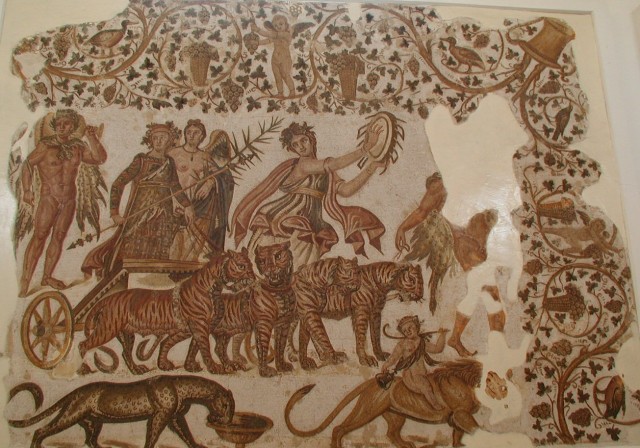
Mosaica of The Triumph of Bacchus – Sousse Archaeological Museum
Mosaica of the Villa Rustica, Tabarka, showing vines

Carthage, the main Phoenician colony in North Africa, was an important winemaking center. Passum, a highly popular straw wine (produced from dried grapes), was from Carthage.

In the 4th Century BCE, the Carthaginian countryside was full of vine and olive trees. Wine from the Bagradas (Medjerda) river valley was especially popular.

Mosaica showing a grape basket – Sousse Archaeological Museum

The Carthaginians also introduced vine into Spain, in the old coastal Phoenician colonies. They sold wine to the local tribes, in exchange for precious metals like silver and tin, which were abundant in the region.

Mago, a 2nd-Century Carthaginian author, wrote an agricultural treaty in 28 books, on Carthaginian agricultural knowledge. Major sections of his book explain how to plant and prune vine. He recommends to plant vine on slopes oriented towards the North, to protect them from the sun. He also exposes the best Carthaginian winemaking practices, especially how to produce the best straw wine. His book was so influential that after the destruction of Carthage, the Roman Senate ordered it to be translated into Latin.

… to the Romans…

The Grape-Picking Amours mosaica, Museum of Hippo (Annaba)

Viticulture and winemaking in North Africa continued in the Roman era, especially in urban centers like Carthage and Volubilis. African wine was highly appreciated in the whole Roman world. Together with wheat and olive oil, it played an important role in the region’s economy.

Roman grape harvest mosaica, Cherchell National Museum

Under the influence of Mago, the Romans developed advanced viticulture techniques inspired from the Carthaginians. Mago’s book is now lost, but it was quoted by Latin authors. Columella, a 1st-Century author who quotes Mago abundantly, was from Gadir (Cadiz), a former Punic city in Spain, which explains his interest for the Carthaginian author. It can be said that, via Mago, the whole modern European and Western winemaking industry is in debt to Carthage.

The Greek-Roman god of wine was Dionysus – his Latin name was Bacchus – who, according to mythology, taught men how to cultivate vine. The cult of Bacchus was highly popular in Roman Africa, and involved ecstatic rites of drunkenness, often together with sexual orgies.

In the Roman era, large Jewish communities settled in North Africa. Later on, Christianity also became very popular in the region. Both religions see wine as a gift of God – their sacred texts even say that wine “rejoices the heart of man” – while also condemning drunkenness and encouraging a reasonable consumption. Christians even use wine in their religious service, as an element of the Eucharist. The Christianisation of the region caused a deep change in wine drinking habits, by discouraging excessive drinking. Later on, Christian monks developed new fermentation methods, for wine and beer, to create new flavors.

… until today

Winemaking in North Africa strongly decreased after the arrival of Islam, because of the religious prohibition of alcohol consumption; but it never completely disappeared. Especially, North African Jews continued producing wine for their own consumption.

Ship charging wine barrels, in the port of Oran, 1898

The North African winemaking industry underwent a renewed time of growth in the French (and Italian, in Libya) colonial era, when many new vineyards were planted. Especially in Algeria, French colonists produced wine, for their local consumption or to export it to metropolitan France. There is even a theory that the French community in Algeria were called “Pieds-Noirs” (“Black-Feet”) because their feet were black from crushing grapes! When in the middle of the 19th Century, an epidemic ravaged the French vineyards, Algerian wine filled the void.

Grape harvest in Algeria

Just before independence, Algeria was the fourth-largest winemaking country in the world after France, Italy and Spain, and had over a dozen of estates classified as “Vin délimité de qualité supérieure” (Superior quality delimited wine). After the colonists and the French army, two important local wine-drinking groups, left, Algerian wine production started declining, forcing the local vineyards to find new markets like USSR. New efforts are now ongoing to revive the Algerian wine market.

Selection of Moroccan wines

Morocco’s wine production developed a lot since the 1990s, and the country is now seen as having the highest winemaking potential in the region. Thanks to the efforts of local producers, Morocco now has over 50.000 hectares of vineyards, mostly in the Fes-Meknes and Oriental regions, and produces high-quality wine for the local and international markets. Boulaouane, a wine from Doukkala region, is the best-sold foreign wine in France.

Bottle of White Magon

In Tunisia, winemaking is mostly located around the Cape Bon, and the country mostly produces rosé wine. A local producer in Kelibia renders homage to the Carthaginian agronomist Mago, whose writings spread the Carthaginian winemaking know-how through the whole Roman world, by producing the country’s most popular wine, called Magon.

Phoenicians in North Africa

The Phoenician alphabet in North Africa

Français – عربي – ⵜⴰⵎⴰⵣⵉⵖⵜ – English

The Phoenician alphabet, one of the oldest in the world, is at the origin of several of the most common alphabets in the world today, including the Latin and Arabic alphabet. In North Africa, it was used in Carthage and the whole Carthaginian Empire.

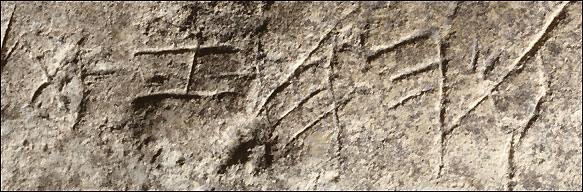
The Zayit abecedary: the oldest known Phoenician inscription

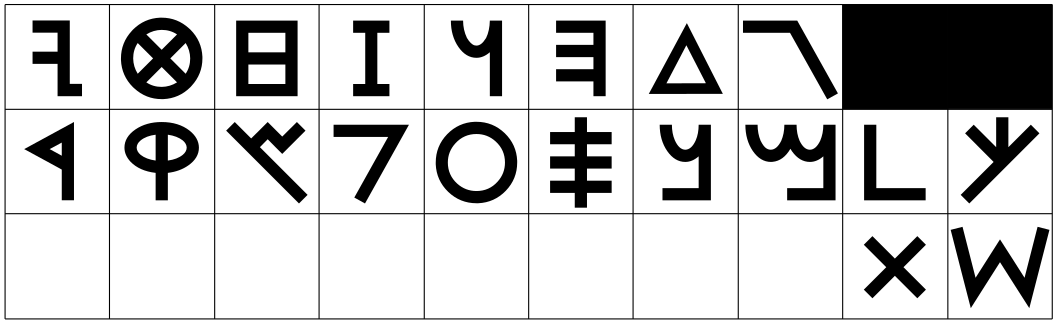
The Phoenician alphabet is an alphabet of 22 letters. It was developed around 3000 years ago, by the ancient Phoenicians. It is an abjad, an alphabet in which only the consonants are written, just like the Arabic alphabet. It is written from right to left, again like Arabic. It is one of the oldest alphabets invented by man, in which each sign represents one sound, while other older forms of writing, like Cuneiform of Egyptian hieroglyphs, were far more complex and accessible only to a highly trained scribal class.

From Phoenicia, the Phoenician alphabet spread through the Middle East, and then the Mediterranean basin. The Phoenicians were a maritime trading civilisation: as their ships navigated around all Mediterranean ports, they brought with them not only goods for sale, but also their alphabet and other forms of knowledge. The Phoenician alphabet was more simple to learn than other common forms of writing at the time, making its adoption by other people easier.

Dipylon vase: the oldest Greek inscription still looks a lot like the Phoenician alphabet

With time, other people in the ancient Mediterranean world developed their own alphabet, based on the Phoenician alphabet. The Hebrews, neighbors of the Phoenicians, created their alphabet around the 10th Century BCE, which they used to write down their sacred texts. The Greeks also developed an alphabet, which is still used today, from the Phoenician alphabet. According to the Greek historian Herodotus, the inventor of the Greek alphabet was the Phoenician prince Cadmus of Tyre. In Italy, the Etruscan alphabet, derived from the Greek alphabet, gave birth to the Latin alphabet.

Bilingual Punic-Libyc inscription, Dougga Numidian Mausoleum

In North Africa, the Phoenician alphabet was used in Carthage and the other Phoenician colonies. In the Carthaginian Empire, it was used to write the Punic language, a Phoenician dialect. As the Carthaginian scribes remained attached to traditional Phoenician grammar, the inscriptions that have been found give only few indications on the linguistic evolution of Punic, compared to the original Phoenician language.

Tifinagh, potentially the world’s oldest alphabet, is an indigenous North African writing system, used by the ancient Amazigh to write their language. The link between the Phoenician alphabet and Tifinagh is debated: some specialists believe Tifinagh to be a strongly altered adaptation of the Phoenician alphabet, but most hold that this alphabet developed according to an indigenous North African model, with only limited Phoenician influences.

Neo-Punic inscription on the theatre of Leptis Magna

As the Phoenician alphabet was originally engraved in stone with a stylus, the letters had a quite angular shape. In the Roman era, a more cursive form or writing, the Neo-Punic alphabet, developed in North Africa.

The Phoenician alphabet is the ancestor of the most widely used alphabets in the world today. On the one hand, via the Greek alphabet, it gave birth to the Latin alphabet, as well as the Cyrillic alphabet, used to writer Slavic languages. On the other hand, is also gave birth to the Semitic alphabets, like the Arabic, Hebrew, and Ethiopian alphabet.

Phoenicians in North Africa

Agadir: Amazigh city and Phoenician counter

Français – عربي – ⵜⴰⵎⴰⵣⵉⵖⵜ – English

In Antiquity, the city of Agadir was a Phoenician port, the last link of a chain of trade counters along the Atlantic coast; but the city’s name was originally Amazigh, which shows that the indigenous population of the region knew this site long before the first Phoenician ships came. This name was actually borrowed by the Phoenicians, who named several other cities they founded after it.

After the founding of Carthage, Phoenician merchants founded a chain of trade counters beyond the Columns of Hercules, on the Atlantic coast of modern-day Morocco. From those counters, the Phoenicians developed relations with the indigenous populations and traded with them. The last of those counters was probably located on Cape Ghir. Nothing else is known of this counter, which never became very important (unlike the one on the Iles Purpuraires, on the coast of Essaouira, where the Phoenicians developed a purple fabric). Phoenician remains, mostly potteries, have been found in the region.

Agadir of Tasguent, Anti-Atlas

The name “Agadir” is of Amazigh origin: an “agadir” (in Tifinagh: ⴰⴳⴰⴷⵉⵔ) is a fortified granary, used by the Amazigh mountain tribes to store their harvest and other possessions. Several such agadirs can still be found in Morocco, throughout the High Atlas, the Anti-Atlas and the Draa valley. When the Phoenicians arrived in the region, they borrowed this word from the Amazigh: in Punic language, a “gadir” (𐤀𐤂𐤃𐤓) is a wall or a fortified compound. The Phoenicians gave this name to several other cities they founded, the main one being Gadir (Cadiz), in Southern Spain.

Possible itinerary of Hanno the Navigator

In the 5th Century BCE, the Carthaginian explorer Hanno the Navigator led an expedition to explore the West African coast, founding colonies on the way (or, more likely, reestablishing abandoned Phoenician colonies). His travel narrative mentions five cities he founded: Karikon-Teichos (castle of the sun), Gytte (potentially derived from geth, “cattle”, or gt, “press”), Akra (promontory), Melitta (honeybee) and Arambys (mountain of grapes). Those cities are difficult to identify with certainty. Some believe that Akra was Agadir, but most specialists rather locate them further North, between El-Jadida and Essaouira. The most common identification of the five cities, according to the etymology of their name, is Azemmour, El-Jadida, Oualidia, Cape Beddouza and the Island Mogador, next to Essaouira. The river Lixus, also mentioned in the travel itinerary, is probably the Oued Draa.

Argan tree

Among the products that the local population sold to the Phoenicians was argan oil, produced by the Amazigh from the fruit of the argan tree, which grows only in this region of the world. Over 3.000 years ago, the Phoenicians were already exporting argan oil through the whole Mediterranean basin, and using it as food complement and cosmetic.

Cape Ghir lighthouse, built in 1926

In the Roman era, Cape Ghir was known as “Cape Rhysaddir”. This name, mentioned by the Roman historian Polybius, comes from the Phoenician Rs ‘dr, “Cape of the Powerful”, probably a reference to the Punic goddess Tanit. There was apparently no city at that time. The modern-day name of Cape Ghir comes from the Tamazight ighir (ⵉⵖⵉⵔ), meaning “[mountain] shoulder”.

Agadir Oufellah

The modern-day city of Agadir was founded by the Portuguese in 1505, under the name Santa Cruz do Cabo de Aguer (Holy Cross of Cape Ghir). The Portuguese built the Casbah of Agadir Oufella. The city became Moroccan in 1541, after it was conquered by the Saadian dynasty.

Phoenicians in North Africa, Roman North Africa, The Amazigh, the first North Africans

Tamusiga: the ancient city of Essaouira

Français – عربي – ⵜⴰⵎⴰⵣⵉⵖⵜ – English

In the Roman era, the city of Essaouira was called Tamusiga. While Tamusiga was not located in Roman territory, the city entertained trade links with Roman Africa. The Iles Purpuraires, off the coast, had an important purple fabric that dated back to the Phoenician era.

Iles Purpuraires, off the coast of Essaouira

Origins

7th-Century Phoenician plate, found on the Island of Mogador

The city’s origins are lost in the night of time. After the founding of Carthage, Phoenician merchants established a chain of trading posts beyond the Columns of Hercules, on the Atlantic coast of modern-day Morocco. The furthest-away of these trading posts was probably Agadir. The site of Essaouira, which offers one of the best anchorages on this coast, certainly held a trading post. Phoenician remnants on this site date back to the 7th Century BCE.

The Phoenicians developed relations with the indigenous population and traded with them. On the islands off the coast of Essaouira, they developed a purple dye fabric, where they made purple from the seashells they found on the coast. Because of their purple industry, these islands became known as Iles Purpuraires (Purple Islands).

Argan tree

Next to purple, the Phoenicians also traded argan oil, produced by the local Amazigh populations from the fruit of the argan tree, which grows only in this region of the world. Over 3.000 years ago, the Phoenicians were already exporting argan oil through the whole Mediterranean basin, and using it as food complement and cosmetic.

Possible itinerary of Hanno the Navigator

In the 5th Century BCE, the Carthaginian explorer Hanno the Navigator led an expedition to explore the West African coast, founding colonies along the way. In his travel itinerary, the Punic city located at the site of Essaouira is called Arambys (Har Anbin, “mountain of grapes”). It was probably abandoned before Hanno’s visit. Some specialists identify the Island of Cerne, also mentioned in Hanno’s travel itinerary, as the Island of Mogador; but most believe this island to be located further South, in the Banc d’Arguin, modern-day Mauritania.

Phoenicians, Amazigh and Romans

After the fall of Carthage, the former Punic trading posts were attached to the Kingdom of Mauretania.

Roman purple mantle

King Juba II of Mauretania reestablished the ancient purple dye industry on the Iles Purpuraires. In the Roman era, purple was used to dye the togas of Roman Senators. Juba II also organized an expedition from the Iles Purpuraires, to explore the Canary Islands.

During the reign of Juba II, a city developed on the Iles Purpuraires. The Amazigh called it Amagdul (“well-guarded”). The Romans later renamed it Tamusiga. The city was limited to the islands: the Essaouira bay wasn’t occupied before the modern era.

Amphora from Hispania Betica, 2nd Century
Roman coins, 3rd Century, found on the Island of Mogador

While Tamusiga was the biggest Mauretanian city beyond the Roman borders, it also entertained close trade links with Roman Africa through its port. A Roman villa and necropolis have been excavated, and a Roman vase and Roman coins were found. Those items are now at the Sidi Mohammed ben Abdallah Museum, in Essaouira.

Later on

Regraga sanctuary

After the fall of the Roman Empire, Tamusiga was abandoned. The surrounding area was inhabited by Amazigh tribes, like the Regraga, who were Christian before Islam. According to a legend, during the life of the Prophet Mohammed, seven men of the Regraga tribe traveled to Mecca, where they converted to Islam.

Tomb of Sidi Mogdoul, Essaouira

In the 11th Century, Sidi Mogdoul, a Muslim saint from the Regraga tribe, was buried in Essaouira. His name was probably the origin of Mogador, the name the Portuguese gave to the city. The ancient Amazigh already called it Amagdul, from the Phoenician Migdol, “small fortress”.

Kasbah of Essaouira, built by Sidi Mohammed ben Abdallah

In the beginning of the 16th Century, the Portuguese built a fortress in Mogador. They faced strong resistance from the Regraga, and were finally driven out by the Saadians. The Saadian Sultan Ahmed al-Mansur established an important sugar factory in the Essaouira region, and imported Black slaves from Sub-Saharan Africa to work there – they became the ancestors of the famous Gnaouas. The modern city was built in the 18th Century, by the Alawi Sultan Sidi Mohammed ben Abdallah (Mohammed III). At the end of the Protectorate, Mogador was renamed Essaouira, from the Arabic الصويرة (as-sawîra), “small wall” – a meaning that remains close to the ancient Amazigh, Phoenician and Latin name.

Slat Lkahal Synagogue, Essaouira

The Jewish community in Essaouira, which remains highly influential even today, goes back to the 18th Century. There might also have been Jews living in Tamusiga in the Roman era: no archaeological trace of them remains, but it seems likely, given that there were Jewish communities in cities of Roman Mauretania like Volubilis and Sala. For the same reason, a Christian presence in ancient Tamusiga is undocumented, but likely.

Today, the city of Essaouira is proud of its multicultural heritage, with its European, Moroccan and Sub-Saharan roots (Gnaoua Festival) and its Muslim, Jewish and Christian influences. Ancient history shows that this diversity is nothing new: over 2.000 years ago, the indigenous Amazigh were already mingling with Phoenician traders and Roman adventurers in the city’s port and streets.

Essaouira today
Phoenicians in North Africa

Carthage to the rescue of Phoenicia

Français – عربي – ⵜⴰⵎⴰⵣⵉⵖⵜ – English

By the beginning of the 6th Century BCE, Tyre, the mother city of Carthage, was facing the threat of the Babylonian Empire, so that it could no longer defend the Phoenician colonies in the Western Mediterranean basin. Carthage, recently independent, took over the role of protector of the other Phoenician colonies, thus laying the foundations of the Carthaginian Empire.

Context

Siege of Tyre

In the 7th Century, Tyre and the other Phoenician city-States came under the domination of the Assyrian Empire, while remaining largely autonomous. The weakening of Tyre enabled Carthage to take its independence around 650.

Tyre was later besieged by King Nebuchadnezzar of Babylon, from 586 to 573. Nebuchadnezzar never managed to conquer the city, but the Tyrians gave themselves up after 13 years of siege.

Carthage: protector of the Phoenician cities

In 580, a group of Greek colonists from Rhodes and Cnidus, led by Pentathlos of Cnidus, tried to establish a Greek colony in Sicily, at the site of the future city of Lilybaeum (modern-day Marsala). While other Greek colonies, like Syracuse, had already been established before, they were far away from the Phoenician cities to the West of the island and weren’t a threat for them. This new Greek colony was surrounded by Phoenician territory, very close to the city of Motya.

Sicily in the 6th Century – Blue: Greek influence – Pink: Phoenician influence – Click to enlarge

The Phoenicians in Sicily decided to get together, in order to expel this new Greek colony from their zone of influence. As Tyre, under siege by the Babylonians, could not come to their aid, Carthage took the leadership of the united Phoenician forces.

At this time, the Greek city of Selinunte was at war against the Elymians (an indigenous people of Sicily) of Segesta, who were allied with the Phoenicians of Motya. The Greek newcomers decided to send support to their kinsmen in Selinunte, but they were defeated by the Phoenician-Elymian alliance. Their leader, Pentathlos of Cnidus, was killed in battle. The survivors fled and founded a Greek colony in Lipari, in the Aeolian Islands.

The Carthaginian Empire is born

After this episode, Carthage established itself as the protector of the Phoenician colonies in the Western Mediterranean basin, a role that enabled them to gradually take control of the other Phoenician colonies.

While the Phoenicians were a trading civilisation, who founded colonies and bought local products from the surrounding peoples, the Carthaginians broke with the peaceful Phoenician tradition by using military force to extend their Empire.

Punic necropolis of Utica

The Carthaginian conquest of North Africa started during the reign of King Malchus (556-550). Carthage took control of the former Phoenician colonies on the Gibraltar Strait and in Tripolitania. After Oea (Tripoli) had been taken by the Greeks of Cyrenaica, the Carthaginians reconquered the city. Utica, the first Phoenician colony in Africa, came under Carthaginian control quite late, around 540.

Carthaginian ambitions went beyond Africa. A military campaign in Sicily, probably after the Phoenicians on the island called on Carthage for help against Greek expansion, enabled Carthage to integrate the Phoenician cities in Sicily into their Empire.

Around 550, Malchus was sent to Sardinia, to support the local Phoenician population gainst the indigenous Nuragic people. He won several victories that enabled him to establish Punic colonies on the island.

Around 540, the new King Mago of Carthage made an alliance with the Etruscans. Together, they attacked Alalia, a colony founded in Corsica by the Greeks of Massalia (Marseille). The Phocaeans were defeated and forced to abandon Alalia, which came under Carthaginian rule.

The Carthaginian Empire at its height

Around 530, the Tartessian civilisation, an important trading partner of Carthage in Spain, fell, enabling the Carthaginians to extend their influence in Spain.

From 480 on, Carthage led several wars against the Greeks of Syracuse, for the control of Sicily. In 397, after Motya was destroyed, the survivors founded the city of Lilybaeum, on the site of the short-lived Greek colony.

Over a century later, in 332, Alexander the Great besieged Tyre and conquered the city. The Phoenician civilisation, once the major power in most of the Mediterranean basin, was now surviving only in the Carthaginian Empire.

Phoenicians in North Africa

A gift from heaven: history of the olive tree in North Africa

Français – عربي – ⵜⴰⵎⴰⵣⵉⵖⵜ – English

While the olive tree is a typical tree of North African landscapes today, that can be found everywhere in our countrysides, its cultivation in North Africa actually started quite recently, around 3.000 years ago. The indigenous population were familiar with the wild olive tree, but the domestic form was brought on board the Phoenician ships, or by the Greeks to Cyrenaica.

The olive tree: a gift of the gods

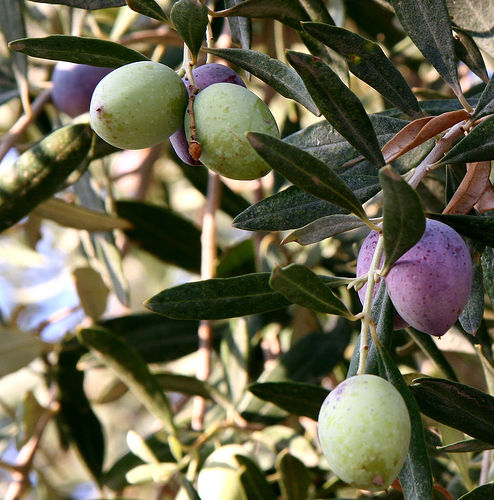
The olive tree can be found all around the Mediterranean basin. Its cultivation plays an important role in the region’s economy, with several thousands of known cultivars. Olive oil is used since Antiquity as fuel for lamps, for cooking, and as a cosmetic, considerably enriching all the people who produced it.

Athena gives the olive tree to the Athenians

The Greeks considered the olive tree to be a gift of the gods. According to mythology, after Athens was founded, the gods Athena and Poseidon were contending for the right to give their name to the city. Zeus, the king of the gods, decreed that the one who would offer its inhabitants the best gift would win. Poseidon hit a rock with his trident, and sweet water came out. Then Athena hit the soil with her spear, and an olive tree grew out of it. The Athenians preferred her gift, as it would bring them light and heat.

In addition to its strong resistance to drought, the olive tree is also known for its longevity: there are trees known to be several thousands of years old!

Olive tree cultivation

Olive tree cultivation started around 7.000 years ago, in the Middle-East. It is no coincidence that this is also the time when the first big cities developed in the region.

Olive tree cultivation expanded from the Middle-East, all around the Mediterranean basin, especially thanks to the Phoenician salesmen. In Crete, the Minoans, the first ancestors of the Greek civilisation, were cultivating olive trees 5.000 years ago. Olive oil might have been the source of the Minoan civilisation’s wealth. Later, olive tree cultivation spread to all Greece.

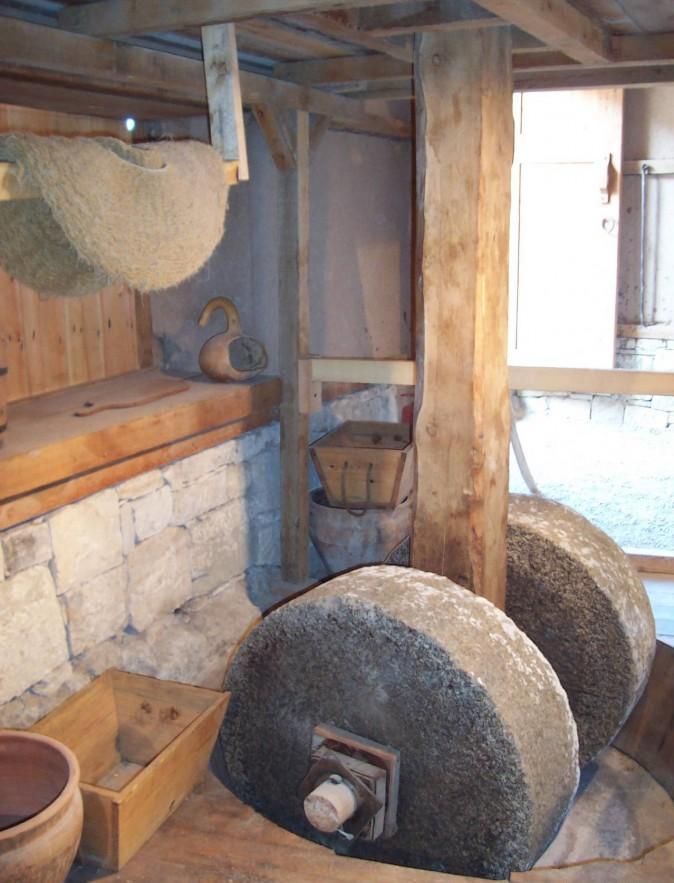
Olive press

Olives were cultivated mostly to make lamp oil. This oil was then burned in the temples, as an offering for the gods. It was also used to keep the Olympic flame burning.

In Antiquity, olive oil was known for its medicinal and cosmetic virtues. It was used to anoint kings. The Greeks spread perfumed oil over their body and hair. At sports competitions, the winners received a crown made of olive branches. Today, the olive branch is an universal symbol of peace.

Olive oil was also used for cooking. It is now a basic ingredient of all Middle-Eastern and Mediterranean cuisine. Its has many nutritious virtues: it is rich in vitamins and good fats, and also low in cholesterol.

The olive tree played an important role in the Jewish religion, and then in Christianity and Islam. Jewish priests were anointed with oil, and some Christian traditions use it for baptism. The olive tree is mentioned in the Bible and the Quran, as a source of wealth.

The olive tree in North Africa

Wild olive trees have always grown in North Africa. The first inhabitants of the region knew the tree: they used it to produce fuel, and maybe also for food; but they didn’t cultivate it.

The first to cultivate olive trees on the North African coasts were the Phoenicians and the Greeks, the two major maritime civilisations of the Mediterranean basin. While the Greeks, in Cyrenaica, mostly cultivated it themselves, the Phoenicians, who were salesmen rather than farmers, taught the local Amazigh people to cultivate it on their highly fertile land. The Numidian and Mauretanian Amazigh learned to cultivate olive trees, to graft wild olive branches on cultivated trees, and to produce olive oil.

During the Roman era, olive tree cultivation certainly played a major role in making North Africa one of the most prosperous regions of the Empire.

The discovery of petrol put an end to the use of oil as fuel. Nowadays, olives are mostly cultivated for food. Around 80% of all cultivated olives are used to produce oil, while the other 20% are table olives, meant to be eaten. Olive oil is the most common cooking oil in the region. Olives are also part of the recipe for traditional North African dishes.

Amazigh kingdoms before the Roman invasion, Carthage and the Carthaginian Empire, Phoenicians in North Africa, Roman North Africa

At the end of the world: the cities around the Straight of Gibraltar

Français – عربي – ⵜⴰⵎⴰⵣⵉⵖⵜ – EnglishEspañol

At the entrance of the Mediterranean Sea, Africa and Europe, only a few dozens of miles apart, almost touch each other. Only by a narrow inlet separates both sides: the Straight of Gibraltar, formerly known as the “Pillars of Hercules”. According to mythology, the two continents used to form only one, until the hero Hercules split it. In Antiquity, the straight was a crossing point rather than a border. In this article, we will discover the history of the cities situated on the Straight of Gibraltar.

From myth…

Caves of Hercules

During Antiquity, it was believed that the world was a flat disk. Mauretania and Spain were considered as the last inhabited regions, and the Straight of Gibraltar represented the end of the world. The “Pillars of Hercules”, two mountains on either side of the straight – probably the Rock of Gibraltar, to the North, and Djebel Musa, to the South – were a sign for travelers, that they had arrived at the edge of the known world. Close to Tangier, the Caves of Hercules, where he spent the night during his travels, is a popular tourist site.

In such a worldview, the straight cities played an important role, as guardians of the civilized world. The Greeks were fascinated by these far-away cities, and placed some of their myths there, also mixing them with local Amazigh myths. According to one of their myths, Tingis (Tangier) was founded by Syphax, the son of Hercules and the daughter of King Atlas of Mauretania, who named the city after his mother. Some sources say that the Garden of the Hesperides, where Hercules went to find the famous golden apples, was in Lixus. The ruins of Lixus (close to modern-day Larache) contain numerous frescoes of mythological scenes.

… to history

The oldest city on the straight is Tingis, founded around the 8th Century by Phoenician merchants. Its name derives from the Amazigh word tinjit, water mass. Because of its strategic location, Tingis quickly became an important port in the Phoenician commercial roads. Other Phoenician colonies appeared, in Lixus (Larache), Abyla (Sebta), Rusadir (Melilla), and then further South, along the Atlantic coast.

Statue of Hercules Gaditanus

Another Phoenician colony was founded on the Spanish side of the straight, just across Tangier. This site certainly served as a seasonal port already before, but the first permanent population arrived in the 7th Century and was probably originally Carthaginian. The Phoenician name of the city, Gadir, has the same root as Agadir, another port city founded by the Phoenicians. Its Roman name, Gades, later became Gadix, and then Cadiz. The city was mostly famous for its temple of the Phoenician god Melqart, whom the Greeks and Romans would identify to Hercules.

During the 7th Century, the Phoenician colonies around the straight came under Carthaginian control. Tingis was one of the main ports in the Carthaginian Empire, with Carthage and Leptis Magna. Gadir was the main Carthaginian city in Spain, until Carthago Nova (Carthagene) was founded. The expeditions of the great Carthaginian explorers probably started from Tingis and Gadir. While the Phoenician presence extended further South, until Agadir, Carthaginian influence ended in Lixus.

The straight cities only played a minor role in the Punic Wars: the Romans attacked Africa from Sicily. Before starting his military campaign in Italy, Hannibal offered a sacrifice to Melqart/Hercules, at the temple in Gadir.

After the second Punic war, the North African cities were attached to the Kingdom of Mauretania. However, Tingis maintained its Punic heritage, still issuing bronze coins with Punic inscriptions. Around this time, King Baga founded the city of Tamuda (Tetouan).

The reign of King Juba II of Mauretania was the golden age of the city of Lixus, which became a major economic center, thanks to its industrial complex, the largest in the Mediterranean basin. Its economy relied mostly on fishing and viticulture.

After the Roman annexation, Tingis became the capital of the province of Mauretania Tingitana. The city grew strongly, becoming larger than Volubilis, the historical capital of Mauretania.

Roman amphitheatre in Lixus

Alongside Tingis, Lixus, Abyla (renamed Septem), and Rusadir also became Roman colonies. These cities were strongly Romanized, while the rest of Mauretania was hostile to Roman domination. Economically, the region, especially Septem, specialized in selling salted fish.

Tingis and Lixus were also the two main Christian centers in Mauretania Tingitana. The Mauretanian Christian martyrs were killed in Tingis, by the end of the 3rd Century. The ruins of the former church in Lixus are still visible today.

In the 5th Century, the Vandals, already present in Spain, crossed the Straight of Gibraltar and invaded North Africa. A few centuries later, a Muslim Moorish army crossed the straight in the other direction, to conquer Spain. The modern name of Gibraltar derives from Djebel Tariq; Tariq ibn Ziyad was the commander of the Umayyad forces in Spain. Since this far-away time, all successive invaders, until the modern-area European colonisers, came through the port of Tangier. Ceuta (Sebta) and Melilla, the last remnants of Spanish presence in North Africa, testify to the complex history of a region lying between two continents.

Long before Tangier became an international city in the 20th Century, the straight cities, as commercial ports, open on the world, were always strongly cosmopolitan. Over the centuries, they also welcomed many refugees fleeing persecution on both sides of the straight: Catholic Christians driven out by the Vandals, Muslims and Jews expelled from Spain, and anti-colonial activists. Their strategic location makes their unique identity: African cities, but close to Europe, multicultural and tolerant.