

Français – عربي – ⵜⴰⵎⴰⵣⵉⵖⵜ – English
After the Second Punic War, the Carthaginian Empire lost most of its territory and was considerably weakened. King Massinissa of Numidia took profit of its weakness to conquer further Carthaginian territories. When Carthage finally defended itself, the Roman Senate used this military action against a Roman ally as a pretext to declare war again, leading to the Third (and final) Punic War and to the destruction of Carthage.
Context
In Rome, the old animosity against Carthage was fuelled even more by the hurtful memories of Hannibal’s military campaign in Italy. Also, close to 50 years after its defeat, Carthage had almost finished to pay its war indemnity, and the Romans feared that it would quickly recover its former power after that. A faction of the Roman elite, led by the influential Senator Cato the Elder (who coined the famous formula “Carthago delenda est”), wanted to get rid of the Carthaginian threat once and for all.

In Africa, Massinissa led several military campaigns, to take back regions he saw as stolen by Carthage from his ancestors. He conquered Tripolitania, and then turned to territories in modern-day central Tunisia. Carthage, unable to defend itself as the peace treaty forbid it from waging war without permission, called on Rome, but Roman arbitration always decided in favour of Massinissa.
In 151, Carthage, notwithstanding the prohibition, finally decided to defend itself against Massinissa’s repeated aggression. The newly constituted and unexperienced Carthaginian army was defeated at the battle of Oroscopa. Although Carthage represented no threat to Rome, this treaty violation became a pretext for a punitive expedition.
The Roman Senate was apparently also motivated by fear of their ally Massinissa becoming too powerful for them, especially if he were to conquer Carthage himself.
Siege and destruction of Carthage
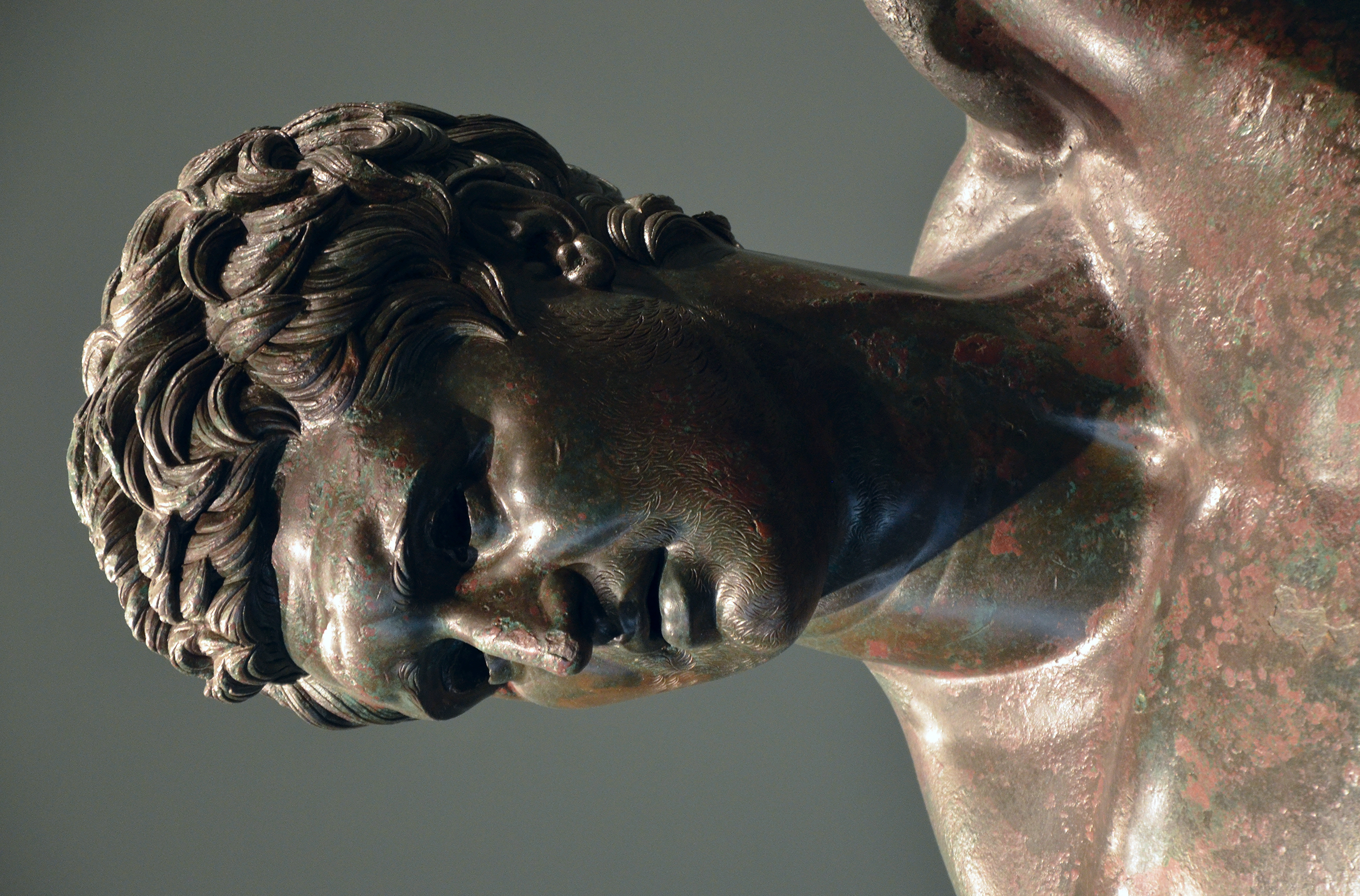
In 149, the Roman army besieged Carthage. Their badly located first camp was quickly infected by a plague epidemic, which forced them to move to a less defendable place. The Carthaginian attacks, by sorties and with fireships, inflicted them much damage.
The siege lasted three years. In spring 146, Roman general Scipio Aemilianus (the adoptive grandson of Scipio Africanus) launched the final assault. The Carthaginians saw that the Romans were attacking via the port, and thus burned down the warehouses. The Roman troops nevertheless managed to enter the city. For six days, the Romans worked their way around the city neighbourhoods, killing all whom they met and putting fire to the buildings. On the last day, the last Carthaginian fighters surrendered. 50.000 survivors were sold into slavery.
The Roman hatred for Carthage was so strong that the city would be completely razed to the ground. What was left of its territory became the Roman province of Africa, with Utica as its capital. The Roman Senate decreed that the city would remain in ruins for all eternity, and it was strictly forbidden to rebuild it or to install another population center there. Despite this prohibition, the Carthaginian prestige was so strong that a new city would be built one century later, by Julius Caesar, and became the capital of Roman Africa.

1 thought on “The Third Punic War (149-146) and the destruction of Carthage”