Ce site présente l'histoire de l'Afrique du Nord avant les conquêtes arabes – This website presents the history of North Africa before the Arab conquests – يعرض هذا الموقع تاريخ شمال إفريقيا قبل الفتوحات العربية
At the beginning of the 6th Century, as North Africa was under Vandal occupation, Cabaon, a Libyan Amazigh chief, led an insurrection against the Vandal King Thrasamund, and even inflicted him a great defeat. Cabaon’s war weakened the Vandals in Africa and contributed to their fall.
The Laguatan, an Amazigh tribe, originally from Cyrenaica, migrated from oasis to oasis and settled in Tripolitania, where they allied with several local tribes. Around 510, they took control of a major part of Tripolitania, from the Nafusa Mountains to the coast, where they established a kingdom. With other Amazigh tribes from Byzacena (modern-day Southern Tunisia), they led attacks against the Vandals.
The chief of the Laguatan was Cabaon. Today, there is a village in the Nafusa Mountains, called Kabaw, 30 km from Nalut. The name of this village might come from Cabaon.
Cabaon’s war
Kabaw: Cabaon’s capital?
In 523, Vandal King Thrasamund decided to pacify Tripolitania by attacking Cabaon. When Cabaon learned about the attack, he ordered all his subjects to retreat into two camps, one for the men and one for the women; it was forbidden for anyone, on pain of death, to enter the camp of the opposite sex.
During Thrasamund’s campaign, Cabaon sent spies to follow the Vandals everywhere they went, and repair the damage they caused. Cabaon’s attitude toward the Christians caused much fascination among later Christian historians: while he was not a Christian himself, he strongly respected Christian places of worship, and repaired all those the Vandals had destroyed. He thus hoped to obtain the Christian God’s favor.
The final battle took place when the Vandals reached Cabaon’s camp. The Amazigh took shelter behind a rampart of camels and fought on foot, using mostly range weapons that decimated the Vandal ranks. Thrasamund’s troops, upset by this fighting tactic which they had never faced before, were defeated.
After their defeat, the Vandals lost control of Tripolitania, and their domination over the whole region was shaken. Some ten years later, they were defeated and expelled from Africa by the Byzantines.
In late Antiquity, the people of the Mediterranean world were wondering how to make sense of the ancient myths and legends that had been at the foundation of their culture for centuries, now that they were Christian and no longer believed in the gods of their ancestors. Fulgentius, a North African author of the Vandal era, wrote several books in which he suggests an allegorical reading of Greco-Roman myths, drawing a moral and spiritual message from them.
A hidden message behind myths of another age
The world of ancient mythology is a supernatural world, full of magic, fantastic creatures, talking animals and men changed into animals or into stone. Also, in the mythological universe, the gods who live among men have very human passions: they are murderers, rapists, adulterers, thieves, liars, and commit all sort of crimes. The most reasonable men of the time, especially the philosophers, have always been embarrassed by the absurdity and immorality of these myths. To provide an explanation, they tried to discern a deeper meaning behind those imaginary stories.
Neoplatonic philosophers were especially active in reexamining the ancient myths at the light of their more sophisticated understanding of the world, to find a hidden sense behind their words.
Odysseus and Circe
Their method is best explained by an example. In Homer’s Odyssey, the hero Odysseus and his companions land on the island of the sorceress Circe. When Odysseus’ companions, in their hunger, precipitate themselves on Circe’s table, she changes them all into pigs. Odysseus, on his way to save his companions, meets the god Hermes, who gives him a magical plant, together with instructions of how to triumph of the sorceress. The magical plant protects Odysseus against Circe’s magic. In the end, Circe agrees to return his companions to their human form. For the Neoplatonics, the change of Odysseus’ companions into pigs represents human degradation: when we give in to our primary impulses, to corrupting sensual pleasures, we become like wild animals. Odysseus, on the other hand, is protected by the knowledge of the wise, which gives him the strength to resist the destructive magic of the sorceress.
Ymagines Fulgencii: medieval images inspired by Fulgentius the Mythographer
Allegorical reading of myths became even more prominent in the Christian era. It allowed the Christians in the Greco-Roman world to reclaim possession of the old pagan myths, in which they discovered moral lessons, teaching them how to live a virtuous life, and even spiritual lessons, on God and his plan for them. One of the most prominent authors who developed this Christian allegorical reading of mythological texts was the North African Fulgentius the Mythographer.
Who was Fulgentius the Mythographer?
Fabius Planciades Fulgentius was a North African Christian author, who lived and wrote in the Vandal era, from the 5th to the 6th Centuries CE. Very little is known of his life, not even where in North Africa he lived. His writing style in Latin, his knowledge of Greek and his mastery of classical authors and popular cults indicate he was probably a trained rhetorician or grammarian. He understood the Libyc language and could read the Libyc alphabet, which shows he probably had Amazigh origins. The prologue of his Mythologies mentions that he was married.
Fulgentius of Ruspe
Since the Middle Age, certain scribes identified Fulgentius the Mythographer with Fulgentius of Ruspe, a North African bishop who lived in the same era, and was the leader of the North African Christian resistance against Vandal Arianism. However, this identification is contested by modern specialists.
Fulgentius the Mythographer’s work is traditionally dated from the late 5th and early 6th Century. However, a passage of his work resembles a verse of Corippus, another North African author who wrote around 550, after the Byzantine reconquest. Some specialists believe that he quotes Corippus, which would mean that he wrote after him. Others believe he is older than Corippus, and the resemblance is a pure coincidence. If he indeed does quote Corippus, this would prove that Fulgentius the Mythographer cannot be identified with Fulgentius of Ruspe, as the latter died in 527.
Fulgentius the Mythographer’s work was very popular all through the Middle Age, and had a strong influence on medieval Christian mythographers.
Fulgentius the Mythographer’s works
The most well-known work of Fulgentius the Mythographer are his Mythologies, a series of three books, with 50 chapters altogether. Each chapter tells a myth, and then interprets it allegorically, drawing a moral and spiritual message from it. For his interpretation, he uses etymologies of character names, which are often highly doubtful; but this was common at the time. In his prologue, the author explains that he wanted to strip the classical Greek myths of all their fictitious elements, in order to reveal the obscure truths they contain. While he had a Christian motivation, the lessons he draws from the myths are quite general and can be applied to any public.
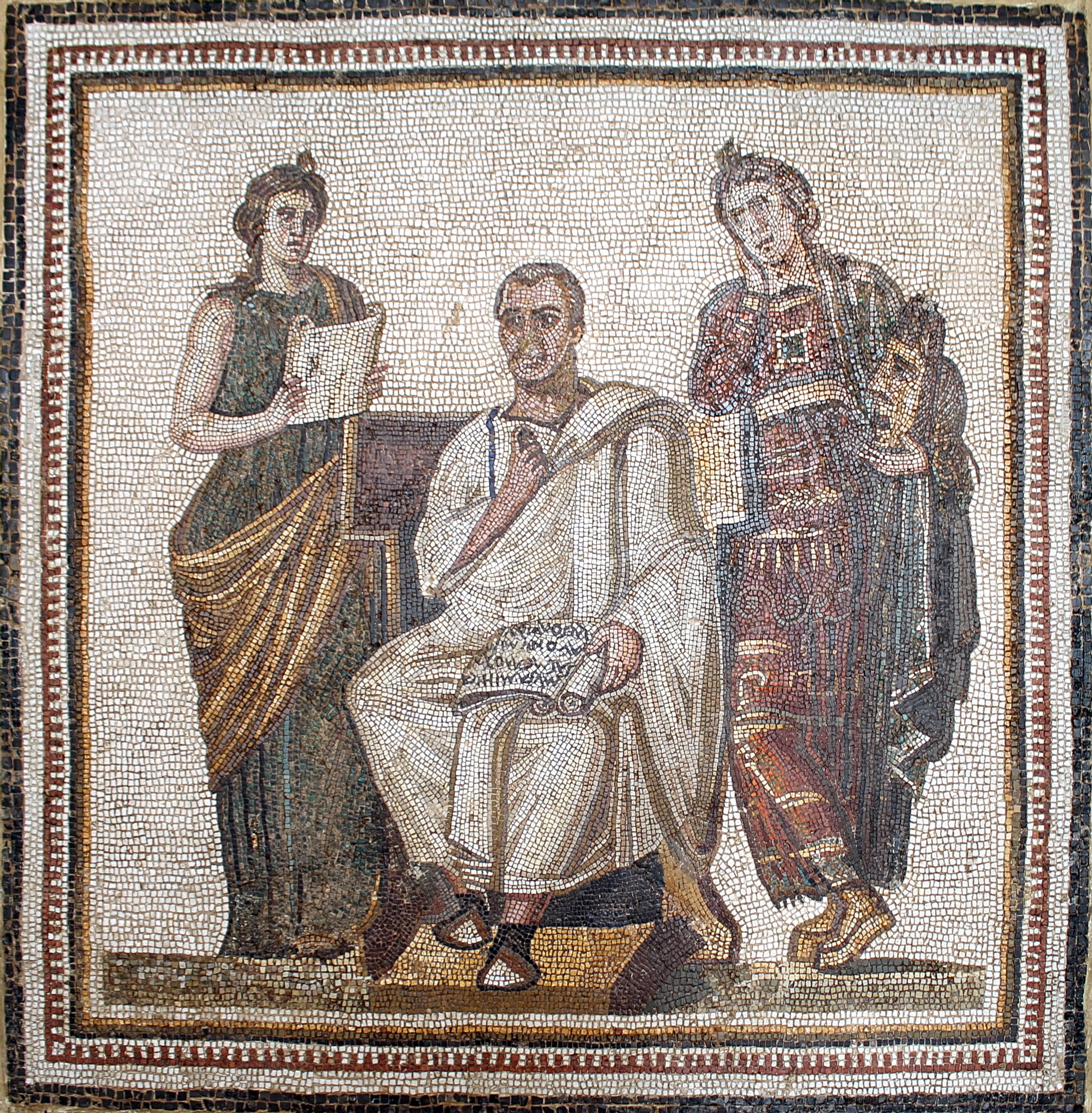
In another work, Fulgentius the Mythographer exposes an allegorical reading of the Aeneid of Virgil, which he sees as an allegory of all human life. In this book, he ghost of Virgil appears to the author, together with the Muses (goddesses of art), to explain the truths contained in the Aeneid. Virgil addresses the author on a condescending tone, and makes fun of the readers’ tendency to read his poem literally, without grasping the deeper meaning behind his words. Allegorical interpretations of Virgil were already common (including one by the Roman African grammarian Aelius Donatus), but Fulgentius the Mythographer was the first one to do this in a Christian perspective.
Fulgentius the Mythographer also wrote an Explanation of obsolete words, which gives an explanation of 62 ancient Latin words appearing in classical literature, as well as a historical book, On the Ages of the World and Men.
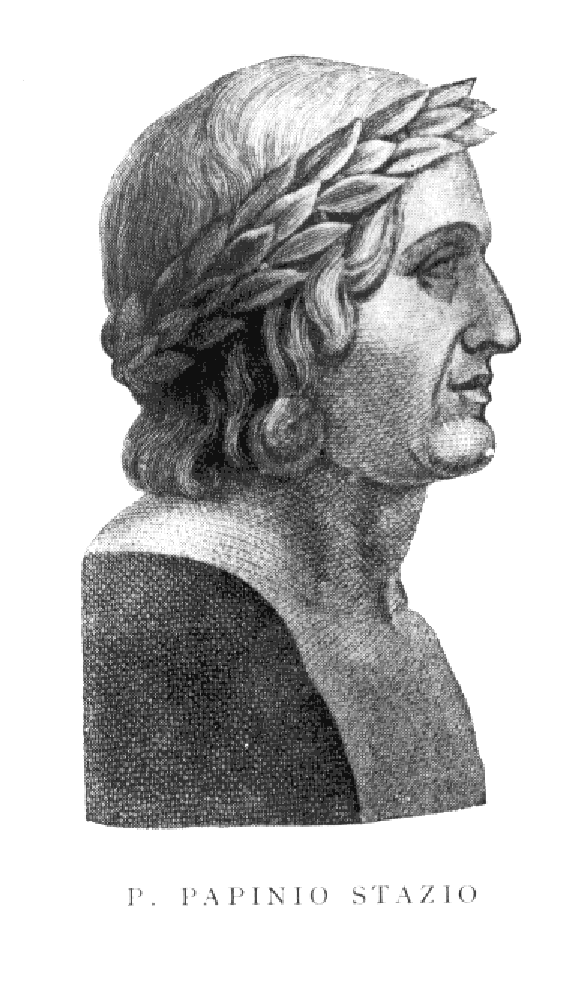
Statius
Finally, an allegorical reading of the Thebaid, a poem by the 1st-Century Roman poet Statius, was also attributed to Fulgentius the Mythographer, probably by mistake: this work was written later, during the Middle Age. Its author imitates Fulgentius the Mythographer’s writing style. Statius was a contemporary of the first Christians, and a medieval tradition without any historical base, mentioned in Dante’s Divine Comedy, claims that he secretly converted to Christianity, and that his works contains a hidden Christian message.
After the 5th-Century Vandal conquest, North Africa, previously one of the most strongly Christian areas in the Roman world, faced a serious religious crisis: its bishops were banished and its population forced to adopt the Arian doctrine held by the Vandals. In this context, bishop Fulgentius of Ruspe, sometimes called the “second Augustine”, became known as the champion of North African Christianity. For over 20 years, he faithfully preached the Catholic doctrine, stood up to the Vandal authorities, and held public debates with Arian bishops. He was exiled several times, but continued to defend his convictions through his writings. Without his influence, the North African Church probably would not have survived the Vandal occupation.
Context
Bishop Quodvultdeus of Carthage, who was exiled by the Vandals
The Vandals followed the Arian religion, a doctrine considered heretical by the official Christian Church. North African Christians were distraught by this new doctrine which they had never been confronted with yet: while Augustine of Hippo had written a book against Arianism, only few were still fluent enough in Latin to read it. Also, the Vandals wanted to force all their subjects to accept their doctrine, and they persecuted the indigenous North African Christians, both Catholics and Donatists. Over a thousand North Africans were killed for refusing to convert to Arianism.
Life of Fulgentius
Fulgentius of Ruspe
Fabius Claudius Gordianus Fulgentius was born around 465, in Thelepte (Medinet-el-Kedima, close to Feriana, in the Tunisian governorate of Kasserine), in a Roman Christian family. His grandfather, a Carthaginian Senator, was banished to Italy after the Vandal conquest of Africa, and all his property was confiscated. His two sons returned to Africa after he died: the family house was lost, but they could recover some land in Byzacene (Southern Tunisia) and settled there. Fulgentius’ father died when he was a child, and he was raised by his mother, who taught him Greek and Latin. At a very young age, Fulgentius memorized all of Homer’s works.
Fulgentius’ family was highly respected. As an adult, his excellent reputation enabled Fulgentius to obtain a job as a tax collector. As a brilliant career was opening up in front of him, his study of religious texts, especially a sermon by Augustine of Hippo on the Psalm 36, convinced him to renounce his worldly life and devote himself to God. Around 22 years of age, he decided to become a monk.
Monastery in Byzacene (Image created by ChatGPT)
About this time, Faustus, a bishop who had been expelled from his diocese by the Vandal King Huneric, established a monastery in Byzacene. Fulgentius asked Faustus to take him as a novice. Faustus first tried to dissuade him, due to his fragile health, but the young man was so insistent that he finally agreed. With the other monks, Fulgentius lived a life of prayer, away from society.
A short time later, Arian attacks forced Fulgentius to leave for another monastery, where he took responsibilities. In 499, he fled to Sicca (El Kef) during another wave of persecution. The following year, he traveled to Rome. He then returned to Byzacene, where he founded his own monastery. His reputation was spreading more and more in the whole region.
In 504, Fulgentius became the new bishop of Ruspe (Henchir Sbia, close to Mahdia). At this time, the Vandal King Thrasamund had forbidden any new bishops from being appointed after the death of a standing bishop. Fulgentius was exiled to Sardinia with around 60 other bishops. In exile, he wrote books to instruct the African Christians in their faith, especially by refuting the errors of Arianism.
Writing on a church vault, mentioning King Thrasamund, Henchir El Gousset, Kasserine governorate, Tunisia
Fulgentius returned to Africa in 515, at the invitation of King Thrasamund, for a public debate with an Arian bishop. Thrasamund was so impressed by his knownedge that he allowed him to stay in Carthage, but not to return to Byzacene. Fulgentius continued writing and preaching the Catholic doctrine. He was exiled again in 520.
Thrasamund died in 523. His successor Hilderic, whose mother was Catholic, led a policy of religious tolerance. Fulgentius was allowed to return from exile and take back his function as bishop of Ruspe. After his return, he worked to end abuses that had developed in the Church while he was away. He was such an eloquent and efficient preacher that the bishop Bonifatius of Carthage cried every time he heard him preach, and thanked God publicly for giving such a preacher to his Church.
Close to the end of his life, Fulgentius, who was still more drawn to the solitary monastic life than to the responsibilities of a bishop, retired to a monastery on the Circinia Islands (Kerkennah). However, his influence in Ruspe was so strong that the faithful called him back. He continued serving as bishop of Ruspe until his death in 527.
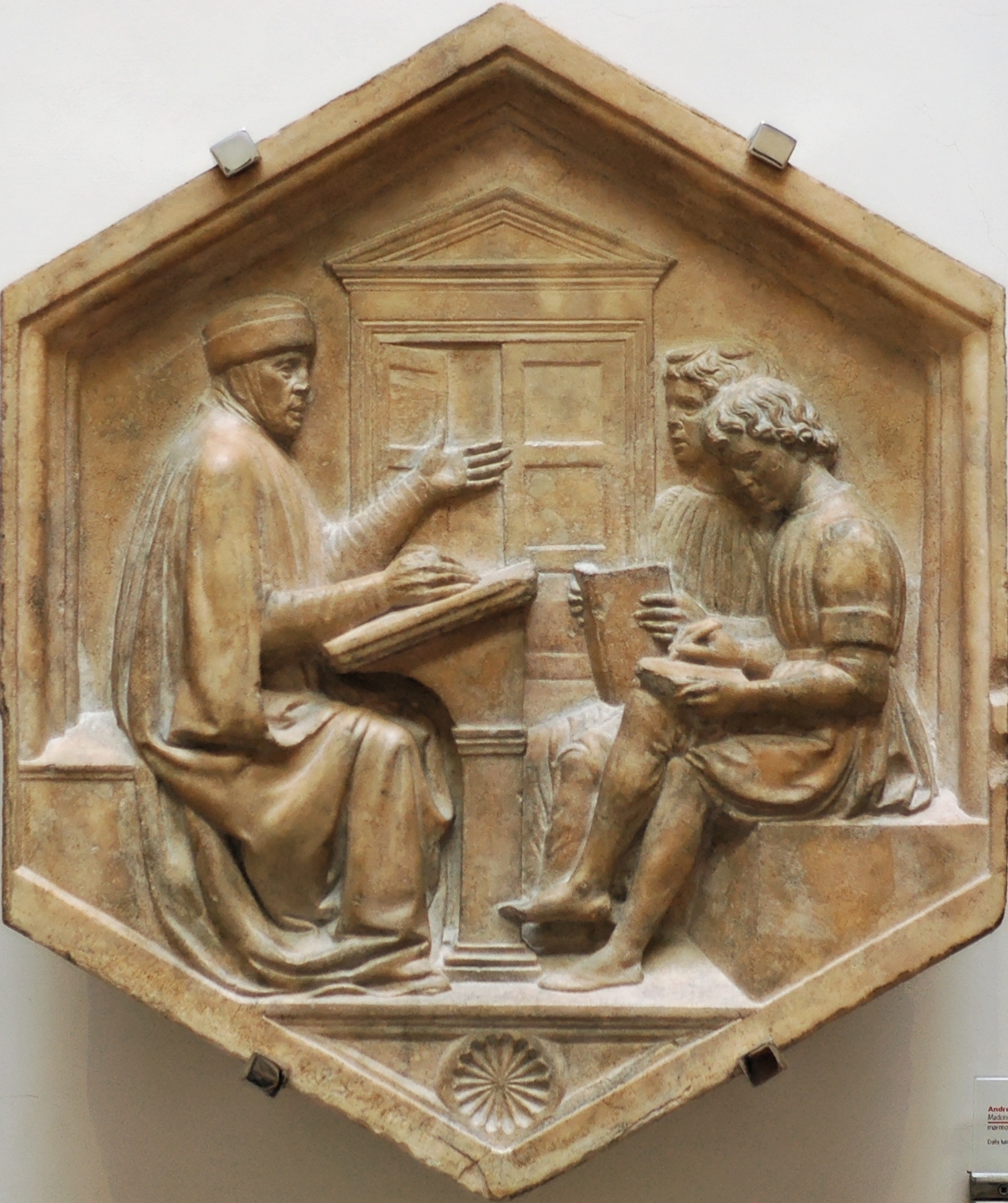
Priscian of Caesarea was a 6th-Century grammarian. Born in Caesarea (Cherchell), Mauretania, he taught Latin grammar in Constantinople, the new Imperial capital.
Priscian of Caesarea, relief, bell tower of Florence, Italy, by Luca della Robbia
Priscian was born around 470, in Caesarea (Cherchell), Mauretania. He was probably of Greek origin. Although he was a Christian, his works contain many references to ancient Greek mythology.
Emperor Anastasius, Priscian’s mecene
At the time, North Africa was occupied by the Vandals. As a young man, Priscian fled his native region and settled in Constantinople, the capital of the Byzantine Empire, where he taught grammar. Anastasius, the Byzantine Emperor at the time (491-518), led a policy of welcoming Romans who had been uprooted by the fall of the Western Roman Empire. Priscian wrote a panegyric of Anastasius, praising his good will towards those refugees.
The most well-known of Priscian’s works was his Institutes of grammar, a systematic exposition of Latin grammar, in 18 books. In this work, Priscian uses quotes of Latin authors as examples of the grammatical rules he exposes. Those quotes preserved fragments of authors whose work would otherwise be lost.
The Institutes of grammar were used during all the Middle Age to teach Latin, together with the Ars Grammatica, written by Aelius Donatus, another North African grammarian: Aelius Donatus was used as an introduction, while Priscian, whose work was more detailed, served for deeper study.
The Vandals, who invaded North Africa in the 5th Century, practiced Arianism and wanted to force all their subjects to adopt their doctrine. They persecuted the indigenous North African Christians. Several thousand North African Christians were killed for refusing to convert to Arianism.
Context
The Vandals, like other Germanic people, followed the Arian religion, a doctrine considered heretical by the official Christian Church. After the arrival of the Vandals in North Africa, the local believers were bewildered by this new doctrine that they had never faced before: Augustine of Hippo had written a book against Arianism, but not many still understood enough Latin to read it.
Also, unlike the Goths, who were also Arian, but tolerant of other confessions, the Vandals wanted to impose their doctrine onto all their subjects. Because of this, they persecuted the North African Christians, both Catholic and Donatist. Several hundred Christians were put to death for their faith during the Vandal era, and many religious sisters were raped. The bishop Victor of Vita (Beni Derraj), who witnesses those events, wrote a detailed book on the persecutions.
History of the persecutions
Quodvultdeus, bishop of Carthage
After the Vandal conquest of Carthage, bishop Quodvultdeus (his name means “what God wants”) was exiled, together with most other North African bishops. Those bishops were embarked on an old ship without sales or ores, that luckily managed to cross the sea and reach Naples. The exiled bishops settled in Italy. One of them, Gaudiosus, later became bishop of Naples.
After Quodvultdeus’ exile, Carthage remained without a bishop for several years. In 454, the Vandal King Gaiseric, under the pressure of the Roman Emperor Valentinian III, finally agreed to the nomination of a new bishop of Carthage: Deogratias. After the sack of Rome by the Vandals, bishop Deogratias sold all the Church possessions to redeem the Romans who had been kidnapped and sold as slaves in Carthage. He then hosted them in the city’s larger churches before sending them back to Rome. After Deogratias died in 457, there was again no bishop.
Olivia was a Christian woman from Sicily, who was kidnapped by the Vandals and sold as a slave in Tunis, where she was put to death for her faith. Her tomb is now the Zitouna Mosque, in Tunis.
During Gaiseric’s reign, bishop Victor of Cartennae (Tenes, modern-day Algeria) wrote a refutation of Arianism, dedicated to Gaiseric. This book is lost, but its author is mentioned in On Illustrious Men, by Gennadius of Massilia, a collection of short biographies of influential Christian figures.
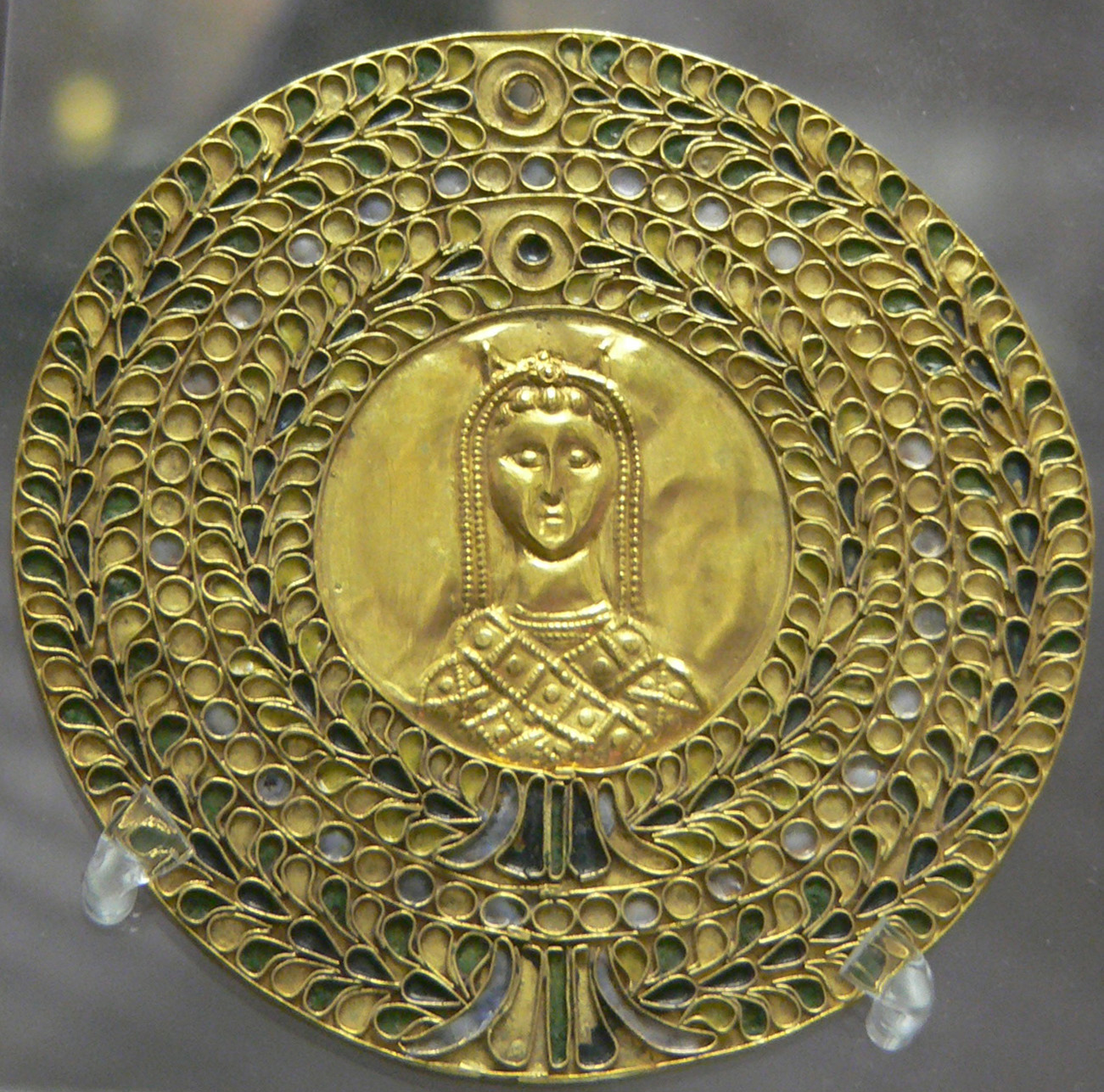
Eudocia
Coin with the effigy of Huneric
Persecution worsened during the reign of Gaiseric’s son Huneric (477-484). In his early reign, Huneric tried to appease the tensions in his kingdom by allowing the election of a new bishop of Carthage, Eugene, after 24 years of vacancy. Later, however, he resumed his father’s repressive policies. Huneric’s religious policy would be the cause of tension between him and his wife Eudocia, the daughter of the Roman Emperor Valentinian III, who was a Catholic Christian. Eudocia ended up fleeing to Jerusalem, where she died.
In 483, Huneric summoned 466 North African Catholic bishops to Sicca (El Kef), for a public debate with Arian bishops. There, he tried to force them to deny their faith. After they refused, he had them arrested. Victor of Vita recounts how he bribed guards in order to be able to visit the prisoners. In the end, they were deported into the desert. Most of them died on the way, and the survivors were executed on arrival.
The number of victims might be exaggerated, but the facts are certainly true. Only two of those martyrs are known by name: the bishops Felix of Abbir Germaniciana (Henchir en Naam) and Cyprian of Unizibira (Henchir Zembra). Victor of Vita also mentions the daughter of the bishop of Zuritana (Ain Djour), who was imprisoned together with her son.
Frumentius and Victorian
In 484, Frumentius, a Carthaginian salesman, and Victorian, the proconsul of Hadrumetum (Sousse), were put to death for their faith in Hadrumetum.
The same year, bishop Laetus of Nepta (Nefta) was burned alive by the King’s orders. 50 years later, Laetus reportedly appeared in a dream to the Byzantine Emperor Justinian, imploring him to deliver North Africa from the Vandals.
The inhabitants of Tipasa, after refusing to convert to Arianism, had their right hand and their tongue cut off. According to Victor of Vita, they miraculously continued talking and confessing their faith.
Victor of Vita also mentions three monks from Gafsa, who were put to death for refusing to convert to Arianism.
Other believers were sold into slavery by the Vandals, to Amazigh tribes inside the continent. Victor of Vita writes that some of these tribes converted to Christianity through those slaves. This was the case especially for the Caprapicti tribe of Southern Tunisia. The legendary Christian roots of certain Amazigh tribes like the Sanhaja of the Rif or the Regraga to the North of Essaouira might go back to such captives.
The storm calms down
King Gunthamund (484-496), Huneric’s successor, ended the persecutions. Victor of Vita’s book was probably written during his reign.
Fulgentius of Ruspe
Gunthamund’s successor Thrasamund (496-523), hoping to eradicate Catholicism in his Kingdom without violence, forbid the nomination of new bishops after the standing bishop’s death. Around 504, bishop Victor of Vita, the author of the book on the history of the persecutions, ordained Fulgentius bishop of Ruspe (Henchir Sbia). He then was exiled to Sardinia for disobeying the royal prohibition, and died in exile in 510. In the following years, Fulgentius of Ruspe became the most influential figure of North African Catholicism. He had public debates with Arian bishops and wrote books against Arianism. He was exiled several times, but remained committed to his cause until his death in 527.
In 523, Hilderic (523-530), son of Huneric and Eudocia, became the King of the Vandals. Hilderic, whose mother was Catholic, led a policy of religious tolerance. A new bishop of Carthage, Bonifatius, was named, and Fulgentius of Ruspe was allowed to return from exile and preach the Catholic doctrine. During Hilderic’s reign, the Vandals started converting to Catholicism.
In 511, Gesalec, King of the Visigoths of Spain, was overthrown by the King of the Ostrogoths of Italy Theodoric the Great. Gesalec fled to Carthage, to the court of the Vandal King Thrasamund. When he tried to reconquer Spain, Thrasamund entrusted him with the Vandal fleet. He later abandoned him, under pressure from Theodoric.
Context
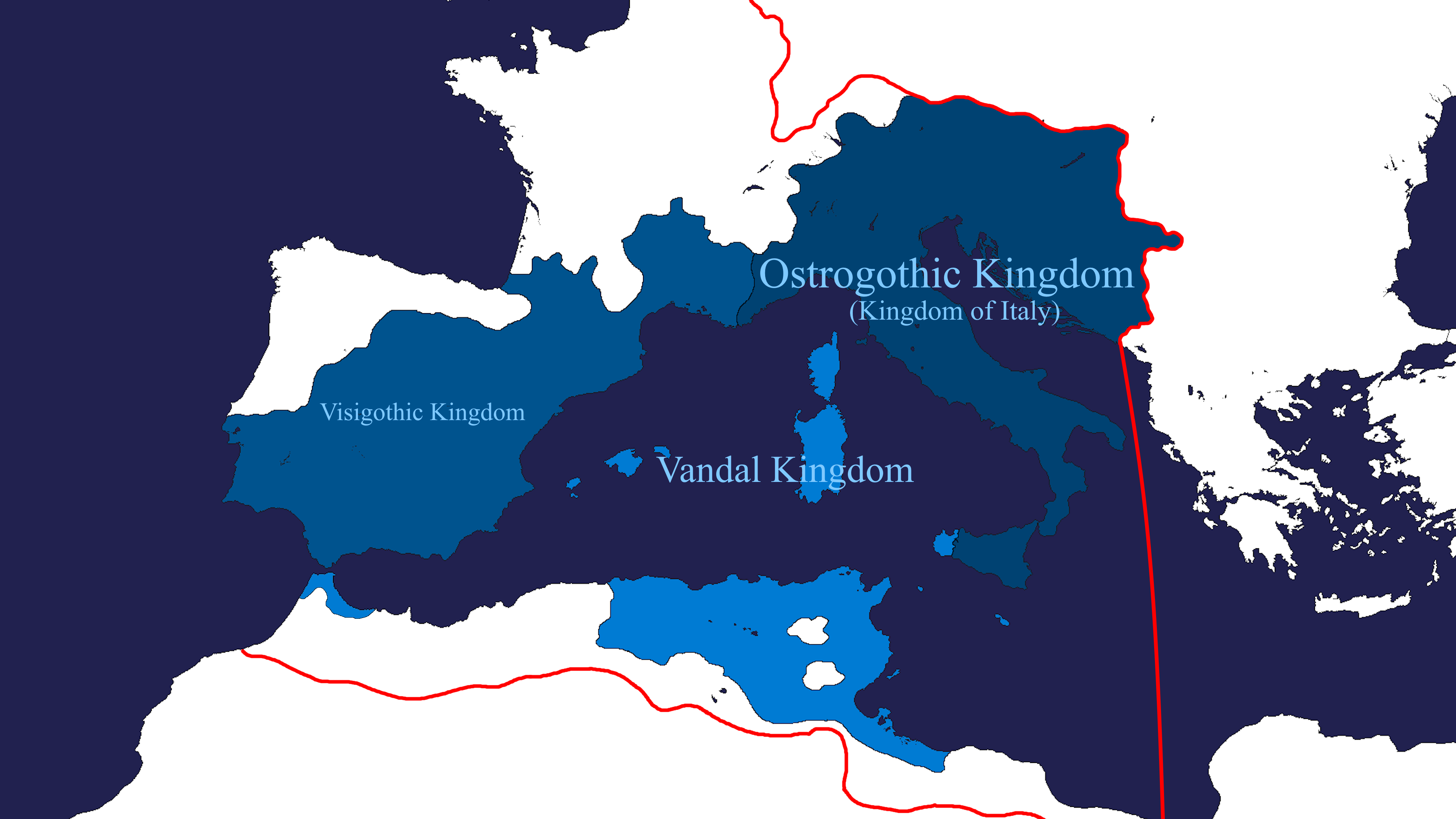
Visigothic Kingdom of Spain – Light orange: territory lost in 507, after the defeat against the Franks
The Goths, who had been living in Spain since the 5th Century, established a Kingdom there on the ruins of the old Roman administration. Since the conquest of Italy by Theodoric the Great, their Kingdom was called the Visigothic (Western Gothic) Kingdom of Spain, to distinguish it from the Ostrogothic (Eastern Gothic) Kingdom of Italy.
Alaric II, King of the Visigoths, was married to Theodegotha, the daughter of Theodoric the Great, King of the Ostrogoths. Theodoric was the most powerful Germanic King of his time.
Gesalec King of the Visigoths
Alaric II was killed in 507, in battle against the Franks. His only legitimate son, Amalaric, was too young to be king. The Visigoths chose Gesalec, an illegitimate son of Alaric II, as his successor. At the beginning of Gesalec’s reign, Theodoric the Great supported him.
The Empire of Theodoric the Great after Gesalec’s fall
In 508, the Burgunds conquered Narbonne, the Visigothic capital. Gesalec fled to Barcelona. Three years later, in 511, he was overthrown by Theodoric the Great, who proclaimed himself King of the Visigoths until his grandson Amalaric came of age.
Gesalec fled to Carthage, where he received the support of the Vandal King Thrasamund. To help him take back his throne, Thrasamund entrusted him with the Vandal fleet to invade Spain.
When Theodoric the Great heard that the King of the Vandals, who was his ally, married to his sister Amalafrida, had chosen to support Gesalec, he got angry, and sent him a letter ordering him to withdraw his support for Gesalec. Thrasamund, who understood that he was not powerful enough to confront the King of the Ostrogoths, abandoned Gesalec. Shortly after, Gesalec was captured and killed.
Theodoric the Great reigned over a unified Gothic Empire until his death in 522. After he died, his two grandsons Amalaric and Athalaric succeeded him in Spain and Italy.
The Vandals, a Germanic people who conquered North Africa in the 5th Century, are known as ruthless warriors who pillaged and destroyed many of the cities they conquered. Nowadays, the word “vandalism” means the destruction of others’ property. Is this reputation well-founded? Most historians believe that the ancient sources exaggerated Vandal violence.
Cover picture: ruins of Hippo (Annaba), a city destroyed by the Vandals
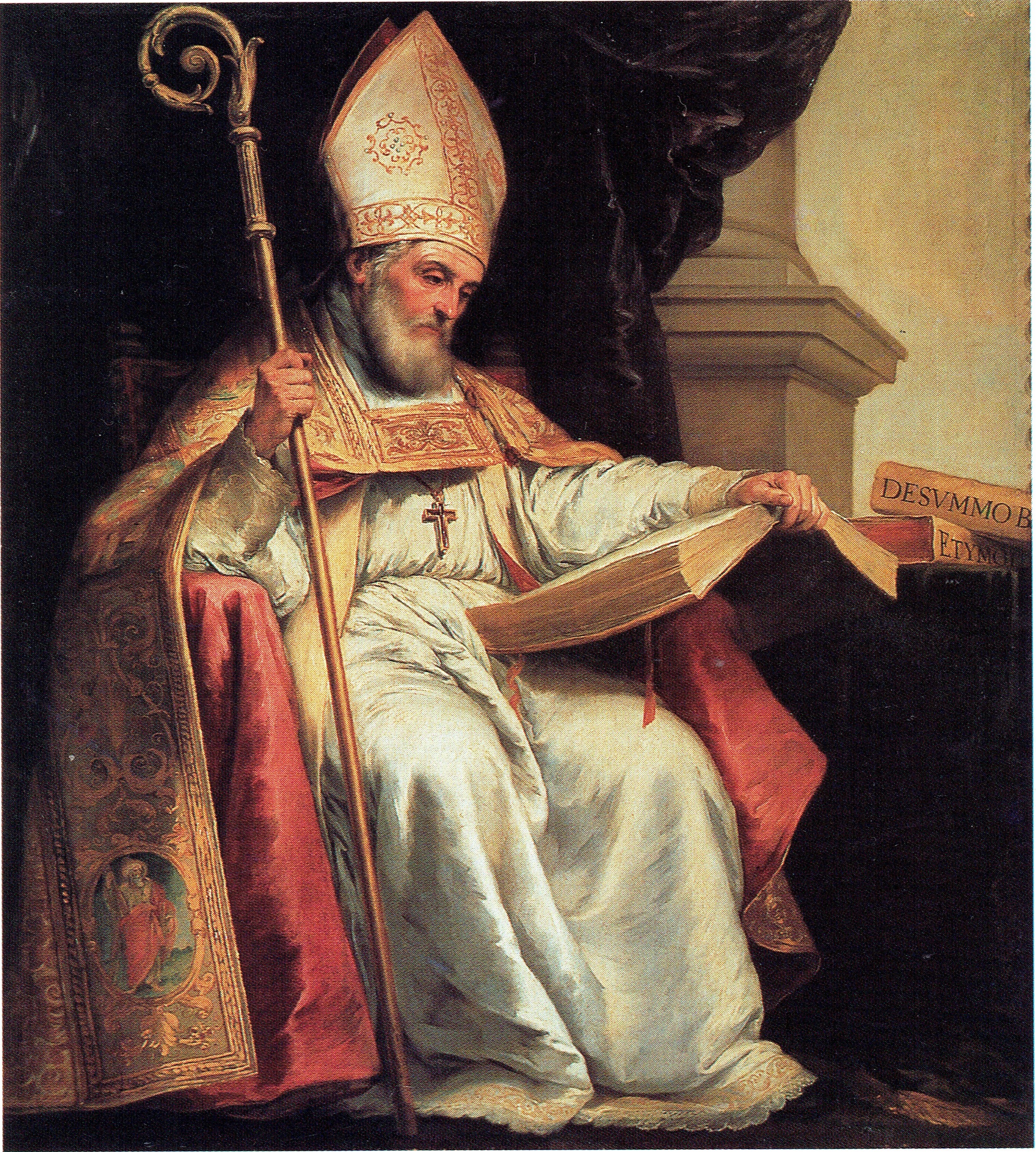
Isidore, bishop of Seville, wrote a History of the Kings of the Goths, Vandals and Suevi
Our main ancient sources on the Vandals are Roman (Augustine of Hippo, Isidore of Seville) or Byzantine (Procopius of Caesarea, Jordanes). Those authors were enemies of the Vandals, and the way they depict them is certainly exaggerated.
According to most modern historians, the Vandal conquest and occupation of North Africa wasn’t particularly violent, compared to what was common at the time. The only city that was mostly destroyed was Hippo (Annaba), where whole neighborhoods and public buildings were burned after the 430-431 siege. The city survived, but never regained its former prosperity. However, there is no sign of massacres or other large-scale atrocities against the civil population.
Ruins of the Antonine Baths, Carthage – destroyed by the Vandals
In Carthage, the Vandals destroyed important buildings like the theater, the odeon and the Antonine Baths; but military strategy offers a good explanation for this: such monuments could easily be transformed into fortresses in case of an urban uprising. In other cities, the city walls were destroyed, for the same reason.
Several North African cities were pillaged, including Constantine, Hadrumetum (Sousse) and Leptis Magna. This pillage accelerated the decline of urban life. Most of those cities were punished for resisting the Vandals. Other cities, like Carthage, Utica, Hippo Diarrhytus (Bizerte) and Sicca (El Kef), were not only preserved, but developed and embellished by the Vandals, especially close to the end of the Vandal era, once their domination was well established. The Vandals were dependent on Roman urban infrastructure and had nothing to gain in destroying cities, except if they encountered resistance.
Sack of Rome by the Vandals
In 455, the Vandals invaded Rome and pillaged the city for two weeks. The sack of Rome by the Vandals was even more destructive than the 410 sack by the Goths. The Vandals tore off half the roof of the Temple of Jupiter Capitoline, the largest temple in Rome, to take its gilded bronze tiles. They also destroyed the aqueducts that provided water to Rome. However, even during the sack of Rome, there were no exactions against the population: the bishop of Rome Leo I negotiated with the Vandal King Gaiseric, and convinced him to spare the inhabitants who didn’t resist, not to burn the buildings and not to torture prisoners.
Victorian and Frumentius, two Christian salesmen from Carthage and Hadrumetum, were killed for their faith by the Vandals
On the other hand, the religious persecution against the North African Christians is very well attested. The Christian bishop Victor of Vita wrote a book that gives a detailed account of the persecution. It is however important to keep in mind that the North African bishops were often also political leaders of the resistance against the Vandals, so that the violence against them had both political and religious motivations.
Vandal golden jewelry
The Vandal reputation is mostly due to their love for pillage. It is however important to remember here that in their historical context, a people group that was finally entering history after having long lived at the margins of civilisation naturally aspired to enjoy the riches they had so long been deprived of. Especially in major cities, the Vandals saw their appropriation of the treasures previously confiscated by the Roman urban elite as nothing more than legitimate wealth redistribution.
Amalafrida, sister of Theodoric the Great, the founder of the Ostrogothic Kingdom of Italy, married the Vandal King Thrasamund. Their marriage marks an alliance between the two kingdoms, which opened a new era of prosperity for the Vandals in Africa.
Context
Theodoric the Great, King of the Ostrogoths from 471 to 526
The Goths were divided into two tribes: the Visigoths (Western Goths) and the Ostrogoths (Eastern Goths). Around 375, when the Huns invaded their territory, some Goths fled into Roman territory, where they waged war against the Romans. The Visigoths are the descendants of the Goths who settled in Roman territory, while the Ostrogoths are the descendants of those who remained in their historical territory East of the Danube.
The Ostrogoths were vassals of the Huns. After Attila the Hun died in 453, they became independent and migrated towards the Balkans. They were loyal to Aspar, the commander of the Eastern Roman army, who had Gothic origin. They agreed to fight for the Roman army, except against the Vandals.
Gold coin with the effigy of Theodoric the Great
In 476, the last Western Roman Emperor Romulus Augustulus was deposed by the Germanic chief Odoacer. In 493, Theodoric, King of the Ostrogoths, invaded Italy, overthrew Odoacer and founded the Visigothic Kingdom of Italy, with Ravenna as its capital. His Kingdom quickly became the most powerful of the new Germanic kingdoms in Europe.
To increase his influence, Theodoric allied himself by marriage with other Germanic kingdoms. He married the daughter of Childeric I, King of the Franks (the sister of the famous King Clovis), and gave his two daughters in marriage to Sigismund, King of the Burgunds, and to Alaric II, King of the Spanish Visigoths. Finally, he arranged the marriage between his sister Amalafrida and Thrasamund, King of the Vandals of Carthage.
Amalafrida of Carthage
Amalafrida of Carthage – Image created by ChatGPT
Amalafrida was the daughter of the Ostrogothic King Theodemir. Born around 470, she was very young when her father died and her brother Theodoric succeded him. She had two children from her first marriage; her husband’s name is unknown. Her son Theodahad later becamer King of the Ostrogoths, while her daugther Amalaberga married Hermanfrid, King of the Thuringii.
Around 500, Theodoric the Great decided to arrange a marriage between Amalafrida, who was now a widow, and Thrasamund, the new King of the Vandals. Theodoric sent Amalafrida to Carthage with a considerable dowry. She was accompanied by 1.000 elite Gothic warriors affected to Thrasamund’s service, and 5.000 armed guards for her personal security.
Coin with the effigy of Thrasamund
Thrasamund’s alliance with Theodoric the Great marks the beginning of an era of peace and prosperity for the Vandal Kingdom of Africa, propitious to the flourishment of arts and culture. Nothing else is known about Amalafrida’s role as Queen of the Vandals, but she certainly contributed to Gothic influence in Carthage.
In 511, Gesalec, King of the Spanish Visigoths, was overthrown by Theodoric the Great and fled to Carthage. Thrasamund supported him, and entrusted him with the Vandal fleet to invade Spain; but after he received a letter of warning from Theodoric the Great, he backed out to avoid provoking Theodoric.
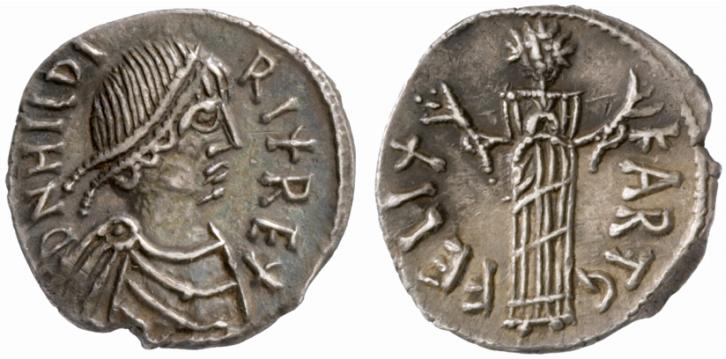
Coin with the effigy of Hilderic
After Thrasamund’s death in 523, his successor Hilderic decided to lead a policy of religious tolerance for the African Catholic Christians, who were persecuted by his predecessors. Amalafrida was opposed to this policy, and led a revolt against Hilderic. Her supporters fought the army of Hilderic at Capsa (Gafsa) and were defeated. Amalafrida was arrested and imprisoned, and then died in prison. Hilderic also had her Gothic soldiers executed, in order to reduce Gothic influence in his Kingdom.
The Roman domination over North Africa, after lasting for over four centuries, finally crumbled when the Vandals, a Germanic people, invaded the region. The Vandals founded a new Kingdom, with Carthage as its capital. In this article, we will discover the history of the Vandal Kings of Africa.
Coin with the effigy of Gaiseric
The founder of the Vandal Kingdom of Carthage was Gaiseric, or Genseric (427-477). He became King of the Vandals in Spain, where his people were settled, and then led his men over the Straight of Gibraltar, to conquer North Africa. In 439, he conquered Carthage and made it his capital. We wrote a detailed article on him.
Sack of Rome by Gaiseric
After consolidating his control over Africa, Gaiseric even attacked Rome, the Imperial capital. To appease the Vandals, the Roman Emperor Valentinian III had promised that his daughter Eudocia would marry Huneric, Gaiseric’s son. In 455, Valentinian was killed, and his murderer forced Eudocia to marry his son. Gaiseric used this as a pretext to invade Rome and loot the city. He raptured Eudocia, together with her mother, and brought her to Carthage, where she was wed to Huneric. Gaiseric’s sack of Rome significantly accelerated the city’s decline, which eventually led to the final fall of the Roman Empire.
During the final part of his reign, Gaiseric resisted several Roman attempts to reconquer North Africa. He died in 477, aged 87. No other Vandal King after him had the same authority over his people.
Coin with the effigy of Huneric
Gaiseric’s successor was his eldest son Huneric (477-484). He had spent his childhood as a hostage in Rome, after the 435 peace treaty between his father and the Roman Emperor. His wife, Eudocia, was the daughter of Roman Emperor Valentinian III, but their marriage was difficult because of their religious difference: Huneric was an Arian, Eudocia a Catholic Christian. Because of the tension between them, Eudocia left Huneric before he became King, and ended her life in Jerusalem.
After succeeding his father on the throne, Huneric had his brothers killed.
At the beginning of his reign, Huneric tried to appease the tensions in his Kingdom, by giving back to the Carthaginian merchants the goods that had been confiscated by his father and allowing the Christian community to elect a new bishop of Carthage, after 24 years of vacancy. Later, however, he again persecuted his Christian subjects. Several thousands were martyred after refusing to convert to Arianism. By the end of his reign, the Amazigh of the Aures, under their chief Masties, rebelled against the Vandal domination.
According to Vandal law, the throne belonged to the oldest prince. Gunthamund (484-496), son of Gento, the youngest son of Gaiseric and the only one Huneric hadn’t killed, was older than the sons of Huneric, making him Huneric’s successor.
Coin with the effigy of Gunthamund
Gunthamund (484-496) was the most popular King since Gaiseric. He ended the persecutions against the Christians, thus restoring stability in his Kingdom, which was about to fall apart. He suddenly died around the age of 40.
Coin with the effigy of Thrasamund
His brother Thrasamund (496-523) had the longest reign of any Vandal King, except Gaiseric. He married Amalafrida, the sister of Theodoric the Great, the founder of the Ostrogoth Kingdom of Italy, which had succeeded the Roman Empire. His reign was an era of peace and prosperity, enabling the flourishing of arts and culture. Close to the end of his life, he led a military campaign in Tripolitania, against the Amazigh chief Cabaon, and was defeated by him.
Coin with the effigy of Hilderic
After he died, his cousin Hilderic (523-530), the son Huneric and Eudocia, succeeded him, while he was already over 60 years old. He was openly homosexual. He entertained good relations with the Byzantine Empire. During his reign, the Vandals in North Africa started converting to Catholic Christianity, without any opposition from Hilderic, whose mother was a Catholic Christian.
Coin with the effigy of Gelimer
By the end of his reign, Hilderic was overthrown by his cousin Gelimer (530-534), with the support of the Vandal nobility, who were concerned about Hilderic’s complacency toward Catholic Christianity. The Byzantine Emperor Justinian, who supported Hilderic, declared war against the Vandals. In 533, an army of 15.000 men, led by general Belisarius, landed in North Africa. The Byzantines, supported by the local Amazigh tribes, took control of the whole Vandal territory in a few months: the Vandal Kingdom of Carthage had fallen.
Roman domination over North Africa, which lasted over four centuries, ended with the Vandal conquest of the region. The loss of Africa, the Empire’s bread-basket, was a hard blow for the Romans, who tried several times to take back the region. In 468, the Western and Eastern Roman Emperors came together for a military campaign against the Vandals. Their defeat at the Battle of Cape Bon was the last Roman attempt to reconquer Africa.
Context
Gold coin with the effigy of Majorian
During the reign of Emperor Majorian (457-461), the Roman Empire reconquered Spain. Majorian wanted to continue by taking back North Africa from the Vandals, but failed. His officer Marcellinus managed to reconquer Sicily.
In 467, the Vandal King Gaiseric tried to invade the Peloponnese. With the Vandal fleet spreading further and further East, the Romans feared an attack against Alexandria. The Eastern Emperor Leo I, who had previously been hesitant to support the Western Empire against the Vandals, finally decided to intervene.
The Roman offensive
The Western Emperor Anthemius, the Eastern Emperor Leo I, and Marcellinus, a military officer who controlled a semi-autonomous territory in Illyria, came together in Sicily, to prepare a vast common offensive against Carthage.
Gold coin with the effigy of Basiliscus
The Romans decided to attack the Vandals on three fronts : Basiliscus, the commander of the Eastern Roman army, would attack Carthage by sea with the major part of the troops; Marcellinus would attack Sardinia from Sicily, and then join Basiliscus; while Heraclius, the governor of Egypt, would attack Carthage from the East, via Libya.
Marcellinus conquered Sardinia, while Heraclius took control of Tripolitania. Basiliscus’ fleet anchored close to Cape Bon and waited for Marcellinus. However, a large part of Marcellinus’ fleet, led by Ricimer, a general with Germanic origins, refused to leave. Ricimer might have deliberately tried to sabotage the operation.
The Roman landing on Cape Bon was one of the largest military operations of this kind in ancient history: over 50.000 fighters and a thousand ships participated.
The Vandal King Gaiseric asked for a truce to negotiate. During this time, the Vandals filled their ships with flammable materials, and then, at night, they set fire to their ships and projected them against the Roman fleet, which was taken by surprise. Over half the Roman fleet was burned.
Later on
Basiliscus and Marcellinus fled to Sicily with the survivors of their army, while Heraclius fled across the Libyan desert. In Sicily, Marcellinus was assassinated by Ricimer.
Julius Nepos, the nephew of Marcellinus, became Western Emperor from 474 to 475. Basiliscus became Eastern Emperor in 475-476.
This Roman defeat was the last step in the decline of the Western Roman Empire, which was now limited to Italy and Sicily. The last Emperor, Romulus Augustulus, was deposed in 476, by the German chief Odoacer.