Français – عربي – ⵜⴰⵎⴰⵣⵉⵖⵜ – English
Paulinus of Nola was a Roman Senator and, later, bishop of the Italian city of Nola. A legend tells that after a Vandal raid in Southern Italy, he sold himself as a slave to the Vandals, in exchange for the son of a widow, who had been kidnapped. He spent some time serving the son-in-law of the Vandal King as a gardener, and then was freed when his master found out who he was.
Who was Paulinus of Nola?
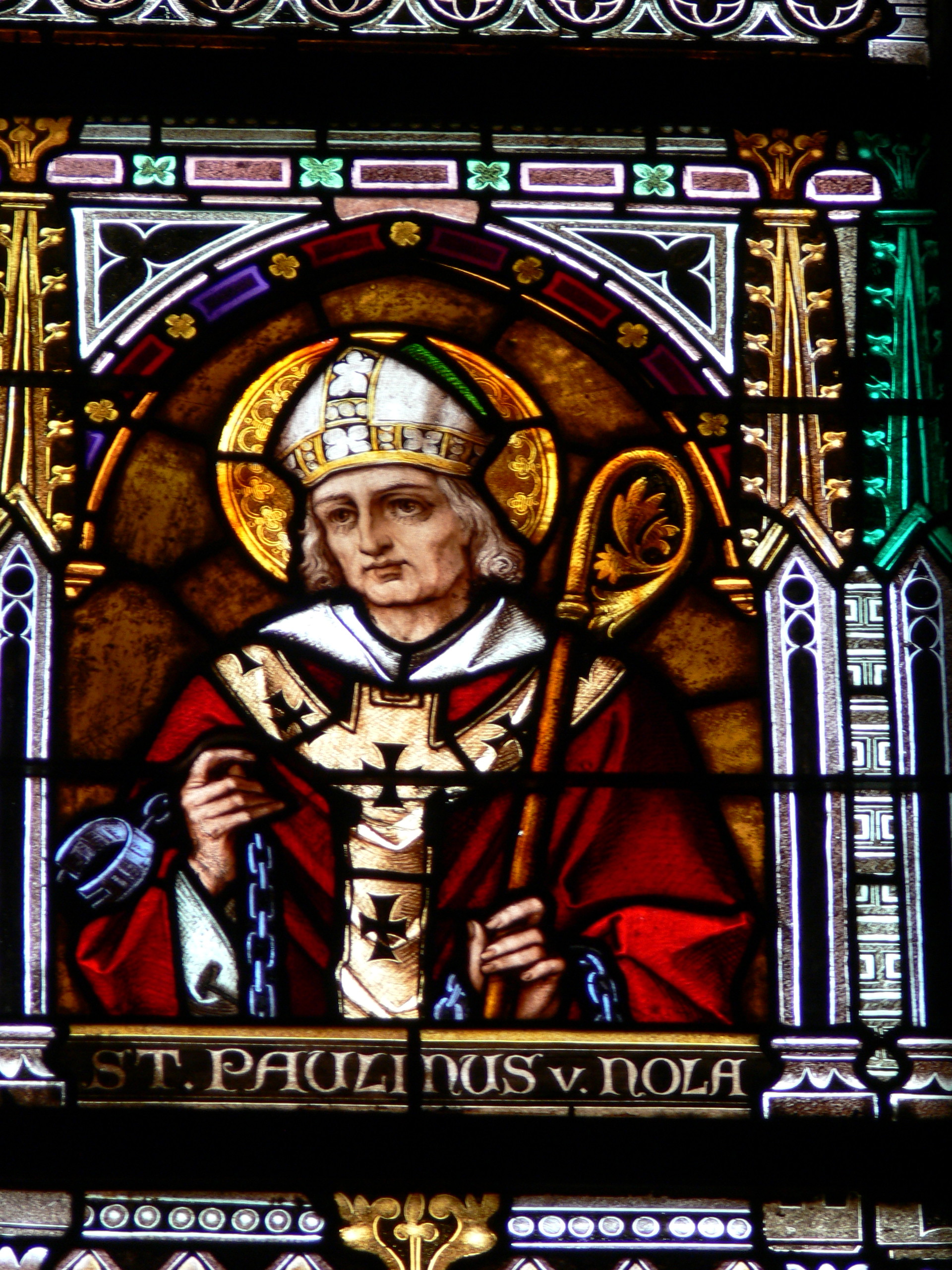
Pontius Meropius Paulinus was a Roman aristocrat. Born 352 in Burdigala (Bordeaux), he was from a rich and influential family that owned domains in Gaul, Spain, and Southern Italy. He was educated by the famous Gallo-Roman poet Ausonius.
In his youth, Paulinus, like most young men of his rank, started a public career in the Roman administration. In 377, he was named consul by Emperor Gratian. In 380, he became governor of Campania, a Roman province in Southern Italy. In 384, he married Therasia, a Spanish noblewoman, and they moved to Spain together.

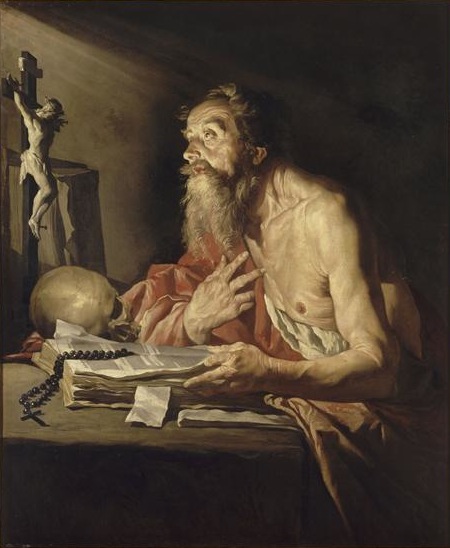
Paulinus was a Christian: he had been baptized by the bishop of Burdigala, and studied theology in Milan, under bishop Ambrosius. After their marriage, Paulinus and his wife felt increasingly challenged by the calling of Christ to the young rich man in the Gospels: “Go, sell everything you have and give to the poor, and you will have treasure in heaven. Then come, follow me.” After their only child died eight day after its birth, they finally decided to answer this call: they sold their lands and all their possessions, gave away the money to the poor, and entered a life of seclusion from the world. The rest of their life would be devoted to the service of Christ.
EIn 395, Paulinus and Therasia left Spain for Nola, in Campania. Paulinus considered Saint Felix, a bishop of Nola who had been put to death for his faith by Emperor Decius around 260, as his model: Felix also had sold all his possessions to give the money to the poor. At his arrival in Nola, he restored and enlarged the Basilica devoted to Saint Felix. Every year, he wrote a poem in his honor.
Therasia died around 410. Shortly after her death, Paulinus was ordained bishop of Nola. He spent the rest of his life in the city, until his death in 431.
Paulinus of Nola in Africa?

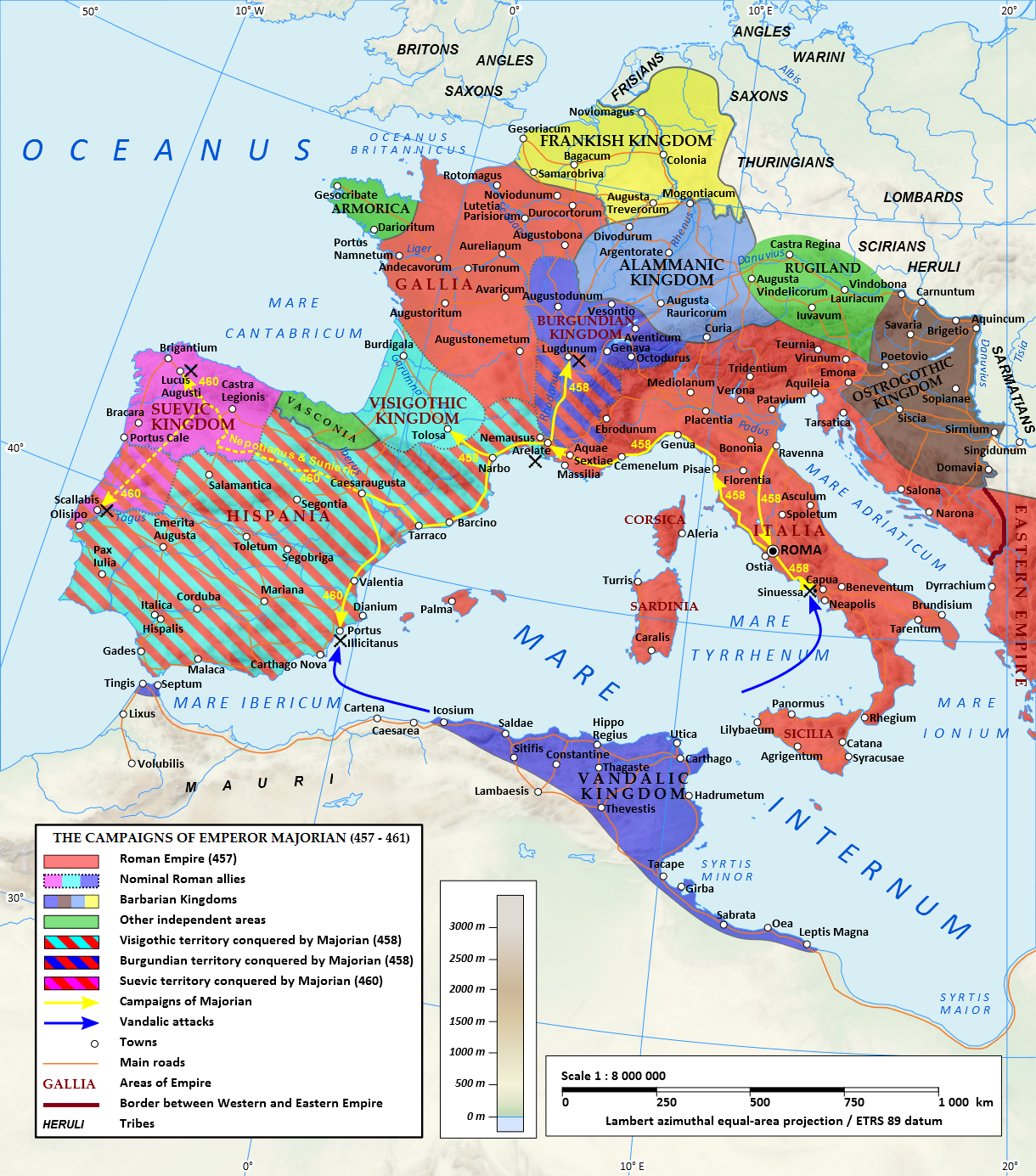
According to a Christian tradition, while Paulinus was bishop of Nola, he used the Church treasure to redeem the inhabitants of the region who had been enslaved by the Vandals during a raid in Southern Italy. Finally, when a widow whose son had been kidnapped by the Vandals came to see him, as there wasn’t enough money left for the ransom, Paulinus sold himself as a slave in exchange of the widow’s son.
In Africa, Paulinus was asked about his skills, and answered that he was a good gardener. He was thus given as a slave to the son-in-law of the Vandal King (probably Gaiseric), who loved gardens. Some time later, the King found out through a dream who this slave really was, and freed him.
This story was told by Pope Gregory the Great, who lived over a century after Paulinus of Nola. Its historicity is doubtful, but the story seems quite plausible, in the light of all the other stories about the life of Paulinus of Nola.