

Français – عربي – ⵜⴰⵎⴰⵣⵉⵖⵜ – English
Gaiseric, the founder of the Vandal Kingdom in North Africa, was a contemporary of another Barbarian king whom the Romans particularly feared: the terrible Attila the Hun, the “scourge of God”. The two men never coordinated their actions against their common enemy, but they both profited from the other’s victories to serve their own goals.
Context

Gaiseric (427-477) was the Vandal King who led his people in their conquest of North Africa. In 429, he crossed the Gibraltar Strait and landed at Tangier. Ten years later, he conquered Carthage and established his capital there.
Attila (434-453) was the King of the Huns, a nomadic people, originally from the Central Asian steppes, who started migrating towards Eastern Europe in the course of the 4th Century. The arrival of the Huns forced the Goths, who were previously settled on the other side of the Danube, to seek refuge in Roman territory. At the beginning of the 5th Century, the Huns reached the borders of the Roman Empire. The Huns were mighty warriors, and Attila was their greatest king.
Attila and Gaiseric against the Romans
Against the Eastern Empire
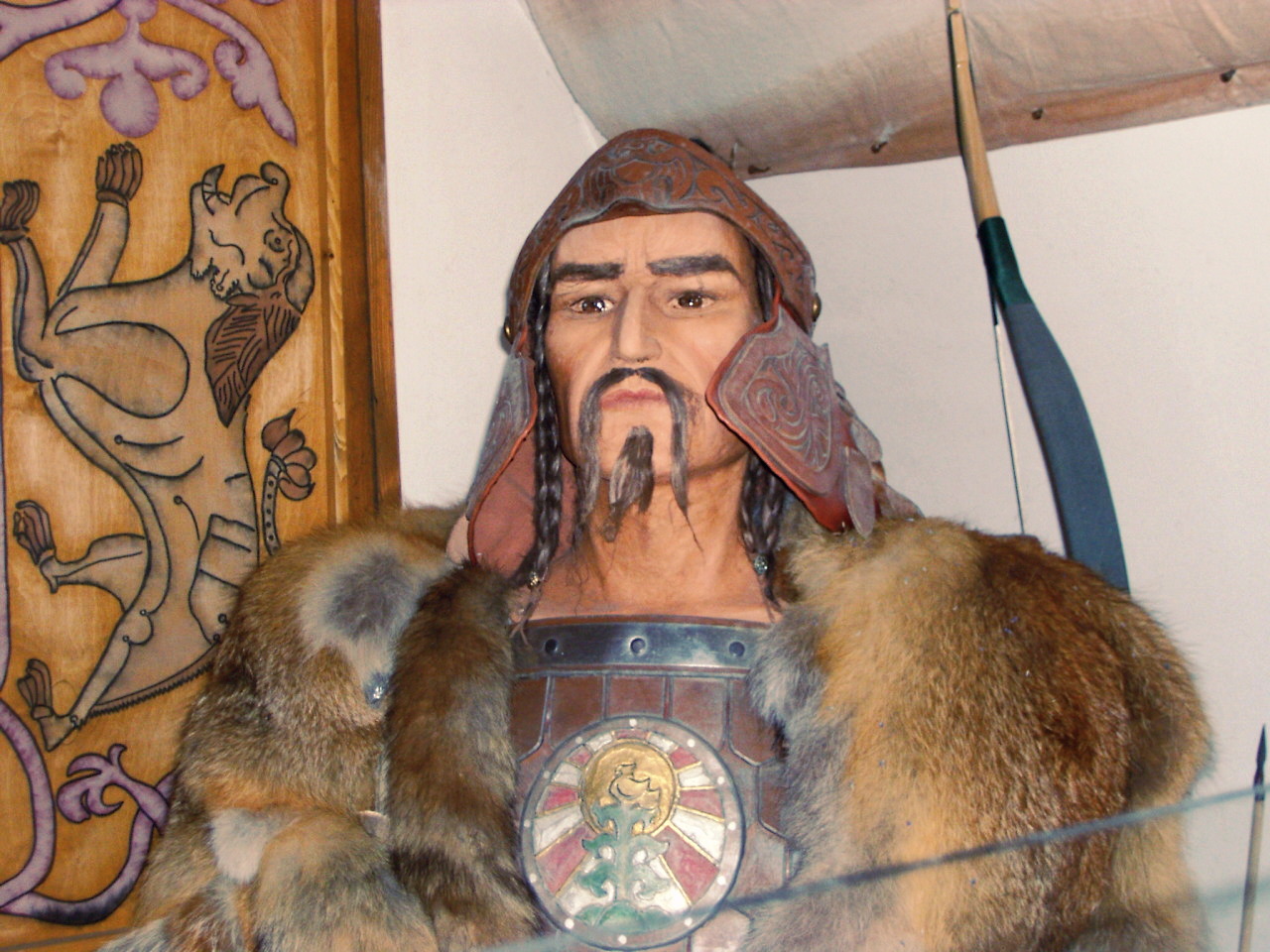
Attila and his brother Bleda reigned together over the Huns since the death of their uncle Rugila, in 435.
In 439, Gaiseric, who had been in peace with the Romans for a few years, attacked Carthage by surprise and conquered the city.
Shortly after, the Huns reappeared at the Roman borders, after an unsuccessful campaign against the Persian Empire. They started attacking Roman merchants on the Northern side of the Danube, and then crossed the Danube and invaded the Roman Empire. The Roman troops that were usually stationed on the Danube had been sent to fight the Vandals in Africa and Sicily, enabling the Huns, led by Attila’s brother Bleda, to move forward quickly in the Balkans without resistance.

To face this new threat, the Eastern Roman Emperor Theodosius II called back his troops that were fighting the Vandals. The Roman retreat enabled Gaiseric to conquer Sicily, Sardinia, Corsica and the Balearic Islands. The Vandal and Hunnic attacks were not coordinated, but they had the effect of weakening the Roman army by forcing them to fight on two fronts simultaneously.
The Hunnic army, equipped with battering rams for the first time in its history, won victory on victory. In 443, the Huns were at the doors of Constantinople. Theodosius was forced to sign a peace treaty and to pay a tribute. The Huns drew back, but they later returned.
Soon after the Hunnic retreat, Bleda was killed by Attila, who became the sole King of the Huns.
Against the Western Empire

In 447, Attila launched another campaign in the Balkans. He advanced all the way to Greece, but was pushed back.

In 450, Honoria, the sister of the Western Roman Emperor Valentinian III, had an affair with a palace servant and became pregnant from him. Her lover was executed and Honoria was forced to marry the Senator Bassus Herculanus. She then sent a letter to Attila, to beseech him to come to save her from this unwanted marriage. With her letter, she sent her engagement ring. Attila interpreted the sending of the ring as a marriage proposal, although this was certainly not Honoria’s intention. Attila decided to invade the Western Roman Empire and fetch his bride.

Gaiseric, always the skillful diplomat, sent him messengers to encourage him to attack Theodoric, the King of the Goths, in Gaul. While Attila’s ambition was to later invade Italy from Gaul, Gaiseric mostly wanted to use him to weaken his old enemy Theodoric. Attila invaded Gaul and wrought much devastation there, forcing Theodoric to make an alliance with Rome. The Romans and Goths fought Attila’s army at the Battle of the Catalaunian Plains, in 451: Theodoric was killed in battle, and Attila forced to withdraw from Gaul, while the Romans won a semblance of victory.
Attila returned in 452, and invaded Italy. At the same time, the new Eastern Roman Emperor Marcian stopped paying the tribute due to the Huns. Attila left Italy and headed to Constantinople.
Gaiseric after Attila
Attila, at the height of his power, died suddenly in 453: during a feast given for his wedding, he got drunk, and then started nose-bleeding and choked in his own blood. His Empire was divided between his sons, and never again became a threat to Rome.

After Attila’s death, Gaiseric became the main enemy of Rome. In 455, Emperor Valentinian III, who had promised his daughter Eudocia in marriage to Gaiseric’s son Huneric, was assassinated. His murderer forced Eudocia to marry his son. Gaiseric took this as a pretext to invade Rome and sack the city. He captured Eudocia, with her mother, and took her to Carthage, where she was married to Huneric.
After the Vandals left, the new Gothic King Theodoric II imposed Avitus, a Senator of Gaulish origin who was close to him, as new Emperor. His successors were submitted to the Goths.
The sack of Rome by Gaiseric contributed a lot to accelerate the decline of the Western Roman Empire, until its final fall: the last Emperor, Romulus Augustulus, was deposed in 476, by the Germanic chief Odoacer. Gaiseric died the following year in Carthage, after a long and happy life: he was 87 years old.

1 thought on “Gaiseric the Vandal and Attila the Hun: a strategic alliance against Rome”