

Français – عربي – ⵜⴰⵎⴰⵣⵉⵖⵜ – English
The Vandals, who invaded North Africa in the 5th Century, practiced Arianism and wanted to force all their subjects to adopt their doctrine. They persecuted the indigenous North African Christians. Several thousand North African Christians were killed for refusing to convert to Arianism.
Context

The Vandals, like other Germanic people, followed the Arian religion, a doctrine considered heretical by the official Christian Church. After the arrival of the Vandals in North Africa, the local believers were bewildered by this new doctrine that they had never faced before: Augustine of Hippo had written a book against Arianism, but not many still understood enough Latin to read it.
Also, unlike the Goths, who were also Arian, but tolerant of other confessions, the Vandals wanted to impose their doctrine onto all their subjects. Because of this, they persecuted the North African Christians, both Catholic and Donatist. Several hundred Christians were put to death for their faith during the Vandal era, and many religious sisters were raped. The bishop Victor of Vita (Beni Derraj), who witnesses those events, wrote a detailed book on the persecutions.
History of the persecutions

After the Vandal conquest of Carthage, bishop Quodvultdeus (his name means “what God wants”) was exiled, together with most other North African bishops. Those bishops were embarked on an old ship without sales or ores, that luckily managed to cross the sea and reach Naples. The exiled bishops settled in Italy. One of them, Gaudiosus, later became bishop of Naples.
After Quodvultdeus’ exile, Carthage remained without a bishop for several years. In 454, the Vandal King Gaiseric, under the pressure of the Roman Emperor Valentinian III, finally agreed to the nomination of a new bishop of Carthage: Deogratias. After the sack of Rome by the Vandals, bishop Deogratias sold all the Church possessions to redeem the Romans who had been kidnapped and sold as slaves in Carthage. He then hosted them in the city’s larger churches before sending them back to Rome. After Deogratias died in 457, there was again no bishop.
Olivia was a Christian woman from Sicily, who was kidnapped by the Vandals and sold as a slave in Tunis, where she was put to death for her faith. Her tomb is now the Zitouna Mosque, in Tunis.
During Gaiseric’s reign, bishop Victor of Cartennae (Tenes, modern-day Algeria) wrote a refutation of Arianism, dedicated to Gaiseric. This book is lost, but its author is mentioned in On Illustrious Men, by Gennadius of Massilia, a collection of short biographies of influential Christian figures.
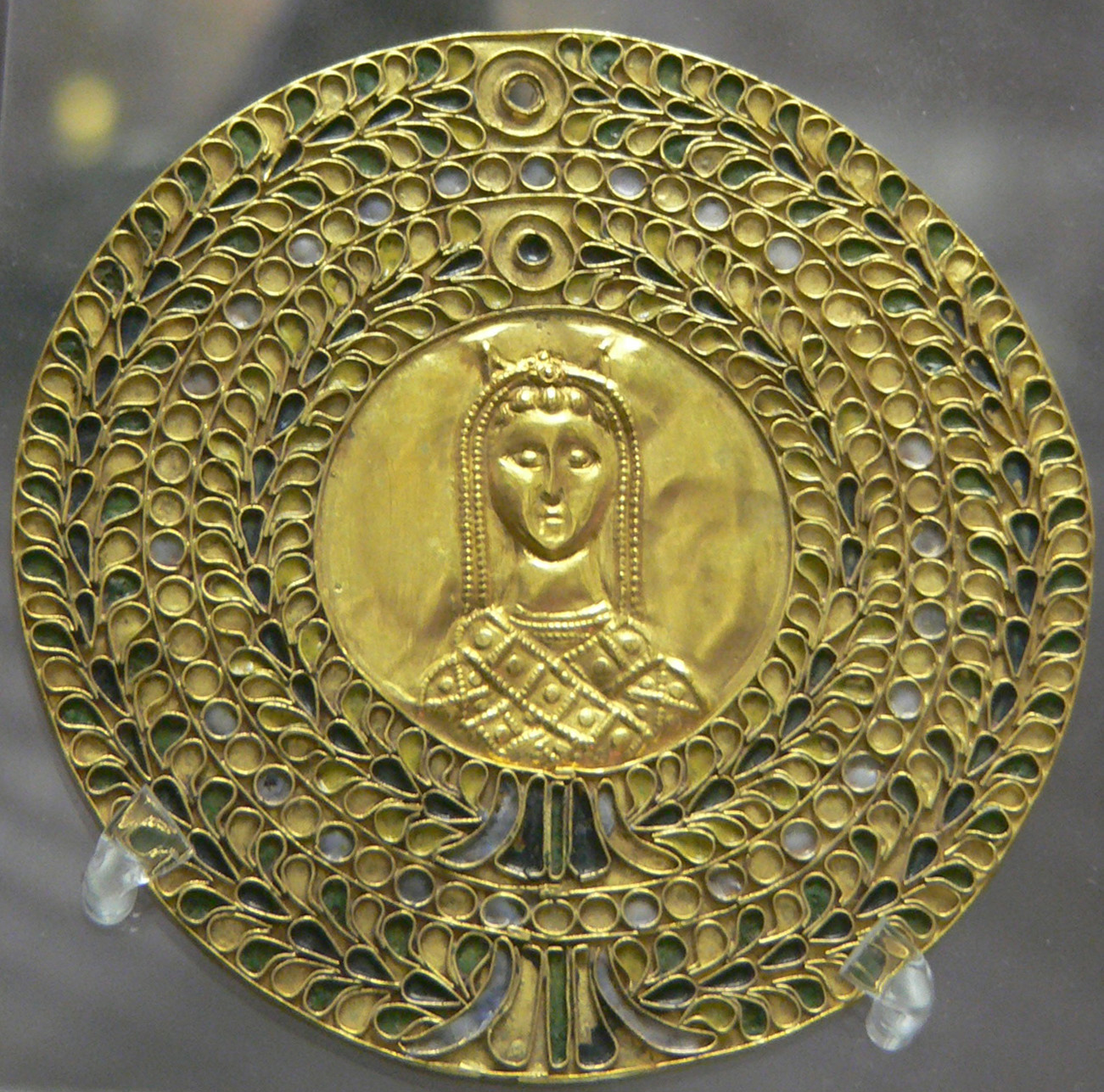

Persecution worsened during the reign of Gaiseric’s son Huneric (477-484). In his early reign, Huneric tried to appease the tensions in his kingdom by allowing the election of a new bishop of Carthage, Eugene, after 24 years of vacancy. Later, however, he resumed his father’s repressive policies. Huneric’s religious policy would be the cause of tension between him and his wife Eudocia, the daughter of the Roman Emperor Valentinian III, who was a Catholic Christian. Eudocia ended up fleeing to Jerusalem, where she died.
In 483, Huneric summoned 466 North African Catholic bishops to Sicca (El Kef), for a public debate with Arian bishops. There, he tried to force them to deny their faith. After they refused, he had them arrested. Victor of Vita recounts how he bribed guards in order to be able to visit the prisoners. In the end, they were deported into the desert. Most of them died on the way, and the survivors were executed on arrival.
The number of victims might be exaggerated, but the facts are certainly true. Only two of those martyrs are known by name: the bishops Felix of Abbir Germaniciana (Henchir en Naam) and Cyprian of Unizibira (Henchir Zembra). Victor of Vita also mentions the daughter of the bishop of Zuritana (Ain Djour), who was imprisoned together with her son.

In 484, Frumentius, a Carthaginian salesman, and Victorian, the proconsul of Hadrumetum (Sousse), were put to death for their faith in Hadrumetum.
The same year, bishop Laetus of Nepta (Nefta) was burned alive by the King’s orders. 50 years later, Laetus reportedly appeared in a dream to the Byzantine Emperor Justinian, imploring him to deliver North Africa from the Vandals.
The inhabitants of Tipasa, after refusing to convert to Arianism, had their right hand and their tongue cut off. According to Victor of Vita, they miraculously continued talking and confessing their faith.
Victor of Vita also mentions three monks from Gafsa, who were put to death for refusing to convert to Arianism.
Other believers were sold into slavery by the Vandals, to Amazigh tribes inside the continent. Victor of Vita writes that some of these tribes converted to Christianity through those slaves. This was the case especially for the Caprapicti tribe of Southern Tunisia. The legendary Christian roots of certain Amazigh tribes like the Sanhaja of the Rif or the Regraga to the North of Essaouira might go back to such captives.
The storm calms down
King Gunthamund (484-496), Huneric’s successor, ended the persecutions. Victor of Vita’s book was probably written during his reign.

Gunthamund’s successor Thrasamund (496-523), hoping to eradicate Catholicism in his Kingdom without violence, forbid the nomination of new bishops after the standing bishop’s death. Around 504, bishop Victor of Vita, the author of the book on the history of the persecutions, ordained Fulgentius bishop of Ruspe (Henchir Sbia). He then was exiled to Sardinia for disobeying the royal prohibition, and died in exile in 510. In the following years, Fulgentius of Ruspe became the most influential figure of North African Catholicism. He had public debates with Arian bishops and wrote books against Arianism. He was exiled several times, but remained committed to his cause until his death in 527.
In 523, Hilderic (523-530), son of Huneric and Eudocia, became the King of the Vandals. Hilderic, whose mother was Catholic, led a policy of religious tolerance. A new bishop of Carthage, Bonifatius, was named, and Fulgentius of Ruspe was allowed to return from exile and preach the Catholic doctrine. During Hilderic’s reign, the Vandals started converting to Catholicism.
