

Français – عربي – ⵜⴰⵎⴰⵣⵉⵖⵜ – English
In all the Roman world, the rapid growth of Christianity and its radically new dogma caused much hostility. While North Africa was an especially fertile field for the Christian gospel, persecutions were also particularly strong there. During the first centuries of the Christian era, many North African Christians paid their lives for their faith.
Context

Why were the Roman authorities persecuting the first Christians?
Roman society was polytheistic and quite tolerant in terms of religion: the Romans had their own gods, but they also “borrowed” the gods of the other people they conquered. The problem with Christianity was its exclusivity: the Christians irritated their pagan contemporaries by proclaiming that their God was the one true God and all other gods were nothing but idols.
Another problem was the imperial cult: while the Emperor was considered divine, and acted as an intermediary between gods and men, Christians (and Jews) refused to worship a mere man. In a society where ceremonies and sacrifices in honor of the Emperor were the base of civil life, not taking part was both a political and religious crime. Finally, the Christian idea that all men were equal before God was a threat to the ancient social order.
When the Roman authorities arrested Christians, they commanded them to deny their faith by offering a sacrifice to the Emperor. If they refused, they could be executed for rebellion against the Emperor. However, Christians weren’t afraid of dying: death was the fulfillment of their hope, their entry into eternal life.
The first North African martyrs

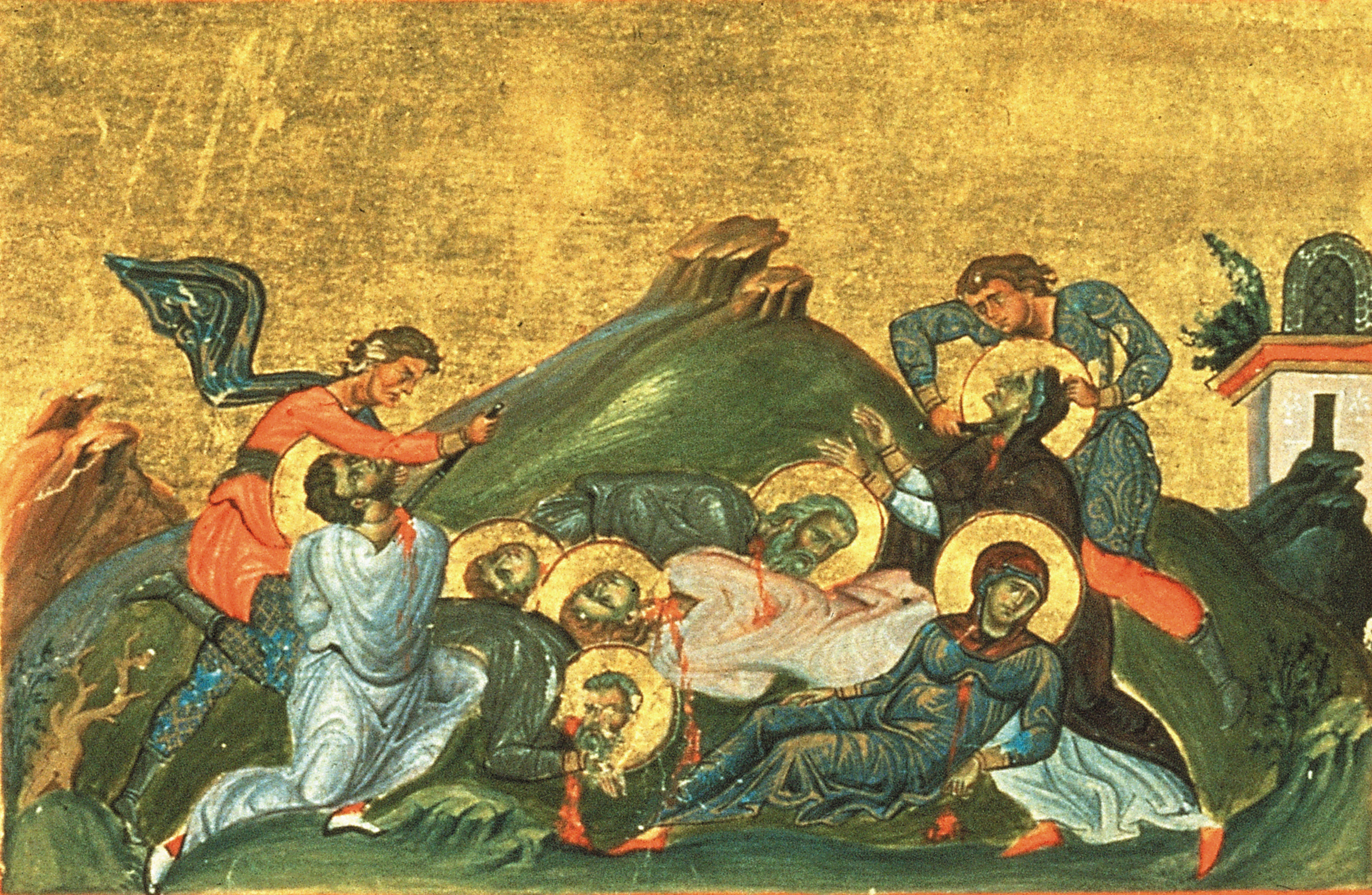
The first Christian martyrs in North Africa were a group of 12 believers who were put to death in Scillium (Kasserine, modern-day Tunisia) in 180. A 4th-Century letter written to bishop Augustine of Hippo mentions four other believers who were reportedly martyred in Madaura (M’daourouch, modern-day Algeria), around the same time. However, this is a late source, which makes it doubtful.
The Scillitan martyrs were seven men: Speratus, Nartzalus, Cittinus, Veturius, Felix, Aquilinus and Laetantius, and five women: Januaria, Generosa, Vestia, Donata and Secunda. Their names show that they had Amazigh, Punic and Roman origins, the three main groups composing the North African society.
The story of their martyrdom can be read online on this page. It is the oldest North African Christian text. When interrogated by the Roman civil authorities, the group of Christians – Speratus was their speaker – insisted that they were good citizens, who paid taxes and didn’t harm anyone. Their answer to the Roman proconsul who commanded them to sacrifice to the Emperor sums up the spirit of so many other Christian martyrs after them: “We honor Caesar as Caesar, but we fear only God.” As they refused, they were killed.
The Carthaginian martyrs

Among the most famous of all martyrs, Perpetua and her slave Felicity were put to death in Carthage around 203. Perpetua was a young, 22-year-old noblewoman and the mother of a newborn child, while Felicity was pregnant. We don’t know how the two women became Christian, but the story of their martyrdom clearly shows that since they shared the same faith, they no longer saw each other as mistress and slave, but as two sisters.
The story of their martyrdom starts with a visit of Perpetua’s father, a local dignitary, to his daughter in prison, to beseech her to renounce her faith. Perpetua refuses to let herself be swayed by her father’s cries or by her worries for her own child: her faith in Christ was so strong that not even death would separate her from him.
Before her execution, she had a vision: she saw herself climb a ladder, with a serpent at the feet of the ladder, but the serpent did not harm her. When she arrived to the top of the ladder, she found herself in a beautiful garden. She understood that she would die for her faith, but then enter paradise after her death.
Finally, Perpetua and Felicity, together with other believers, were devoured by wild animals in the arena.
Other North African martyrs
The bishop Cyprian of Carthage was martyred in 259, followed by eight other Christians, Montanus, Lucius, Flavian, Julian, Victoricus, Primolus, Rhenus and Donatian.
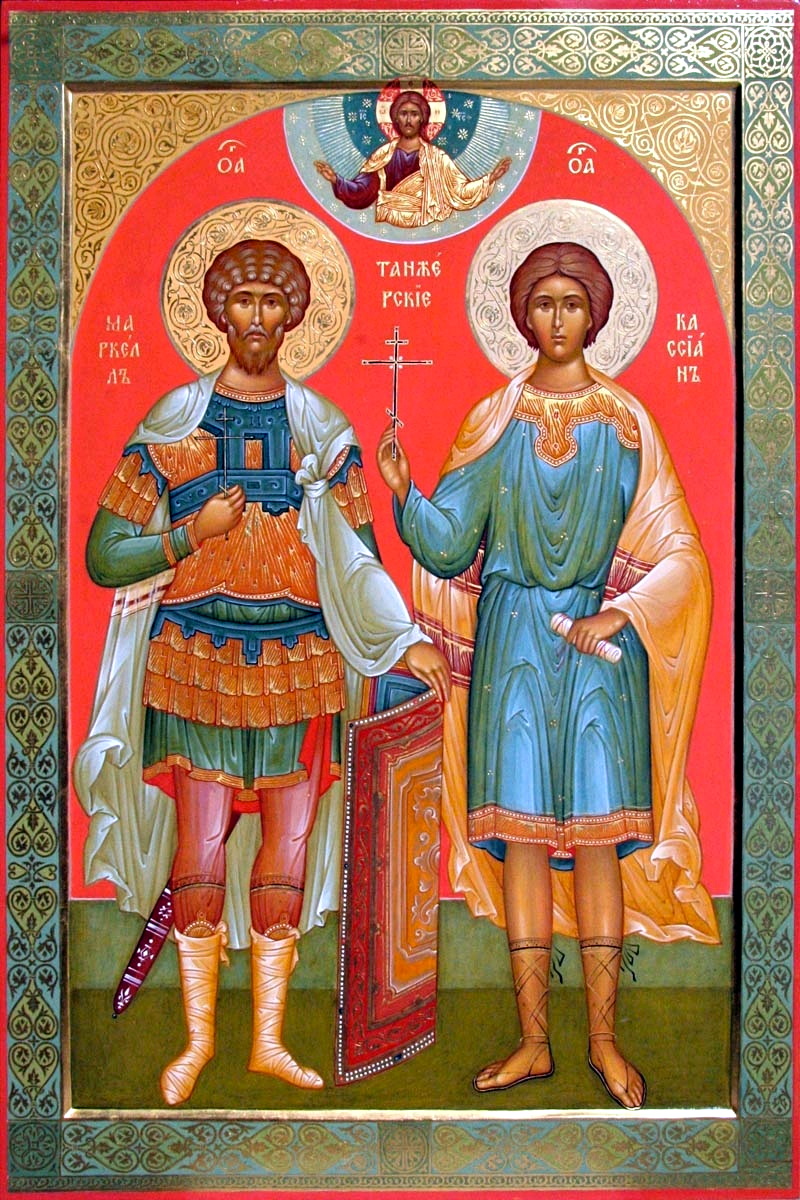
Marcellus was a centurion in the Roman army, based in Tingis (Tangier). In 298, because of his Christian faith, he refused to take part in the ceremonies organised for the birthday of Emperor Maximian. He was judged by a military court, sentenced to death and beheaded. Cassian, the court clerk, was so much impressed by his courage that he converted during the trial, refused to write down the unjust sentence, and was executed together with Marcellus.
Victor the Moor, a Christian soldier from Mauretania, who was serving in the Praetorian Guard, was martyred in 304, in Milano, Italy.

Later during the 4th Century, Fabia Salsa, a young, 14-year-old Christian girl, was killed for her faith in Tipasa, modern-day Algeria. According to the legend, her pagan parents brought her to a celebration in honor of a local god, represented by a bronze dragon. Seeing such idolatry made her so furious that during the night, she threw the dragon’s head into the sea. The next day, she was stoned and her body thrown into the sea, but a Gaulish seaman who happened to be passing by found her body and buried her. This legend is more recent, and thus certainly less historical than older martyrs’ accounts, but there is no reason to doubt that this young girl was indeed killed for her faith in Tipasa. The Saint-Salsa Basilica exists in Tipaza today.
Finally, after the Vandal conquest of North Africa, the Vandals, who adhered to the Arian doctrine, also persecuted the North African Christians. Several hundreds, including many bishops, but also ordinary believers, were put to death for their faith. One of those martyrs of the Vandal era, Olivia, gave her name to the Zitouna Mosque, in Tunis, which is built on her tomb.
The blood of the martyrs: a seed
The unshakable faith of the Christian martyrs, who were ready to die rather than recant, impressed all those who saw them and won new souls to their faith. The Christian author Tertullian of Carthage expressed it this way: “The blood of the martyrs is the seed of the Church.”

1 thought on “The Christian martyrs: their blood is a seed”