

Français – عربي – ⵜⴰⵎⴰⵣⵉⵖⵜ – English
Priscian of Caesarea was a 6th-Century grammarian. Born in Caesarea (Cherchell), Mauretania, he taught Latin grammar in Constantinople, the new Imperial capital.
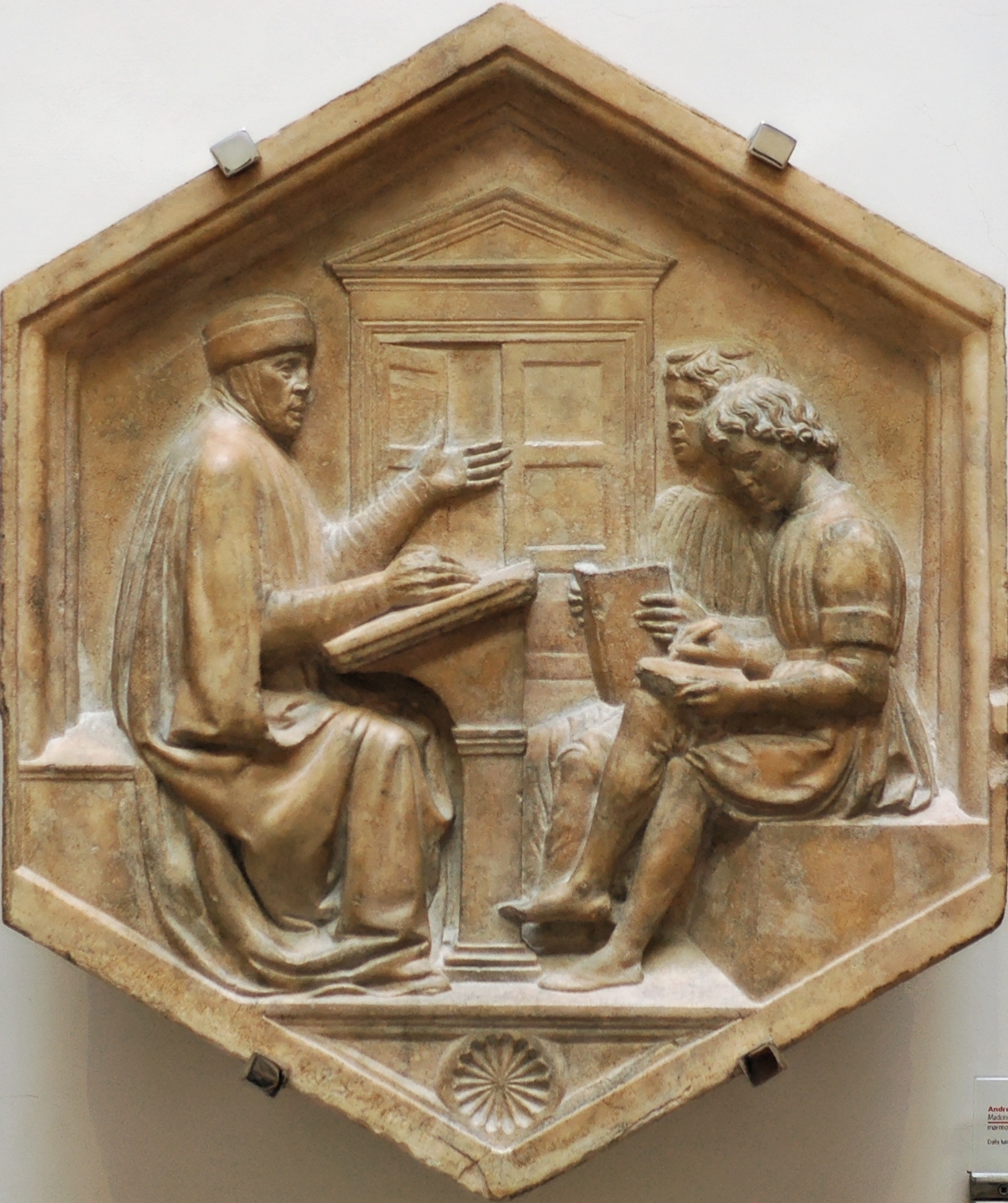
Priscian was born around 470, in Caesarea (Cherchell), Mauretania. He was probably of Greek origin. Although he was a Christian, his works contain many references to ancient Greek mythology.

At the time, North Africa was occupied by the Vandals. As a young man, Priscian fled his native region and settled in Constantinople, the capital of the Byzantine Empire, where he taught grammar. Anastasius, the Byzantine Emperor at the time (491-518), led a policy of welcoming Romans who had been uprooted by the fall of the Western Roman Empire. Priscian wrote a panegyric of Anastasius, praising his good will towards those refugees.
The most well-known of Priscian’s works was his Institutes of grammar, a systematic exposition of Latin grammar, in 18 books. In this work, Priscian uses quotes of Latin authors as examples of the grammatical rules he exposes. Those quotes preserved fragments of authors whose work would otherwise be lost.
The Institutes of grammar were used during all the Middle Age to teach Latin, together with the Ars Grammatica, written by Aelius Donatus, another North African grammarian: Aelius Donatus was used as an introduction, while Priscian, whose work was more detailed, served for deeper study.
