

Français – عربي – ⵜⴰⵎⴰⵣⵉⵖⵜ – English
In the early 5th Century, the Roman Empire was weakened by the Barbarian invasions. Bonifatius, the last Roman governor of Africa, was an important actor of the Roman wars during these decades. His defeat against the Vandals marks the end of Roman Africa.
Context

Emperor Theodosius the Great, who is known mostly for establishing Christianity as the official religion of his Empire, died in 395. After his death, the Roman Empire was divided between his sons: Arcadius (395-408) in the East, Honorius (395-423) in the West. The two new Emperors were young and inexperienced, especially Honorius, who was only 10 years old when his father died. Stilicho, a general with Germanic origins, ensured the regency, until he was executed in 408.
At the same time, the invasions of Roman territory by foreign populations, which started in the 3rd Century, were continuing. In 406, the Vandals crossed the Rhine, entered Gaul, and devastated the country. In 409, they settled in Spain. The following year, the Goths, led by their King Alaric, sacked Rome, the Imperial capital. Galla Placidia, the Emperor’s sister, was kidnapped and forcibly married to Athaulf, Alaric’s successor.
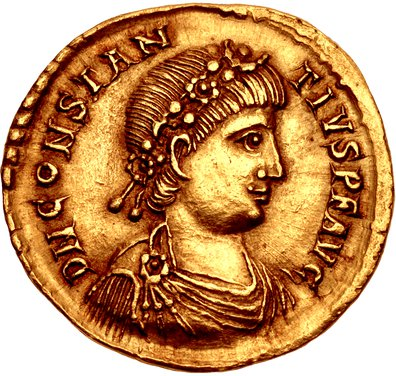
The Roman general Constantius, who was made commander-in-chief of the Roman army in 411, led a military campaign in Gaul and Northern Spain, first against the usurper Constantine, and then against the Goths. He managed to expel the Goths out of Gaul and to free Galla Placidia. As a reward, Emperor Honorius gave him Galla Placidia as his wife, and then named him co-Emperor in 421, under the name Constantius III. He died a few months later.
Bonifatius, the last Roman governor of Africa

Bonifatius, the future last governor of Roman Africa, became known as an officer under Constantius during his campaign against the Goths. In 413, he won a victory against the Goths in Massalia; in this battle, he reportedly wounded the Gothic King Athaulf himself.
A few years later, he commanded a regiment of soldiers of Gothic origin in Africa, where he fought a Moorish revolt. In those years, he became friends with bishop Augustine of Hippo, with whom he discussed theological questions.
In 422, he was called back to the imperial court, where he got married. His wife had Gothic origins.
The same year, Bonifatius, together with another military officer, Castinus, were charged with organizing a campaign against the Vandals in Spain. Bonifatius finally didn’t take part in this campaign, because of the tension between him and Castinus. He withdrew to Africa, where he was named comes (count, governor-general) of the Roman diocese of Africa.

Emperor Honorius died in 423. As he didn’t have a son, his successor wasn’t announced right away. During the interregnum, Bonifatius’ rival Castinus proclaimed Joannes, a high official, as new Emperor. The Theodosian dynasty, led by Galla Placidia, refused this nomination. Bonifatius, loyal to the Theodosians, cut the supply of African wheat to Rome. Joannes sent troops to Africa to fight Bonifatius, but couldn’t overthrow him.
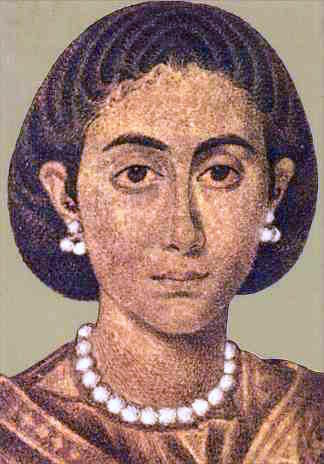
Joannes was finally defeated by the Eastern Emperor Theodosius II in 425. Valentinian III, son of Constantius II and Galla Placidia, was chosen as the new Western Emperor. As he was only 6 years old, his mother Galla Placidia ensured the regency. Bonifatius was rewarded for his loyalty to the Theodosian dynasty: this was the zenith of his career.
However, Bonifatius would quickly fall into disfavor: two years later, in 427, he was accused of plotting to form his own Empire in Africa. Galla Placidia summoned him to the Imperial court to answer for these accusations, but Bonifatius refused to go. Galla Placidia then sent an army against him. After two years of fighting, Bonifatius could finally prove that the accusations against him were false, thus regaining the Empress’ favour.

In 429, the Vandals crossed the Strait of Gibraltar and invaded Africa. Some sources claim that Bonifatius himself invited the Vandals into Africa, to avenge himself from the Imperial family. In 430, the Roman troops, led by Bonifatius, were defeated at the Battle of Calama (Guelma). After another defeat in 432, Bonifatius was relieved of his function. The Vandals conquered Carthage in 439: Roman domination over North Africa was ended.
Back in Italy, Bonifatius was charged by Galla Placidia with confronting the powerful Roman general Aetius, who was threatening revolt. Aetius, a former ally of Castinus and Joannes, also stood behind the accusations against Bonifatius when he was governor of Africa. Bonifatius was victorious, but he was wounded to death in battle. He died close to the end of the year 432.

1 thought on “Bonifatius: the last Roman governor of Africa”