Roman North Africa, The late Roman Empire, The Vandals in North Africa

The Battle of Cape Bon: the last Roman defeat in Africa

Français – عربي – ⵜⴰⵎⴰⵣⵉⵖⵜ – English

Roman domination over North Africa, which lasted over four centuries, ended with the Vandal conquest of the region. The loss of Africa, the Empire’s bread-basket, was a hard blow for the Romans, who tried several times to take back the region. In 468, the Western and Eastern Roman Emperors came together for a military campaign against the Vandals. Their defeat at the Battle of Cape Bon was the last Roman attempt to reconquer Africa.

Context

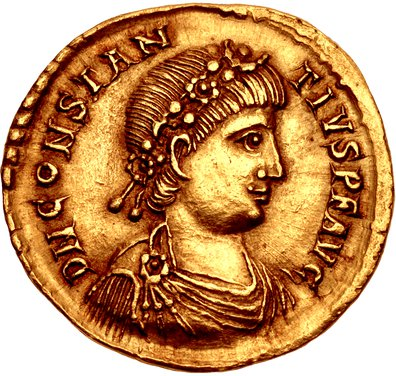
Gold coin with the effigy of Majorian

During the reign of Emperor Majorian (457-461), the Roman Empire reconquered Spain. Majorian wanted to continue by taking back North Africa from the Vandals, but failed. His officer Marcellinus managed to reconquer Sicily.

In 467, the Vandal King Gaiseric tried to invade the Peloponnese. With the Vandal fleet spreading further and further East, the Romans feared an attack against Alexandria. The Eastern Emperor Leo I, who had previously been hesitant to support the Western Empire against the Vandals, finally decided to intervene.

The Roman offensive

The Western Emperor Anthemius, the Eastern Emperor Leo I, and Marcellinus, a military officer who controlled a semi-autonomous territory in Illyria, came together in Sicily, to prepare a vast common offensive against Carthage.

Gold coin with the effigy of Basiliscus

The Romans decided to attack the Vandals on three fronts : Basiliscus, the commander of the Eastern Roman army, would attack Carthage by sea with the major part of the troops; Marcellinus would attack Sardinia from Sicily, and then join Basiliscus; while Heraclius, the governor of Egypt, would attack Carthage from the East, via Libya.

Marcellinus conquered Sardinia, while Heraclius took control of Tripolitania. Basiliscus’ fleet anchored close to Cape Bon and waited for Marcellinus. However, a large part of Marcellinus’ fleet, led by Ricimer, a general with Germanic origins, refused to leave. Ricimer might have deliberately tried to sabotage the operation.

The Roman landing on Cape Bon was one of the largest military operations of this kind in ancient history: over 50.000 fighters and a thousand ships participated.

The Vandal King Gaiseric asked for a truce to negotiate. During this time, the Vandals filled their ships with flammable materials, and then, at night, they set fire to their ships and projected them against the Roman fleet, which was taken by surprise. Over half the Roman fleet was burned.

Later on

Basiliscus and Marcellinus fled to Sicily with the survivors of their army, while Heraclius fled across the Libyan desert. In Sicily, Marcellinus was assassinated by Ricimer.

Julius Nepos, the nephew of Marcellinus, became Western Emperor from 474 to 475. Basiliscus became Eastern Emperor in 475-476.

This Roman defeat was the last step in the decline of the Western Roman Empire, which was now limited to Italy and Sicily. The last Emperor, Romulus Augustulus, was deposed in 476, by the German chief Odoacer.

Roman North Africa, The late Roman Empire

Olybrius: Emperor and friend of the Vandals

Français – عربي – ⵜⴰⵎⴰⵣⵉⵖⵜ – English

Olybrius, one of the last Roman Emperors, was allied by marriage to Gaiseric, the Vandal King of Carthage. He tried to take power several times with Vandal support, and finally reigned for a few months in 472.

Gold coin with the effigy of Olybrius

Anicius Olybrius was born in Rome, in an ancient noble family. He married Placidia, the daughter of Emperor Valentinian III, shortly before the sack of Rome by the Vandals. It is also possible that Olybrius and Placidia were only engaged and got married after Placidia returned to Rome.

In 455, Placidia was taken as a prisoner to Carthage by the Vandals, together with her sister Eudocia, who was married to Huneric, the son of the Vandal King Gaiseric. Placidia was freed in 461.

After the death of Emperor Majorian in 461, the new master of the Empire was general Ricimer, who could not become Emperor himself because of his Germanic origins. Olybrius claimed the Imperial throne. He was supported by Gaiseric, who hoped that his reign would be favorable to Vandal interests. However, Ricimer chose another Emperor, Libius Severus. Olybrius became consul in 464.

Reverse of a gold coin with the effigy of Olybrius: Christian cross surrounded by laurels

After Libius Severus died in 465, Olybrius claimed the throne again, still with Gaiseric’s support, but Anthemius was chosen instead of him. Olybrius finally succeeded in his third attempt to become Emperor, after Anthemius died in 472. Ricimer, who controlled the nomination of all Emperors since Majorian, died shortly after Olybrius’ accession to the throne.

Olybrius, through his marriage to Placidia, was the heir of the Theodosian dynasty, the last great Roman Imperial dynasty. His reign was short and uneventful. He had the reputation of being a devout Christian. The fact that the coins with his effigy show him without a spear of helmet seems to show that he didn’t have a strong interest for military affairs. Olybrius died of dropsy after four months on the throne.

The French word “olibrius”, which means a pompous and ridiculous person, comes from this Emperor’s historical reputation, due to his short reign, without any significant events.

Roman North Africa, The late Roman Empire

Majorian: The Roman Emperor Who Tried to Reconquer North Africa

Français – عربي – ⵜⴰⵎⴰⵣⵉⵖⵜ – English

Translation: Ibrahim Ait Dami

Roman rule over North Africa, which had lasted more than four centuries, collapsed when the Vandals invaded the region. About thirty years later, a new Emperor, Majorian, led a campaign that allowed him to retake control of Spain. He then wanted to reconquer North Africa, but he lacked the means to do so.

Background

Gold coin bearing the image of Avitus

After the Vandals sacked Rome in 455, the Roman Empire was weaker than ever. The Gothic king Theodoric II imposed Avitus, a senator of Gallic origin who was close to him, as the new Emperor. During Avitus’s reign, the Goths invaded Spain, officially to bring the region back under Roman rule, but in reality for their own benefit. Abandoned by Theodoric, Avitus was killed in 456, after a year on the throne.

Majorian: Make Rome Great Again

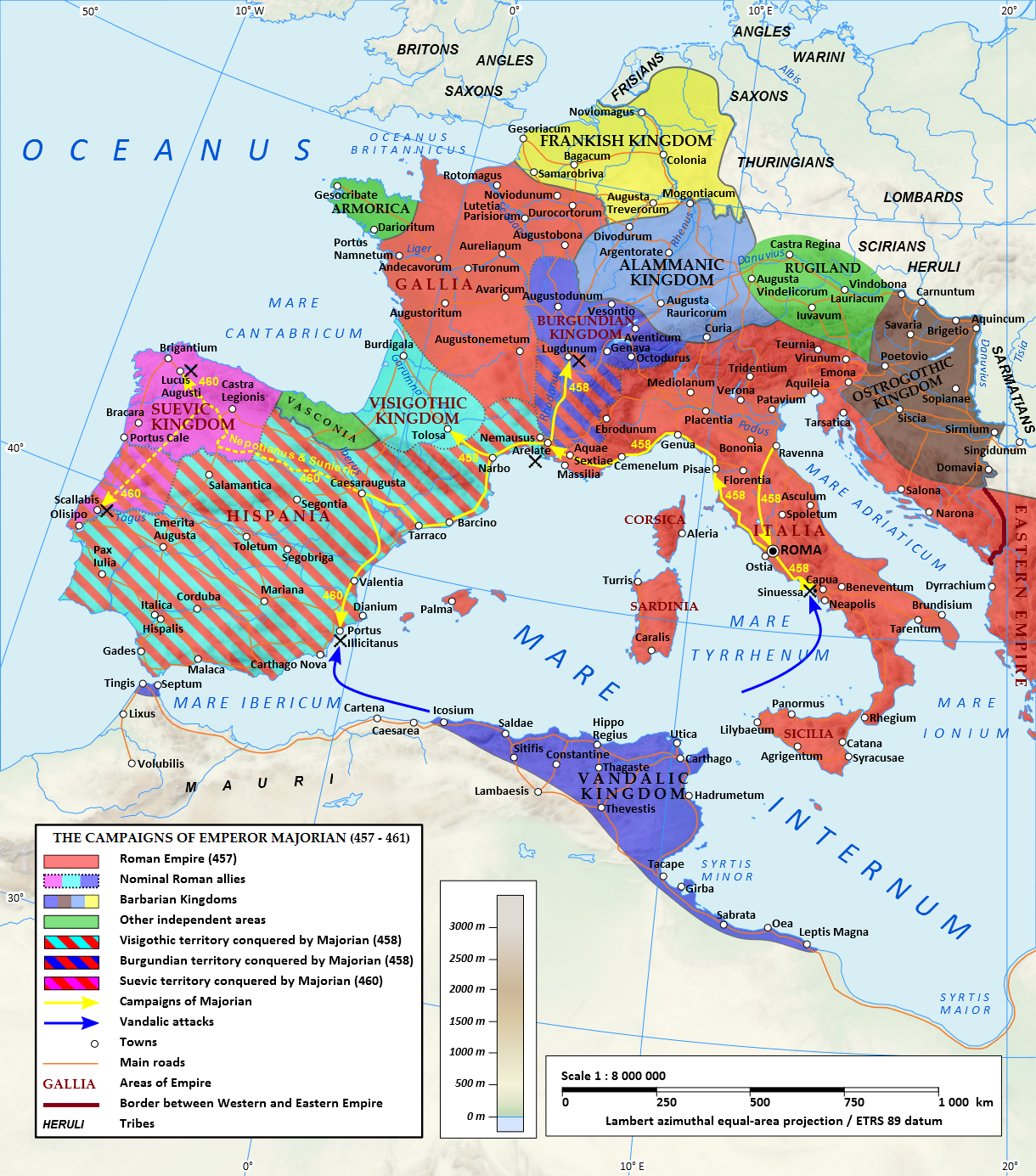
Territories reconquered by Majorian – click to zoom

General Majorian, who proclaimed himself Emperor, decided to launch a vast campaign to reconquer the territories Rome had lost. He began by driving the Burgundians out of southern Gaul, then turned on the Goths in Spain. Within three years, he had retaken control of most of Spain. He also sent his officer Marcellinus to recapture Sicily from the Vandals.

Majorian wanted to use Spain as a base from which to attack the Vandals in Africa. But during his Spanish campaign, the Vandals managed to destroy the ships he was preparing for the invasion. Deprived of his fleet, Majorian was forced to cancel his plans. In 460, he concluded a peace treaty with the Vandal king Gaiseric and disbanded his troops.

On his return to Italy, Majorian was captured by Ricimer, a Roman general of Germanic origin. He was assassinated in 461.

Aftermath

Seal of Ricimer

For the following years, Ricimer, who could not become Emperor himself because of his Germanic origins, was the true master of the Empire, until his death in 472. The Emperors who reigned during these years were mere puppets. One of them, Olybrius, was linked by marriage to the Vandal king Gaiseric.

The last Roman emperor, Romulus Augustulus, was deposed in 476 by the Germanic chieftain Odoacer: this marked the end of the Roman Empire.

Roman North Africa, The late Roman Empire

Zerco: the Moorish dwarf of the King of the Huns

Français – عربي – ⵜⴰⵎⴰⵣⵉⵖⵜ – English

Zerco was a Moorish dwarf, and the slave and jester of Attila the Hun. Because his appearance was considered comical, he was used to entertain his master’s army. In this less than enviable life, Zerco managed to make himself popular with the Huns, and to transform his weakness into a strength that enabled him to take control of his destiny.

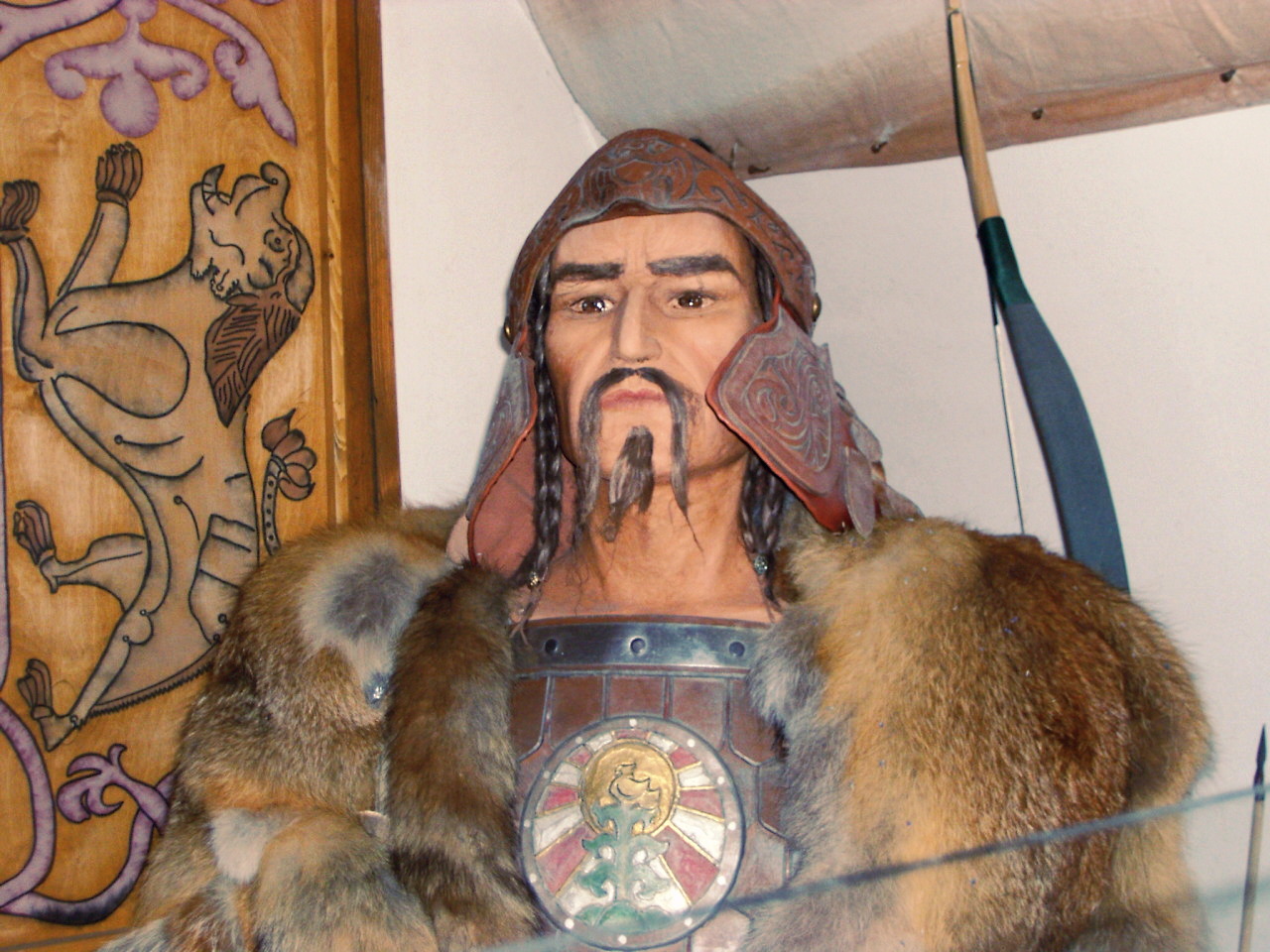
Zerco – Image created by ChatGTP

Zerco was from Mauretania. He was short, had a hunchback, twisted feet and a flat nose. Because of his appearance, he was sold as a slave for his masters’ amusement.

Zerco’s first master was the Roman general Aspar, who bought him in 432, during his military campaign against the Vandals with Bonifatius, the Roman governor of Africa. Zerco went to Constantinople with Aspar, and then accompanied his master in his military campaigns.

Around 442, Zerco was captured by the Huns. Bleda, the brother of Attila, became his new master. Bleda was so fascinated by Zerco that he took him everywhere with him. He even had a special armor made for him, that fitted his anatomy. One day, Zerco fled with other prisoners. Bleda let the others run away, but took Zerco back. When Bleda askec him why he had fled, Zerco said he wanted to find a wife, and Bleda married him to a maid of the Queen.

After Bleda died, Attila inherited Zerco. Unlike Bleda, Attila hated Zerco; but he was too popular in the army to get rid of him.

After some time, Attila offered Zerco to the Roman general Aetius, as a gift to seal a peace agreement. Aetius gave him back to his former master Aspar. However, Zerco still wished to return to the Huns. When a Roman delegation led by the diplomat and historian Priscus was sent to Attila, he asked for permission to go with them, but his request was denied. It is Priscus who mentions Zerco in his writings.

Zerco probably finished his life in Constantinople. Nothing more is known about him.

Why write about this?
We strongly condemn any kind of abuse against disabled people, even more so for entertainment.
However, such practices sadly existed. Mentioning it does not mean approving it.
Zerco is part of the history of North Africa. As we publish this article, our hope is that his story, the dignity he found in his unhappy life, would be a source of inspiration for others.
The Vandals in North Africa, The late Roman Empire

Eudocia: a Roman Princess in Carthage

Français – عربي – ⵜⴰⵎⴰⵣⵉⵖⵜ – English

Eudocia was the daughter of the Roman Emperor Valentinian III. As the wife of Huneric, son of the Vandal King Gaiseric, she lived in Carthage and was destined to become Queen of the Vandals of Carthage. Later on, her son Hilderic becale King of the Vandals.

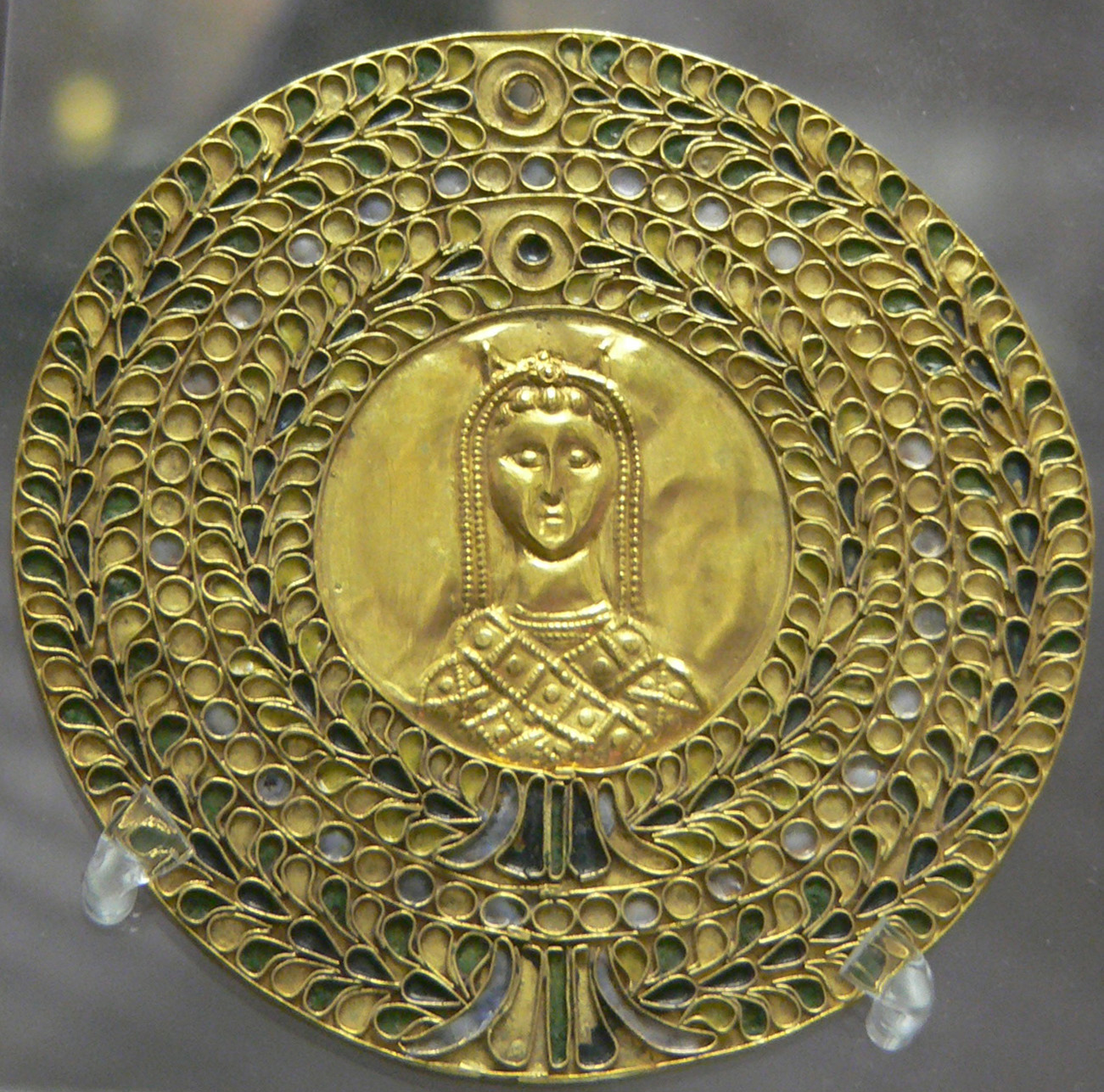
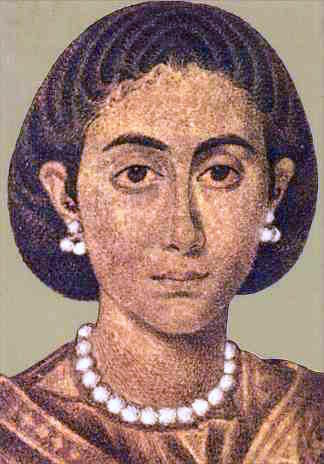
Eudocia

Origins and childhood

Bust of Valentinian III, Eudocia’s father

Eudocia was born in Rome around 440. She was the eldest daughter of the Roman Emperor Valentinian III and his wife Licinia Eudoxia. She was of pure Imperial blood on both sides of her family: her father was the son of the Roman general Constantius and Galla Placidia, daughter of Emperor Theodosius the Great, while her mother was the daughter of the Eastern Roman Emperor Theodosius II.

In 442, the Roman Empire concluded a peace treaty with the Vandals, recognizing their sovereignty over North Africa. To seal this agreement, Eudocia, who was just a child, was promised in marriage to Huneric, the son of the Vandal King Gaiseric.

Eudocia in Carthage

In 455, Valentinian III was assassinated by the Senator Petronius Maximus, who took the throne. The new Emperor married Valentinian III’s widow Licinia Eudoxia, and forced their daughter Eudocia to marry his son Palladius.

Coin with the effigy of Huneric

To the Vandals, the broken engagement between Eudocia and Huneric invalidated the peace treaty. When the Vandal King Gaiseric heard the news, he decided to attack Rome and pillaged the city. Eudocia, together with her mother and her sister Placidia, was kidnapped and taken prisoner to Carthage, where she was married to Huneric.

Little is known about the years Eudocia spent in Carthage. We only know that her relationship with her husband Huneric was difficult. Apart from the fact that Eudocia was forced to marry Huneric against her will, the main reason for the tensions between them was their religious difference: Huneric was an Arian, Eudocia a Catholic Christian.

Coin with the effigy of Hilderic

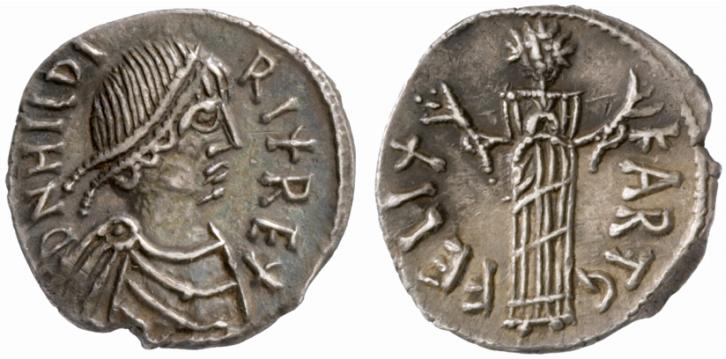
Around 460, Eudocia gave birth to a son, Hilderic. Shortly after Hilderic was born, Eudocia, who could no longer stand the tensions with her husband, decided to leave Carthage. Eudocia thus never became Queen of the Vandals, as she left Huneric before he became King. Her son Hilderic grew up at his father’s court and became King of the Vandals from 523 to 530.

Eudoxia, Eudocia’s grandmother

After her departure from Carthage, Eudocia settled in Jerusalem, where her grandmother Eudoxia, the wife of the Eastern Roman Emperor Theodosius II, had a domain. Eudoxia, a famous Hellenistic poetess, had been exiled from the Imperial court after she was falsely accused of being unfaithful to her husband. She then retired to Jerusalem, where she devoted the last years of her life to her literary work and to religion. When Eudocia arrived in Jerusalem, her grandmother was already dead, but she settled on her domain. At her death, she was buried in her grandmother’s tomb.

Roman North Africa, The late Roman Empire, The Vandals in North Africa

The revenge of the Vandals: Gaiseric sacks Rome

Français – عربي – ⵜⴰⵎⴰⵣⵉⵖⵜ – English

At the beginning of the 5th Century, the Vandals, a Germanic people, invaded North Africa, putting an end to more than four centuries of Roman domination over the region. In 455, the Vandal King Gaiseric entered Rome, sacked the city, and kidnapped the daughter of Emperor Valentinian III, who became his son’s wife.

Context

In the 5th Century, the Roman Empire was divided between its Eastern and Western parts, and weakened by a long series of wars against new foreign populations – often Germanic – that weakened its territory. One of these tribes, the Goths, sacked Rome in 410. It was the first time that the Imperial capital was taken by a foreign army.

Vandal Kingdom

The Vandals settled in Spain, and then crossed the Gibraltar Strait in 429 and invaded North Africa. In 439, they founded a Kingdom, with Carthage as its capital. A peace treaty was concluded in 442, through which Rome recognized the Vandal control over Africa. Roman Emperor Valentinian III promised his daughter Eudocia in marriage to Huneric, the son of the Vandal King Gaiseric.

In 455, Valentinian III was assassinated by Petronius Maximus, who seized the throne. The new Emperor married Licinia Eudoxia, Valentinian III’s widow, and forced their daughter Eudocia to marry his son Palladius. To Gaiseric, the breaking of Eudocia’s engagement to his son Huneric invalidated the peace treaty. When Licinia Eudoxia called on him to avenge her husband, Gaiseric decided to attack Rome.

The Vandals in Rome

Sack of Rome by the Vandals

The Vandals set sail from Carthage and landed at Ostia, the port city of Rome. Petronius Maximus tried to flee Rome, but he was stoned to death by an angry crowd. The Vandals destroyed the aqueducts that supplied water to Rome.

The bishop of Rome Leo I opened negotiations with Gaiseric, and convinced him to spare the inhabitants who didn’t resist, not to burn the buildings and not to torture prisoners. The Vandals sacked the city for two weeks.

Sack of Rome by the Goths, in 410

The sack of Rome by the Vandals was even more destructive than the 410 sack by the Goths. The Vandals tore off half the roof of the Temple of Jupiter Capitoline, the largest temple in Rome, to take its gilded bronze tiles. The Vandal tendency to pillage is at the origin of the word “vandalism”, which means the destruction of others’ property. However, there were no exactions against the population: Gaiseric, true to his word given to the bishop of Rome, restrained his troops.

According to certain sources, after the Vandal King Gaiseric pillaged Rome in 455, he took back to Carthage the sacred utensils of the Temple of Jerusalem, that had been kept in the Roman city treasure. After the Byzantines reconquered Carthage in 533, the Roman general Belisarius had them transported to Constantinople, from where they were later send back to Jerusalem. The possession of these sacred objects was believed to be a sign of divine blessing.

Return to Carthage

Huneric and Eudocia – Image created by ChatGPT

Two weeks later, the Vandals returned to Carthage. Eudocia, the daughter of Valentinian III, was brought back to Carthage as a prisoner, together with her mother and her sister Placidia. Soon afterwards, Eudocia was married to Huneric. Their marriage was difficult because of their religious difference: Huneric was an Arian, Eudocia a Catholic Christian. Because of the tension between them, Eudocia left Huneric before he became King, and ended her life in Jerusalem. The Vandal King Hilderic (523-530) was the son of Huneric and Eudocia.

Several ships full of captives arrived in Carthage, where the captives were given as slaves to the Vandal warriors. The bishop Deogratias of Carthage sold all Church property to buy back all those he could, and then hosted them in the big churches in Carthage, and sent them back to Rome.

Gold coin with the effigy of Marcian

Marcian, the Eastern Emperor, did not react violently after the Vandal attack. He was content with asking for Eudocia and her mother to be freed. Marcian, who served as a soldier in the Vandal-Roman wars in North Africa, had been taken prisoner by the Vandals in 432. A legend told that he was set free when Gaiseric predicted that he would become Emperor, and that in exchange for his freedom, he promised to never attack the Vandals.

Later on

After the Vandals left, Avitus, a Senator of Gaulish origin, was proclaimed Emperor by the Gothic King Theodoric. The last Western Roman Emperors were submitted to the Goths.

The former Empress Licinia Eudoxia, the widow of Valentinian III and the mother of Eudocia, was freed in 461, after the Eastern Emperor Leo I paid a ransom for her. She lived the rest of her life in Constantinople.

Gold coin with the effigy of Olybrius

Olybrius, one of the last Roman Emperors, was married to Placidia, Eudocia’s sister. After Placidia was freed, he tried to take power several times with Vandal support. He finally reigned for a few months in 472.

The sack of Rome by Gaiseric contributed a lot to accelerate the city’s decline, until the final fall of the Roman Empire in 476.

Roman North Africa, The late Roman Empire

Marcian: the future Emperor who was a prisoner of the Vandals

Français – عربي – ⵜⴰⵎⴰⵣⵉⵖⵜ – English

During the Vandal conquest of North Africa, the future Emperor Marcian was taken prisoner by the Vandals. A legend tells that the Vandal King Gaiseric predicted that he would become Emperor. In exchange for his freedom, Marcian reportedly promised never to attack the Vandals.

Context

Gold coin with the effigy of Marcian

In 429, the Vandals crossed the Gibraltar Strait and invaded North Africa. The Roman troops, led by Bonifatius, the last Roman governor of Africa, were defeated at the Battle of Calama (Guelma).

The Romans sent reinforcements in 432, led by Aspar, the commander-in-chief of the Eastern Roman Empire. Aspar, who had Germanic origins himself (Alanic through his father, and Gothic through his mother), wanted to use his affinity with the Vandals to defeat them.

Despite this, the Vandals were victorious again. It was during this campaign that the future Emperor Marcian, who was an officer in Aspar’s army, was taken prisoner.

Marcian, prisoner of the Vandals

Sack of Rome by Gaiseric

The imprisonment of the future Emperor gave birth to a legend that has been told by several ancient authors: while Marcian was a prisoner, an eagle flew over him and covered him with its shadow, while the other prisoners were exposed to the sun. When the Vandal King Gaiseric saw this, he predicted that Marcian would become Emperor, and set him free, in exchange for the promise that he would not wage war on the Vandals when he would be on the throne.

While this story is certainly fictitious, it was part of Marcian’s Imperial propaganda when he became Emperor some 20 years later, in 450. When the Vandal King Gaiseric sacked Rome in 455, taking the wife and daughter of the Western Emperor Valentinian III as prisoners, Marcian, as the Eastern Emperor, didn’t try to defend Rome, but was content with demanding that the imprisoned ladies be set free.

Roman North Africa, The late Roman Empire

Bonifatius: the last Roman governor of Africa

Français – عربي – ⵜⴰⵎⴰⵣⵉⵖⵜ – English

In the early 5th Century, the Roman Empire was weakened by the Barbarian invasions. Bonifatius, the last Roman governor of Africa, was an important actor of the Roman wars during these decades. His defeat against the Vandals marks the end of Roman Africa.

Context

Emperor Honorius

Emperor Theodosius the Great, who is known mostly for establishing Christianity as the official religion of his Empire, died in 395. After his death, the Roman Empire was divided between his sons: Arcadius (395-408) in the East, Honorius (395-423) in the West. The two new Emperors were young and inexperienced, especially Honorius, who was only 10 years old when his father died. Stilicho, a general with Germanic origins, ensured the regency, until he was executed in 408.

At the same time, the invasions of Roman territory by foreign populations, which started in the 3rd Century, were continuing. In 406, the Vandals crossed the Rhine, entered Gaul, and devastated the country. In 409, they settled in Spain. The following year, the Goths, led by their King Alaric, sacked Rome, the Imperial capital. Galla Placidia, the Emperor’s sister, was kidnapped and forcibly married to Athaulf, Alaric’s successor.

Golden coin with the effigy of Constantius III

The Roman general Constantius, who was made commander-in-chief of the Roman army in 411, led a military campaign in Gaul and Northern Spain, first against the usurper Constantine, and then against the Goths. He managed to expel the Goths out of Gaul and to free Galla Placidia. As a reward, Emperor Honorius gave him Galla Placidia as his wife, and then named him co-Emperor in 421, under the name Constantius III. He died a few months later.

Bonifatius, the last Roman governor of Africa

Coin with the effigy of Bonifatius

Bonifatius, the future last governor of Roman Africa, became known as an officer under Constantius during his campaign against the Goths. In 413, he won a victory against the Goths in Massalia; in this battle, he reportedly wounded the Gothic King Athaulf himself.

A few years later, he commanded a regiment of soldiers of Gothic origin in Africa, where he fought a Moorish revolt. In those years, he became friends with bishop Augustine of Hippo, with whom he discussed theological questions.

In 422, he was called back to the imperial court, where he got married. His wife had Gothic origins.

The same year, Bonifatius, together with another military officer, Castinus, were charged with organizing a campaign against the Vandals in Spain. Bonifatius finally didn’t take part in this campaign, because of the tension between him and Castinus. He withdrew to Africa, where he was named comes (count, governor-general) of the Roman diocese of Africa.

Gold coin with the effigy of Joannes

Emperor Honorius died in 423. As he didn’t have a son, his successor wasn’t announced right away. During the interregnum, Bonifatius’ rival Castinus proclaimed Joannes, a high official, as new Emperor. The Theodosian dynasty, led by Galla Placidia, refused this nomination. Bonifatius, loyal to the Theodosians, cut the supply of African wheat to Rome. Joannes sent troops to Africa to fight Bonifatius, but couldn’t overthrow him.

Galla Placidia

Joannes was finally defeated by the Eastern Emperor Theodosius II in 425. Valentinian III, son of Constantius II and Galla Placidia, was chosen as the new Western Emperor. As he was only 6 years old, his mother Galla Placidia ensured the regency. Bonifatius was rewarded for his loyalty to the Theodosian dynasty: this was the zenith of his career.

However, Bonifatius would quickly fall into disfavor: two years later, in 427, he was accused of plotting to form his own Empire in Africa. Galla Placidia summoned him to the Imperial court to answer for these accusations, but Bonifatius refused to go. Galla Placidia then sent an army against him. After two years of fighting, Bonifatius could finally prove that the accusations against him were false, thus regaining the Empress’ favour.

Vandal Kingdom of Africa

In 429, the Vandals crossed the Strait of Gibraltar and invaded Africa. Some sources claim that Bonifatius himself invited the Vandals into Africa, to avenge himself from the Imperial family. In 430, the Roman troops, led by Bonifatius, were defeated at the Battle of Calama (Guelma). After another defeat in 432, Bonifatius was relieved of his function. The Vandals conquered Carthage in 439: Roman domination over North Africa was ended.

Back in Italy, Bonifatius was charged by Galla Placidia with confronting the powerful Roman general Aetius, who was threatening revolt. Aetius, a former ally of Castinus and Joannes, also stood behind the accusations against Bonifatius when he was governor of Africa. Bonifatius was victorious, but he was wounded to death in battle. He died close to the end of the year 432.

Roman North Africa, The late Roman Empire

Marcellinus: a Roman administrator in Carthage

Français – عربي – ⵜⴰⵎⴰⵣⵉⵖⵜ – English

Marcellinus of Carthage was a Roman administrator of the early 5th Century, who served under Emperor Honorius. In 411, he was sent to Carthage, to lead a public conference destined to solve the Donatist controversy. In Africa, he met the bishop Augustine of Hippo, and they became close friends. He was finally executed in 413, under false accusations of revolt.

Flavius Marcellinus was born in Toledo, Spain, in a Roman aristocratic family. After his studies, he started a career in Roman administration, that led him to become a tribune and, later, Secretary of the State. In a newly Christianized Empire, Marcellinus was a devout Christian, interested in theological questions. His wife was called Anapsychia.

Marcellinus leads the Conference of Carthage – Image created by ChatGPT

At this time, the Church in North Africa had been deeply divided by the Donatist controversy for about a century. In 411, Emperor Honorius decided to organize a conference in Carthage, in order to settle this matter once and for all. Marcellinus was sent by the Emperor to lead this conference. He was certainly chosen for his theological expertise.

In front of 286 Catholic and 279 Donatist bishops who met to debate over their disagreements, Marcellinus clearly expressed the Emperor’s position: the Donatists were heretics, and needed to return to the official Church; the object of the conference was to discuss the conditions of their return. The detailed script of the discussions still exists today. After long and fierce debates, Marcellinus decreed that the Donatist bishops who agreed to rejoin the Catholic Church could keep their bishoprics and places of worship, but that those who refused would be imprisoned.

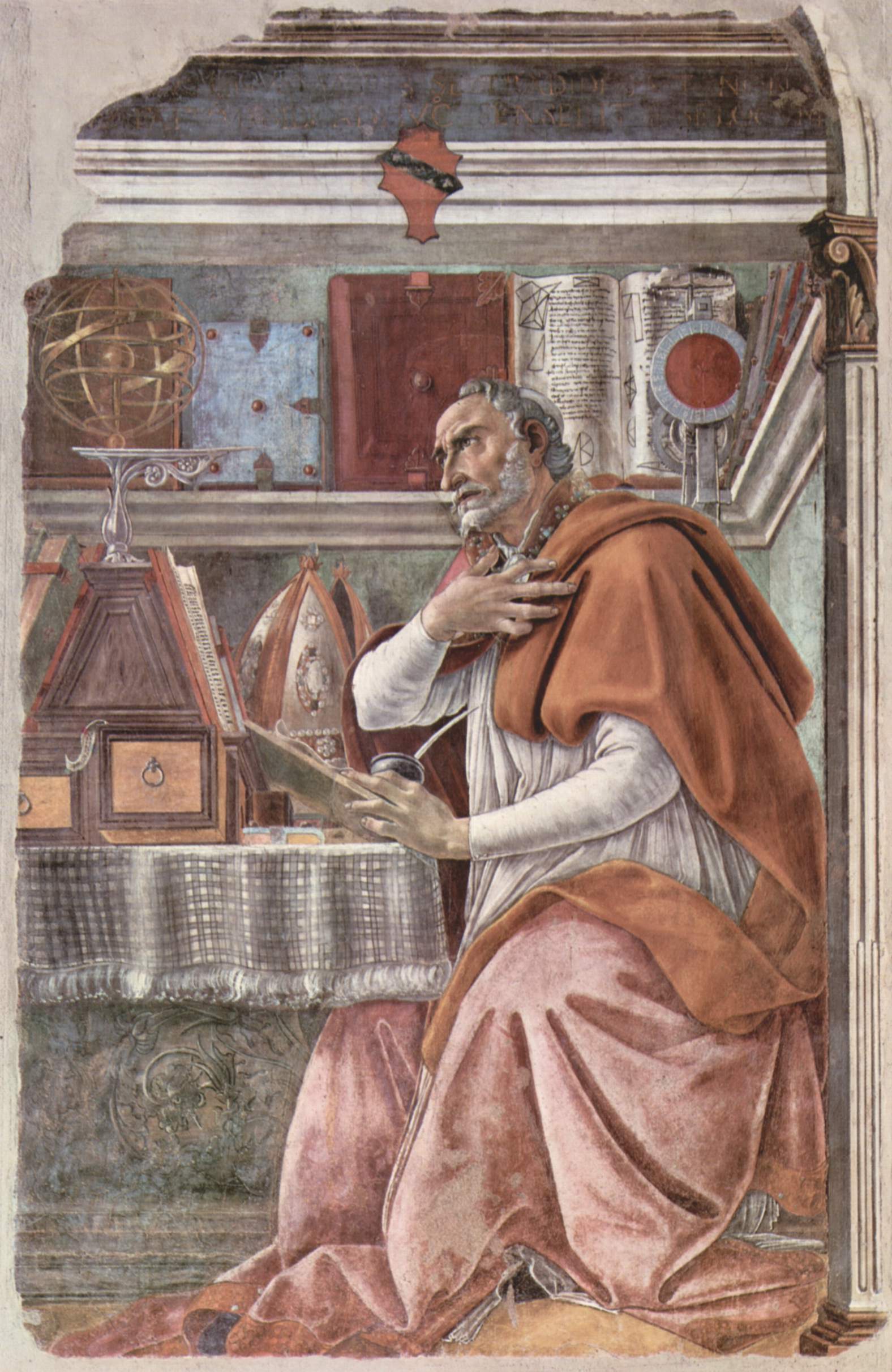
Augustine of Hippo

The Roman army put this judgment into execution with great severity: the persecutions against the Donatists who refused to submit were so violent that even Augustine of Hippo, the leader of the Catholics at the conference, protested. Marcellinus remained in Carthage, to assist his brother Apringius, who had been named proconsul of Africa, in the trials against the Donatists who had been arrested.

During his years in Africa, Marcellinus became friends with the bishop Augustine of Hippo. They discussed theology, and Augustine encouraged Marcellinus to show clemency towards the Donatists. Augustine dedicated several of his writings to Marcellinus, including the first three books of The City of God.

Statue of Marcellinus, Bernini’s Colonnade, St-Peter Square, Vatican

Marcellinus’ career came to an abrupt end in 413, after the revolt of Heraclianus, the governor of Africa: Marcellinus and his brother Apringius were falsely accused by the Donatists of supporting Heraclianus. Marcellinus was sentenced to death and executed. The following year, the Emperor acknowledged his innocence.

The death of Marcellinus had a strong impact on Augustine of Hippo, who pleaded in vain for the Roman authorities to spare his friend’s life. After his execution, Augustine became much more wary of political power, and more skeptical about the alliance between the Christian Church and the Empire, which had become more and more intertwined in his lifetime.

Marcellinus is considered as a martyr by the Catholic Church.

Roman North Africa, The late Roman Empire

Heraclianus: the governor of Africa who claimed the Imperial throne

Français – عربي – ⵜⴰⵎⴰⵣⵉⵖⵜ – English

At the beginning of the 5th Century, the Roman Empire was weakened by the Barbarian invasions. During the reign of Emperor Honorius, the governor of Africa, Heraclianus, revolted and claimed the Imperial throne.

Context

Emperor Honorius

Emperor Theodosius the Great, who is known mostly for establishing Christianity as the official religion of his Empire, died in 395. After his death, the Roman Empire was divided between his sons: Arcadius (395-408) in the East, Honorius (395-423) in the West. The two new Emperors were young and inexperienced, especially Honorius, who was only 10 years old when his father died. Stilicho, a general with Vandal origins, ensured the regency.

At the same time, the invasions of Roman territory by foreign populations, which started in the 3rd Century, were continuing. In 403, the Goths, led by their new King Alaric, invaded Italy. In 406, a confederation of Germanic tribes, led by the Vandals, crossed the Rhine, entered Gaul, and devastated the country.

The Western Roman Empire in 410 – Click to enlarge – Yellow: territory controlled by Emperor Honorius – Red: territory controlled by Constantine the usurper – Other colors: territories controlled by various barbarian tribes

Next to these invasions, the Empire was also facing internal revolts. In 407, Constantine, a Roman soldier based in Britain, proclaimed himself Emperor and established his power in Gaul, where he fought the Barbarians who were settled there.

Stilicho, the most powerful Roman general, failed to quash Constantine’s revolt, which was even gaining popularity in Gaul. His failure enabled his enemies, who had long been jealous of his influence, to prepare a plot against him. Stilicho was executed in 408. The military officer in charge of his execution was called Heraclianus.

Heraclianus governor of Africa

Stilicho, the general killed by Heraclianus

As a reward, Emperor Honorius named Heraclianus comes Africae, governor-general of the diocese of Africa, which included all Roman provinces in North Africa. He succeeded Bathanarius, the brother-in-law of Stilicho, who was also executed.

After Stilicho’s death, unrest broke out in the whole Empire, with mass massacres of the families of foederati – Barbarian warriors integrated into the Roman army, like Stilicho’s father. The survivors fled to Alaric, the King of the Goths, to seek his protection, thus enlarging the ranks of his army.

In 409-410, Priscus Attalus was proclaimed Emperor instead of Honorius, with Alaric’s support. Heraclianus remained loyal to Honorius and cut the supply of African wheat to the city of Rome, where Priscus Attalus was established. A few months later, Priscus Attalus was overthrown by Alaric, after refusing to let Alaric lead a campaign against Heraclianus in Africa. After Priscus Attalus’ fall, Alaric’s army sacked Rome.

The Christian author Jerome of Stridon claims that Heraclianus mistreated Roman nobles who fled to Carthage during Priscus Attalus’ usurpation. Jerome described Heraclianus as a drunkard and a corrupt man. His description is certainly exaggerated, but probably contains a part of truth.

It was also during Heraclianus’ mandate as a governor that the Donatist controversy came to a final resolution: in 411, Emperor Honorius sent his emissary Marcellinus to Carthage, to lead a public conference opposing Catholic and Donatist bishops. At the end of this conference, the Donatists were condemned.

Heraclianus’ revolt

Heraclianus leads his army – Image created by ChatGPT

Late 412, Emperor Honorius named Heraclianus consul for the year 413. However, before even taking this function, Heraclianus revolted and proclaimed himself Emperor. His motivations are difficult to understand, as he was at the peak of his career. It is possible that he felt threatened by the growing power of Constantius, the new commander of the Roman army, whom he saw as a rival.

Heraclianus started by cutting the supply of African wheat to Rome, and to Alaric’s troops, which were based in Gaul, close to Massalia. He then assembled a fleet to invade Italy.

Heraclianus landed in Italy in March 413. Constantius sent an army to meet him. Heraclianus was defeated, and fled to Carthage, where he was killed. According to one version, Heraclianus was so scared by the size of the enemy army that he abandoned his troops.

Later on

Gold coin with the effigy of Constantius III

The defeat of Heraclianus’ revolt allowed Constantius to concentrate on fighting the Goths, until he succeeded in forcing them out of Gaul. In 421, Honorius named him co-Emperor. He also married Galla Placidia, the Emperor’s sister. Their son Valentinian III became Emperor after Honorius died.

Marcellinus was falsely accused by the Donatists of supporting Heraclianus’ revolt, sentenced to death and executed. The bishop Augustine of Hippo pleaded in vain for the Roman authorities to spare his friend’s life.

Bonifatius, an officer of Constantius during his campaign against the Goths, later became the last governor of Roman Africa, before the region was conquered by the Vandals.