

Français – عربي – ⵜⴰⵎⴰⵣⵉⵖⵜ – English
The first city founded by Phoenician salesmen on the North African coast was Utica, close to the mouth of the river Medjerda. Although part of the Carthaginian Empire, Utica always managed to maintain a degree of autonomy from its powerful neighbour. After the fall of Carthage, Utica became the first capital of Roman Africa.
The Punic city

Although diverse ancient sources mention that Utica was founded around 1100 BCE, modern archaeological research indicates a more recent foundation, shortly before 800 BCE. Its Phoenician name, ʿtq (𐤏𐤕𐤒), is related to the Arabic word ʿatiqah (عَتِيقَة), meaning “ancient”, as opposed to Carthage, the “New City”. As Utica was a short distance inland, the neighbouring city of Rusucmona (Ghar el-Melh) served as its port.
Carthage was founded shortly after Utica, around 40km away, and quickly became the most powerful city in the region. However, Utica long retained its political and economical autonomy: it came under Punic control only lately, around 540 BCE, and even after that, it maintained a privileged status as an ally of Carthage. At the same time, there have always been commercial rivalries between both cities.
The Punic Wars were an opportunity for Utica to try to break free from Carthaginian domination. After the first war, when the mercenaries who had served in the Carthaginian army rebelled against Carthage, Utica and the neighbouring city of Hippo Diarrhytus (Bizerte) supported the insurrection. During the second war, the city was besieged by the Roman general Scipio Africanus, who wanted to use is as a rear base to support his African campaign; but he never managed to conquer it. Finally, in 150 BCE, just before the third war, Utica defected and made an alliance with Rome. As a reward, the city became the capital of the new Roman province of Africa. The Romans also allowed it to extend its control over the whole territory between Carthage and Hippo Diarrhytos.
The Roman city
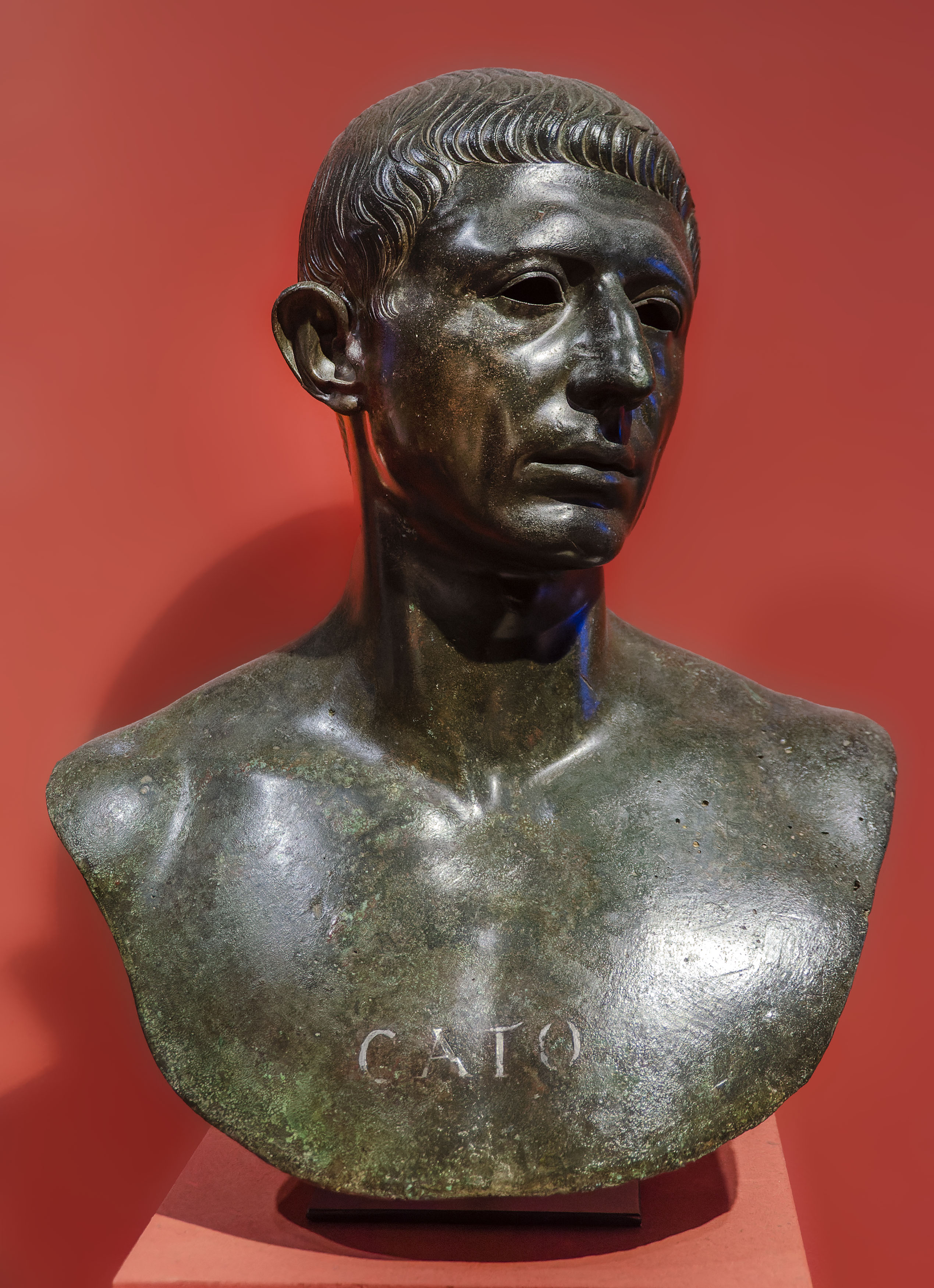
During the Roman Civil War (49-45), one of the main battles between the followers of Julius Caesar and Pompey took place in Utica. Close to the end of the war, Pompey’s last followers, including their leader, Senator Cato the Young, fled to Utica after their defeat. Cato committed suicide, but he was so popular in the city that its inhabitants, without fearing Caesar’s vengeance, buried him with honour and named him Cato Uticensis.
In 44 BCE, Julius Caesar decided to rebuild Carthage as the capital of Roman Africa. From this time on, Utica’s influence gradually declined. The city petitioned Rome to become a Roman colony during the reign of Emperor Hadrian, but it obtained this status only later, under Emperor Septimius Severus, who was originally from Africa.
At the beginning of the Christian era, the city, like the whole province of Africa, had a strong Christian community. The name of the bishop of Utica is mentioned in the list of participants to several regional church councils that were organised in Carthage.
Utica’s decline accelerated due to the silting of its port, resulting on the town being cut off from maritime commerce. The transition to an economy based on agriculture helped to somehow counteract this decline, but those efforts proved inadequate. The city was pillages by the Vandals in 439, the final step of its decline. Utica was still in existence at the time of the reconquest of Roman Africa by the Byzantine Empire, but the city seems to have been abandoned before the beginning of the Arab conquests. Its ruins can still be visited, in the Tunisian governorate of Bizerte.
