

Français – عربي – ⵜⴰⵎⴰⵣⵉⵖⵜ – English
Translation: Souliman El Abdellaoui
As Roman influence in North Africa grew, the reigns of the last Numidian and Mauretanian kings became so intertwined with Rome that Roman wars and political intrigues increasingly affected the region. This article, part of our series on the final decades of the Roman Republic, examines the impact of the Roman civil war of 49-45 BC, between Julius Caesar and Pompey, on Roman Africa and the kingdoms of Numidia and Mauretania.
Context


By the mid-1st century BC, the Roman Republic was in crisis, reeling from Sulla’s dictatorship and the Catilinarian conspiracy. In 59 BC, the three most powerful men in Rome—Julius Caesar, Pompey, and Crassus—formed the First Triumvirate. This alliance, while serving their personal ambitions, proved detrimental to the Republic.
From 58 to 50 BC, Caesar was absent from Rome, engaged in his Gallic Wars. His military successes, culminating in his victory over Vercingetorix in 52 BC, significantly increased his power and wealth. Meanwhile, Pompey consolidated his power in Rome. After Crassus’s death in 53 BC, a clash between Caesar and Pompey became inevitable.
In 52 BC, Pompey was elected sole consul, a departure from the traditional two-consul system. In 50 BC, he demanded that Caesar relinquish command of his legions, claiming the Gallic conquest was complete.
Beginning of the civil war
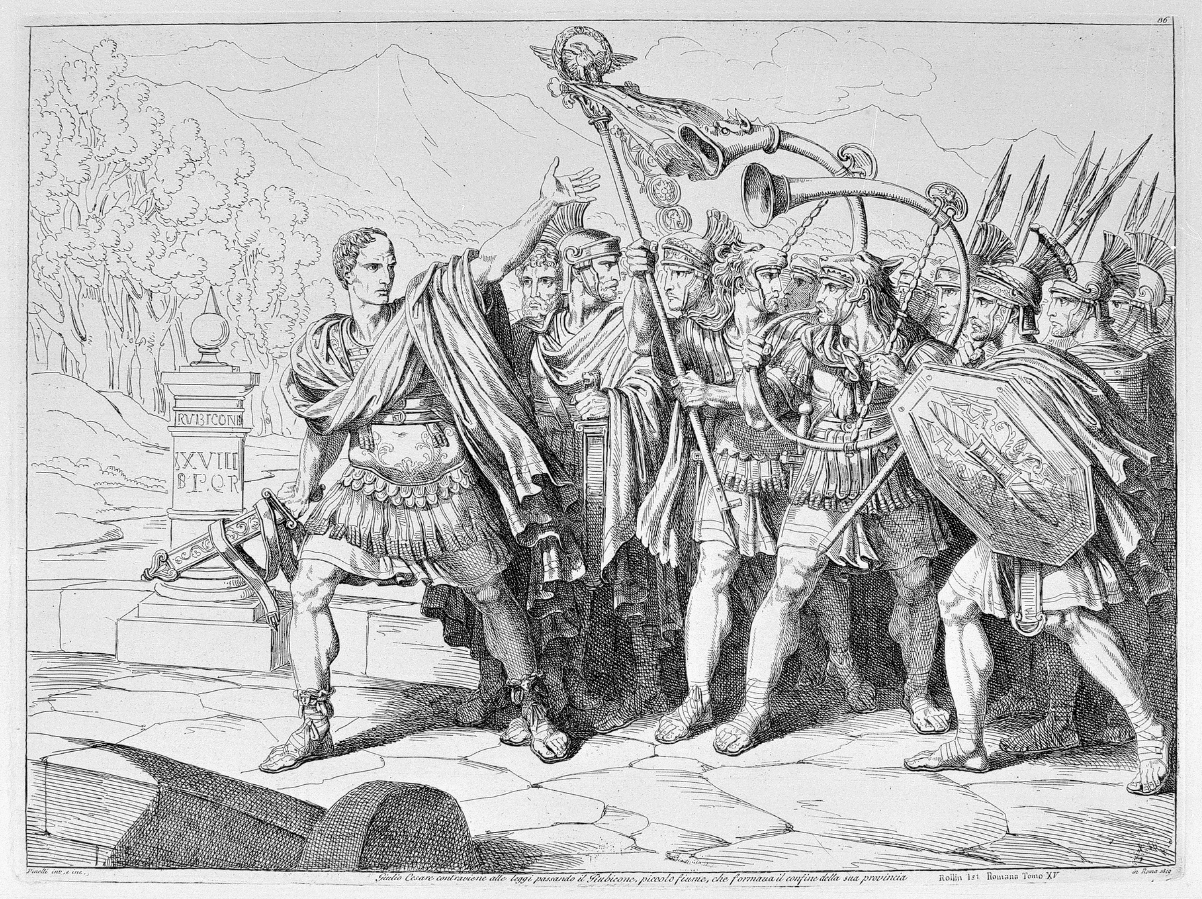
In January 49 BC, Caesar crossed the Rubicon, a small river marking the boundary of Roman Italy, leading his troops. Roman law required any general returning to Roman territory to disband their army first. Caesar’s action constituted a declaration of war, effectively making him a rebel against the Republic. As he crossed, he is said to have declared, “Alea jacta est” (“The die is cast”).
Roman Italy was wholly unprepared for invasion. Caesar captured several cities unopposed before marching on Rome. Pompey and his allies, along with many senators, fled the city, fearing retribution.
While Caesar consolidated control over Italy, Pompey escaped to Greece, where he raised an army from the eastern Roman provinces.
The ensuing Civil War saw Caesar’s and Pompey’s forces clash across Italy, Spain, Africa, Greece, and Asia. This article focuses on the fighting in Africa.
First battles in Africa

Following Pompey’s flight to Greece, Caesar marched toward Spain. Simultaneously, he dispatched his ally, Caius Scribonius Curio, to Sicily and then Africa. Pompey’s forces in Africa were commanded by Publius Attius Varus and supported by the cavalry of Numidian King Juba I.
The initial engagement near Utica resulted in a victory for Caesar’s supporters, driving Varus back into the city. However, a few months later, Caesar’s troops suffered a decisive defeat at the Battle of Bagradas (near the Medjerda River) in October 49 BC. Curio was killed in action, and Pompey’s faction gained control of Africa.
Juba I entered Utica and massacred the remaining members of Caesar’s camp, sparing only a few Roman senators, whom he imprisoned and took back to Numidia, where they were executed. Following this victory, Juba I was granted the title “friend of Rome.” However, his relationship with his Roman allies remained strained by mistrust. He insisted on being treated as an equal ally, not a vassal, and was determined to maintain Numidian independence.
Succession war in Egypt
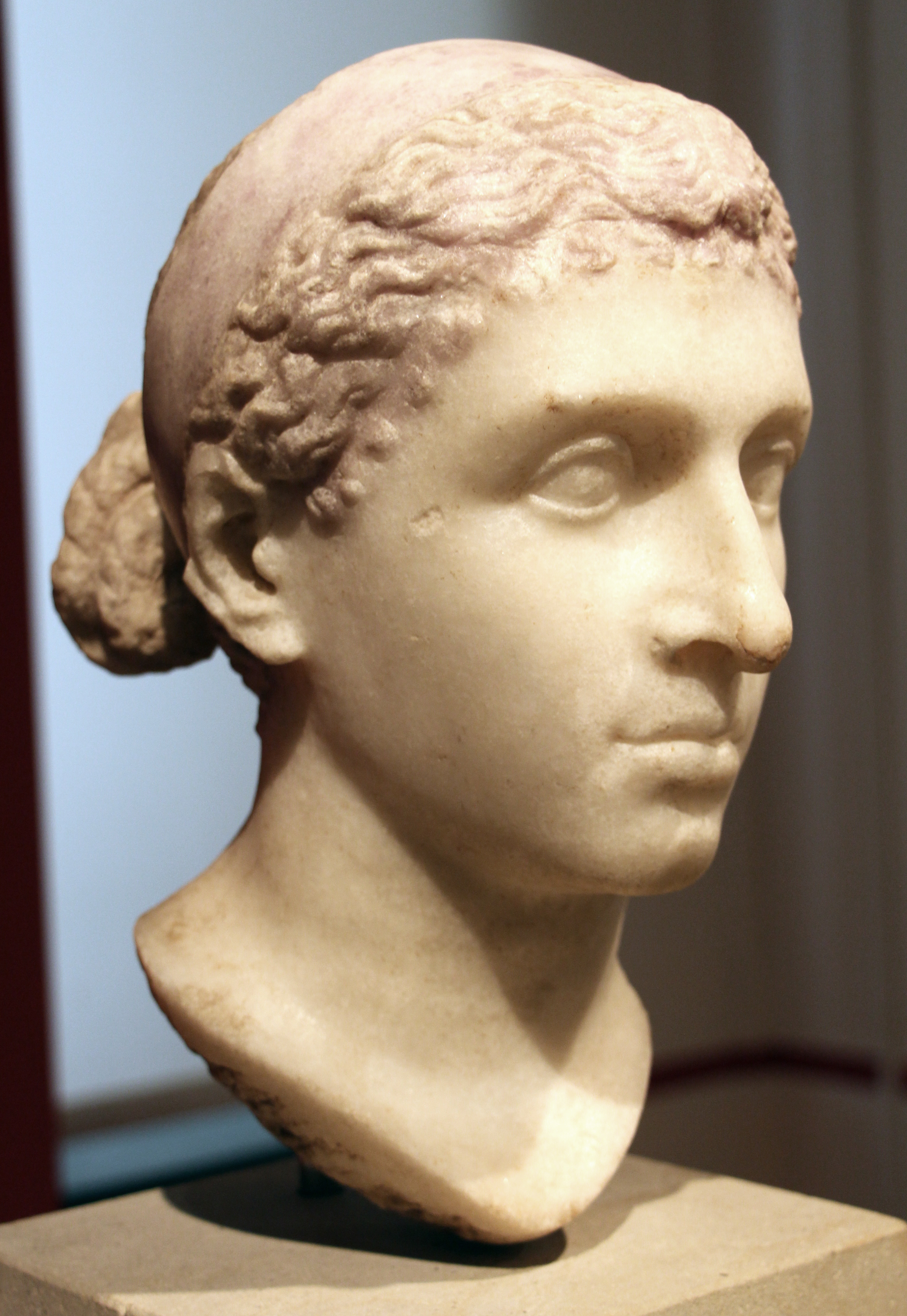
In 48 BC, Caesar and Pompey clashed in Macedonia. After several defeats, Pompey fled to Egypt in despair. Upon arriving at Pelusium (Tell el-Farama), he was assassinated. Caesar, in pursuit, arrived in Egypt three days later.
At that time, the last two heirs of the Ptolemaic dynasty, Ptolemy XIII and his sister Cleopatra, were vying for the Egyptian throne. Upon his arrival, Caesar demanded repayment of Egypt’s debt and offered to mediate between the two claimants. Besieged in Alexandria by Ptolemy XIII’s forces, Caesar met Cleopatra, who seduced him and became his lover. Caesar subsequently sided with Cleopatra against her brother.
During the siege, Caesar had the Egyptian ships in Alexandria’s harbor burned. The fire spread, resulting in the burning of the Library of Alexandria.
In early 47 BC, a supporting army arrived in Egypt from Syria. Caesar and Cleopatra’s forces joined them and crossed the Nile. Together, they engaged Ptolemy XIII’s troops in the Battle of the Nile, which Caesar won. Ptolemy XIII drowned while attempting to escape.
Following his victory, Caesar remained in Egypt for several months. His cruise on the Nile with Cleopatra served as an opportunity for rest and to secure the new queen’s loyalty to Rome. When he left, Cleopatra was pregnant. Their son, Ptolemy XV Caesar, became known as Caesarion.
Caesar’s final campaign in Africa
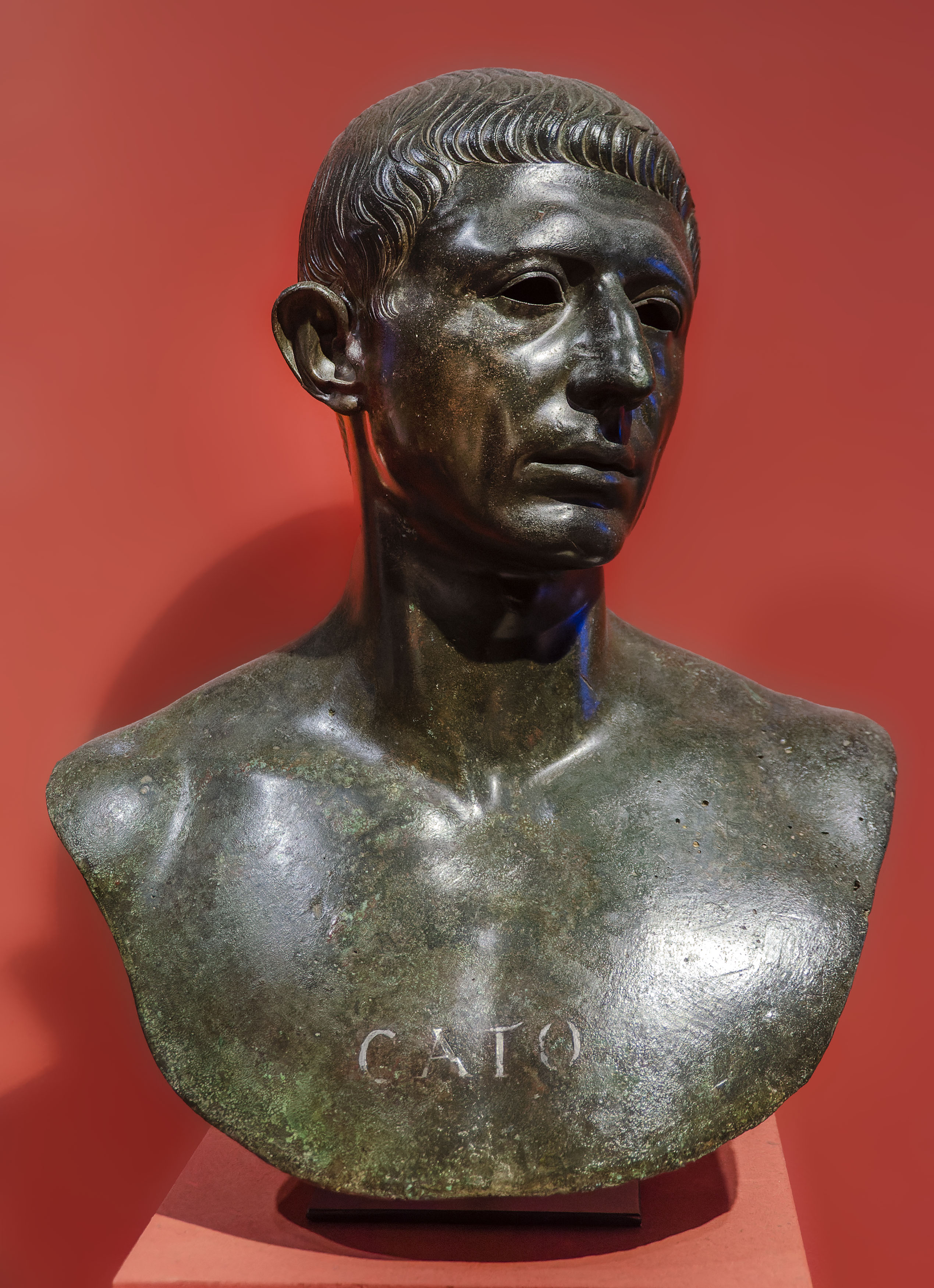
After Pompey’s death, some of his followers resolved to continue the fight. Cato led his troops across the Cyrenaican desert to Africa, where he joined forces with Scipio Metellus, commander of Pompey’s African forces. The Roman governor of Hispania Ulterior (southern Spain) also joined their cause.
Leaving Egypt, Caesar first addressed a crisis in Asia, where King Pharnaces II had capitalized on the civil war to reclaim territories Rome had seized from his father, Mithridates VI. His victory over Pharnaces was so swift that he famously declared, “Veni, vidi, vici” (“I came, I saw, I conquered”).
Back in Rome, he faced a mutiny. In December 47 BC, he assembled his legions in Sicily to confront Pompey’s remaining supporters in Africa. One anecdote recounts that upon landing in Africa, Caesar stumbled. Rising, he dispelled his officers’ superstitious anxieties by grabbing two handfuls of sand and exclaiming, “I hold you, Africa!”
At the outset of his campaign, Caesar’s forces were significantly outnumbered. Scipio Metellus commanded ten legions (compared to Caesar’s six), in addition to Juba I’s Numidian cavalry and 120 war elephants. After Hadrumetum (Sousse) refused him entry, Caesar established his headquarters at Ruspina (Monastir). The initial engagement at Ruspina resulted in a victory for Pompey’s supporters.
Meanwhile, King Bocchus II of Mauretania, supported by the Roman mercenary Publius Sittius, invaded Numidia. While Caesar played no role in this attack, he benefited from it, as Juba I was compelled to withdraw and defend his own territory.
In February 46 BC, Caesar besieged Thapsus (Ras ed-Dimas), hoping to draw Scipio Metellus into battle. The decisive battle occurred in April 46 BC, resulting in a complete victory for Caesar. Over 10,000 enemy soldiers were killed. Metellus Scipio escaped by sea but committed suicide when his ship was intercepted.
After the battle
Cato, the other prominent leader of Pompey’s faction, did not participate in the battle, as he was garrisoning Utica. Upon learning of the defeat, he committed suicide to avoid capture by Caesar. Such was his popularity in Utica that, without fear of Caesar’s retribution, the townspeople honored him with a proper burial and bestowed upon him the posthumous title of Cato Uticensis (Cato of Utica).
Juba I also did not participate in the battle. Following his defeat, he wandered from town to town, eventually reaching his capital, Zama. Everywhere, his subjects refused him entry, following his earlier orders not to welcome him if he lost the war against Caesar. Alone and abandoned, he ultimately took his own life.
Massinissa II, Juba I’s brother and co-ruler of Numidia, also sided with Pompey. His fate after the war remains unknown.

Numidia was divided: its eastern portion became the Roman province of Africa Nova, while the western part was incorporated into Mauretania. Publius Sittius claimed the region of Cirta (Constantine) as spoils of war.
Caesar remained in Africa for several months to manage regional affairs, punish cities that had supported Pompey, and oversee the construction of the new Roman Carthage. He also engaged in an affair with Eunoë, the wife of King Bogud of Mauretania. In November 46 BC, he traveled to Spain, where, with Bogud’s assistance, he suppressed an insurrection. This marked the final episode of the civil war, which lasted until February 45 BC.
Aftermath

Upon his return to Rome, Caesar was proclaimed dictator for life. Shortly thereafter, on March 15, 44 BC, he was assassinated by a group of senators led by Brutus, who feared his growing power.
In Africa, Carthage, rebuilt by Caesar’s decree, became the new capital of Roman Africa.
In Numidia, Arabio, the son of Massinissa II, successfully ousted Bocchus II and Publius Sittius, reclaiming his father’s throne.
Juba II, son of Juba I, grew up in captivity in Rome. He later became the last king of Numidia and Mauretania before their annexation by Rome.
| The Civil War in Roman poetry A century later, the Roman poet Lucan composed an epic poem, the Pharsalia, which depicted the Roman civil war in a semi-mythological context. Through his admiration for Pompey’s supporters, whom he represented as defenders of the old Republic, Lucan expressed his nostalgia for that era and his animosity toward the burgeoning Empire. Lucan was later arrested and executed for his involvement in a plot against Emperor Nero. Books 4, 9 and 10 are set in Africa. The Pharsalia can be read online on this page. |
