

Français – عربي – ⵜⴰⵎⴰⵣⵉⵖⵜ – English
Translation: Ibrahim Karmoum
Juba II, the last heir to the throne of Numidia, grew up in Rome. When he was a young adult, he was named as king of the last North African kingdom that remained independent of Rome, which coverd both historical Numidia and Mauretania.
Childhood of Juba II
Juba II was born in Numidia, about 50 BCE. He was the son of Juba I, King of Numidia, which made him a direct descendant of the glorious king Massinissa. From his mother’s side, he was also a descendant of Hannibal. He was a child when his father, defeated by Caesar, committed suicide, leaving no one to succeed him on his throne.
After the death of his father, Juba II grew up in Rome, in a golden captivity. He was raised by Octavia, the sister of the future Emperor Augustus, with several other children of kings defeated by Rome, including Cleopatra Selene, the daughter of the Roman general Mark Antony and Cleopatra of Egypt, who would become his wife. The Romans wanted to raise a new generation of Romanized kings, who would serve the interests of Rome.
Reign of Juba II

In 30 BC, the young Juba II was reinstated as King of Numidia, as the last descendant of Massinissa.
In 25, he was chosen and crowned by the first Roman Emperor Augustus as king of a Great Mauretania, extended to Western Numidia. In the same year, he married Cleopatra Selene, the daughter of Queen Cleopatra of Egypt and the Roman general Mark Antony.
While the reign of Massinissa was the golden age of the Kingdom of Numidia, the reign of Juba II can be considered as the golden age of the Kingdom of Mauretania. His capital was Iol (Cherchell), which he renamed Caesarea in honor of the Emperor. His kingdom extended from Hippo (Annaba) and Cirta (Constantine) to Tingis (Tangier). He reigned for nearly 50 years (25 BCE-23 CE). During his reign, he was a very close ally of Rome. He is remembered as the king who definitively brought Mauretania into the Roman sphere of influence.
The reign of Juba II will be a period of great prosperity. Mauretania enriched itself by exporting wheat, grapes, fish and purple dye. The port of Tingis developed considerably and the city of Lixus became the largest industrial complex in the Mediterranean world. Juba II took over the old Phoenician industry of manufacturing purple on the Purpurary Islands, off Mogador (Essaouira), and even sent an expedition to explore the Canary Islands.
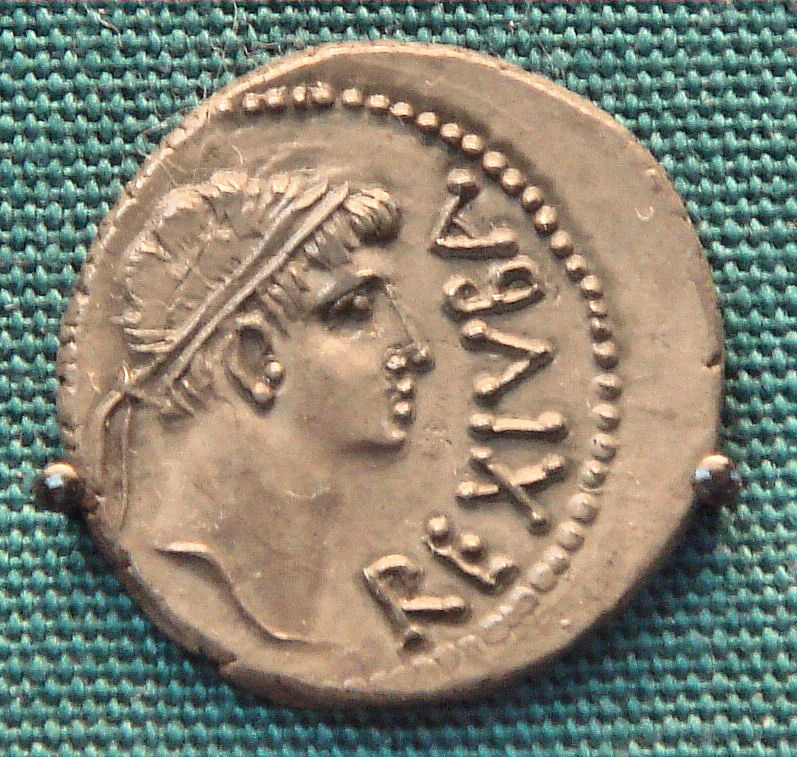
All through his kingdom, Juba II undertook major construction works to provide his cities with quality infrastructure. His architectural and sculptural work, notably at Caesarea and Volubilis, demonstrate a rich mix of Roman, Egyptian and Greek influences.
Juba II also favored the development of arts and scientific research. His court physician, Euphorbos, discovered that a plant from the Atlas Mountains has a powerful laxative effect. Juba II himself was one of the most erudite kings of his time, who wrote several books about history, natural sciences, geography and arts. One of his works is Libyca, on North African geography and the history and customs of the region’s inhabitants.

His queen, Cleopatra Selene, played a very active role at his side and had a strong influence on his policies. She brought a large number of councillors, scientists and artists from her mother’s court in Alexandria to serve at Caesarea. She also built a lighthouse, modeled on that of Alexandria, in the port of Caesarea, as well as many temples dedicated to Roman and Egyptian deities. While the Roman poetry of this time gives a very negative image of Cleopatra of Egypt, Cleopatra Selene of Mauretania vigorously promoted her mother’s legacy.
Close to the middle of his reign, Juba II was chosen by the Emperor Augustus to accompany his grandson Gaius Caesar in an expedition to the East, as a counselor to the young man. This choice shows the high esteem in which the Emperor held him.
Towards the end of his reign, Juba II faced an insurrection by the Amazigh tribes against the Roman presence in North Africa, led by Tacfarinas, from the Getulian Musulamii tribe, a former soldier who deserted the Roman army. This insurrection would continue after his death, under the reign of his son Ptolemy.

Queen Cleopatra Selene died in -5. Juba II got remarried to Glaphyra, the widow of the son of King Herod the Great of Judea. Their marriage was unhappy, unlike Juba II’s previous marriage with Cleopatra Selene.
Juba II died in 23. He was buried, with Cleopatra Selene, in the Royal Mausoleum of Mauretania, near Tipasa (Tipaza, Algeria). This monument, nicknamed the “tomb of the Christian” (a mistranslation of “Qabr el-Rumiyya”, “tomb of the Roman”), is listed as a UNESCO World Heritage site.
Death and succession of Juba II

After the death of Juba II, his son Ptolemy (23-40) succeeded him. Ptolemy was descended from several royal lineages, and had one of the most prestigious filiations in the ancient world. His father, Juba II, was not only a direct descendant of Massinissa, but also a descendant of Hannibal from his mother’s side. His mother, Cleopatra Selene, was the daughter of Mark Antony and Queen Cleopatra of Egypt. Ptolemy was therefore the heir, from his father’s side, of Massinissa and Hannibal, and from his mother’s side, of the Roman aristocracy, the ancient Pharaohs and the Ptolemy of Egypt. Finally, he inherited the throne of the ancient kings of Mauretania.
Such a filiation made him a potential claimant to the imperial throne, but it is also represented a great danger for him. In 40, the Emperor Caligula had him murdered and annexed his kingdom. His murder provoked a new Moorish revolt against Rome, led by Aedemon, a freed slave of the royal court. Aedemon’s revolt enjoyed little support from the local population, and he was killed two years later. The Romans now controlled all of North Africa.

2 thoughts on “Juba II, heir of Massinissa, King of Mauretania”