

Français – عربي – ⵜⴰⵎⴰⵣⵉⵖⵜ – English
The city of Algiers, known as Icosium in Antiquity, had a rich history that goes back over 2.000 years. Founded by the Phoenicians as a trading counter, it became an influential city under King Juba II. In the Roman era, it was one of the main cities of Roman Mauretania. During the Vandal occupation, it remained under Roman sovereignty and served as refuge for the last Roman Africans. The ancient city was located at the Casbah of Algiers.
Origins and etymology
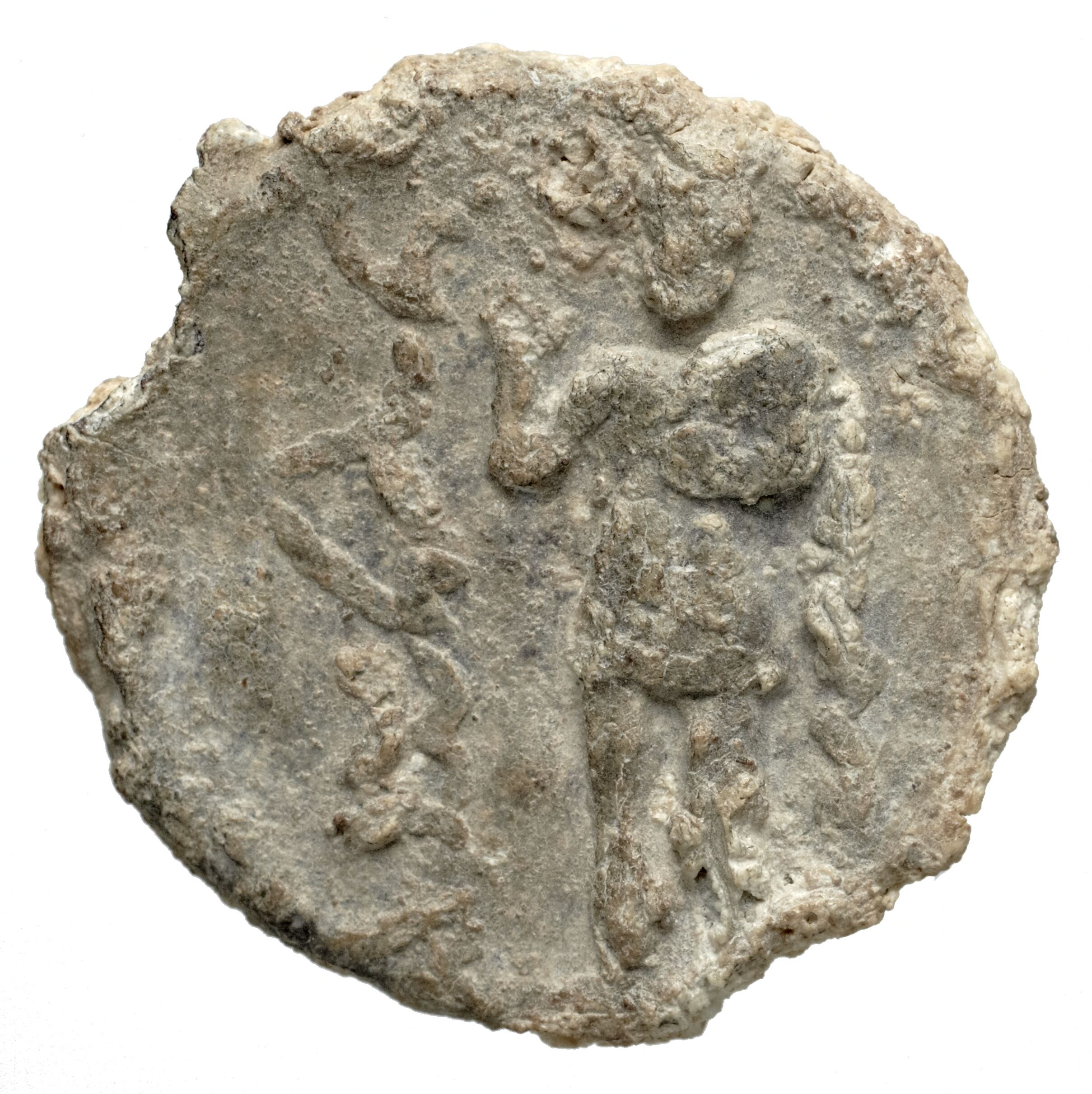
The Phoenicians founded a trade counter on the site of Algiers around 1200 BCE, but it was originally only a small, unimportant town. Around the 4th Century BCE, a fishermen’s village appeared at this site.
In the early 3rd Century BCE, the Carthaginians rebuilt the ancient Phoenician counter and integrated it into their network of Mediterranean port cities. A collection of 158 Punic bronze and plumb coins dating back to the 3rd-1st Centuries were found in 1940, in the Quartier de la Marine.

At this time, the city was known as Ikosim (Y KSM, 𐤀𐤉 𐤊𐤔𐤌), “seagull island” (or “owl island”).
The Greeks called the city Ikosion. According to Greek mythology, it was founded by Hercules, who left twenty of his companions behind when he was travelling through the region, looking for the Garden of the Hesperides. The Greeks believed that the city’s name came from eíkosi (εἴκοσι), “twenty” in Greek language, a reference to Hercules’ companions who founded the city, but it is now known that this is an a posteriori etymology.
In Latin, Ikosim was transcribed Icosium.
The Roman city

After the Second Punic War, Icosium was part of the Kingdom of Numidia, of the glorious King Massinissa. Massinissa was a Roman ally, so Roman influence goes back to this time.
After the revolt of Jugurtha, the Western part of Numidia, including Icosium, was attached to the neighboring Kingdom of Mauretania, under King Bocchus.
The city of Icosium started gaining importance during the reign of King Juba II. At this time, the capital of Mauretania was Caesarea (Cherchell), around 100 kilometer away from Icosium. The city was damaged during the revolt of Tacfarinas, but then underwent a renewal, with the arrival of 3000 veterans of the Roman army who settled in Icosium. At was also at this time that the city’s name took its Romanized form.
The region around Icosium was inhabited by the Amazigh Maghrawa tribes, who supported the revolt of Tacfarinas. Ptolemy, the son of Juba II, had them transferred to Castellum Tingitanum (Chlef) to avoid a new revolt.

In 40 CE, Ptolemy was assassinated by the Emperor Caligula. His Kingdom was taken over by the Roman Empire. Icosium became part of the Roman province of Mauretania Caesariensis.
The Roman city was located at the Casbah of Algiers and the Quartier de la Marine. Bab el-Oued was its cardo maximus, its main road, that crossed the city from North to South. Roman cemeteries were found close to Bab el-Oued and Bab Azoun. The ruins of a Roman aqueduct were also visible close to Porte de la Victoire (now Bab Jdid) until 1845.
Icosium became a Roman colony in 75, under Emperor Vespasian. At the time, the city had around 15.000 inhabitants. Their language was Latin.

In the 2nd Century, the city’s demographics changed, with the arrival of new Amazigh populations from the surrounding countryside. Latin-speakers became a minority elite.
Roman Africa showed itself a fertile ground for nascent Christianity. The new religion probably appeared in the 2nd Century in Icosium. In the 4th Century, the city was mostly Donatist: Icosium was represented by Crescens, a Donatist bishop, at the 411 Council of Carthage. There are two other known bishops of Icosium: Lavrentius, in 419, and Victor, in 484.
Icosium was largely destroyed during Firmus’ uprising (370-375).
After the Roman era
Icosium was conquered by the Vandals in 430, but in 442, the Vandals and the Romans made an agreement allowing the city to remain under Roman sovereignty during the whole Vandal occupation of North Africa. The city grew a lot at this time, thanks to the arrival of refugees from Vandal Africa.
In the beginning of the 6th Century, Amazigh tribes took control of Icosium. The city was then conquered by the Byzantines in 534. In the beginning of the 7th Century, he Amazigh Beni Mezghenna tribe settled in the region of Icosium.
The city was destroyed by the Umeyyads close to the end of the 7th Century. Its inhabitants were killed or deported as slaves to Damascus. Its Roman infrastructure was mostly lost.
The modern city was founded in 972, by Bulughin ibn Ziri, the founder of the Zirid dynasty. Its Arabic name, الجزائر (The Islands), has the same origin as its ancient name. Algiers was occupied by the Ottomans in the 16th Century. It later became the capital of French Algeria, and then of the Republic of Algeria since its independence in 1962. The Casbah of Algiers is largely built on the ruins of the ancient city.
