

Français – عربي – ⵜⴰⵎⴰⵣⵉⵖⵜ – English
Volubilis, to the North of the Moroccan city of Meknes, was the capital of the ancient Kingdom of Mauretania. While the city developed a lot in the Roman era, its population always remained mostly indigenous African. After the 3rd Century, Volubilis, abandoned by the Romans, again became an Amazigh city. It was governed by local tribal chiefs who appropriated its Roman urban infrastructure.
Origins

The city of Volubilis is built in a fertile valley, at the feet of Mount Zerhoun. The surrounding region is inhabited since at least 5.000 years: Neolithic potteries have been found here.
The name “Volubilis” is the Latin form of its Amazigh name Oualili (ⵡⴰⵍⵉⵍⵉ). Two theories have been suggested for the origin of this name: it could either come from the Tamazight word walilit, which means oleander, a flower that is found abundantly in the region, or from the verb wlly (turn). In Latin, the V of “Volubilis” was pronounced “w”.
Volubilis, capital of Mauretania

Before the Roman era, Volubilis was part of the territory of the Kingdom of Mauretania. The ancient history of Mauretania is not well-known. The ancient Kings of Mauretania, reigning over a nomadic tribal confederation, didn’t have a fix capital: their court was mobile. Volubilis already was one of the main power centers of their kingdom.
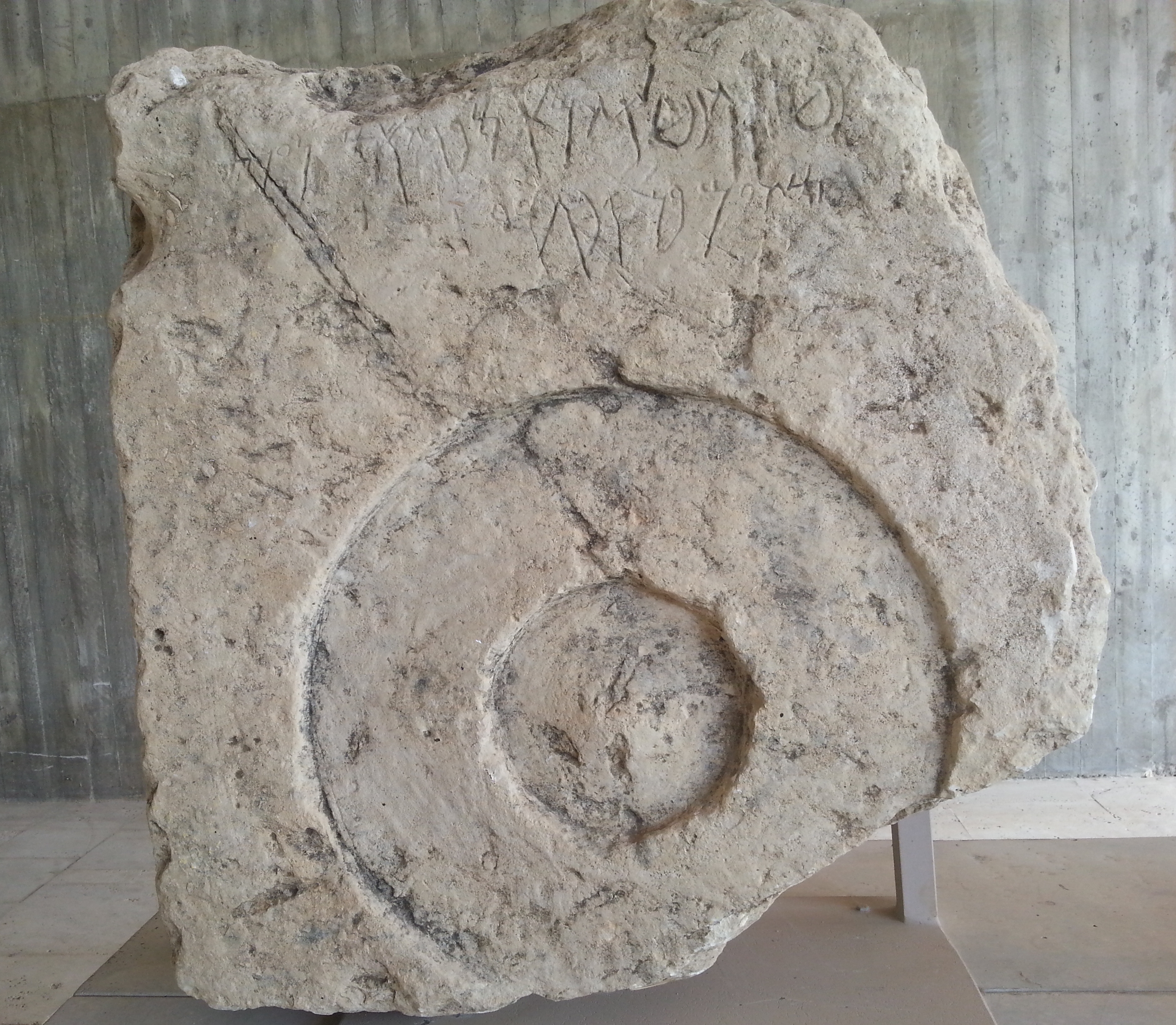
In the 3rd Century BCE, the site of Volubilis was occupied by the Carthaginians, as attested by the temple of Baal and by Punic-language inscriptions. Punic influence lasted long after the fall of Carthage.

In 25 BCE, Juba II was chosen by the Romans to reign over a new Kingdom of Mauretania, extended to much of historical Numidia. His capital was Caesarea (Cherchell), but he also built a secondary residence in Volubilis, which he established as his second capital, for the Western half of his kingdom. Juba II, a native African, but strongly Romanized King, transformed Volubilis into a true Roman city, with a forum, a basilica, temples and baths.
Volubilis in the Roman era
The Roman Empire annexed Mauretania in 40 CE, after the death of Ptolemy, son of Juba II. Aedemon, a freed slave of the royal family, led a revolt against the Romans. Volubilis remained loyal to Rome. As a reward, the Emperor decreed that its inhabitants would have Roman citizenship and be tax-exonerated for ten years.

The Romans chose Tingis (Tangier) as provincial capital instead of Volubilis, due to its proximity with Europe. However, Volubilis remained the most inhabited city in the province, with a peak of 20.000 inhabitants by the end of the 2nd Century – mostly Romanized Amazigh. The city enriched itself considerably during the Roman era, thanks to its fertile land, enabling wheat cultivation and olive oil production. Roads were built to connect Volubilis to Tingis and Lixus (Larache).

Volubilis also had a Jewish community. Funerary writings show that there have been Jews living in Volubilis since the 2nd Century BCE. A synagogue was built in the 3rd Century. The Jews of Volubilis are the forefathers of the influential Moroccan Jewish community.
Volubilis, like all Roman Africa, showed itself to be fertile ground for Christianity. The site of the church of Volubilis is known, and its foundations are still visible, but the building itself has disappeared. Christian inscriptions in Volubilis show links with Oranie, not with Tingis, which means that the Christian message probably came from the East. (Source)

Despite the city’s importance, its location close to Amazigh tribes who were hostile to Roman domination made its position somewhat precarious. Five forts were built in the modern-day villages of Ain Schkor, Bled el Gaada, Sidi Moussa, Sidi Said and Bled Takourart (ancient Tocolosida), to defend the city. Emperor Marcus Aurelius built walls around the city, with eight doors and 40 towers.
The Romans leave
The Roman Empire lost control of Volubilis, together with all of Interior Mauretania, after the 3rd-Century crisis. Around 255, the Amazigh Baquate confederation, living in the region of Taza and the Oriental Rif, revolted against the Romans. Their revolt was mostly motivated by the confiscation of their lands in the region of Volubilis. After a long and deadly insurgency, a peace treaty was concluded in 280, through which the Romans agreed to abandon Volubilis.
The Baquates took control of the city and took back their lands. Volubilis, while keeping its Roman infrastructure, now was an Amazigh city again.
In 285, when the new Emperor Diocletian reorganized Roman administration in Africa, a campaign to reconquer Volubilis was shortly envisioned, but the idea was given up as too costly.
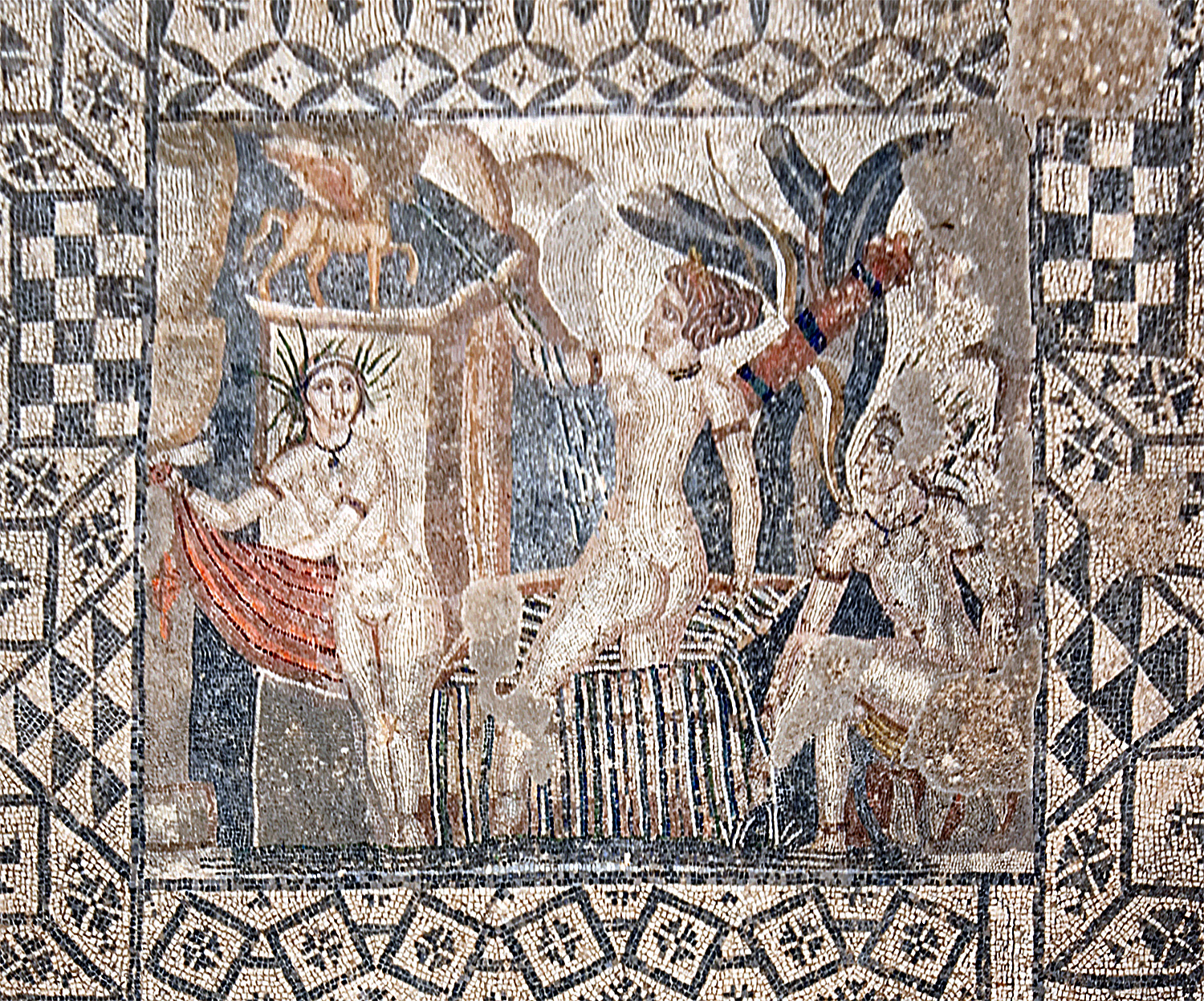
When the Romans abandoned Volubilis, its inhabitants didn’t give up the Roman way of life. Some of the city’s mosaics, like the chariot race mosaic in the House of Venus, date back to the 4th Century – after the Romans left.
Later on

Volubilis was not much affected by the Vandal invasion. The Byzantines probably established themselves in the city, but they didn’t have a lasting influence there. Before the arrival of the Arabs, the region of Volubilis was governed by local Amazigh chiefs whose names indicate that they followed the Christian religion.
In the 7th Century, many Amazigh who fled the Islamic expansion settled in Volubilis – among them were the survivors of the Awraba tribe, after their chief Kusayla was defeated. The city retained a Christian majority well into the Islamic era: the most recent Christian tombs in Volubilis date back to the 12th Century.

In 788, the Sharif Idriss ibn Abdallah, a descendant of the Prophet Mohammed, established himself in the region of Volubilis and founded the Idrisid dynasty, considered the first Moroccan royal dynasty. Idriss I is buried in the Mausoleum of Moulay Idriss, in Moulay Idriss Zerhoun, very close to Volubilis. The capital of ancient Mauretania thus also became the cradle of the modern Moroccan nation.
