

Français – عربي – ⵜⴰⵎⴰⵣⵉⵖⵜ – English
At the time when Roman imperialist ambitions became stronger and stronger, Mithridates, a king in modern-day Turkey, waged war on Rome for the control of Asia. Hiarbas, a mysterious chief who overthrew the King of Numidia, made an alliance with Mithridates to resist Roman expansion together.
Context

The Punic Wars mark the beginning of Roman imperial expansion: Rome took over Sicily after the First Punic War, Spain after the Second Punic War, and Africa (modern-day Tunisia) after the Third Punic War. At the same time, the Romans conquered Greece after their victory at the Battle of Corinth, a few months after the fall of Carthage. Roman influence was felt all the way to Asia (modern-day Turkey).
Mithridates VI Eupator, the ambitious King of Pontus (to the North of modern-day Turkey), waged three wars to oppose Roman domination in his region.
Mithridates : Rome’s deadliest enemy
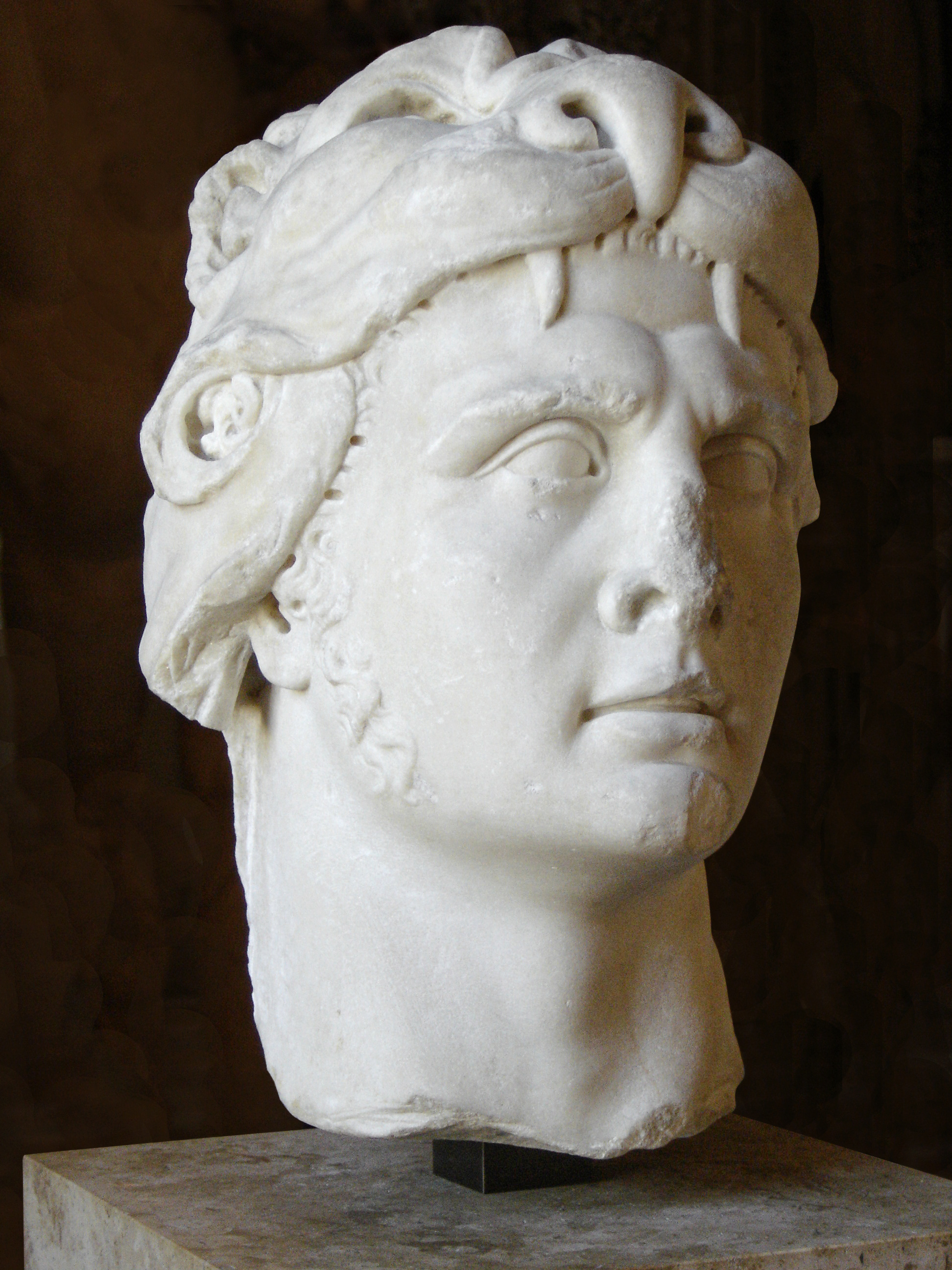
King Mithridates had Persian origins, but was of Hellenistic culture. His name means “gift of Mithra”, the Persian god of the sun, while his Greek epithet Eupator means “of a noble father”. He was born in 135 BCE, in Sinope, modern-day Turkey.
Mithridates, whose father was poisoned, is famous for his habit of regularly swallowing small quantities of arsenic, in order to immunize himself in case someone tried to poison him. Since then, the method of immunization through the ingestion of small, non-lethal doses of poison is called mithridatisation (or mithridatism). Ironically, after Mithridates was defeated, his suicide attempt failed because of his immunity.

After establishing himself on his throne, Mithridates nourished the ambition of transforming his kingdom into the dominant power in Anatolia and the Black Sea area. This is when he would first be confronted with the Roman Republic, which also wanted to extend its influence in Asia.
In 89, Mithridates seized the opportunity of the Roman engagement in the Social War, in Italy, to wage war on his neighbor, King Nicomedes of Bithynia, a Roman ally. After his victory, he massacred the Roman and Italian colonists in Anatolia. The Greeks, happy to see a king who was capable of confronting Rome, joined him and welcomed his army in Greece.

Rome sent an army, led by general Sulla, to fight Mithridates. At the end of the first war between Mithridates and the Romans (88-84), Sulla managed to push Mithridates out of Greece, but Mithridates remained the master of Anatolia. In the second war (83-81), Mithridates was victorious. At the end of the third, and longest, war (73-63), the Roman army, led by Pompey (the future rival of Julius Caesar), inflicted a final defeat of Mithridates at the Battle of the Lycus (65).
After this defeat, Mithridates fled to Crimea. The following year, he wanted to launch another attack against Rome. When his son Machares, whom he had named King of the Bosporan Kingdom, refused to help him, he had him assassinated. In 63, Pharnaces, another son of Mithridates, rebelled against him. Mithridates drew back to the citadel of Panticapaeum, in Crimea, where he killed himself (he first tried to poison himself, and when the poisoning failed, he fell on his own sword).
Hiarbas : an African ally of Mithridates
At this time, Numidia was a client kingdom of Rome, governed by the descendants of Massinissa.

Around 88, King Hiempsal (son of Gauda, the brother of Jugurtha) was overthrown by Hiarbas, who reigned in his place. The origins of Hiarbas are unclear: some sources say he was the chief of the Maxitani tribe, others that he was Hiempsal’s brother, but it is more likely that he wasn’t related to the royal family. He might have had Getulian origins; the Roman poet Virgil presents him as Getulian in the Aeneid. During the civil war between Marius and Sulla in Rome, Hiarbas was supported by Marius and his supporters, while Sulla supported Hiempsal.
The Greek-Roman historian Appian, who wrote a book on the Mithridatic Wars, mentions that Mithridates sent an officer named Heraclides to Numidia, to negotiate an alliance with Hiarbas. Mithridates wanted to form a common front to oppose Roman expansion. Their anti-Roman coalition also included Sertorius, the leader of a revolt against Rome in Spain. It was a mere alliance of convenience: the three leaders had no ideological affinity.

The anti-Roman front between Mithridates, Hiempsal and Sertorius didn’t last long. After defeating his rivals in Rome, Sulla sent an army, led by Pompey, to reestablish Hiempsal as King of Numidia. What happened to Hiarbas is unknown. Sertorius continued his war against the Romans in Spain for around 10 years, with the support of Mithridates and of the revolted gladiator Spartacus, until he was finally killed.
The historians of this era wrote very little on Hiarbas, but his alliance with Mithridates seems to indicate that he was more than a simple Numidian usurper: a leader of the Numidian resistance against Roman domination, and against the pro-Roman Numidian kings. Around 20 years after Jugurtha’s uprising, his memory was still very alive, and many Numidians certainly still wished to live free of Roman law.
