

Français – عربي – ⵜⴰⵎⴰⵣⵉⵖⵜ – English
Spartacus was a gladiator who became the leader of a major slave rebellion that threatened Rome. While he is usually described as Thracian, some say he had Numidian origins. In this article, we will discover the origins of this idea, and explain why it is unlikely.

Who was Spartacus?
Spartacus was born around 103 BCE. In his youth, he was captured by Roman legions. He was sold to a gladiator’s school in Capua, Italy, and trained as a gladiator. In 73, he managed to escape with other gladiators. During the following years (73-71), he became the leader of an insurrection of former slaves.
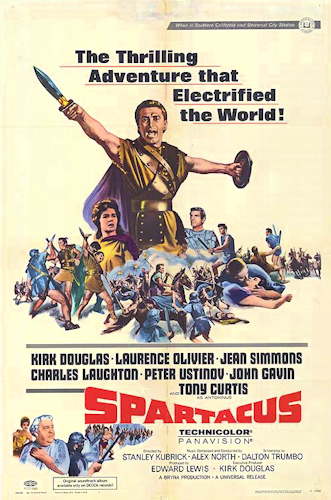
Spartacus’ rebellion is know mostly from Stanley Kubrick’s movie Spartacus. This memorable movie takes certain liberties with the historical reality: while it is true that after their final defeat, 6.000 rebel slaves were crucified along the Appian Way, from Rome to Capua, Spartacus was not one of them: he was killed in their last battle. Also, Spartacus never fought to free all slaves or to abolish slavery, but only for a better future for himself and his fellow rebels.
In modern times, Spartacus also became a Communist icon, as a slave who fought to break his chains. Karl Marx described him as “the most splendid fellow of the whole of ancient history”. The Spartakiads, an international sports competition organised in the USSR from 1928 to 1937, were named in honor of Spartacus. Several sport clubs, in Russia, Ukraine and elsewhere, are also called Spartak.
Spartacus: a Numidian?

For historians of the ancient world, the question of Spartacus’ ethnic background is an evidence: he was a Thracian (from modern-day Bulgaria). However, certain social media posts and press articles claim Spartacus was actually Numidian. Is this a credible theory, or a phony historical reappropriation?
Most of those who claim that Spartacus was Numidian don’t bother mentioning their sources. After I discovered this idea on Facebook, it took me several hours searching to finally find a publication that mentions the idea’s source. So it apparently was the Greek historian Plutarch who mentioned Spartacus’ Numidian origins.
Plutarch, together with another Greek historian, Appian of Alexandria, is one of the most exhaustive ancient sources on the life of Spartacus. His Parallel Lives are a series of short biographies of famous people of Antiquity. He mentions Spartacus in his biography of Crassus, the Roman general who fought him.
After verifying, it turned out that the French translation of the Parallel Lives by Alexis Pierron, published in 1853 and freely available online, does indeed mention that Spartacus was “Thrace de nation et de race numide” (Thracian by nation, and Numidian by race). Another somewhat older translation, by Dominique Ricard (1829), says he was “Thrace de nation, mais de race numide” (Thracian by nation, but Numidian by race). This description doesn’t really make any sense, except if we assume that he or his family were Numidians who migrated to Thrace.
Is this enough to settle the question? Not really, as the translations of Plutarch into other languages don’t mention the word “Numidian”. According to the English translation by John Dryden (1683), revised by A.H. Clough (1859), Spartacus was “a Thracian of one of the nomad tribes”. Several Thracian tribes were nomadic.

Given these differences, we needed to consult the original Greek text. The oldest manuscripts of the Parallel Lives describe Spartacus as “ἀνὴρ Θρᾷξ τοῦ vομαδικοῦ γένους” (aner thrax tou nomadikou genous), literally: “a Thracian man of nomadic race”. More recently, in 1955, the German philologist Konrad Ziegler suggested that “nomadikou” might be a corruption of “Maidikou”; the Maides are a known Thracian tribe. This correction is largely accepted today, and the newer Greek editions change the text into “ἀνὴρ Θρᾷξ τοῦ Μαιδικοῦ γένους” ((aner thrax tou Maidikou genous). The French translations that describe Spartacus as a Numidian were published before this modification. (Source)
So what does this imply for us? If Konrad Ziegler was right, then Spartacus was “a Thracian of Maidian race” or “a Thracian from the Maidian tribe”. The “Numidian” translation would thus be impossible, as it was based on a corrupted manuscript. Even if Konrad Ziegler was mistaken, and “nomadikou” was part of the original text, the most logical translation would be: “a Thrace from a nomadic tribe”. “Numidian” simply doesn’t fit the original text!
The French translators mistook “nomad” for “Numidian”, because of the similarity between both words. They were also probably influenced by the spirit of their time: both translations containing “Numidian” date from just before and shortly after the beginning of the French colonisation of Algeria, a time when the French saw the “indigenous” Amazigh, descended from the old Numidians, as the ultimate “nomads”.
Quite apart from the linguistic question, the idea that Spartacus was a Numidian living in Thrace doesn’t make sense: what would a Numidian be doing in Thrace at this time? The two regions were far apart from each other and didn’t entertain trade links.
A few other arguments
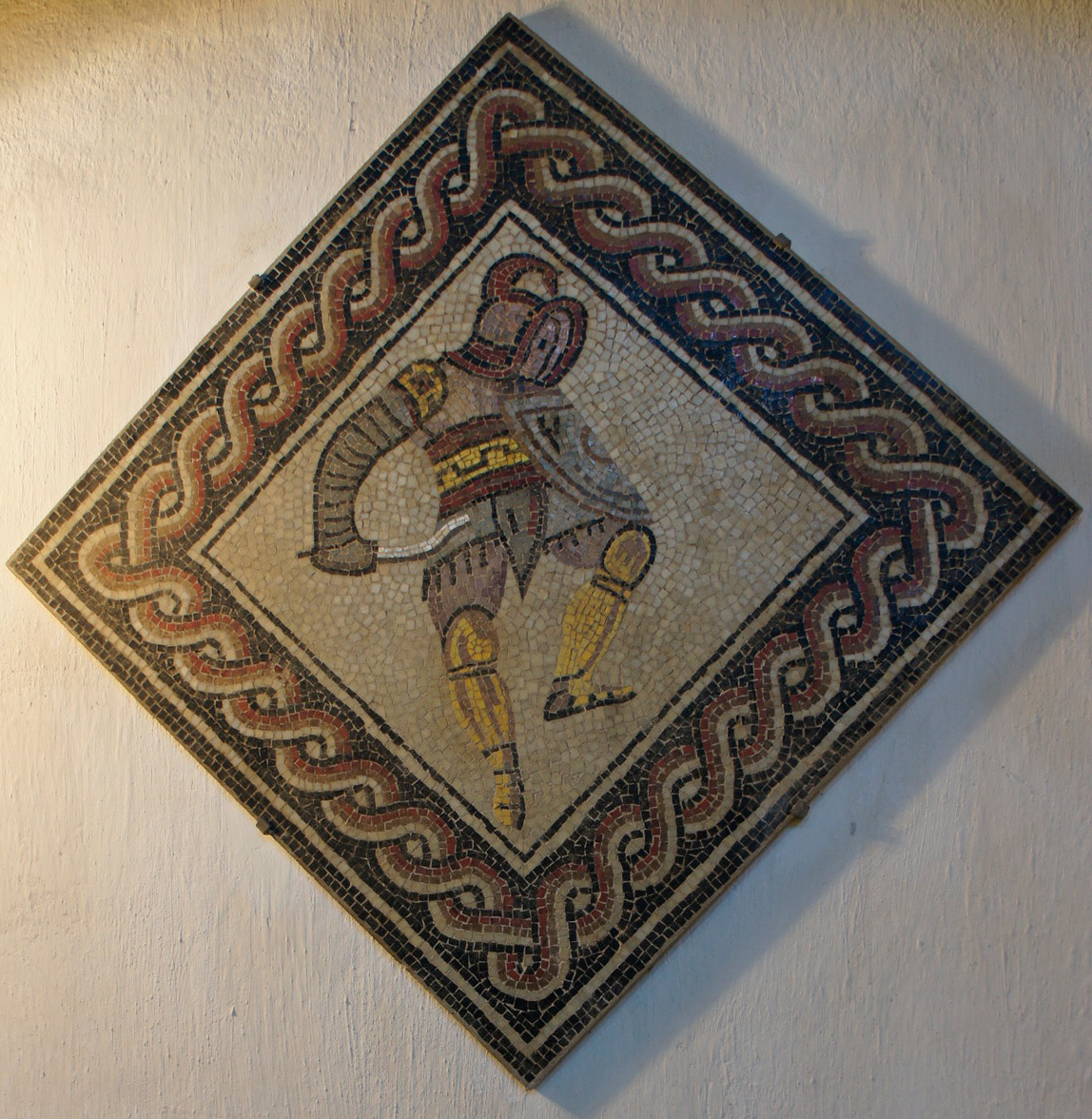
It is sometimes argued that Spartacus did not have Thracian origins, but was rather a “Thracian” gladiator. The Thracians were a type of gladiator, who wore an armor inspired by the Thracian soldiers Rome had defeated. This is a possibility; however, it is unlikely, as all ancient historians who mention Spartacus agree that he was Thracian by race. His name also seems to indicate this: it is a Thracian name, several kings of Thrace were called Spartacus.
This publication on the Facebook page Histoires Berbères claims that Spartacus was Numidian, and that he “went to Sicily with the hope of reaching Numidia, with the support of the Sicilian slaves”. While it is true that Spartacus went to Sicily, his motives were different: Sicily had large slave population, especially in its mines, and had previously known several slave rebellions. Spartacus was hoping to win over the Sicilian slaves to his cause, but he never had the intention to later go to Numidia.
Another Numidian slave?

In the TV series Spartacus, Oenomaus, one of the leaders of Spartacus’ rebels, is Numidian. The historical Oenomaus was actually a Gaul.
Over 100.000 slaves took part in Spartacus’ rebellion. It is therefore very likely that there were some Numids and other North Africans among them. However, none of the rebel leaders who are known by name were described as Numidian or North African.
Conclusion
As we saw, Spartacus was not Numidian, and the claim that he was is based on a translation error. There are enough heroes in ancient Numidia and North Africa, without the need to invent new ones.
