

Français – عربي – ⵜⴰⵎⴰⵣⵉⵖⵜ – English
Since the reign of Massinissa, the Kingdom of Numidia was a loyal Roman ally. The famous Numidian cavalry, much feared around the ancient world, took part in many wars alongside the Roman army. Massinissa took part in the war between the Romans and the Kingdom of Macedonia, and thus contributed to the Roman conquest of Greece.
Context
Since the conquests of Alexander the Great, Greece was the dominant civilisation in the Mediterranean world and the Greek language had become the vernacular language in the whole region.
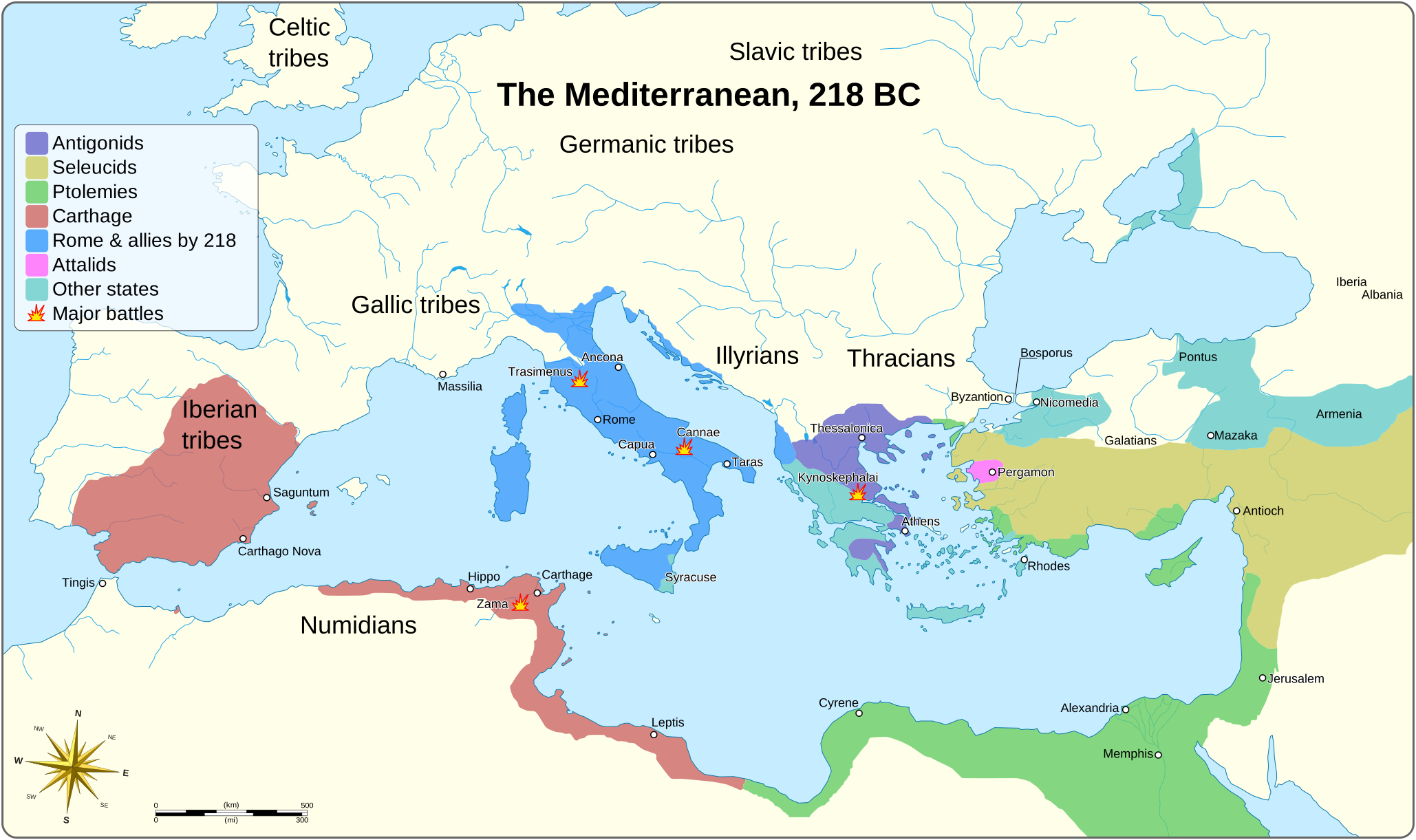
In the Third Century BCE, three major powers born from the division of Alexander the Great’s Empire dominated the Hellenistic world: the Kingdom of Macedonia, under the Antigonid Dynasty; Ptolemaic Egypt; and the Seleucid Empire, based in Syria. Other smaller Greek Kingdoms, like Syracuse, in Sicily, the Kingdom of Pergamon, in Asia Minor, and the island of Rhodes, survived in the shadow of those three powers.
Wars between Rome and the Greeks
Rome waged several wars against the various Greek kingdoms, that enabled it to extend Roman influence in the Eastern Mediterranean, while the Punic Wars ensured Roman domination over the Western Mediterranean.

During the Second Punic War, King Philip V of Macedonia made an alliance with Hannibal. Rome sent an army to attack the Macedonian coast: it was the First Macedonian War (214-202). The goal of the Romans was not to conquer Macedonia, but to keep Philip V busy at home so he couldn’t join forces with Hannibal.
Later on, the Romans led three further wars against the Kingdom of Macedonia (200-196, 171-168 and 150-148), as well as one against the Seleucid Empire (192-188), which had recruited Hannibal, Rome’s deadliest enemy, as military adviser. They most often intervened to support their local allies, like Pergamon and Rhodes. After each victory, they drew back, as they were not yet ready to conquer new territories.
During the Third Macedonian War (171-168), the Romans received help from their new ally: Numidia of King Massinissa.
Role of Massinissa in the Third Macedonian War

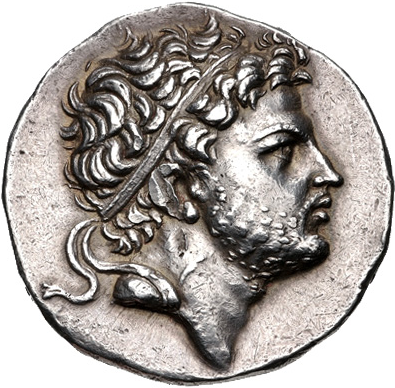
After Philip V of Macedonia died in 179, his son Perseus, who wanted to return his kingdom to its past power, led an aggressive policy against his neighbors. When he tried to assassinate King Eumenes II of Pergamon, a Roman ally, the Roman Senate declared war on Macedonia.
Numidia took part in this war alongside their Roman allies: Massinissa sent a contingent of Numidian cavalry, commanded by his son Misagenes.

Misagenes is less well-known than his brothers: we hear no more of him after his campaign in Macedonia, probably because he died shortly afterwards. He didn’t succeed his father, as he died before him. However, his engagement against Perseus in Macedonia proves him to be a worthy heir of the glorious King of Numidia. His Numidian cavalry rendered precious services to their allies, thanks to their speed, mobility, and efficiency in skirmishes.
Next to their military contribution, the Numids also supplied the Roman army in food, especially wheat, which they cultivated abundantly.
The Battle of Pydna, the decisive battle that determined the outcome of the war, involved hand-to-hand fighting between the Macedonian phalanges and the Roman legions. In such a scenario, the role of the Numidian cavalry was limited. However, the Numids played a role in the Roman victory, as scouts, and in pursuing Macedonian fugitives and preventing them from regrouping.
After the Roman victory, Macedonia was divided into four client kingdoms of Rome. The Numidian troops returned to Africa by sea, but their ships were scattered by a storm and several were shipwrecked. Misagenes himself was ill, and took refuge in Brundusium (Brindisi), Apulia, where he received a warm welcome by the Roman quaestor Stertinius, who gave him gifts and lodging.
Tributes to Massinissa and his sons

The role of the Numidian cavalry in the Roman victory was so important that a monument in honor of the sons of Massinissa was built on the Greek island of Delos. The monument is lost, but its base still exists. An incomplete inscription mentions Gulussa, another son of Massinissa, who led the Numidian army during the Third Punic War. Gulussa’s name appears in second position after a missing name. The missing name is probably his brother Misagenes, the commander of the Numidian cavalry in Macedonia. This would mean that Gulussa probably served under his elder brother’s orders – an useful experience for his future role of commander of the Numidian army after his brother died. The monument probably contained a statue of the Numidian royal family – Massinissa and his two sons – dedicated by the people of Delos. (Source)

Certain online sources mention that another statue of Misagenes was built at the Temple of Apollo in Delphi, one of the most prestigious sites in ancient Greece. This statue reportedly bore the inscription : “The Amphictyons of Delphi [the religious authorities in charge of the sanctuary] honored Misagenes, son of Massinissa, in acknowledgement of his military services.” No such inscription has actually be found in Delphi. The Roman writer Plutarch mentions that Aemilius Paullus, the commander of the Roman troops in Macedonia, had a statue of himself built in Delphi, on a white marble pillar that had been prepared for a statue of his enemy Perseus. The mistaken idea of a statue of Misagenes in Delphi probably comes from a confusion between this statue of Aemilius Paullus and the monument in Delos.
Later on

The Fourth Macedonian War (150-148) was fought at the same time as the Third Punic War, against Andriscus, an usurper who wanted to reestablish the Kingdom of Macedonia. Numidia didn’t take part in this war directly, but the Numidian engagement against Carthage freed Roman troops to fight in Macedonia. This time, after their victory, the Romans took control of Macedonia.
Two years later, in 146, Rome, right after destroying Carthage, mobilised its troops against the Achaean League, a coalition of Southern Greek cities. Their victory at the Battle of Corinth enabled them to extend their domination over all of Greece, at the same time as they took over the former Carthaginian territories in Africa.
