

Français – عربي – ⵜⴰⵎⴰⵣⵉⵖⵜ – English
The ancient kings of Numidia had close links with Greece, especially at the time of Massinissa. Close to a century after Massinissa’s death, the inhabitants of the Greek island of Rhodes built a statue of one of his descendants, King Hiempsal II of Numidia.

Rhodes is one of the largest Greek islands. In the Hellenistic era, Rhodes was an independent kingdom and a Roman ally. The Colossus of Rhodes, a 30-meter high statue, was the biggest statue in the ancient world and one of the Seven World Wonders. Rhodes also controlled the wheat trade in the Eastern Mediterranean.
Cultural and trade links between Numidia and Greece are well-known. During the reign of King Massinissa, Numidia supplied wheat for free to the Greek island of Delos. To thank Massinissa, the inhabitants of Delos built a monument in his honor. Mastanabal, a son of Massinissa, studied in Greece and won the chariot race at the Panathenaic Games. Massinissa also took part, alongside his Roman allies, in their war against the Kingdom of Macedonia, thus contributing to the Roman conquest of Greece. The presence in Greece of a statue of a later Numidian king is however more surprising.

Nevertheless, an inscription that was found in 1969 in the old city of Rhodes mentions King Hiempsal II, great-grandson of Massinissa, who reigned from around 88 to 60. The inscription seems to be the base of a statue of Hiempsal II. We don’t know on what occasion the Rhodians built this statue.
This inscription, the only mention of Hiempsal II outside the Roman world, also mentions his whole genealogical line, from Massinissa to him, thus allowing us to complete and correct our knowledge of the history of the Numidian royal family.
The Greek transcription of the names of the Numidian kings in this inscription is quite surprising. Hiempsal is transcribed Ίυμψύα (Iumpsua), very different from the form usually used by Greek writers, Ίεμφάλ (Iempsal). The transcription of his father Gauda’s name is even more different: Γάος (Gaos), while the common form is Γαύδας (Gaudas).
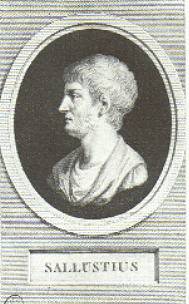
Finally, the discovery of this inscription raises another question. The Roman historian Sallust, who wrote a book on the Jugurthine Wars, used the writings of a Hiempsal as a source on ancient Numidian history. It is usually believed that his source was Hiempsal I, grandson of Massinissa and cousin of Jugurtha, who was killed by Jugurtha. However, the fact that Hiempsal II had links with Rhodes, a major cultural center, and that the Rhodians even honored him with a statue, seems to indicate that he might have been the author of the historical books used by Sallust.
