Ce site présente l'histoire de l'Afrique du Nord avant les conquêtes arabes – This website presents the history of North Africa before the Arab conquests – يعرض هذا الموقع تاريخ شمال إفريقيا قبل الفتوحات العربية
Stoicism is a philosophical school that appeared in the early 3rd Century BCE, and quickly became one of the most influential doctrines of the ancient world. Herillus, one of the first Stoic philosophers, was originally from Carthage.
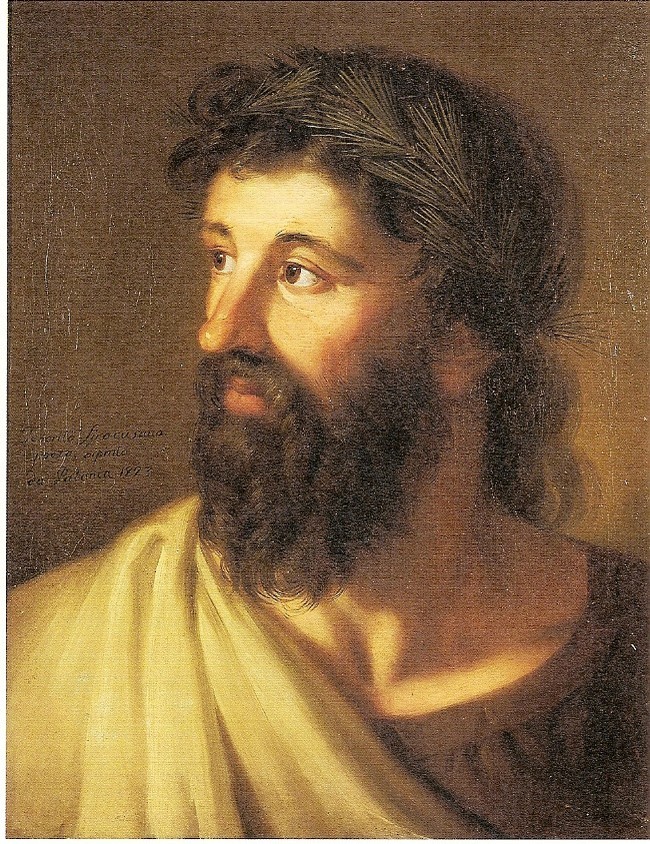
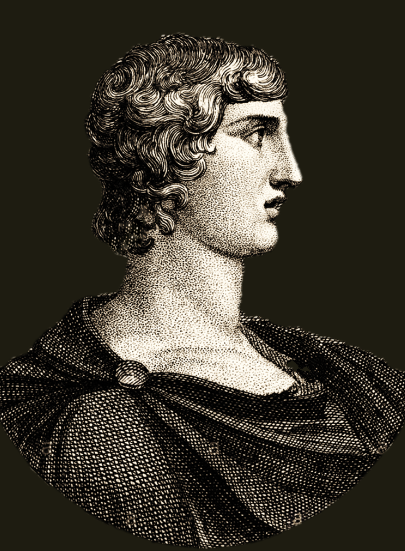
Herillus of Carthage – Image created by ChatGPT
The beginning of the Hellenistic era was a time of intellectual proliferation, propitious to the emergence of new philosophical schools. Epicurus, from the island of Samos, taught that the goal of life was seeking pleasure: his doctrine gave birth to Epicurianism. Diogenes of Sinope, the major figure of Cynicism, lived in a barrel and professed that happiness was found in living close to nature, free from social constraints. Pyrrho of Elis, the founder of Scepticism, erected doubt as a doctrine by claiming that the true nature of things is unknowable.
Ruins of the Stoa of Athens, the meeting place of the first Stoics
The most important of those new philosophies was Stoicism, founded by Zeno of Citium, who taught under the Portico (Stoa) of Athens. To Zeno and his fellow Stoics, the goal of life was the quest of peace through a life of virtue, according to the laws of nature. Stoicism had a strong influence on the Roman Empire: the most famous Roman Stoic philosopher was Seneca, and Emperor Marcus Aurelius was also a Stoic.
Herillus, one of the first Stoic philosophers and a disciple of Zeno of Citium, was from Carthage. Born in Carthage around 280, his family moved to Athens, where he became a disciple of Zeno. He wrote a book, which is lost.
While a disciple of Zeno, Herillus’ thought showed strong differences with his master’s teaching. While Zeno believed that the goal of life was virtue, Herillus saw knowledge as the supreme principle.
Herillus’ philosophy had little impact after his death: Cicero claims that he was mostly forgotten in his lifetime.
In the 3rd Century BCE, the Greek king Pyrrhus of Epirus, wanting to break the Roman and Carthaginian hegemony in the Mediterranean world, invaded Sicily to drive out the Carthaginians from the island. After several victories, he was forced to draw out, letting Carthage take back the territories he had conquered.
Context
Kingdom of Epirus and Pyrrhus’ campaigns
Pyrrhus of Epirus
Pyrrhus was the King of Epirus, a kingdom in modern-day Albania. He was Greek, and a distant relative of Alexander the Great.
At this time, Rome was trying to extend its domination over all Italy. After the Etruscans were defeated, the last Italian cities still free from Roman control were the Greek colonies in Southern Italy (Magna Graecia). Sicily was divided between Carthage and the Greek colonies led by Syracuse. Greeks and Carthaginians had already fought seven wars over the island.
In 280, the city of Tarentum, in Apulia, had a conflict with Rome. The Tarentines called on Pyrrhus to help them against the Romans. Pyrrhus and his army settled in Southern Italy. He won several victories against the Romans, in Heraclea and Asculum. However, his victories were so costly in human lives that the expression “Pyrrhic victory” is used nowadays for a victory that comes so costly to the victor that it is almost equivalent to defeat.
Pyrrhus in Sicily (278-276)
Shortly after Pyrrhus’ victory in Asculum, the Greek cities of Sicily sent him messengers to ask for help to drive out the Carthaginians from Sicily. At the same time, the Macedonians, as their king had just died, called on him to take their throne. Pyrrhus, who still aspired to conquer an Empire, but also understood that he wasn’t powerful enough to continue fighting Rome, decided to go to Sicily.
Coin with the effigy of Pyrrhus, minted in Syracuse in 275
Pyrrhus landed in Sicily in 278. After forcing the Carthaginians to lift their siege of Syracuse, he was proclaimed King of Sicily. His army was composed of 30.000 infantrymen, 3.000 horsemen, 20 war elephants, and 200 ships.
Pyrrhus’ campaign in Sicily lasted 3 years. After a first victory against the Carthaginians in Heraclea Minoa, other Punic and allied cities, like Selinunte and Segesta, joined his side. Eryx, the main Carthaginian fortress in Sicily, was taken in 277. Pyrrhus also submitted the Mamertines, in Messana.
In 276, Pyrrhus besieged Lilybaeum, the last Carthaginian possession in Sicily. As he knew that he wouldn’t be able to conquer the city without also blockading it by sea, he decided to collect money from the Sicilian cities to build a fleet. The unpopularity of this measure, together with his harshness in forcing the Sicilians to pay, caused him to lose the support of his allies. At the same time, the Romans started taking back the territories he had conquered in Southern Italy. In the end, Pyrrhus lifted the siege of Lilybaeum, and drew out of Sicily.
Later on
Back in Italy, Pyrrhus was defeated by the Romans in 275, at the Battle of Beneventum. He returned to Greece and was crowned King of Macedonia. He was killed in 272, after besieging Sparta and failing to take control of the Peloponnesus. After his death, Tarentum, the last Italian city that had not yet been conquered by the Romans, submitted to Rome.
Sicily before the First Punic War – Grey: Carthaginian territory – Green: Greek territory – White: Mamertine territory
In Sicily, the balance of power between Greeks and Carthaginians was almost unchanged by the war: Carthage took back control of the cities that had been abandoned by Pyrrhus. Several years later, Rome and Carthage, who were allied against Pyrrhus, fought each other for the control of the island: the First Punic War.
The Necropolis of the Rabs, or Necropolis of Bordj Djedid, is a Punic-era cemetery, located on the Carthage archaeological site. It was rediscovered in 1897, and as the largest Punic necropolis, it teaches us a lot on the ancient Carthaginian funerary rites.
Selection of objects found in the necropolis, exposed in the National Museum of Carthage
Sarcophage of the Princess, watercolor painting, 1903, by Auguste-Émile Pinchart
The Necropolis of the Rabs was active from the 5th Century to the fall of Carthage, with activity peaks in the 4th and 3rd Centuries. Is is estimated that all the Carthaginian necropoles covered around 60 hectares, while the surface of the city itself was of over 300 hectares. More than 3.000 tombs were excavated in Carthage, including around 1.000 in the Necropolis of the Rabs.
The examination of these tombs enabled specialists to study the evolution of Carthaginian funerary practices. While the oldest constructions are individual and family funerary chambers, throughout the centuries, specific zones were allocated to specific families, clans and religious colleges. The deceased were both buried and incinerated. Cremation became dominant in the 4th Century, during the hellenistic era, because of space restrictions. The ashes were preserved in limestone boxes. Jewels, potteries and a diversity of other objects, made of gold, bronze or ivory, accompanied the deceased in their last abode.
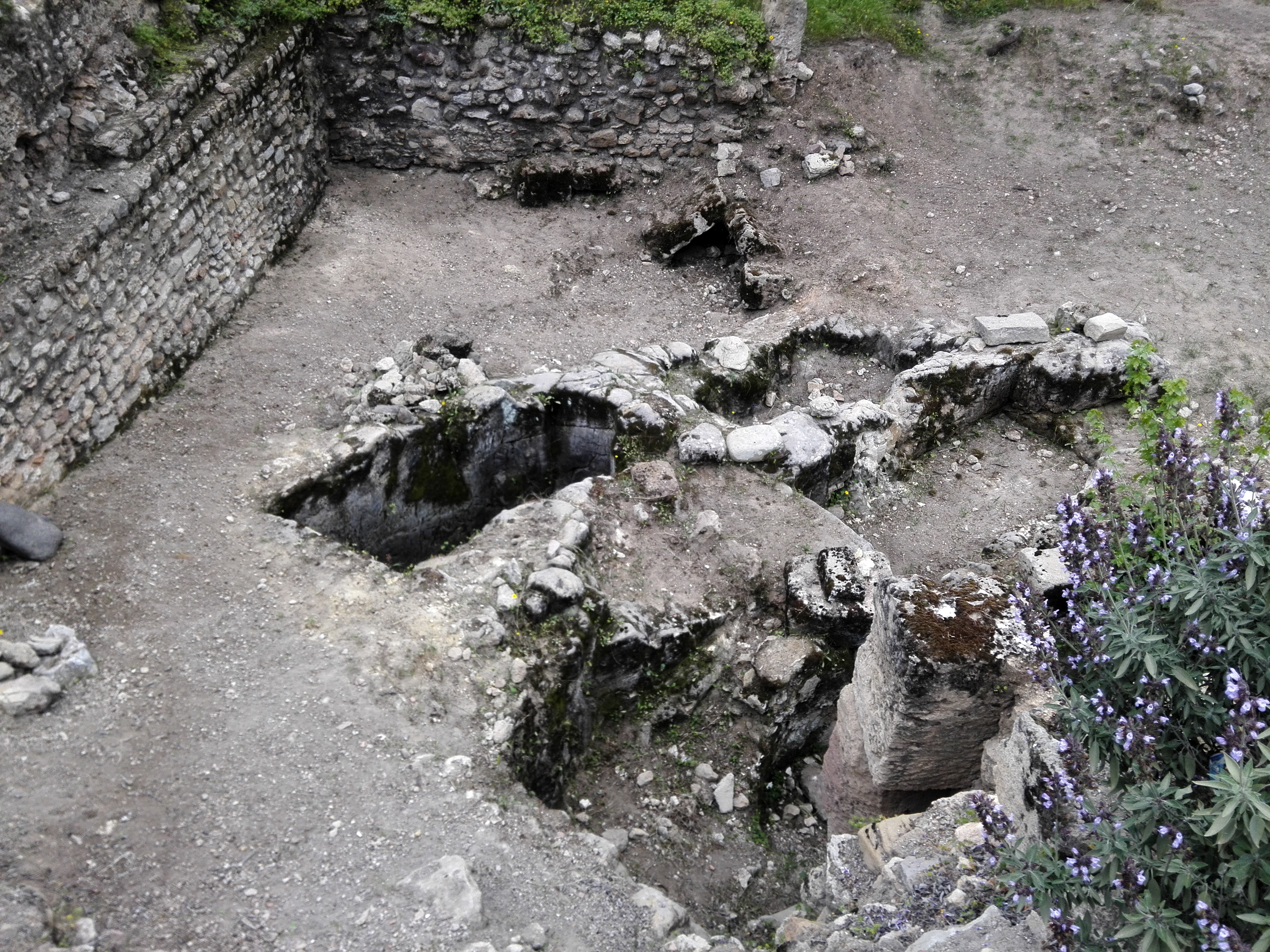
The funerary chambers were aligned in rows and accessible through corridors. Wells were built to get down to them; their average depth was 12m, and the deepest was 27m. Entails in the walls enabled people to climb down. The wells served to protect the funerary chambers against robbers. They might have also played a religious role.
The funerary chambers’ architecture and the rich objects they contain show that the Necropolis of the Rabs was used by the elite of Carthaginian society. It is possible that is was set apart for the priests and religious officials, who were chosen amongst the aristocratic class and played an important ceremonial role.
Around 15 sarcophages dated to the 4th-3rd Centuries were unearthed in the Necropolis of the Rabs. Those sarcophages are made of wood, sandstone, stone and marble. They were made above ground, and then lowered down to the funerary chambers with ropes.
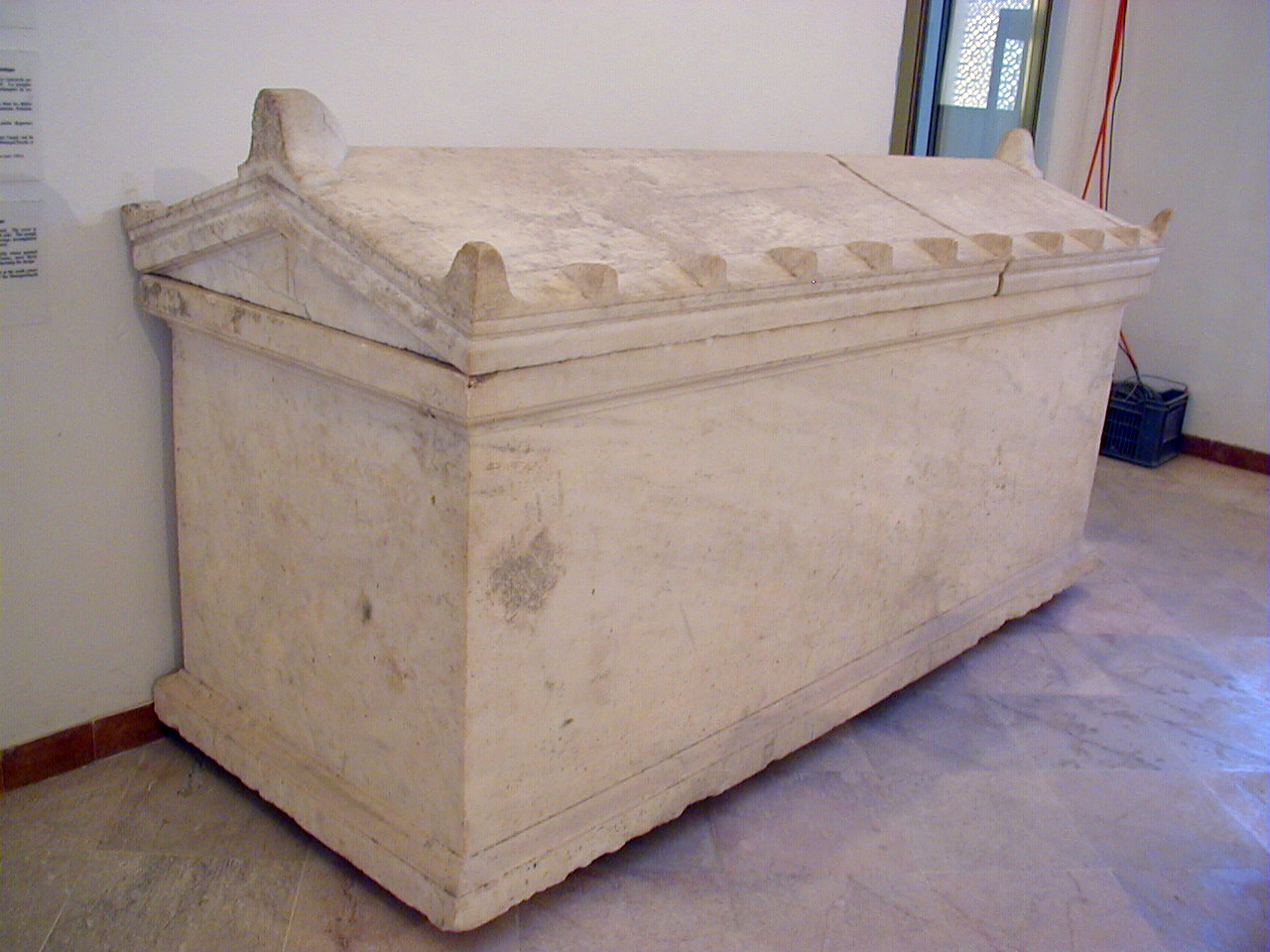
Marble sarcophage, Greek inspiration
Some sarcophages show a Greek influence, with a roof-formed cover that reminds us of Greek temples. Those sarcophages might have been made by Greek migrants in Carthage. There are also some Egyptian-style sarcophages, with mummies.
.
Sculpted-cover sarcophages, exposed in the Carthage Room of the Louvre Museum, Paris
The most spectacular are four sculpted-cover sarcophages. Carthaginian sculpture is not well documented; those sarcophages are the main known examples. The sculpted covers represent human shapes: two men and two women. These sarcophages were found in two funerary chambers containing each one male and one female sarcophage, which means that they probably belong to married couples who were buried together.
Sarcophage of the Winged Princess
The lost amazing discovery of all is the Sarcophage of the Princess, exposed in the National Museum of Carthage. This white-marble sarcophage represents a woman with bird’s wings. The woman holds a dove in one hand, and a vase of perfume in the other. Her hairstyle is Egyptian, and her wings seem to evoke the Egyptian goddesses Isis or Nephthys; they might also be a symbol of the goddess Tanit. She is covered in a falcon-shaped veil that reaches down to her knees, and the lower part of her body looks like a fish tail. The sarcophage was originally colored, but the colors faded with time.
During the 5th and 4th Centuries BCE, Carthage fought seven wars against the Greeks of Sicily, over the control of the island. Around 345, the Carthaginian suffete Mago took advantage of the divisions between rival political factions in Syracuse, the main Greek city of Sicily, to enter the city at the invitation of one faction, but he failed to win a victory allowing Carthage to take the upper hand over its rival.
Context
Syracuse
Starting in the 6th Century BCE, several Greek colonies were founded in Southern Italy. Greek influence in this region was so strong that the Romans called it Magna Graecia (Great Greece). In Sicily, the main Greek colony was Syracuse, founded around 734 by colonists from the city of Corinth.
During most of the 5th and 4th Centuries, the Greek cities of Sicily were governed by tyrants (authoritarian leaders, against the Greek democratic ideal). The most famous tyrants of Syracuse were Dionysius the Elder (405-367) and his son Dionysius the Younger (367-357, 346-344).
Reign of Dionysius the Younger
Coin with the effigy of Dionysius the Younger
Dionysius the Younger, who was less than 30 years old when he succeeded his father, had no experience of power and was leading a frivolous and dissolute life. The first years of his reign were characterized by tensions with his uncle Dio, who wanted to reform the governance of Syracuse in order to make it more democratic. Dio was exiled by Dionysius the Younger, but in 357, he returned and led a revolt against his nephew. Dio managed to take power, but he was assassinated in 354.
Euryalus fortress: the citadel where Dionysius the Younger found refuge
After years of instability, Dionysius the Younger returned to power in Syracuse in 346. His power was contested by Hicetas, the tyrant of the neighboring city of Leontini and a friend of Dio, who welcomed his family after his death. After Dionysius the Younger’s return, Leontini became the rallying point of the Syracusans who were opposed to his power. Hicetas finally attacked Syracuse, and took control of the whole city, except the citadel, where Dionysius the Younger took refuge.
In this context, a group of Syracusans who were tired of the unending wars against Carthage and the political divisions that weakened the city, decided to send a call for help to Corinth, the mother-city of Syracuse. The Corinthian general Timoleon was sent to Sicily, to restore stability in Syracuse.
The mission of Mago of Carthage
The rivalry with Carthage always played an important role in Syracusan internal political intrigues. Dio’s banishment was apparently motivated by a letter he had sent to the Carthaginian authorities, in which he advises them to consult him directly for peace negotiations.
Syracusan coin with the effigy of Timoleon
On his arrival in Sicily, Timoleon first fought Hicetas, who was heavily defeated. Soon after, Dionysius the Younger gave up the citadel of Syracuse into the hands of Timoleon. The city was now divided between the forces of Hicetas and Timoleon.
Mago in Syracuse – Image created by ChatGPT
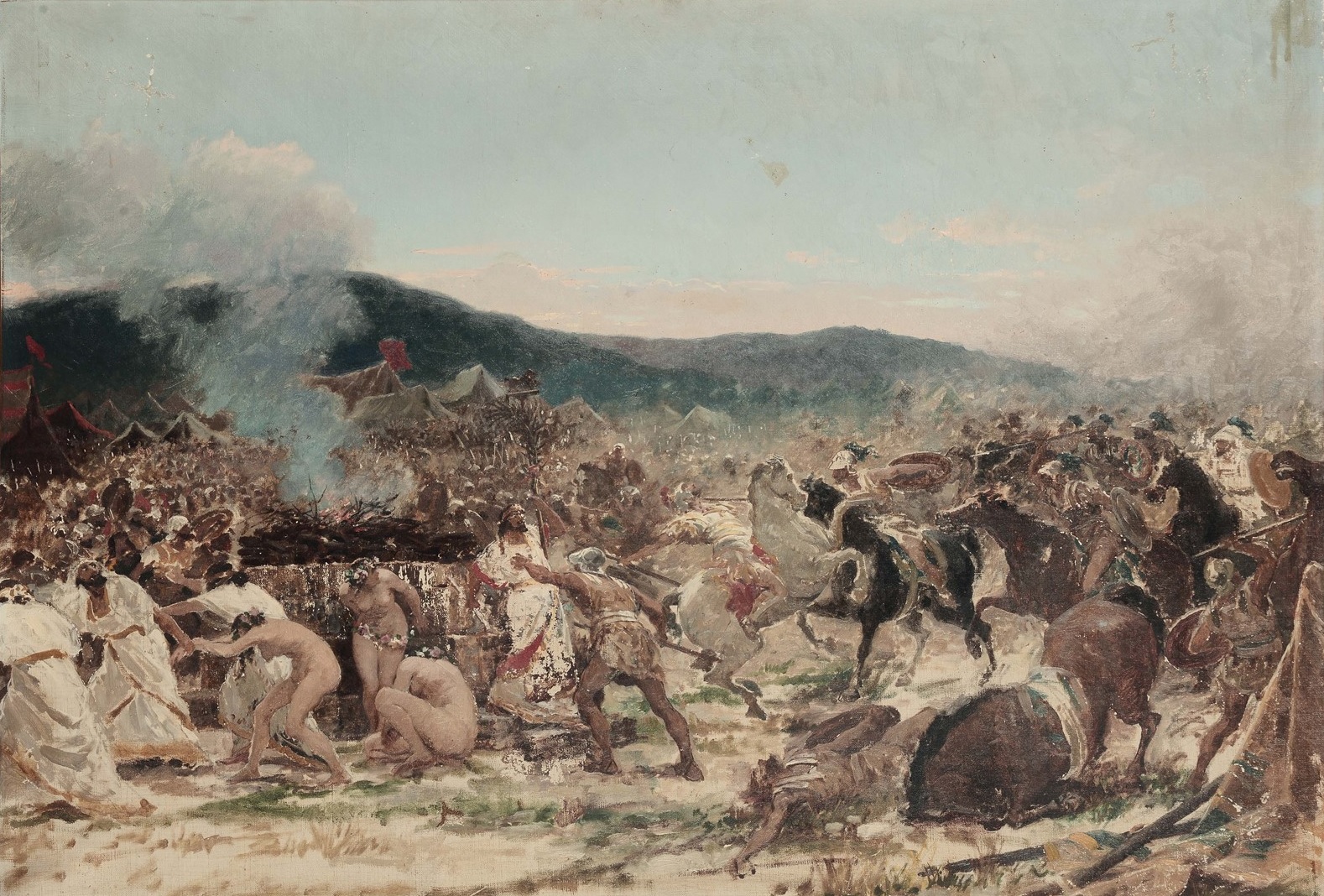
This is when Hicetas called on the Carthaginians to help him against his new enemy. The Carthaginian suffete Mago entered the port of Syracuse at the head of a large fleet, and then marched into the city at the invitation of Hicetas. He was hoping to obtain an issue that would be favorable to Carthaginian interests.
This Carthaginian intervention was short-lived: not long after he arrived, Mago, who was facing the hostility of the Syracusan population and feared betrayal, drew his troops out of Syracuse and returned to Carthage. After he left, Hicetas was easily defeated by Timoleon. The Corinthian general became the new master of Syracuse.
Later on
Dionysius the Younger went into exile in Corinth, where he died the following year.
Timoleon
Timoleon established a new Syracusan Constitution which reestablished democracy after half a century of tyranny. He invited new settlers from continental Greece to settle in Syracuse and other Sicilian cities, in order to rebuild the economy after the years of war.
Once the situation in Syracuse was stabilized, Timoleon continued the war against Carthage. He won a major victory against the Carthaginian troops led by Mago, who committed suicide after his defeat. Carthage was forced to sign a peace treaty allowing it to keep control only over the Eastern half of Sicily.
Timoleon spent the last years of his life fighting the last tyrants of Sicily. Hicetas, in Leontini, was defeated and executed. Timoleon remained in history as the liberator of Sicily.
In the beginning of the 5th Century BCE, Carthage led a military intervention in Sicily, against the Greek cities of Syracuse and Akragas. The Carthaginian army was defeated at the Battle of Himera. This defeat led to a profound reform of Carthaginian society, to make it more democratic by limiting the powers of the King in favor of an assembly elected by the people.
Sicily before the Battle of Himera Red: Syracusan territory; yellow: territory submitted to Syracuse ; blue: territory submitted to Akragas; black spots: Carthaginian cities
At this time, most Greek cities in Sicily had come under the power of tyrants (authoritarian leaders, against the Greek democratic ideal). Gelo, the tyrant of Syracuse, who controlled the largest territory, made an alliance with Thero of Akragas, creating an united Dorian Greek front, against the Ionian Greeks and the indigenous Sicels. Against this threat, the Ionians entered an alliance with Carthage.
The Battle of Himera
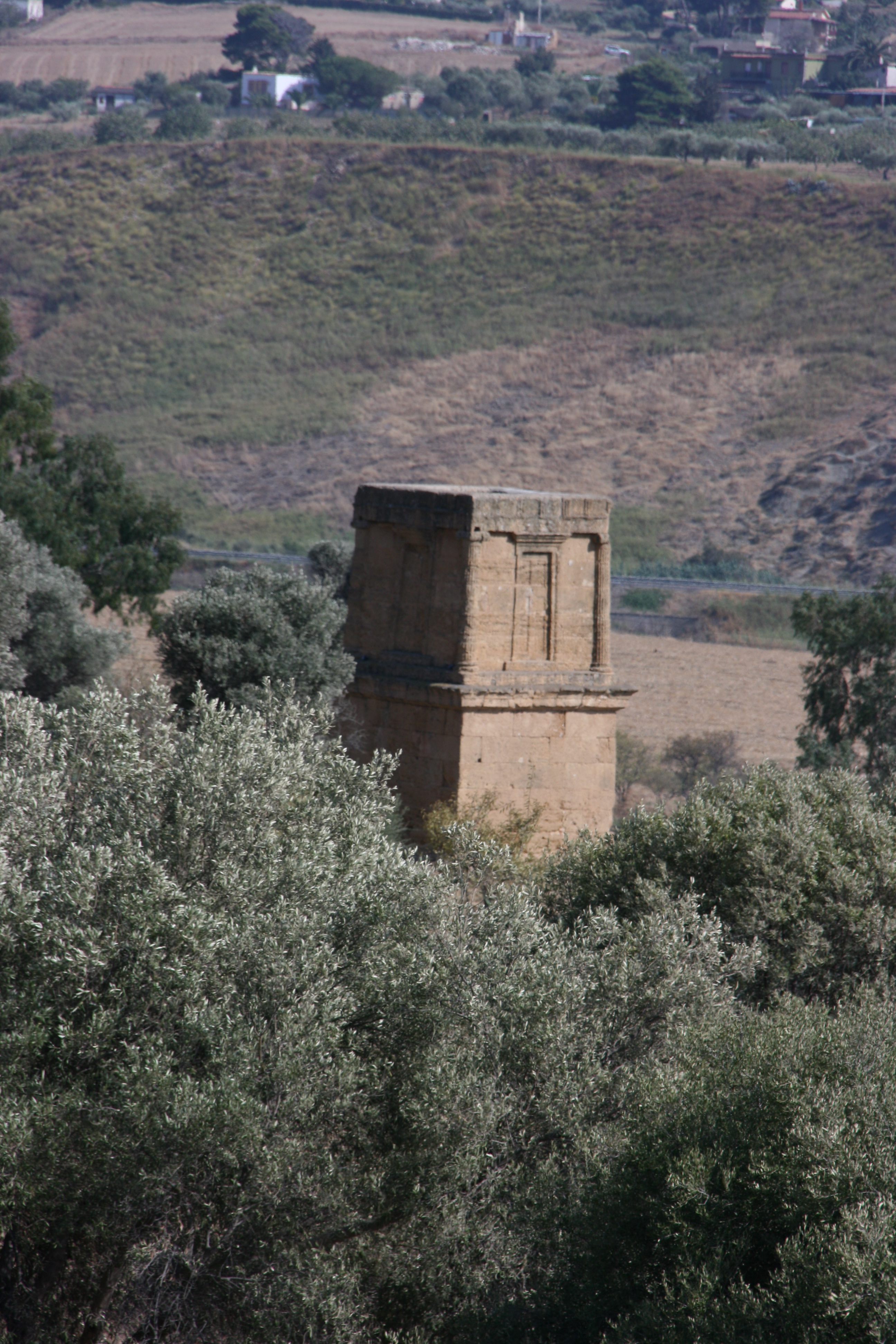
Tomb of Thero of Akragas, the tyrant who defeated Carthage at Himera
In 483, Thero of Akragas deposed Terrilus, the Ionian tyrant of Himera. Terrilus called on Carthage for help. The Carthaginians, concerned that the alliance between Gero and Thero would take over all Sicily, intervened in 480.
The Carthaginian army, led by King Hamilcar I, was defeated at the battle of Himera. Hamilcar himself was killed, or committed suicide after his defeat, depending on the sources. Carthage however kept its Sicilian possessions.
In the first few centuries after its foundation, Carthage was governed by a leader called suffete (shophet). Greek and Roman historians called them “kings” of Carthage, but most modern historians believe this was a mistake due to their ignorance of the Carthaginian political system. Their role seems to have been different from the kings in most ancient kingdoms. In this article, we will discover all that we know about the ancient “kings” of Carthage.
The suffetes: kings of Carthage?
Reconstitution of Carthage
We know very little of the ancient history of Carthage: some historians even doubt that it can be reconstructed at all, because of the total destruction of all Carthaginian historical sources when the city was destroyed. We thus don’t know what exactly was the role of the first suffetes. Anyway, they probably weren’t “kings” in the most common sense in Antiquity, but rather prominent magistrates (shophet 𐤔𐤐𐤈 means “judge” in Phoenician) who were chosen for their competences, maybe as “first among equals”. We don’t know if their function was hereditary: most suffetes came from the same families, but this might have been more a question of education than dynastic succession.
The kings of Carthage
This is the most common list of ancient kings of Carthage, based on the research of French historian Gilbert Charles-Picard. This list is only one out of several existing theories. All dates are speculative.
The first known historical king was Hanno I, who reigned from 580 to 556. He was probably a descendant of Dido. Nothing more is known of his life.
His successor Malchus (556-550) probably had a military background. The Carthaginian conquest of the North African coast started in his time. At the beginning of his reign, he led a campaign in Sicily, probably after the Phoenician colonies called on him for help against Greek expansion on the island. The Phoenician cities in Sicily, like Motya, Panormus and Soluntum, became part of the Carthaginian Empire. Later on, he fought the Libu in the region of Leptis Magna for control of the Libyan coast. Close to the end of his reign, he was sent to Sardinia with an army of 80.000 men, to support the local Phoenician population against the indigenous Nuragic civilisation. He won several victories, and established several Punic colonies on the island; but after a defeat, he was exiled together with what was left of his army. He then returned to besiege Carthage, took control of the city by force, and had those who exiled him executed.
The Magonid dynasty (550-340)
Around 550, Mago, a general in the Carthaginian army, seized power in Carthage. He reigned from 550 to 530, and founded a dynasty that remained in power for two centuries. We don’t know if he was originally a mere military strongman who grabbed power by force, of if he was recognized as a legitimate king.
Alalia, the first Carthaginian possession in Corsica
Mago I started by having Malchus executed for treason, because of his attack against Carthage. During his reign, Carthage continued to impose itself as the main power in the Western Mediterranean Basin. He made an alliance with the Etruscans against the Greeks of Massalia, which would last until the Roman era. Around 540, Carthaginians and Etruscans together attacked Alalia, a Phocaean colony in Corsica. The Phocaeans were defeated and forced to abandon Alalia, and the area came under Carthaginian control. Mago then strengthened Carthaginian domination over Southern Spain, from Gadir (Cadiz). Close to the end of his reign, the Tartessian civilisation, an important trading partner of Carthage in Spain, fell, allowing the Carthaginians to take control of their mines of precious metals.
Mago II was succeeded by his son Hasdrubal I (530-510). According to the Roman historian Justin, he was elected “king” 11 times – which shows that the function of suffete might have been elective and not hereditary. Together with his brother Hamilcar, he led a military expedition in Sardinia. He was honored four times by a triumph for his victories, the only Carthaginian who received so many honors. During his reign, the Greek prince Dorieus of Sparta tried to establish a Greek colony close to Leptis Magna, but he was expelled. Hasdrubal was wounded and died in Sardinia around 510.
His brother and successor Hamilcar I (510-480) continued their 25-year-long campaign for the control of Sardinia. The indigenous population was supported by the Greeks of Magna Graecia (Southern Italy). Hamilcar is also known to have signed the first treaty between Carthage and Rome, defining their respective zones of influence, and more specifically recognizing Carthaginian control over Sicily and Sardinia.
The Battle of Himera: a turning point in Carthaginian history
Hannibal I (440-406), the grandson of Hamilcar I, led a military expedition in Sicily in 410. The Carthaginians took control of the Greek cities of Selinunte and Himera. After his victory, Hannibal had 3000 prisoners of war executed, to avenge his grandfather’s defeat in Himera 70 years earlier. A few years later, Hannibal died of the plague during the siege of Agrigento.
Carthaginian soldier
After Bomilcar, the son of Hannibal I, died a few days after him, his nephew Himilco II (406-396) succeeded him. Himilco II might be the son of Hanno the Navigator. He continued the war in Sicily, until a peace agreement was concluded with Syracuse. The war broke out again in 398. Himilco besieged Syracuse. After a defeat, he decided to lift the siege and evacuate all Carthaginian soldiers, abandoning the foreign mercenaries who were fighting with him. The Carthaginians, shocked by his attitude, destituted him. According to the Greek historian Diodorus Siculus, Himilco, full of regret, let himself die of hunger in Carthage.
His successor Hanno III (344-340) was the last suffete of the Magonid dynasty. After Mago III’s defeat, he led a Carthaginian relief operation in Sicily, but he was also defeated.
The Hannonid dynasty
Another Hanno, who was not from the Magonid family, won an important victory against the Sicilian Greeks in 367, and became one of the richest and most powerful men in Carthage for twenty years. After the last Magonid suffete Hanno III was defeated, he tried to take power with the support of a local Amazigh chief. He was captured and tortured to death with several members of his family.
Soon after his death, the Carthaginian authorities called on Gisco, a son of Hanno who had already been exiled before his father’s death, to continue the fight in Sicily. He won several victories, but couldn’t defeat Timoleon, who had now taken power in Syracuse.
Bomilcar, the brother (or a more distant relative) of Hamilcar, tried to take power after Hamilcar’s death. The traditional function of suffete wasn’t enough for him: he wanted the power of the ancient kings before the 480 reform. He failed and was crucified.
Alexander the Great, the greatest conqueror of the ancient world, conquered an Empire that spread from his native Macedonia to the river Indus. His conquests caused such fear in Carthage that the Carthaginians decided to send a spy to inform them about his projects.
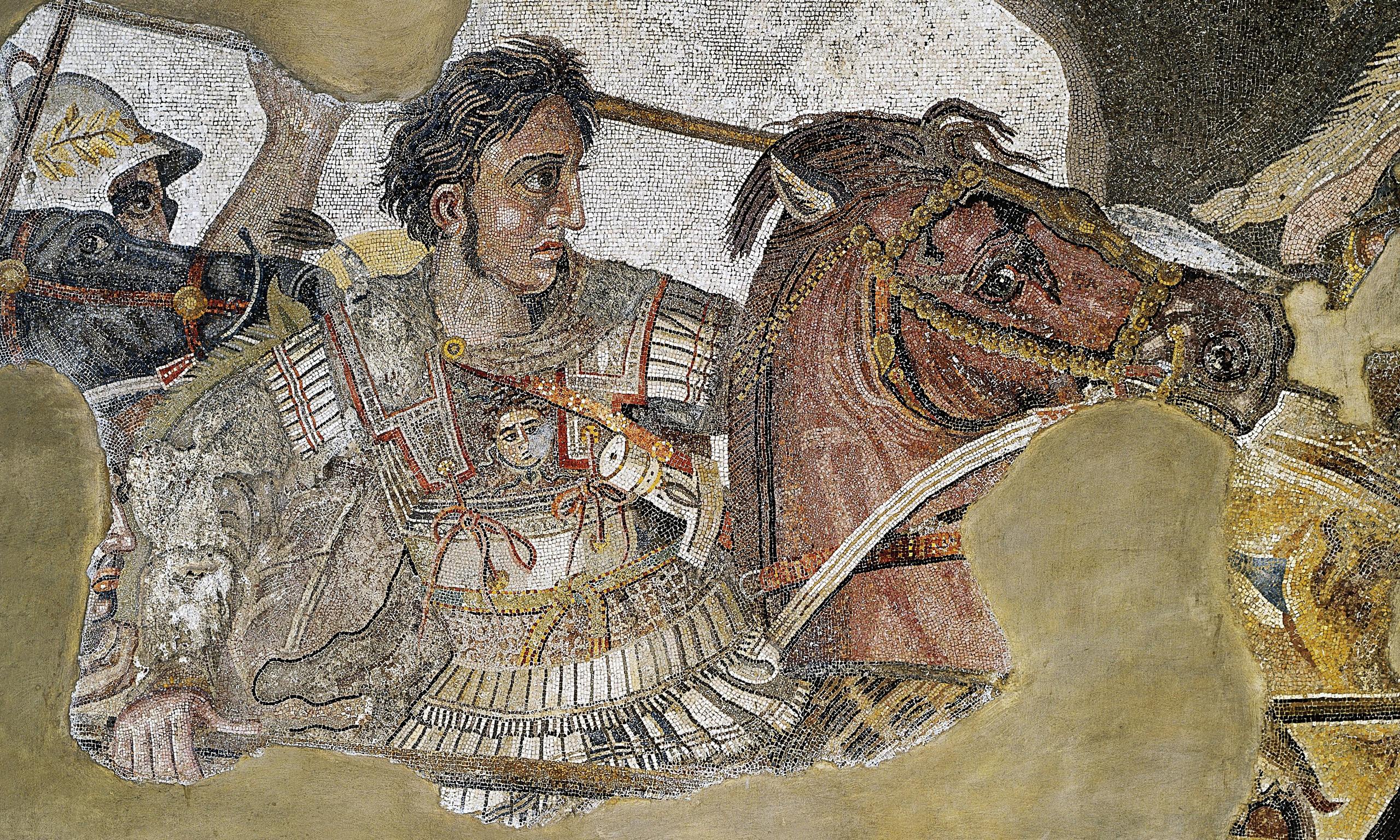
Alexander the Great – Mosac from Pompeii
Context: Alexander the Great’s campaigns
After inheriting from his father a kingdom that already dominated most of Greece, young King Alexander III of Macedon’s main ambition was defeating the mortal enemy of the Greeks: the immense Persian Empire. He crossed the Hellespont in 334, and first conquered Asia Minor (modern-day Turkey).
Siege or Tyre – Drawing by André Castaigne
In 332, he besieged Tyre, the capital of the confederation of Phoenician city-States. During this siege, the women and children of the city were evacuated to Carthage. After some time, Alexander the Great understood that he needed a fleet to conquer the city. At this moment, 80 Persian ships from the cities he had already conquered joined him, followed by 120 ships from Cyprus who had heard of his exploits. With this fleet, he took control of the city. The Phoenician civilisation, which had once dominated a vast part of the Mediterranean basin, was now surviving only in its diaspora, centered on Carthage.
In October 331, he fought the army of the Persian Emperor Darius III at Gaugamela (probably Tel Gomel, close to Erbil, modern-day Iraqi Kurdistan). He won a total victory. The Persian Empire, the historical enemy of the Greeks, was defeated. In the following years, he extended his conquests further and further East. When he died in 323, he was at the head of the largest Empire in ancient history.
Carthaginian reaction
Equestrian statue of Alexander the Great, Thessalonica
At the beginning of the campaigns of Alexander the Great, the Carthaginians mostly met him with indifference: his army was far away from their borders, and he was mostly interested in the Eastern regions. This changed after his conquest of Tyre, the mother city of Carthage, with which the former colony had maintained close links: the Carthaginians now feared that once he reached his goals in the East, Alexander the Great would turn West, towards their Empire. This fear grew even greater after the founding of Alexandria, on the Southern Mediterranean coast, as its port was threatening to become a powerful rival for Carthage.
The Carthaginian spy Hamilcar the Rhodian – Image created by ChatGPT
This is when the Carthaginian authorities decided to send a spy into Alexander the Great’s army. The spy was called Hamilcar the Rhodian (not to be confused with Hannibal the Rhodian, a Carthaginian officer during the First Punic War). His mission was to keep them informed about Alexander the Great’s projects, especially if he was planning to attack Carthage.
This Carthaginian spy is mentioned only by three ancient authors: Frontinus, a 1st-Century Roman military officer, Justin, a 2nd-Century Latin historian, and Orosius, a 5th-Century Christian author who wrote a history of the world in a Christian perspective. All those authors wrote several centuries after the events, which led certain modern historians to doubt their testimony. It is however possible that their writing is based on older sources that are now lost. Most historians now accept that the story of the Carthaginian spy is historical.
Were the Carthaginian fears valid? Was Alexander the Great really intending to return and attack Carthage after conquering the East? Modern historians disagree on this question: some sources say that after his conquest of Tyre, he sent Carthaginians living in the city back to Carthage with the message that their turn would come, but even if this is true, it might be more war rhetoric that a real plan for future conquests. Anyway, the Carthaginian fears were real.
Whether or not Alexander the Great had the intention of conquering Carthage, he didn’t have time: he died in 323, in Babylone, at only 32 years of age.
By the end of the First Punic War, while the Romans were besieging the Sicilian city of Libybaeum, an adventurous Carthaginian officer, Hannibal the Rhodian, entered the city by sea, in full sight of the Romans, to deliver provisions to the besieged inhabitants. Thanks to his ship’s superior speed, he escaped the Roman troops.
–
Hannibal the Rhodian was an officer in the Carthaginian army during the First Punic War. His nickname “the Rhodian” probably comes from his amazing navigation skills: the inhabitants of the island of Rhodes were known as great seamen. Hannibal the Rhodian was also a skilled inventor: his ship, which he built himself, was equipped with special functions to make it even faster than the other ships of the Carthaginian fleet.
Around 250, after over 10 years of fighting in the First Punic War, the Romans had taken control of most of Sicily. The Roman army then decided to besiege Lilybaeum (modern-day Marsala), one of the last Carthaginian cities on the island.
It was during this siege that Hannibal the Rhodian became famous. The historian Polybius tells how he entered the port of Lilybaeum, in the middle of the day, without even trying to hide from the enemy, to deliver provisions to the besieged Carthaginian troops. Then, alone on his ship, he left, and easily escaped the Roman ships attacking him: his ship was so fast that nobody could catch up with him. Polybius mentions he even stopped to insult and provoke his enemies.
After Hannibal the Rhodian’s exploit, others followed his example. These expeditions not only enabled the Carthaginians to provide food to the besieged city, but also to obtain useful intelligence on their enemies. The Romans, overwhelmed by such audacity, tried unsuccessfully to close up the entrance of the port.
One day, a Carthaginian ship was stranded on a sand bank. The Romans seized it and used it to pursue other ships delivering provisions to the city. Hannibal the Rhodian himself was finally captured during one of his expeditions. The Romans built their own fleet based on the model of his ship, which enabled them to prevent further expeditions.
The Etruscans were an ancient civilisation that lived in Central Italy. As historical rivals of the Romans, they were allies of Carthage. Quite a few Etruscan handicraft objects were found in Carthage and elsewhere in North Africa.
Etruscan Tesserae Hospitales found in Carthage – a “tessera hospitalis” was a small object used to symbolize an agreement of mutual friendship, hospitality and assistance between two individuals, families or communities: the tessera was divided in two, and each party to the agreement kept one half of it as proof of their agreement and a sign of mutual recognition when they met again
Map of the 12 cities of the Etruscan League and of the expansion of the Etruscan civilisation
The Etruscans appeared around 900 BCE, and formed a federation of 12 city-States who shared the same language and a common culture. Their region, Etruria, was in the center of the Italian Peninsula, between the Arno and Tiber rivers. The Etruscan civilisation dominated Italy until the beginning of the Roman expansion. From the 6th to the 3rd Century, the Etruscan city-States fought several wars against the Romans, through which Rome took control of Italy. The Etruscans were later assimilated into the Roman civilisation. They received roman citizenship in 90, together with all the inhabitants of Italy.
Etruscan potteries found in Carthage (click to enlarge)
Etruscans and Carthaginians had common interests in the Mediterranean, as natural allies against the Greek influence in their region. They first allied in 540, to attack Alalia, a colony founded by the Greeks of Massalia in Corsica, together. The Etruscan-Carthaginian alliance was victorious: the Greeks abandoned Alalia and Corsica came under Carthaginian sovereignty. Later on, the Etruscans supported Carthage in their first wars against the Greeks in Sicily. Around the end of the 5th Century, the Etruscan power started declining and their involvement in Sicily ended. The Carthaginians, eager to avoid open conflict with Rome, did not send military support to the Etruscan cities during their wars against the Romans; but they did support their Etruscan allies financially (and maybe also through their fleet), especially when in coincided with their interests in Sicily and Sardinia. As the Etruscans were defeated by the Romans before the beginning of the Punic Wars, they were unable to support Carthage against Rome.
Bronze infundibula found in Carthage
Carthage entertained close trade links with the Etruscans, as can be seen by the many Etruscan handicraft objects that have been found in Carthage and in other Punic cities in North Africa – mostly pottery and bronze. There are even inscriptions revealing an Etruscan presence in modern-day Tunisia and Algeria until the 2nd and 1st Centuries (after the destruction of Carthage) – probably populations who fled to Africa after their territory was conquered by Rome.
After the Roman conquest, the Punic language and culture did not disappear, but kept a deep influence in the former Carthaginian territories. The Ghorfa Steles, a series of steles that were found in Maghrawa, Tunisia, show the links between the Punic cultural heritage and the new Roman African civilisation.
Ghorfa steles, Musée du Louvre, Paris
The Ghorfa Steles are a collection of Punic-Roman steles dating from the end of the 1st Century to the beginning of the 2nd Century AD, over 200 years after the fall of Carthage. These steles were discovered gradually, between 1842 and 1967, in Maghrawa, close to Makthar, Tunisia. As they were scattered after their discovery, their exact provenance was determined only recently, by the works of the Tunisian researcher Ahmed M’Charek.
Steles, Makthar Museum
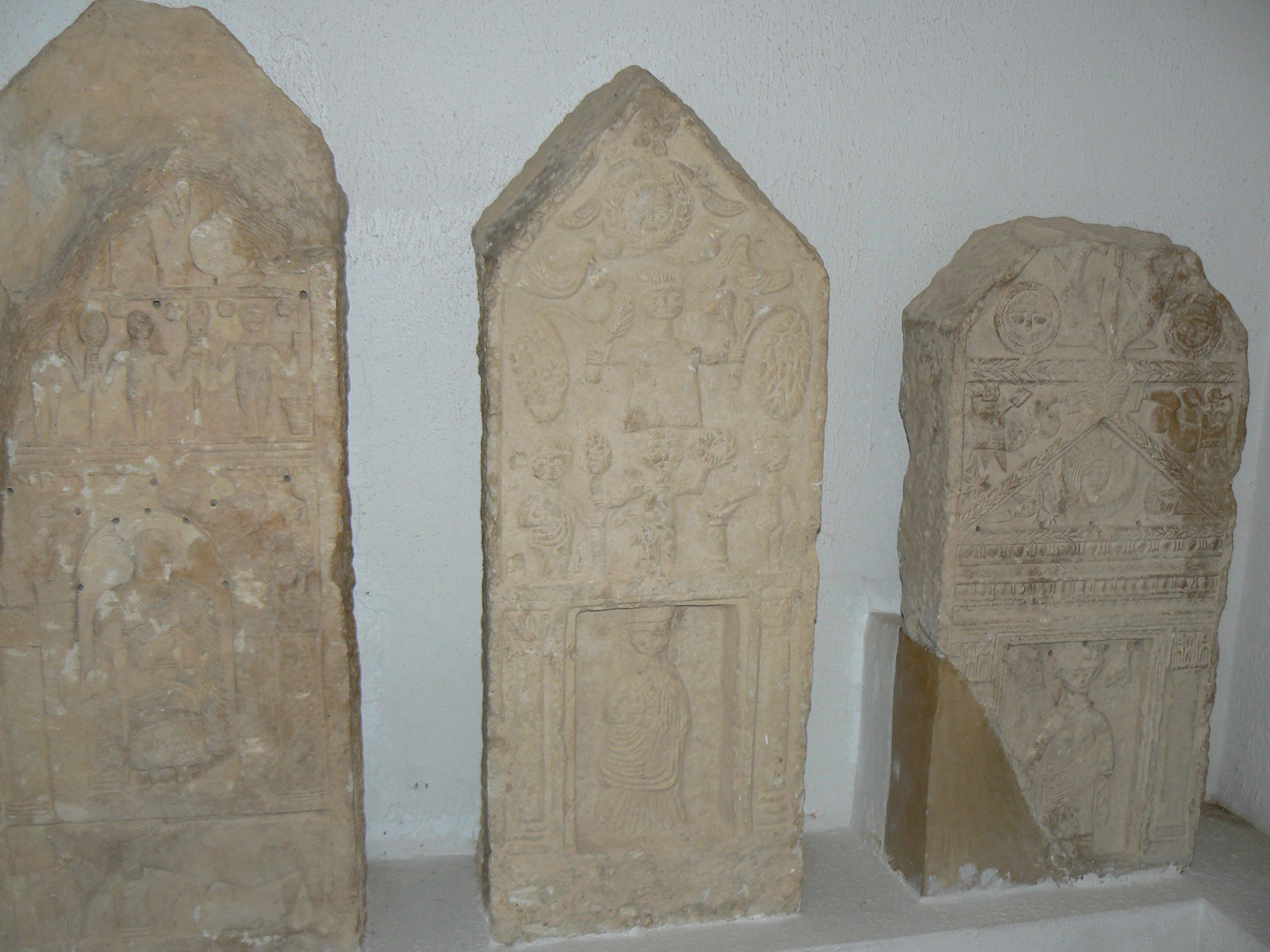
The Ghorfa steles are now shared between several Tunisian and foreign museums. The British Museum, in London, has the largest share, with a collection of 22 steles. 3 steles are exposed at the Musée du Louvre, in Paris, and 2 others at the Kunsthistorisches Museum, in Vienna. Finally, 17 steles are still in Tunisia: 12 at the National Bardo Museum, 4 at the Makthar Museum and the last one at the Dougga Antiquarium. The cover image of this article shows the collection of the Bardo Museum.
The Ghorfa steles are around 1.75m high. They have a triangular top, and contain three successive levels. Some steles also have dedications written in Latin.
Middle and lower levels of the same stele
Upper level of one of the steles in the Bardo Museum
The steles’ three levels represent the cosmic hierarchy according to the traditional Punic worldview. The upper level shows the world of the gods, represented in human form, with astral symbols of the sun and moon. The sign of Tanit sometimes appears, together with Roman divinities like Mercury and Venus. The middle level is the level of the dedicant, who dedicates the stele to the gods: he is standing in what appears to be a chapel, with columns and pontoons. The dedicant can be a man or a woman. Finally, the lower level represents the world of men. This level often shows scenes of sacrifices.
These steles tell us a lot about the religious and cultural syncretism in Roman Africa at this time, with a mix between Punic and Roman divinities and symbols.