

Français – عربي – ⵜⴰⵎⴰⵣⵉⵖⵜ – English
In the first few centuries after its foundation, Carthage was governed by a leader called suffete (shophet). Greek and Roman historians called them “kings” of Carthage, but most modern historians believe this was a mistake due to their ignorance of the Carthaginian political system. Their role seems to have been different from the kings in most ancient kingdoms. In this article, we will discover all that we know about the ancient “kings” of Carthage.
The suffetes: kings of Carthage?

We know very little of the ancient history of Carthage: some historians even doubt that it can be reconstructed at all, because of the total destruction of all Carthaginian historical sources when the city was destroyed. We thus don’t know what exactly was the role of the first suffetes. Anyway, they probably weren’t “kings” in the most common sense in Antiquity, but rather prominent magistrates (shophet 𐤔𐤐𐤈 means “judge” in Phoenician) who were chosen for their competences, maybe as “first among equals”. We don’t know if their function was hereditary: most suffetes came from the same families, but this might have been more a question of education than dynastic succession.
The kings of Carthage
This is the most common list of ancient kings of Carthage, based on the research of French historian Gilbert Charles-Picard. This list is only one out of several existing theories. All dates are speculative.
The first kings

The first known historical king was Hanno I, who reigned from 580 to 556. He was probably a descendant of Dido. Nothing more is known of his life.
His successor Malchus (556-550) probably had a military background. The Carthaginian conquest of the North African coast started in his time. At the beginning of his reign, he led a campaign in Sicily, probably after the Phoenician colonies called on him for help against Greek expansion on the island. The Phoenician cities in Sicily, like Motya, Panormus and Soluntum, became part of the Carthaginian Empire. Later on, he fought the Libu in the region of Leptis Magna for control of the Libyan coast. Close to the end of his reign, he was sent to Sardinia with an army of 80.000 men, to support the local Phoenician population against the indigenous Nuragic civilisation. He won several victories, and established several Punic colonies on the island; but after a defeat, he was exiled together with what was left of his army. He then returned to besiege Carthage, took control of the city by force, and had those who exiled him executed.
The Magonid dynasty (550-340)
Around 550, Mago, a general in the Carthaginian army, seized power in Carthage. He reigned from 550 to 530, and founded a dynasty that remained in power for two centuries. We don’t know if he was originally a mere military strongman who grabbed power by force, of if he was recognized as a legitimate king.

Mago I started by having Malchus executed for treason, because of his attack against Carthage. During his reign, Carthage continued to impose itself as the main power in the Western Mediterranean Basin. He made an alliance with the Etruscans against the Greeks of Massalia, which would last until the Roman era. Around 540, Carthaginians and Etruscans together attacked Alalia, a Phocaean colony in Corsica. The Phocaeans were defeated and forced to abandon Alalia, and the area came under Carthaginian control. Mago then strengthened Carthaginian domination over Southern Spain, from Gadir (Cadiz). Close to the end of his reign, the Tartessian civilisation, an important trading partner of Carthage in Spain, fell, allowing the Carthaginians to take control of their mines of precious metals.
Mago II was succeeded by his son Hasdrubal I (530-510). According to the Roman historian Justin, he was elected “king” 11 times – which shows that the function of suffete might have been elective and not hereditary. Together with his brother Hamilcar, he led a military expedition in Sardinia. He was honored four times by a triumph for his victories, the only Carthaginian who received so many honors. During his reign, the Greek prince Dorieus of Sparta tried to establish a Greek colony close to Leptis Magna, but he was expelled. Hasdrubal was wounded and died in Sardinia around 510.
His brother and successor Hamilcar I (510-480) continued their 25-year-long campaign for the control of Sardinia. The indigenous population was supported by the Greeks of Magna Graecia (Southern Italy). Hamilcar is also known to have signed the first treaty between Carthage and Rome, defining their respective zones of influence, and more specifically recognizing Carthaginian control over Sicily and Sardinia.
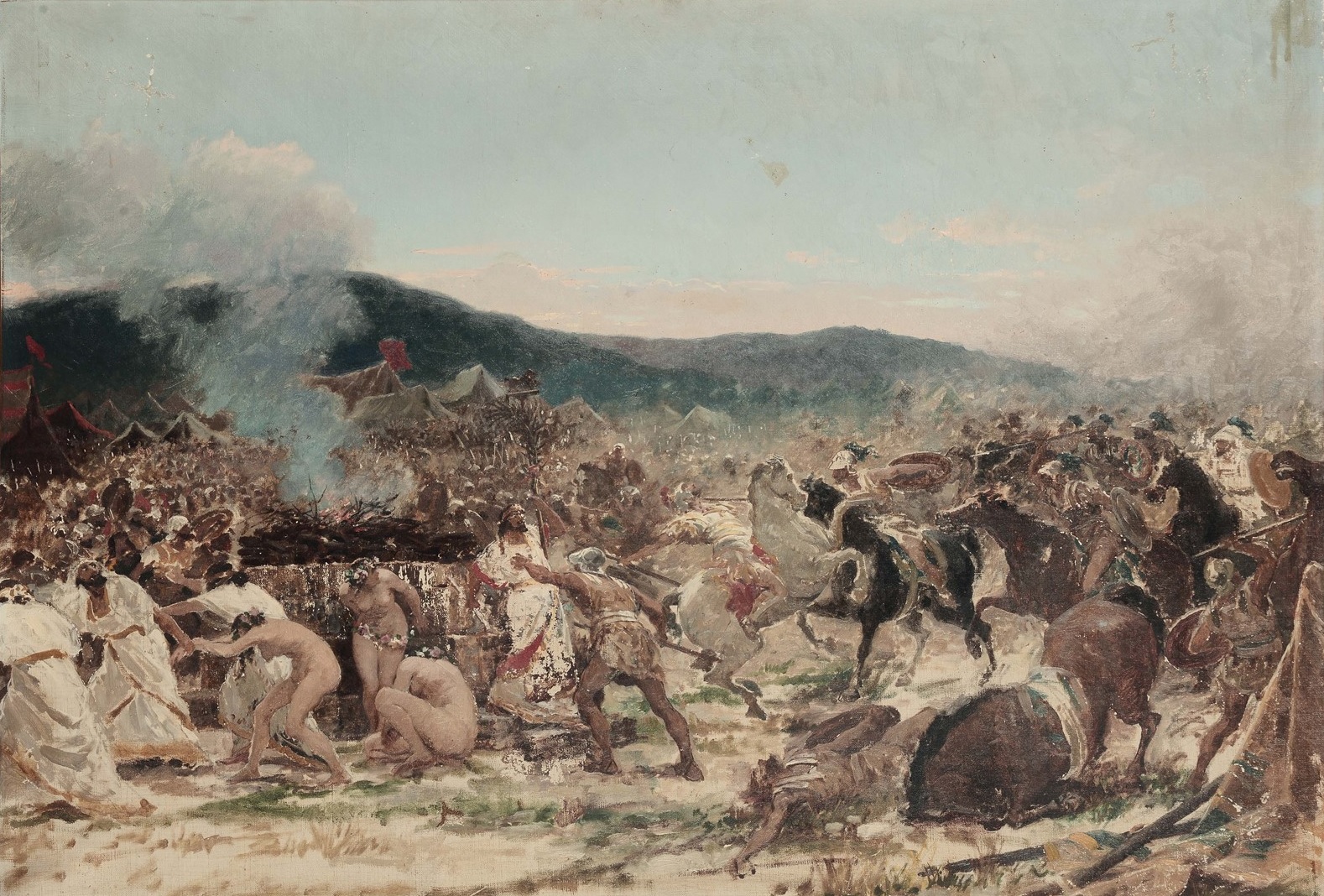
Close to the end of the reign of Hamilcar I, Carthage led a military intervention in Sicily, against the Greek cities of Syracuse and Acragas – the beginning of seven successive wars between Greeks and Carthaginians in Sicily. The Carthaginian army was defeated at the Battle of Himera. Hamilcar himself was killed in battle or committed suicide after his defeat, depending on the sources – his suicide might have been a ritual sacrifice to change the course of the battle. After this defeat, Carthage implemented reforms limiting the power of the king by putting in place an elected assembly.
After this reform, the chronology of the kings of Carthage becomes unclear. A son of Hamilcar I, called Himilco I, apparently reigned over the Carthaginian territory in Sicily; he might have been the explorer Himilco, the first Carthaginian to navigate all the way to Britain. Hanno the Navigator, who explored the West African coast beyond the Gibraltar Strait, was probably also from the Magonid family, maybe a son or grandson of Hamilcar I – some sources describe him as “king”.
Hannibal I (440-406), the grandson of Hamilcar I, led a military expedition in Sicily in 410. The Carthaginians took control of the Greek cities of Selinunte and Himera. After his victory, Hannibal had 3000 prisoners of war executed, to avenge his grandfather’s defeat in Himera 70 years earlier. A few years later, Hannibal died of the plague during the siege of Agrigento.

After Bomilcar, the son of Hannibal I, died a few days after him, his nephew Himilco II (406-396) succeeded him. Himilco II might be the son of Hanno the Navigator. He continued the war in Sicily, until a peace agreement was concluded with Syracuse. The war broke out again in 398. Himilco besieged Syracuse. After a defeat, he decided to lift the siege and evacuate all Carthaginian soldiers, abandoning the foreign mercenaries who were fighting with him. The Carthaginians, shocked by his attitude, destituted him. According to the Greek historian Diodorus Siculus, Himilco, full of regret, let himself die of hunger in Carthage.
His successor Mago II (396-375) was a member of the Magonid family, but not the son of Himilco II. During the first years of his reign, he had to suppress an Amazigh rebellion in the Carthaginian territory in Africa. He then tried to reconquer Messana, in Sicily, but failed, and signed a new peace treaty with Syracuse. War in Sicily started again by the end of his reign. Mago II was killed in battle.

His son Mago III (375-344) continued the war in Sicily. Around 345, he took advantage of the divisions between rival political factions in Syracuse to enter the city on the invitation of one faction, but he failed to obtain a victory that would allow Carthage to take the upper hand. Soon after, he was defeated by the Corinthian general Timoleon, who had come to the aid of Syracuse. He killed himself to escape crucifixion, the punishment Carthage applied to defeated generals.
His successor Hanno III (344-340) was the last suffete of the Magonid dynasty. After Mago III’s defeat, he led a Carthaginian relief operation in Sicily, but he was also defeated.
The Hannonid dynasty
Another Hanno, who was not from the Magonid family, won an important victory against the Sicilian Greeks in 367, and became one of the richest and most powerful men in Carthage for twenty years. After the last Magonid suffete Hanno III was defeated, he tried to take power with the support of a local Amazigh chief. He was captured and tortured to death with several members of his family.
Soon after his death, the Carthaginian authorities called on Gisco, a son of Hanno who had already been exiled before his father’s death, to continue the fight in Sicily. He won several victories, but couldn’t defeat Timoleon, who had now taken power in Syracuse.
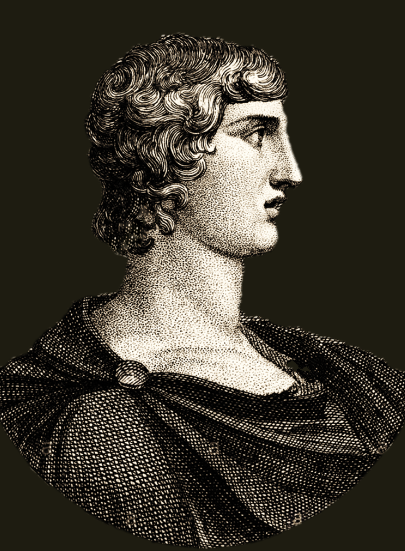
Hamilcar, the son of Gisco, led the Carthaginian army during the war against Agathocles of Syracuse.
Bomilcar, the brother (or a more distant relative) of Hamilcar, tried to take power after Hamilcar’s death. The traditional function of suffete wasn’t enough for him: he wanted the power of the ancient kings before the 480 reform. He failed and was crucified.
After Bomilcar’s coup attempt, the Carthaginian Senate implemented new reforms that would make Carthage a Republic. To avoid a new tyranny, there were now two suffetes instead of one; they were elected for a one-year mandate and exerted their power together.
Hanno the Great, the Carthaginian aristocrat who became Hannibal’s main adversary during the Second Punic War, was probably a descendant of the Hannonid family.
