

Français – عربي – ⵜⴰⵎⴰⵣⵉⵖⵜ – English
The Great Karnak Inscription, one of the most well-known Egyptian inscriptions, recounts the war waged by Pharaoh Merenptah against the Libu, a Libyan Amazigh tribe, and their allies, the “people of the sea”. One of the groups that formed part of the coalition of the “people of the sea”, the Sherden, are also mentioned in other Egyptian sources. They might be an Amazigh people group from Sardinia.

The Sherden are first mentioned in the records of Pharaoh Ramses II (1279-1213): during the second year of his reign, they attacked the Egyptian coasts and were defeated. After their defeat, Ramses II integrated Sherden fighters into his personal guard. Those fighters participated in the battle of Kadesh (1274), against the Hittites.
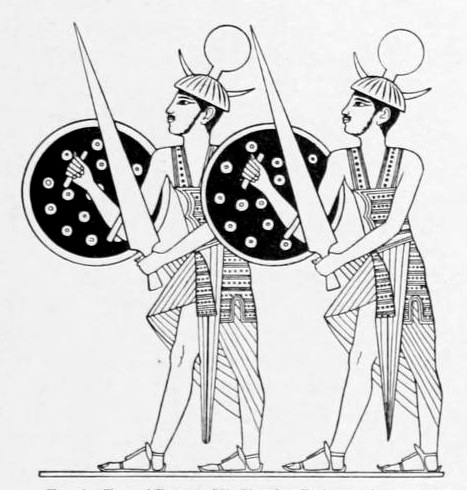
The Sherden warriors are recognizable by their horned helmets, round shields and bronze swords.
Later, the Sherden became part of the coalition of the “people of the sea”. They tried to invade Egypt together with the Libu, but were defeated by Merenptah (1213-1203), the son and successor of Ramses II. The Sherden and the other “people of the sea” were probably groups of pirates who raided the Mediterranean coast with their ships.
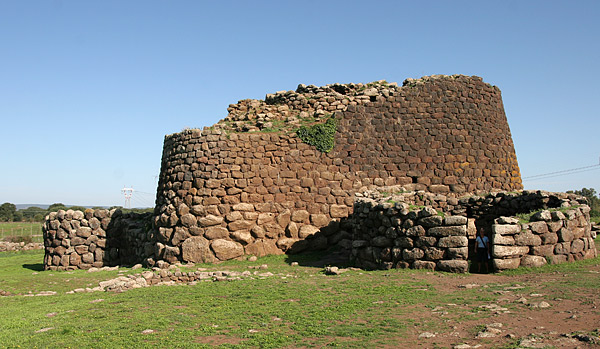
Who were the Sherden and where were they from? Their name seems to indicate a Sardinian origin. Italian archaeologists Antonio Taramelli, Massimo Pallottino and Giovanni Ugas identify the Sherden to the Nuragic civilisation that dominated Sardinia from the 18th Century BCE until the arrival of the Romans, in 238 BCE. This civilisation was founded by Libyan Amazighs who settled in Sardinia. They are mostly known as the builders of the nuraghe, conical towers that became the symbol or Sardinia.
After their defeat in Egypt, the “people of the sea” settled in Palestine. Some of them became the ancestors of the Philistines, the historical enemies of the Hebrews. The Israeli archaeologist Adam Zertal suggested that the biblical general Sisera, mentioned in the Bible as an oppressor of the Hebrews, might have had Sherden origins. The El-Ahwat archaeological site, which Zertal identifies as Harosheth-Hagoyim, Sisera’s capital, is similar to the Sardinian nuraghe. Whether this site indeed was Sisera’s capital or not, it is very likely to have a Sherden origin.
