

Français – عربي – Taqbaylit – English
At the time when Carthage was at the height of its power, Carthaginian ships sailed the Atlantic Ocean, to Spain and Northern Europe, buying silver and other metals that were abundant in the region. Their final destination was far-away Britain, where some Carthaginian merchants established themselves to facilitate metal trade. Vestiges of this Carthaginian presence in Britain can still be found today: coins, but also place names with a potentially Punic origin.

As soon as the first few centuries after Carthage was founded, the city established trade links with the Tartessians, in Spain, to buy metals from them. Next to gold and silver, demand was highest for tin and copper, which were used to produce bronze. Thanks to its monopoly on the Atlantic tin market, Carthage became the only major bronze producer in the region. Around the 5th Century BCE, their growing need for more metals led the Carthaginians to explore the Northern European coasts, all the way to Britain.
Punic coins can be found all over Britain (see map), mostly in coastal regions, but also further inland, which shows that the Carthaginian traders didn’t remain along the coasts, but traveled all around the island. After the fall of Carthage, Numidian merchants took their place. Numidian coins, dating from the reign of King Massinissa and his successors, until Juba II, have been found in Britain (see map). The most recent coins were found to the North, which shows that with time, the Numidian merchants went further North.

Another possible proof of a Punic presence in Britain is a Mediterranean-type anchor, dating from between the 5th and the 2nd Century BCE, that was discovered close to Plymouth, in the Cornwall Peninsula, a region with large tin deposits. The anchor belonged to a ship, probably Punic, or maybe Greek, that had berthed in Cornwall.
In Ireland, a Barbary ape skull was discovered at Eamhain Mhacha. Those animals, originally from the Atlas mountains, were sold as pets. This ape was certainly brought there by Carthaginian merchants.
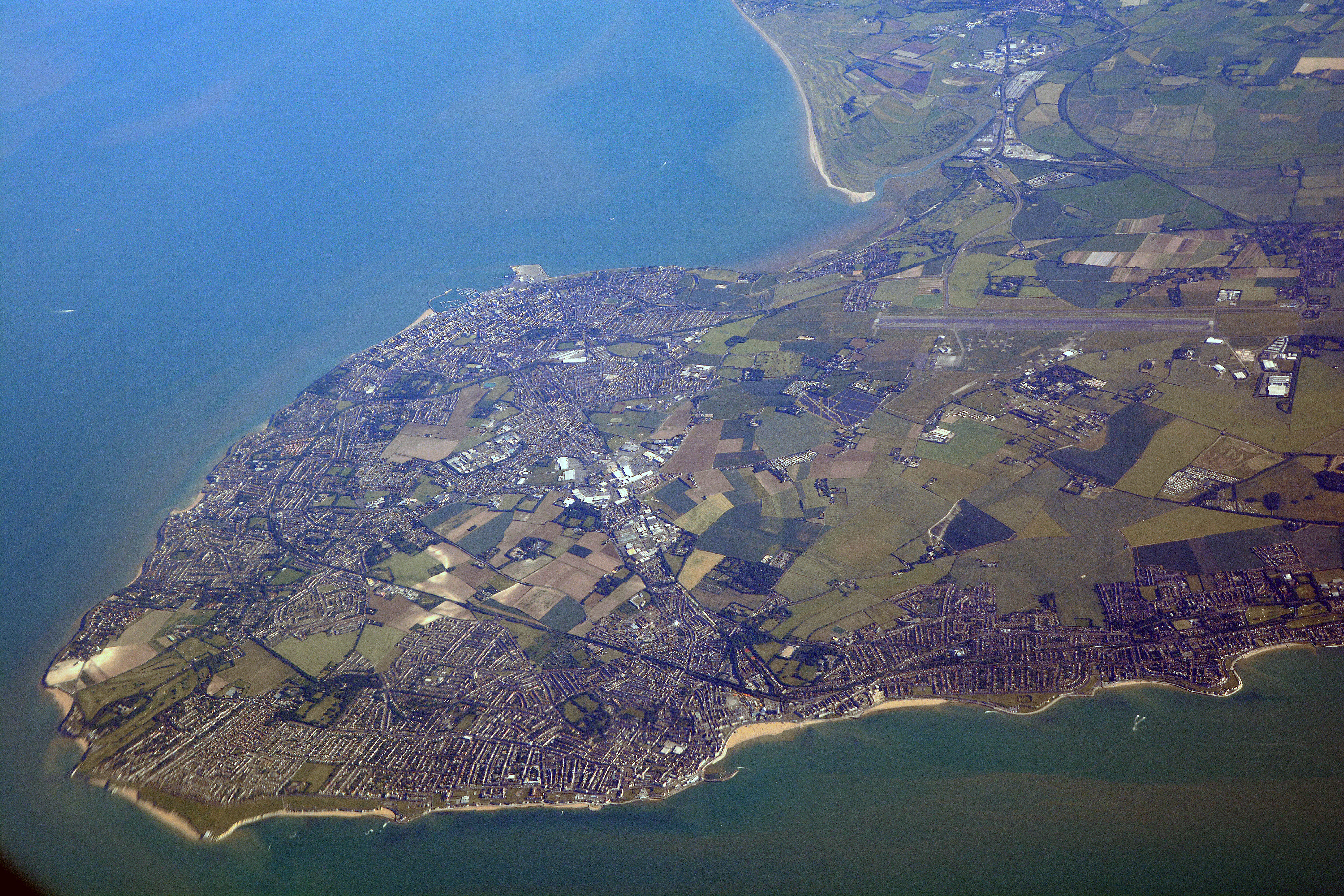
Certain place names, in Britain and Ireland, also seem to have Punic roots. The most obvious is the Isle of Thanet, Kent: its name could derive from Tanit, the main Carthaginian goddess. Gades (Cadiz), the first Carthaginian colony in Spain, was also built on an island called the Isle of Tanit. It is possible that Carthaginian merchants who settled there gave this name to the island because of the geographical similarity with Gades.
Historian and archaeologist Caitlin Green, who teaches at Cambridge University, wrote a series of detailed research articles on the Punic and Numidian presence in Britain before the Roman era. She made a list of 15 place names with potentially Punic origins. All these places are on the British coasts, and many are islands, including the Isles of Scilly; Sark, one of the Channel Islands; and the Scottish Hebrides.
Caitlin Green’s map of these places shows they are in two groups: on the Southern coast, especially Kent and around the Cornwall peninsula, and further North, in modern-day Scotland. The presence of Carthaginian merchants in Southern Britain, where they first landed, makes a lot of sense, especially in Cornwall, at the time a major tin producing region. The fact that they also established themselves in the Scottish islands, while more surprising, can be explained by the proximity of large tin deposits.
Finally, a Punic origin has even been suggested for the names of Britain and Ireland: Britain could come from pretan, meaning “tin” in Punic language, while Ireland (*Īweryon in Old Celtic) could come from i weriju, “copper island”. Of course, there are other possible etymologies. However, the complementarity between the two suggested names, tin land and copper island, the two metals used to make bronze, makes this theory especially interesting. While most specialists believe the names of Britain and Ireland have Celtic roots, the possibility of a Punic origin should not be dismissed too quickly.
