

Français – عربي – ⵜⴰⵎⴰⵣⵉⵖⵜ – English
North African animals, like the Barbary ape and the Atlas lion, were known of the Amazigh and the other people groups living in North Africa since Antiquity. In this article, we will discover the role those two animals played in the history of North Africa.
The Barbary ape
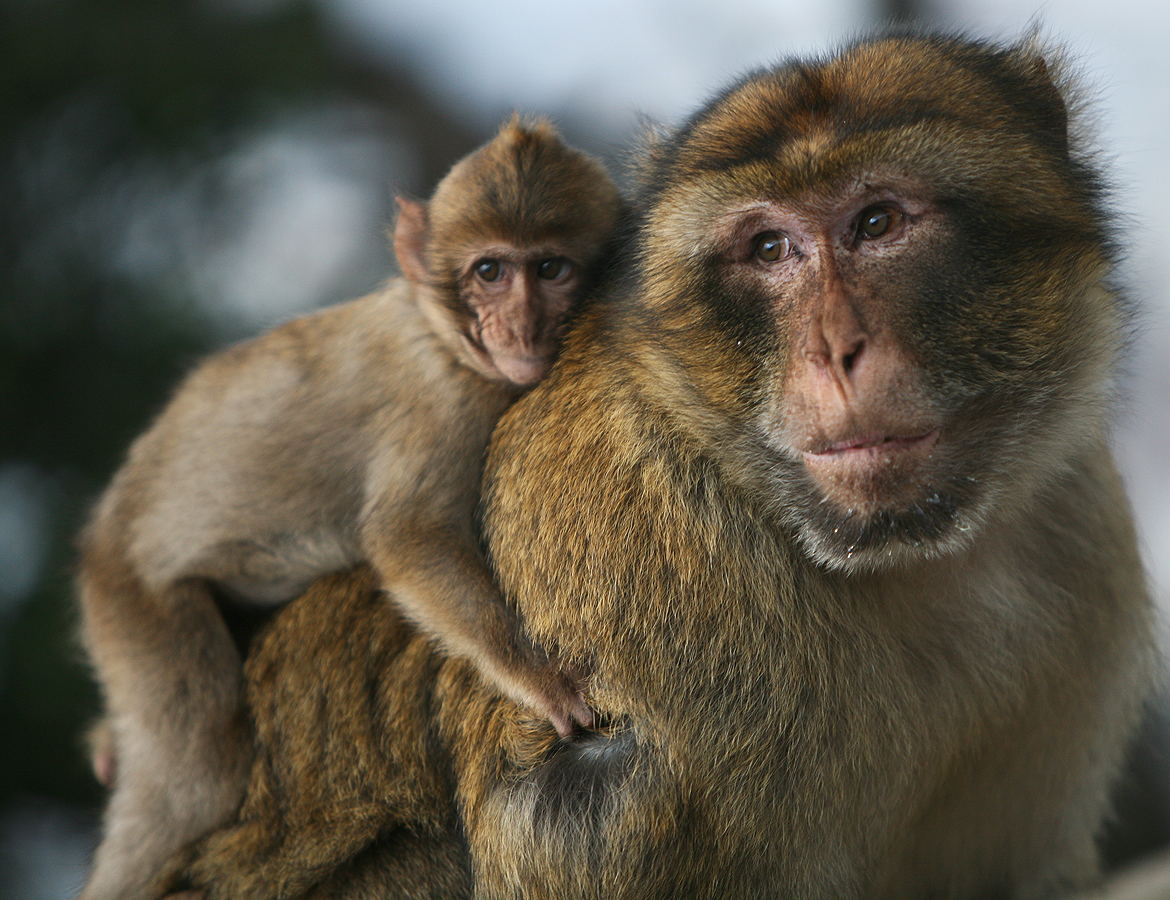
The Barbary ape – officially Barbary macaque – is actually not an ape, but a macaque, a small monkey that lives in the Atlas Mountains. Its name refers to Barbary – the Berber country; the old name the Europeans gave to North Africa. While Barbary apes used to live all over North Africa, today they can be found only in the Rif, Middle Atlas, and High Atlas mountains, in Morocco, and the Kabylie mountains, in Algeria.
The Barbary ape feeds mostly on plants and insects. Its morphology is adapted to the cold winters of the mountain regions where it lives, making it one of the only macaques able to survive in very low temperatures. The males can live up to around 25 years, and the females up to about 30 years.

A population of around 300 Barbary apes also live on the Rock of Gibraltar, where they were imported from North Africa. They are the only wild monkey population in Europe. They have been living in Gibraltar since before the British conquest of the territory, in 1704, although new monkeys were also imported more recently, especially during the 2nd World War. They are highly popular, the main tourist attraction in the territory.
Barbary apes have been captured and sold as exotic pets since Antiquity, around the Mediterranean basin. The “apes” mentioned in the Hebrew Bible, brought from Tarsis by the ships of King Solomon, might have been Barbary apes. A Barbary ape skull was even found… in Ireland! The animal had certainly been brought there by Carthaginian merchants. The ancestors of the first apes in Gibraltar were probably imported by the Moors, escaped, and then found an ideal living place for them on the Rock.
Today, the Barbary ape has become a victim to its own popularity: it is an endangered species, both due to the destruction of its natural habitat and poaching for sale as pets. It has completely disappeared from Tunisia, and its numbers are declining in Algeria and Morocco.
The Atlas lion

The Atlas lion is a lion subspecies, that lived all over North Africa, from Egypt to Morocco, for thousands of years. The Atlas lion is now extinct in the wild. The last known wild lion in Morocco was killed in 1942, near Tizi Tichka. Another lion was seen in 1956, in the Beni Ourtilane district, close to Setif, Algeria. A few populations might have survived in isolated regions until the 1960. Less than 100 Atlas lions still live in captivity, in particular at the Rabat zoo.
But is the Atlas lion really extinct? There have been several testimonies recently, about a wild lion who was supposedly seen in the Khenifra region, in Morocco. The mystery persists, although the National Water and Forest Agency denied the allegations. What if it was true? It is of course too early to be sure. Anyway, this would not be the first time when isolated individuals of a species considered as extinct suddenly reappeared.

The Romans held Atlas lions in their amphitheaters, where they fought gladiators and were used for the execution of prisoners. Most lions, other great cats, and bears used for the Roman circus games came from North Africa.
Another great cat that lives in the Atlas mountains, the Atlas leopard, is almost extinct. A few wild individuals still live in the Moroccan-Algerian border region. Atlas Leopards were also recently observed in the Hoggar Mountains of Algeria, where they had been documented before.

The Atlas lion, even though extinct, still plays an important role in North African popular culture. The Moroccan football team, which made an outstanding stand at the last World Cup in 2023, are nicknamed: “The Atlas Lions”!
