

Français – عربي – ⵜⴰⵎⴰⵣⵉⵖⵜ – English
During the 5th and 4th Centuries BCE, Carthage fought seven wars against the Greeks of Sicily, over the control of the island. Around 345, the Carthaginian suffete Mago took advantage of the divisions between rival political factions in Syracuse, the main Greek city of Sicily, to enter the city at the invitation of one faction, but he failed to win a victory allowing Carthage to take the upper hand over its rival.
Context

Starting in the 6th Century BCE, several Greek colonies were founded in Southern Italy. Greek influence in this region was so strong that the Romans called it Magna Graecia (Great Greece). In Sicily, the main Greek colony was Syracuse, founded around 734 by colonists from the city of Corinth.
During most of the 5th and 4th Centuries, the Greek cities of Sicily were governed by tyrants (authoritarian leaders, against the Greek democratic ideal). The most famous tyrants of Syracuse were Dionysius the Elder (405-367) and his son Dionysius the Younger (367-357, 346-344).
Reign of Dionysius the Younger

Dionysius the Younger, who was less than 30 years old when he succeeded his father, had no experience of power and was leading a frivolous and dissolute life. The first years of his reign were characterized by tensions with his uncle Dio, who wanted to reform the governance of Syracuse in order to make it more democratic. Dio was exiled by Dionysius the Younger, but in 357, he returned and led a revolt against his nephew. Dio managed to take power, but he was assassinated in 354.

After years of instability, Dionysius the Younger returned to power in Syracuse in 346. His power was contested by Hicetas, the tyrant of the neighboring city of Leontini and a friend of Dio, who welcomed his family after his death. After Dionysius the Younger’s return, Leontini became the rallying point of the Syracusans who were opposed to his power. Hicetas finally attacked Syracuse, and took control of the whole city, except the citadel, where Dionysius the Younger took refuge.
In this context, a group of Syracusans who were tired of the unending wars against Carthage and the political divisions that weakened the city, decided to send a call for help to Corinth, the mother-city of Syracuse. The Corinthian general Timoleon was sent to Sicily, to restore stability in Syracuse.
The mission of Mago of Carthage
The rivalry with Carthage always played an important role in Syracusan internal political intrigues. Dio’s banishment was apparently motivated by a letter he had sent to the Carthaginian authorities, in which he advises them to consult him directly for peace negotiations.

On his arrival in Sicily, Timoleon first fought Hicetas, who was heavily defeated. Soon after, Dionysius the Younger gave up the citadel of Syracuse into the hands of Timoleon. The city was now divided between the forces of Hicetas and Timoleon.

This is when Hicetas called on the Carthaginians to help him against his new enemy. The Carthaginian suffete Mago entered the port of Syracuse at the head of a large fleet, and then marched into the city at the invitation of Hicetas. He was hoping to obtain an issue that would be favorable to Carthaginian interests.
This Carthaginian intervention was short-lived: not long after he arrived, Mago, who was facing the hostility of the Syracusan population and feared betrayal, drew his troops out of Syracuse and returned to Carthage. After he left, Hicetas was easily defeated by Timoleon. The Corinthian general became the new master of Syracuse.
Later on
Dionysius the Younger went into exile in Corinth, where he died the following year.
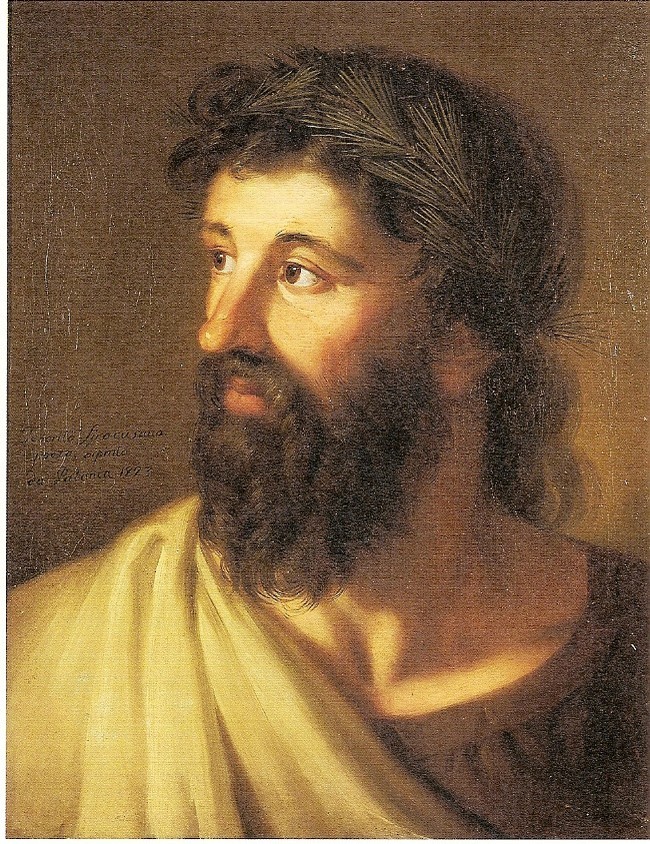
Timoleon established a new Syracusan Constitution which reestablished democracy after half a century of tyranny. He invited new settlers from continental Greece to settle in Syracuse and other Sicilian cities, in order to rebuild the economy after the years of war.
Once the situation in Syracuse was stabilized, Timoleon continued the war against Carthage. He won a major victory against the Carthaginian troops led by Mago, who committed suicide after his defeat. Carthage was forced to sign a peace treaty allowing it to keep control only over the Eastern half of Sicily.
Timoleon spent the last years of his life fighting the last tyrants of Sicily. Hicetas, in Leontini, was defeated and executed. Timoleon remained in history as the liberator of Sicily.
