

Français – عربي – ⵜⴰⵎⴰⵣⵉⵖⵜ – English
Several ancient authors claim that the Carthaginians burned new-born children on the altar of their god Baal and their goddess Tanit. While this idea was largely admitted in the past, some modern historians doubt that human sacrifice was really practiced in Carthage, or believe that the practice was very rare.

Tyre, the “mother city” of Carthage, did practice human sacrifice in its early history, just like other Phoenician cities. However, the city seems to have ended this practice around the time of the founding of Carthage.
According to one theory, there was a link between Tyre abandoning human sacrifice, and the founding of Carthage. When Tyre decided to cease offering human sacrifices, the traditionalists, who wanted to maintain the practice, left the city to found Carthage on the North African coast. The myth of the suicide of Elissa, Carthage’s legendary founding Queen, was originally a self-immolation sacrifice to obtain the god’s favor for the new city. Carthage’s prestige, compared to other Phoenician colonies, can potentially be explained by its religious role, by its status as a sacred city, due to the sacrifice of its founder. This interesting theory cannot be formally proven.
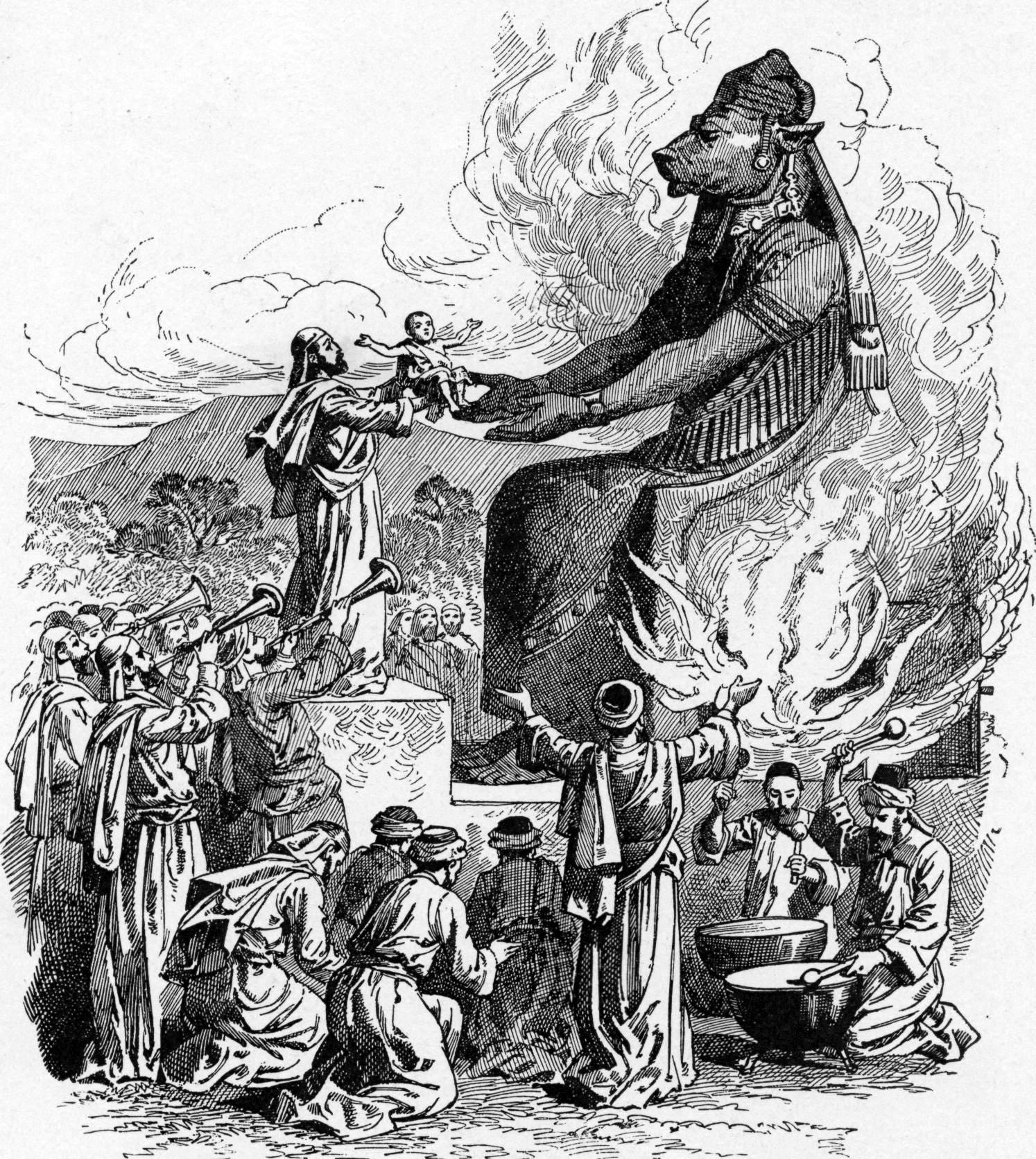
Greek and Roman authors like Plutarch and Diodorus of Sicily describe the human sacrifices practiced by the Carthaginians, especially how new-born children were burned alive during ritual ceremonies. However, it is important to keep in mind that these authors were enemies of Carthage and their work contains a large part of propaganda. This doesn’t mean that there were no human sacrifices in Carthage, but that they might well have been much more rare than the impression given by these authors.
The Tophet of Carthage, at the heart of the old city, was a sacred era, dedicated to Baal and Tanit. A large number of funerary urns containing the remains of children, some-times new-born babies, were found in excavations. Writings mentioning animal and child offerings to the gods (molok) have also been found, but we don’t know if this involved the offering been put to death. It is possible that the Tophet was a place of child sacrifice.
Some specialists have suggested that the Tophet might rather have been a cemetery for stillborn babies and other children who died a natural death. An examination of the children bones shows no trace of trauma indicating a violent death.
The suicide of King Hamilcar I of Carthage after his defeat in Sicily might have been a self-sacrifice in order to reverse the course of the battle.

After Carthage’s final defeat, the last Carthaginian commander Hasdrubal the Boetharch surrendered to the Romans. His wife cursed him for his cowardice, and then cut her children’s throat, threw them into a temple on fire, and precipitated herself into the flames after them. This desperate feat might be interpreted as a ritual sacrifice destined to save the city, as it was about to be destroyed. The suicide of Hasdrubal’s wife possibly inspired Virgil for the suicide of Dido.
Most specialists nowadays accept that the Carthaginians did practice human sacrifice, including child sacrifice. It is however likely that this practice was extremely rare, only in time of extreme crisis.
