

Français – عربي – ⵜⴰⵎⴰⵣⵉⵖⵜ – English
The Necropolis of the Rabs, or Necropolis of Bordj Djedid, is a Punic-era cemetery, located on the Carthage archaeological site. It was rediscovered in 1897, and as the largest Punic necropolis, it teaches us a lot on the ancient Carthaginian funerary rites.


The Necropolis of the Rabs was active from the 5th Century to the fall of Carthage, with activity peaks in the 4th and 3rd Centuries. Is is estimated that all the Carthaginian necropoles covered around 60 hectares, while the surface of the city itself was of over 300 hectares. More than 3.000 tombs were excavated in Carthage, including around 1.000 in the Necropolis of the Rabs.
The examination of these tombs enabled specialists to study the evolution of Carthaginian funerary practices. While the oldest constructions are individual and family funerary chambers, throughout the centuries, specific zones were allocated to specific families, clans and religious colleges. The deceased were both buried and incinerated. Cremation became dominant in the 4th Century, during the hellenistic era, because of space restrictions. The ashes were preserved in limestone boxes. Jewels, potteries and a diversity of other objects, made of gold, bronze or ivory, accompanied the deceased in their last abode.
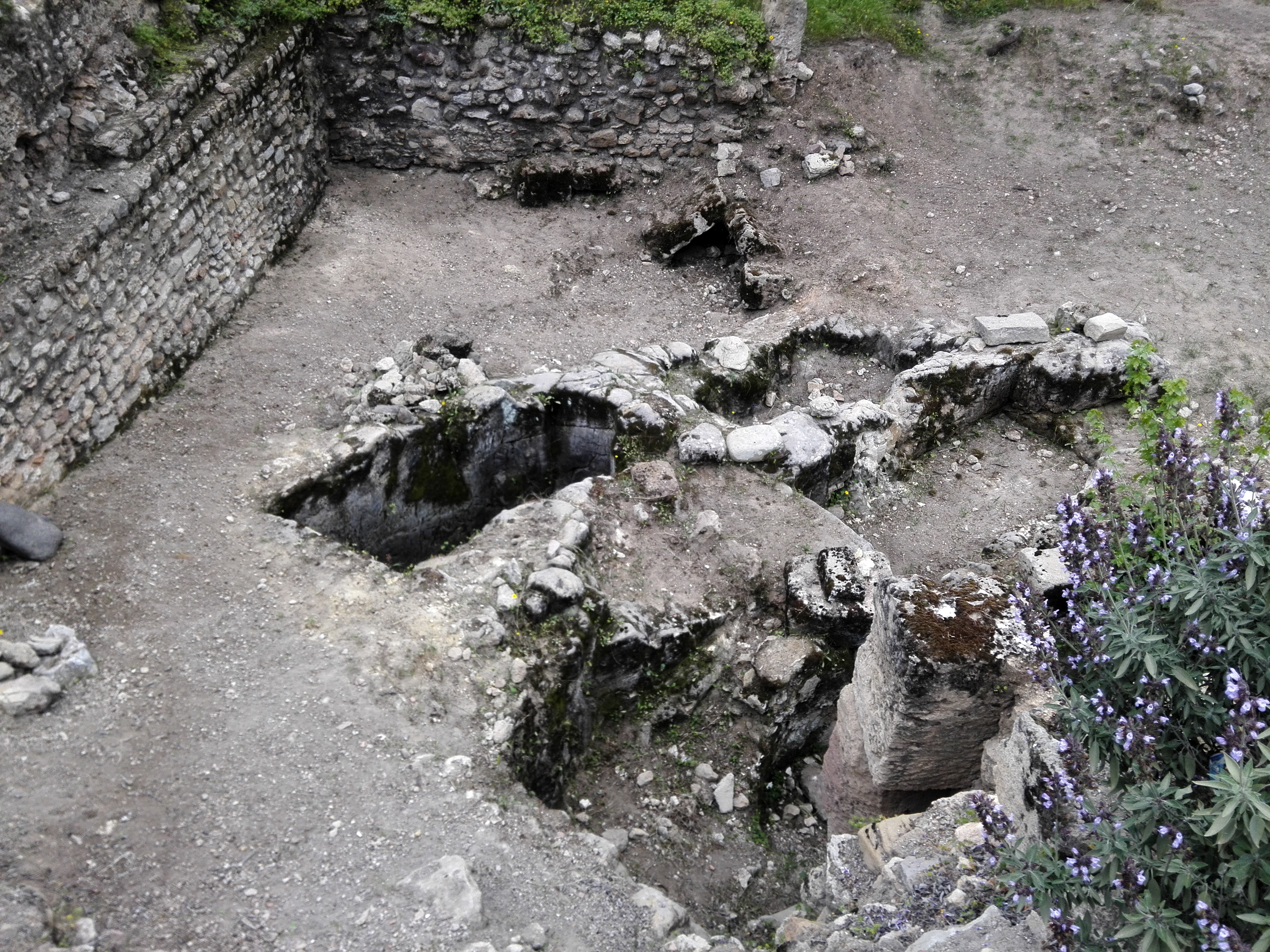
The funerary chambers were aligned in rows and accessible through corridors. Wells were built to get down to them; their average depth was 12m, and the deepest was 27m. Entails in the walls enabled people to climb down. The wells served to protect the funerary chambers against robbers. They might have also played a religious role.
The funerary chambers’ architecture and the rich objects they contain show that the Necropolis of the Rabs was used by the elite of Carthaginian society. It is possible that is was set apart for the priests and religious officials, who were chosen amongst the aristocratic class and played an important ceremonial role.
Around 15 sarcophages dated to the 4th-3rd Centuries were unearthed in the Necropolis of the Rabs. Those sarcophages are made of wood, sandstone, stone and marble. They were made above ground, and then lowered down to the funerary chambers with ropes.
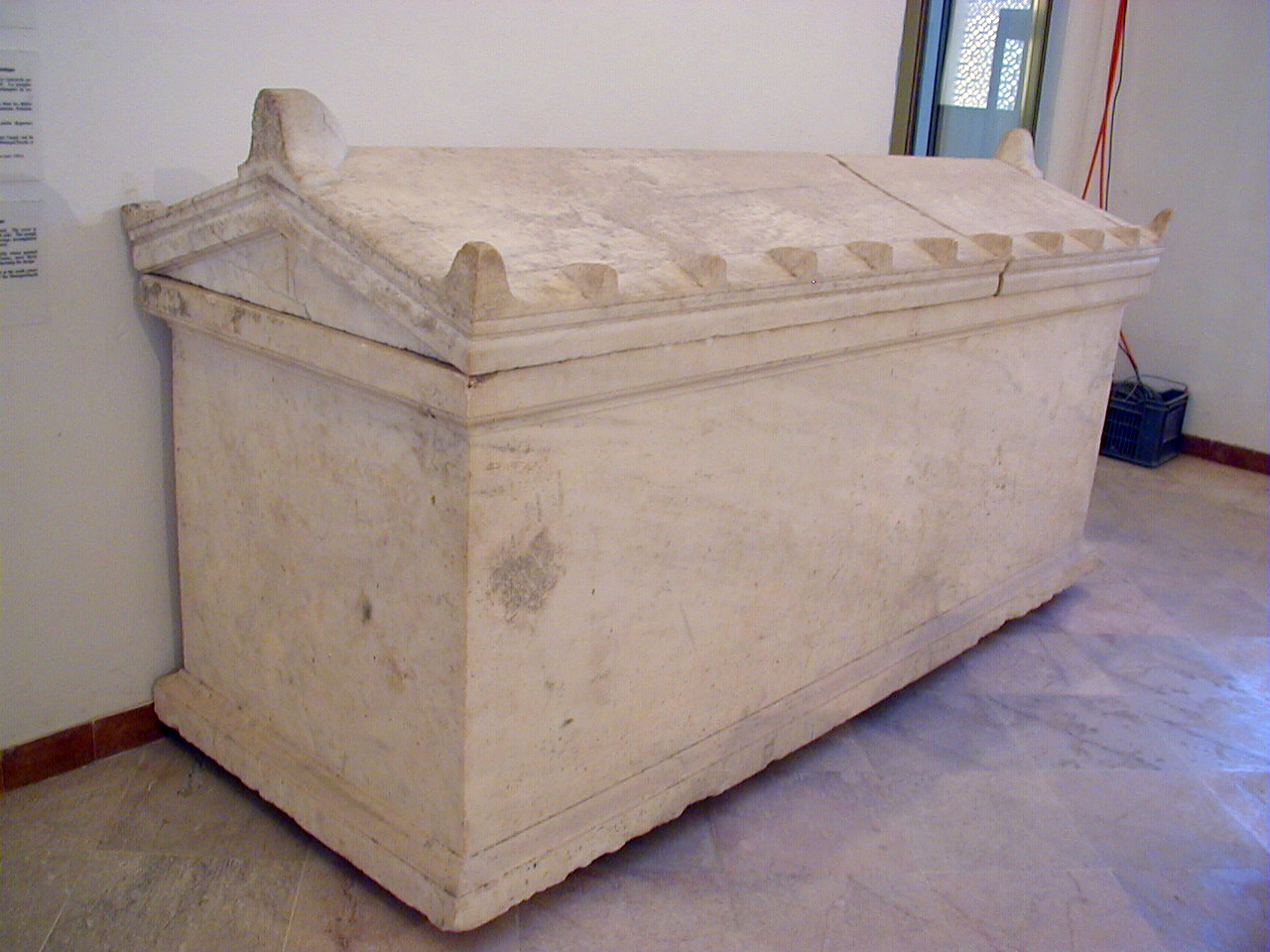
Some sarcophages show a Greek influence, with a roof-formed cover that reminds us of Greek temples. Those sarcophages might have been made by Greek migrants in Carthage. There are also some Egyptian-style sarcophages, with mummies.
.

The most spectacular are four sculpted-cover sarcophages. Carthaginian sculpture is not well documented; those sarcophages are the main known examples. The sculpted covers represent human shapes: two men and two women. These sarcophages were found in two funerary chambers containing each one male and one female sarcophage, which means that they probably belong to married couples who were buried together.

The lost amazing discovery of all is the Sarcophage of the Princess, exposed in the National Museum of Carthage. This white-marble sarcophage represents a woman with bird’s wings. The woman holds a dove in one hand, and a vase of perfume in the other. Her hairstyle is Egyptian, and her wings seem to evoke the Egyptian goddesses Isis or Nephthys; they might also be a symbol of the goddess Tanit. She is covered in a falcon-shaped veil that reaches down to her knees, and the lower part of her body looks like a fish tail. The sarcophage was originally colored, but the colors faded with time.

https://www.amazon.com/TANIT-Lost-goddess-Central-Mediterranean-ebook/dp/B0DBHTQST4