

Français – عربي – ⵜⴰⵎⴰⵣⵉⵖⵜ – English
Between the oasis of Siwa and the ancient Garamantian cities of the Fezzan, another oasis in the middle of the Libyan desert is known to the people of the Mediterranean basin since Antiquity. The Awjila oasis, inhabited for over 2500 years, has always been famous for its high-quality dates. Nowadays, its inhabitants still speak their own Amazigh language.

The original inhabitants of Awjila were Amazigh, related to the Garamantes. According to the Greek historian Herodotus, who wrote in the 5th Century BCE, the Nasamones, a nomadic Amazigh tribe from the coast of the Gulf of Sidra, left their flocks on the coast during the summer and travelled to the Awjila oasis to harvest dates. The Nasamones might have taken a tribute from the indigenous tribes of the oasis. Herodotus also mentions that the distance between Ammonium (Siwa) and Awjila is ten days of travelling, which was confirmed by more recent travellers.
The Nasamones were later driven away from the coast by the Greek colonists in Cyrenaica, and settled in Awjila. They became trading partners of the Carthaginians, enabling them to bypass Cyrene via a new overland trade route.

During the Roman era, the oasis developed into a city, which the Romans called Augila. Its inhabitants worshiped the Egyptian god Ammon, who had an oracle in Siwa. In the 6th Century, the inhabitants of Awjila converted to Christianity, about the same time as the inhabitants of Ghadames. The temples of Ammon were transformed into churches.
The Awjila oasis was conquered around 650, by Abdallah ibn Saad, the governor of Egypt at the time. Abdallah ibn Saad was buried in Awjila. After the Arab conquest, the inhabitants of Awjila adopted Islam. In the 12th Century, there were forty shrines of Islamic saints in the oasis.

The Great Al-Atiq Mosque, in Awjila, is the oldest mosque in the Sahara. Its architecture is unique, and the mosque also enjoys natural air conditioning: despite the desert heat, the temperature inside the mosque remains quite cool during the day, and at night, it is heated by the walls that were exposed to the sun all day.

More recently, Awjila, with the neighboring oases of Jalu and Jikharra, became a major commercial center on the caravan routes between Egypt, Tripoli, the Fezzan, and Timbuktu. Especially during the Ottoman era, travellers who wished to avoid the cities under Ottoman control took this route. In modern-day Libya, Awjila is the only major town on the road between Benghazi and Kufra.
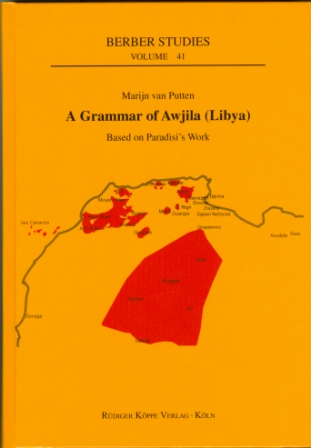
The inhabitants of the Awjila oasis speak a very ancient Amazigh dialect, considered by many specialists as the most fascinating of all Amazigh languages. Sadly, the Awjila Amazigh language is now almost extinct: in 2020, it was estimated that only about 2700 speakers were left. The current political situation in Libya prevents any field study of the language, but a study of Facebook publications allowed linguists to obtain additional information. A detailed grammatical study of Awjila Tamazight is available here.
