

Français – عربي – ⵜⴰⵎⴰⵣⵉⵖⵜ – English
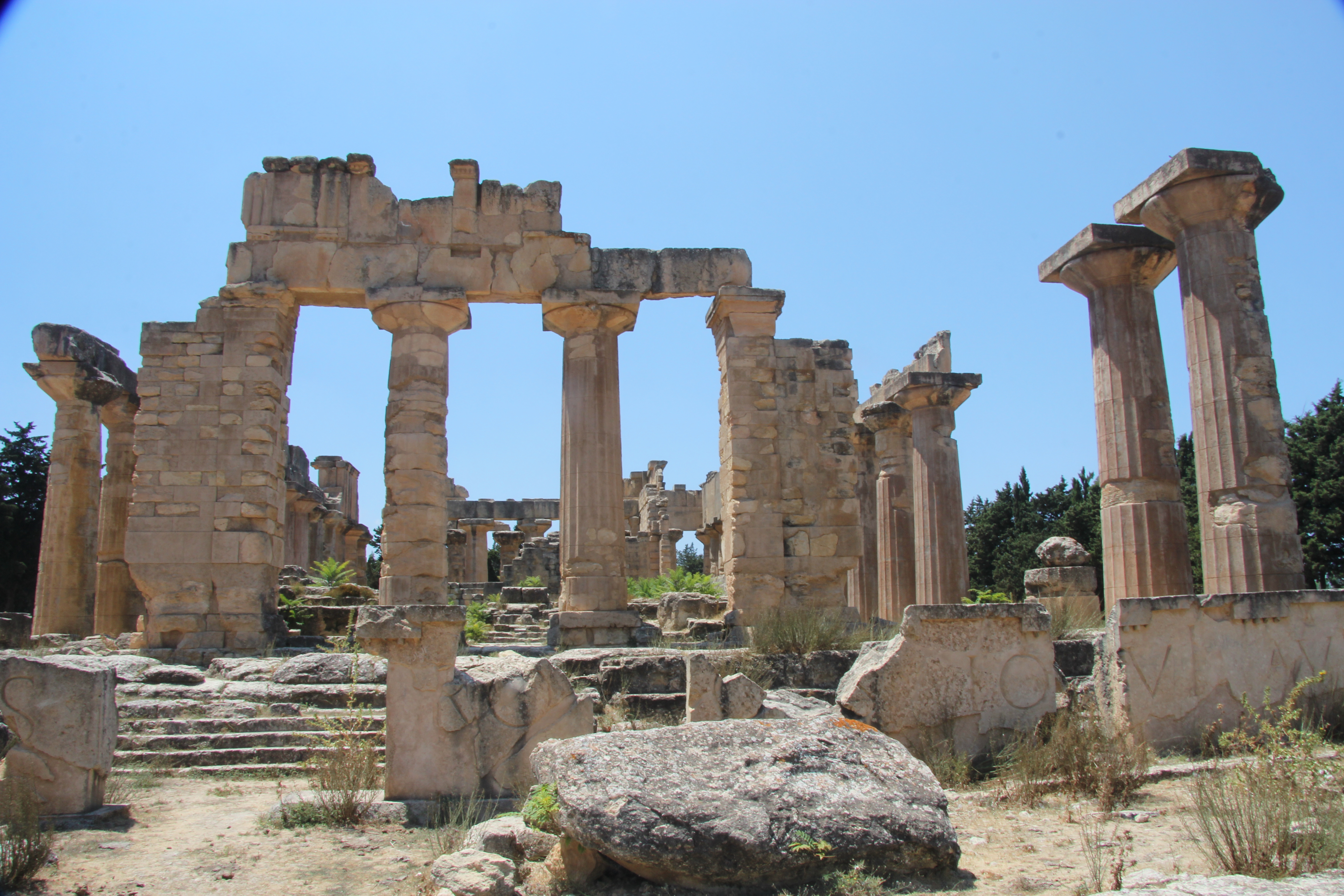
Around the same time when Carthage and other Phoenician colonies were prospering in North Africa, another great maritime civilisation, Greece, also established colonies on the Mediterranean coast. Greek colonisation was mostly oriented towards Asia and the South of Italy, but there also were Greek colonies in the Northern African region directly opposite to Greece. Greek influence in this region would become so strong that the region would be named Cyrenaica, after Cyrene (Shahhat), its most influential Greek colony.
The first Greek colonists arrived in Cyrenaica as early as the 7th Century BCE. Before that, the region was inhabited by Amazigh tribes, with whom the Greeks entertained good relations.
The city of Cyrene was founded in 631, by colonists who originated from the island of Thera (Santorini), which they abandoned because of famine. Their leader became the first King of Cyrene, under the name of Battus, ´King´ in the local Amazigh language.

Shortly afterwards, Cyrene became the main city of the Pentapolis, an alliance of five surrounding Greek cities: Cyrene, Euhesperides (Benghazi), Taucheira (Tocra), Balagrae (Bayda), and Barca (Marj). Apollonia (Marsa Susa) was the Cyrenian port town. Other less prominent Greek cities, like Darnis (Derna) and Antipyrgus (Tobruk), were also part of the Pentapolis territory.
The sparsely populated region to the East of the Pentapolis, Marmarica, became the Western part of modern-day Egypt. Far in the South, the Pharaonian oracle of Ammonium (in the Siwa oasis) marked the limits of Greek influence.

The region quickly became prosperous, as it was full of fertile land. On top of wheat, barley, figs, and olive oil, the Cyrenaican Greeks cultivated silphium, a now extinct plant that grew only in this region. This plant was in high demand because of its medical virtues, including its use as a natural contraceptive.
In 525, the Persian Empire, after conquering Egypt, also took over the Pentapolis. Two centuries later, in 332, the region was conquered by Alexander the Great. After his death, it became part of Ptolemaic Egypt. Cyrenaica briefly became an independent Kingdom from 276 to 250, under Magas of Cyrene, the son of Ptolemy I Soter’s wife, but it was reintegrated to Egypt after his death. King Ptolemy III Evergetes (246-221) married Berenice, daughter of Magas of Cyrene. The city of Euhesperides was renamed Berenice, in her honour. Ptolemy III also founded the city of Ptolemais (Tolmeita), as a residence for his governor in the region.
In 105, Cyrenaica again became independent, with Ptolemy Apion, son of Ptolemy VIII, as king. After he died without an heir, in 96, his Kingdom was bequeathed to Rome.
Throughout the centuries, Cyrene became one of the main Greek cultural and intellectual centers. Aristippus of Cyrene, a disciple of Socrates, founded a philosophical school called the Cyrenaican school. Two other major figures from Cyrene are the mathematician Eratosthenes and the poet Callimachus.
