

Français – عربي – ⵜⴰⵎⴰⵣⵉⵖⵜ – English
Several emblematic North African plants and fruits do actually not originate from the region, but were brought there 3000 years ago on the Phoenician ships. Next to olive trees and vines, which we already mentioned, we will discover today two other Phoenician contributions to our countries’ agricultural production: figs and pomegranates.
Figs : the fruit of Paradise

The fig tree is probably native to Central Asia, and was the first fruit tree to be domesticated by man: around 4500 BCE, long before olive trees. Fig cultivation started in the Middle East, the world region where sedentary agriculture first appeared, in the famous “Fertile Crescent”.

The fig tree was an ideal candidate for domestication, as it is very easy to reproduce: to plant a new tree, all that is needed is a grain, a cut branch, or a piece of fruit. Figs are also highly resistant both to heat and cold, enabling them to survive in highly diverse climate conditions. Finally, the fig tree produces up to three harvests per year.
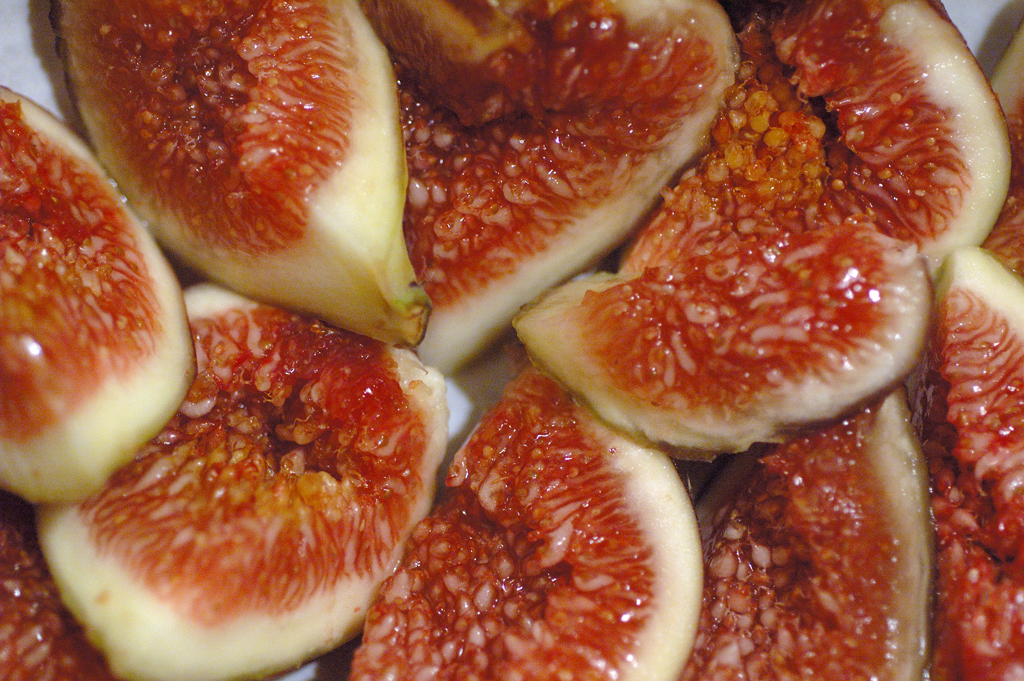
Fig trees were spread through the Mediterranean world by the Phoenician traders. In North Africa, fig cultivation started in Carthage and the other Phoenician colonies. Through the centuries, the new tree was so well acclimated to its new shoreline that it became one of the most cultivated in the region. A hadith describes the fig as a fruit that originates from Paradise.
Pomegranates: Punic apples

The pomegranate tree is originally from modern-day Iran, where it has been cultivated for around 5000 years. In the Persian Empire, the pomegranate flower was considered sacred, a symbol of abundance, fertility and royalty.
From its native region, pomegranate cultivation spread through the Middle East, including Phoenicia. Like olive trees, vines and fig trees, pomegranate trees were spread throughout the Mediterranean world by the Phoenicians, through their colonial empire.

In Roman Antiquity, pomegranates were strongly associated with Carthage. The Romans called them Malum punicum, Punic apple. The English name of pomegranates refers to the Kingdom of Granada, the last Muslim kingdom in Spain. The Arabic name, romman (رمان), derives from a Semitic root meanig “high” or “exalted”.
Today, the North African nations are important pomegranate producers. In 1986, Tunisia offered China plants a local variety of soft-seed pomegranates, which were very successful on the Chinese market.
What about Barbary figs? This strange cactus carries a highly popular fruit in North Africa: the Barbary fig, also called prickly pear. It comes from even further away: it is originally from the Mexican desert. Unknown in the Ancient World before the discovery of America, it was introduced into the Mediterranean world, where it spread rapidly. It is especially common in the semi-desert areas of North Africa, so that in the colonial era, is was called “Barbary fig” (Barbary = Berbery, the land of the Berbers). Its Darija Arabic name, “karmouss ennasara”, fig of the Christians, gives a better account of it origins. This strange cactus carries a highly popular fruit in North Africa: the Barbary fig, also called prickly pear. It comes from even further away: it is originally from the Mexican desert. Unknown in the Ancient World before the discovery of America, it was introduced into the Mediterranean world, where it spread rapidly. It is especially common in the semi-desert areas of North Africa, so that in the colonial era, is was called “Barbary fig” (Barbary = Berbery, the land of the Berbers). Its Darija Arabic name, “karmouss ennasara”, fig of the Christians, gives a better account of it origins. |
