

Français – عربي – ⵜⴰⵎⴰⵣⵉⵖⵜ – English
Balagrae (Al-Bayda), the last of the five cities of the Cyrenaican Pentapolis, was mostly famous for its Temple of Asclepius, the Greek god of medicine. Pilgrims from the whole region came to this temple, hoping to be healed of their illnesses.


Balagrae was probably founded at the beginning of the 6th Century BCE, as a Greek colony. Is was part of the Pentapolis, an alliance of five Greek cities in Libya, together with Cyrene, the main city, Euhesperides (Benghazi), Taucheira (Tocra) and Barca (El-Marj).
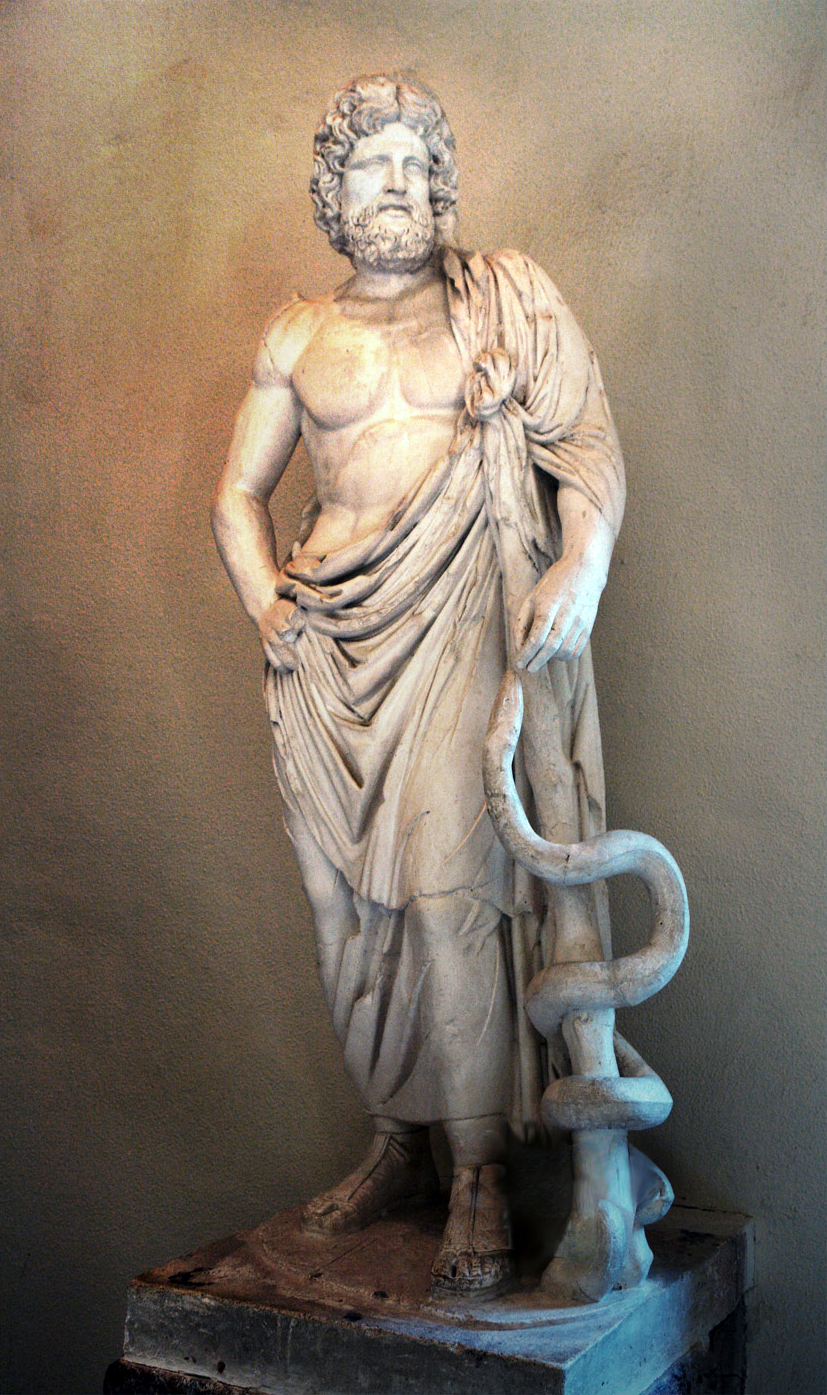
The city of Balagrae was mostly famous for its Asclepium, a temple of Asclepius, the Greek god of medicine. This temple had been founded by colonists from Epidaurus, a city of the Peloponnese that had the largest Asclepian sanctuary in Greece. Pilgrims came to spend the night there, and then, on the next morning, they told the priests about their dreams. The priests then prescribed them a remedy based on their interpretation of the dreams. Snakes, an animal considered as sacred, played an important role in the cult of Asclepius: non-venomous snakes were crawling on the ground in the sanctuary, in the middle of the sick and wounded. Next to the altar and dormitory, the temple also contained a fountain to clean the patients’ wounds, baths, and a gymnasium. The prescribed remedies were mostly purification baths or workout in the gymnasium, together with a specific diet. The Asclepium of Balagrae was especially famous for the healing of children, as shown by the objects discovered during the excavations.

A new complex was built in the Roman era, by Emperor Hadrian. It was a 40m-long, 35m-large square, surrounded by porticoes. The complex contained three temples: the largest, at the center, was the Temple of Asclepius, while one of the two others was dedicated to Serapis, the protector god of the city of Alexandria; we don’t know which god was worshipped in the third temple.

The Asclepium also contained an odeon, a small theater for musical concerts. It was known in Antiquity that music had a soothing effect on people with mental illnesses. The Asclepium probably employed musicians who played music for the sick. The odeon might also have served as a meeting place for the medical staff.
Balagrae declined a lot in the Roman era, until it was no longer part of the Pentapolis.
With the advent of Christianity, the Asclepium of Balagrae was transformed into a church. Cyrenaica was the first region in North Africa to be reached by Christianity, and now has some of the best-preserved ruins of ancient Christian churches in North Africa. The Christian philosopher Synesius, who became bishop of Ptolemais, was born in Balagrae.

In the Islamic era, the city was famous for its tomb of Ruwaifi ibn Thabit al-Ansari, a companion of the Prophet Mohammed. More recently, in 1843, it was here that Mohammed Ali al-Senussi founded the Senusiyya order. The white-walled zawiya he built gave the city its name, Al-Bayda (البيضاء, “the White”). Today, Al-Bayda is the fourth-largest city in Libya, after Tripoli, Benghazi and Misrata.
