Ce site présente l'histoire de l'Afrique du Nord avant les conquêtes arabes – This website presents the history of North Africa before the Arab conquests – يعرض هذا الموقع تاريخ شمال إفريقيا قبل الفتوحات العربية
In the 5th Century BCE, Sataspes, a nobleman from the court of Persian Emperor Xerxes I, was ordered to sail around the African continent. He crossed the Columns of Hercules, but returned without fulfilling his mission and was thus executed.
Sataspes was a Persian nobleman, and a member of the Imperial family: his mother Atossa was the sister of Emperor Darius I. His name means “hundred horses”.
Xerxes I, the Emperor who ordered Sataspes’ expedition
During the reign of Emperor Xerxes I (486-465), Sataspes was sentenced to death for abducting and raping the daughter of the Persian general Megabyzus. However, his mother, who was the Emperor’s aunt, managed to convince Xerxes to spare Sataspes’ life. The Emperor then entrusted him a mission: like Pharaoh Necho II’s exploit over a century earlier, he was to sail all around Africa. If he failed, his death sentence would apply.
However, Sataspes’ expedition did not go very far: after some time, he turned around and returned to the Columns of Hercules. According to the Greek historian Herodotus, at the farthest point he reached, he met “a race of small men, who were wearing robes of palm branches”. He probably didn’t even reach beyond the South of modern-day Morocco.
The failure of Sataspes’ expedition can be explained by the strong currents on the West African coast, which would have prevented him from going further.
On his return, Sataspes claimed that he could not accomplish his mission because his ship had stopped and would not sail further. The Emperor had him impaled.
Saffron, recognizable at its red color and strong flavor, is a highly popular spice in North Africa. Saffron, cultivated entirely by hand, is also known as “red gold” because it is the most expensive spice in the world. Originally from Iran, saffron was introduced into North Africa by the Phoenicians. Nowadays, Moroccan saffron, produced mostly in the area around Taliouine, is famous for its quality. It also plays an important role in traditional Moroccan cuisine, adding a golden color and a delicate flavor to couscous, tajine and pastries.
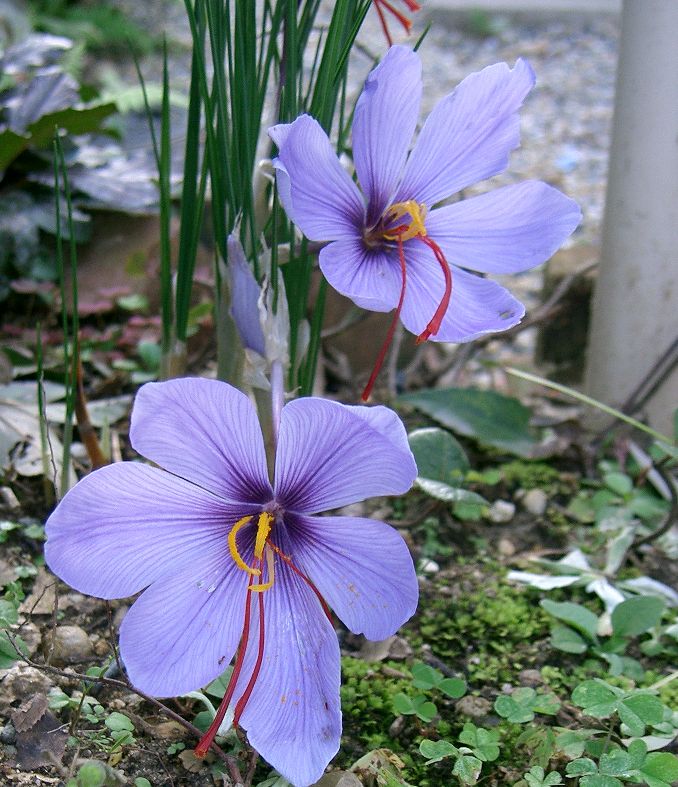
Saffron is produced from a flower: saffron crocus. To make the spice, the saffron crocus stigma (red filament at the heart of the flower) is extracted and dried.
Traditionally, saffron is harvested entirely by hand. In the harvest season – around October-December – producers – usually women – go out into the fields in the early morning hours, to harvest the flowers before they fully open in the sun, which helps preserving the delicate quality of the stigma. The three stigmas of each flower are separated from the flower by hand, and then dried in the sun for 3-5 days. The stigma loses around 80% of its volume when dried: each 100g of stigma yield only 20g of dried saffron. Finally, the saffron is stored up in a closed place, away from sunlight and heat, to preserve its quality.
In Morocco, the price of saffron usually varies between 35 and 175 dirham per gram, depending on the quality. The reason why saffron is so expensive, to the point of being called “red gold”, is precisely because it is so long and hard to produce: the production of only 1 kilogram of quality saffron can require up to 40 hours of strenuous manual labor! Also, only a tiny part of the plant is used: the stigma. Taking into account the loss of volume when the stigma is dried, it takes between 150 and 200 flowers to produce one gram of dried saffron!
Origins
Crocus cartwrightianus, the likely ancestor of the saffron crocus
The saffron crocus, the plant used to produce saffron, is believed to originate from Greece, maybe from the island of Crete. Crocus cartwrightianus, a crocus species that can be found nowadays in Greece, is considered as the ancestor of the modern-day saffron crocus.
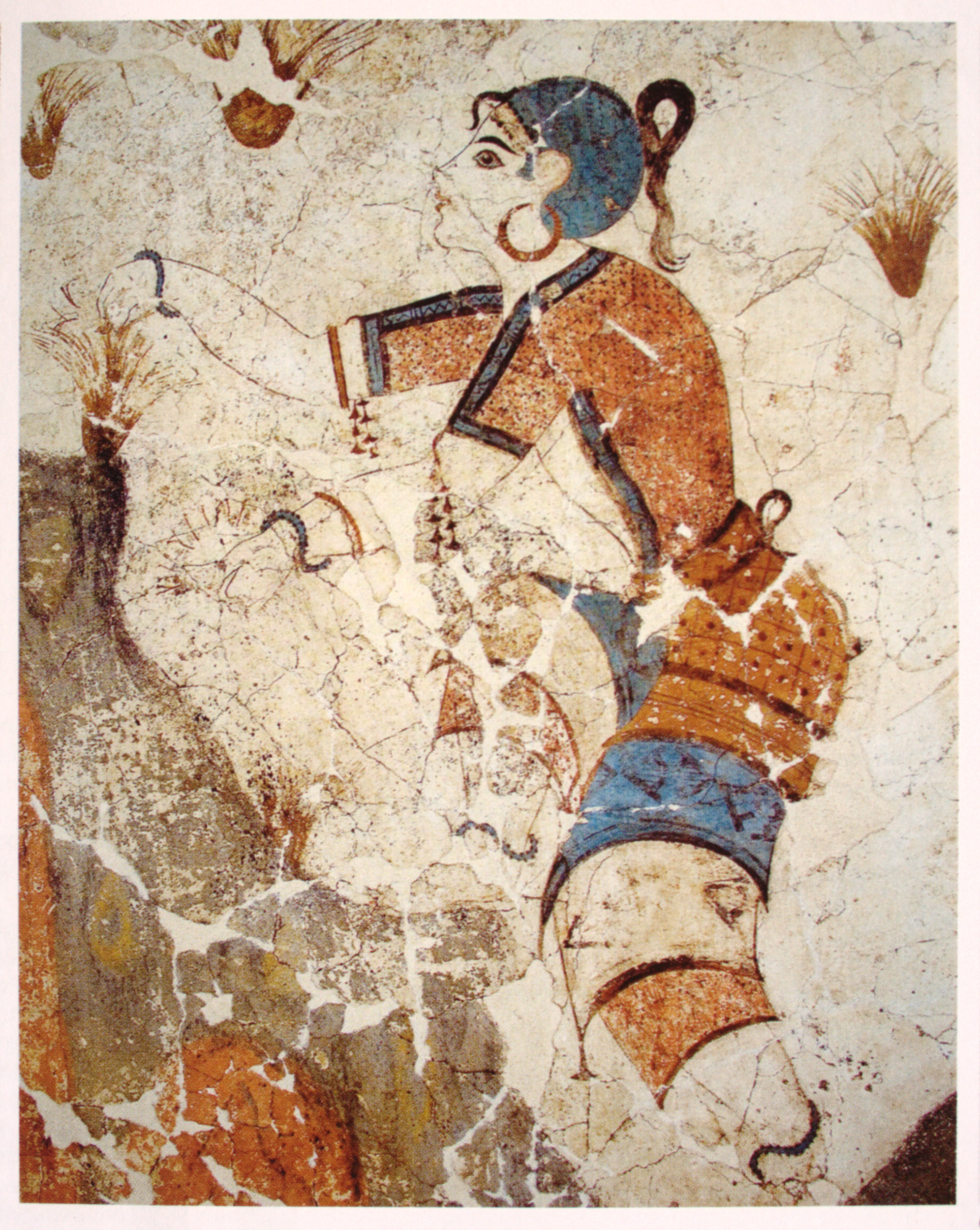
Saffron crocus has been cultivated by man for 3500 years. It was probably domesticated by the Minoan civilisation, a Bronze Age civilisation that appeared in Crete around 3000 BCE. The oldest artistic representations of saffron, Minoan frescoes found in Knossos, Crete, and on the island of Santorini, date back to the 16th or 17th Century BCE.
From Greece, saffron spread throughout the Middle-East, and then into Asia, all the way to India. The Sumerians gathered wild saffron flowers, while the Egyptian Pharaohs imported saffron from Greece.
At this ancient time, men only used the saffron flower. The production of spice from the dried stigma of the flower started later, around 1500 BCE, in modern-day Iran, possibly in the Khorasan region. Saffron was so popular in the ancient Persian Empire that it became an emblematic product of the Persian civilisation until today. Its name, زَعْفَرَان (zaferan) in Persian, comes from زرپران (zarparan), “gold-strung”.
Through the centuries, saffron was exported throughout the Mediterranean basin by the Phoenician trade ships. This is how saffron reached the North African coasts, especially Carthage.
Use
The Greeks of the Minoan era used saffron as a perfume, cosmetic, and dye. There is no indication that they also used it for cooking. Later, however, the Greeks of the Classical era (5-4th Centuries BCE) used saffron as a seasoning, and to flavour wine.
The Sumerians gathered and used wild saffron to produce remedies and magical potions. The Phoenicians developed the fabrication of flavored oil.
The ancient Hebrews used saffron as an ingredient of the incense they burned in the Temple of Jerusalem. Saffron is even mentioned in the Bible, in the Song of Songs of Solomon.
In Egypt, where saffron was not grown locally, but imported from Greece, it was considered a luxury, and used to make perfumes and cosmetics. Egyptian medical doctors also used it for medical applications. Finally, is was probably used in the temples, for religious rituals. In Egyptian mythology, the golden saffron color evoked Ra, the sun god.
Saffron production and use in Persian Antiquity – Image created by Stable Diffusion Web
Persian Emperor holding a saffron offering – Source
The use of saffron was very much diversified in the Persian Empire. For cooking, the Persians used saffron as seasoning for rice and meat, and as an ingredient for pastries and desserts. The also made saffron perfumes and cosmetics, including hair dye. Emperor Darius was famous for bathing in saffron-infused milk, to soften his skin and perfume his body. Persian medicine also discovered the many medical virtues of saffron.
Buddhist monks in saffron robes
While the ritual use of saffron in temples certainly existed before, saffron played an especially important role in the official Persian religion. The ancient Persians made saffron offerings to their gods, and used saffron for various festivities, like Nowruz (Persian New Year), and for funerals. Priests used it in the fire temples. Finally, the ritual garments of priests were dyed with saffron. The saffron color, a lively tone of yellow-orange, was considered sacred, a symbol of purity and prosperity. This symbolic still remains in Buddhist, Hindu and Sikh traditions.
In Carthage, purple, the city’s emblematic tissue, was sometimes associated with saffron.
Cleopatra having a saffron bath – Image created by ChatGPT
Queen Cleopatra of Egypt was famous for her saffron baths. She bathed in water or mare milk infused with saffron, to nourish her skin and better her complexion. She also appreciated the spice’s aphrodisiac virtues, and always took a saffron bath before meeting one of her lovers, to grow her sex drive.
In the Roman world, saffron was a luxury product, a sign of wealth and extravagance. The Roman elite used it as a cooking ingredient and to perfume their bath and their wine. The Romans imported high quantities of saffron to perfume their public buildings, like baths and theaters.
Saffron cultivation today
Various types of saffron
Nowadays, Iran remains the first saffron producer, with a share of over 90% of world production, especially in the Khorasan region. The second producer is Afghanistan, with around 3-5% of world production. In Afghanistan, saffron cultivation is promoted as a healthy alternative to opium. India is third, with around 2%, mostly in the Kashmir region. (Source)
After those three Asian countries, which together count for over 95% of world production, three Mediterranean countries each produce around 1% of the world saffron production: Spain, Greece and Morocco. In Morocco, the national saffron production is mostly concentrated in the High Atlas, around the rura communities of Taliouine (Taroudant province) and Taznakht (Ouarzazate province). (Source)
Moroccan Chebakia
While Moroccan saffron production is quite low on a worldwide scale, Moroccan saffron is known for its quality. Its color is usually lighter, and is flavor less intense, more delicate, and more floral than Iranian saffron, providing the user with a unique, subtle experience. (Source) Moroccan saffron is also very much used in Moroccan cuisine: it is part of the ingredients of many traditional pastries, like briouat and chebakia.
Manichaeism, a religious movement born in Persia, is based on the idea of a cosmic battle between light and darkness. This religion appeared in the 3rd Century, and quickly spread into the whole Roman world, including North Africa. Augustine of Hippo was a Manichean for ten years.
Origins
Seal of Mani
Manichaeism is based on the teachings of Mani, who is considered to be the last prophet, after Zarathustra, Buddha and Jesus. Born in Ctesiphon, capital of the Persian Empire, Mani started preaching his doctrine at the court of the Persian Emperor Shapur I. He originally enjoyed the Emperor’s support, but then he was imprisoned by the end of his life. After his death, his disciples were persecuted.
The Manichean doctrine teaches a complex cosmology, based on a dualistic view of good and evil, pictured as two opposed forces of equal power. Light, associated with the spiritual world, and darkness, associated with the material world, are engaged in constant fight. The world as we know it is the product of this fight. The human soul is light, imprisoned in the material world, and needs to strive to return to the world of light where it comes from.
The four main prophets of Manichaeism: Zarathustra, Buddha, Jesus and Mani
The Manichean dualistic opposition between the material and spiritual world is inspired from Platonic philosophy. Manichean teaching also borrows from other spiritual traditions, both Eastern (Buddhism, Zoroastrianism, Babylonian religion, Judaism) and Western (Greek paganism, Roman mystery cults, Christianity, etc.). Manichaeism claims to be a universal spirituality, transcending all religions traditions that came before it.
The Manichean community was composed of the Elect, fully initiated members who were required to submit to strict ascetic discipline, and the Hearers, the other adherents, who gave the Elect their material support.
Spread in the Roman Empire
Spread of Manichaeism
Its message of universal salvation and emphasis on active proselytism enabled Manichaeism to quickly spread, first in the Middle-East, and then in the whole Mediterranean basin. At the same time, the new religion also spread East, all the way to China.
In the Roman world, Manichaeism became Christianity’s main rival in the race to succeed classical Paganism as the new dominant religion. At the same time, Manichaeism also influenced Christianity, especially Christian monasticism.
In North Africa
Augustine of Hippo
In Roman Africa, a strongly Christian region, Manichaeism mostly spread in the bigger cities like Carthage, Cirta/Constantine and Hippo (Annaba). The Manicheans were particularly active in Carthage, the cultural capital of the region. Their doctrine mostly attracted the urban educated youth, who appreciated its philosophical dualism.
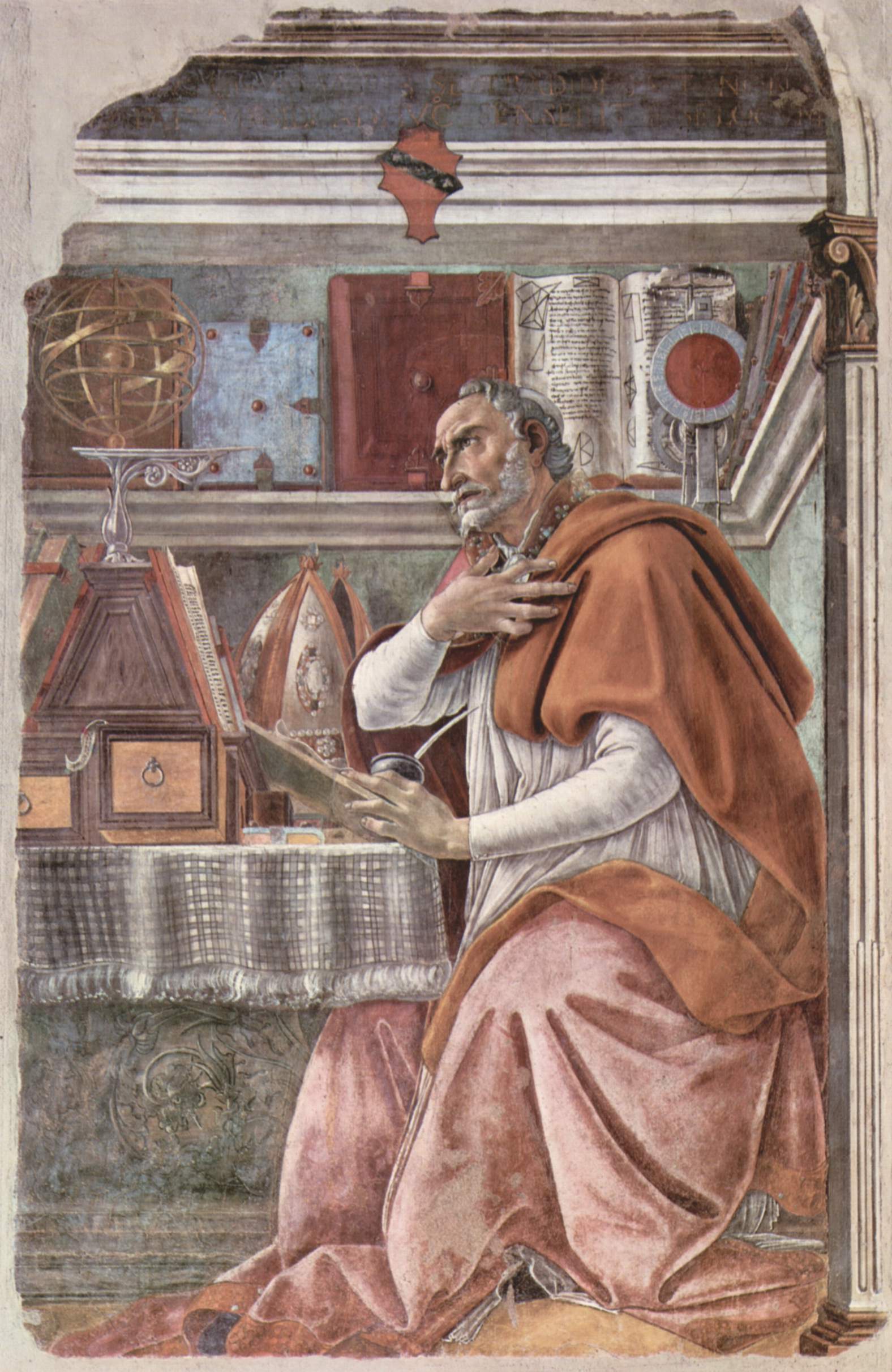
Bishop Augustine of Hippo was a Manichean for ten years, before abandoning this doctrine. After his conversion to Christianity, he wrote several books against the Manichean doctrine. After he became bishop of Hippo, he also took part in public debates with the city’s Manicheans. What we know about the Manichean influence in North Africa mostly comes from his writings. He gives a detailed description of Manichean rites and sacred texts.
Faustus of Milevis – Image created by ChatGPT
The most influential Manichean preacher in North Africa was Faustus of Milevis. Originally from Milevis (Mila), Numidia, he was from a poor pagan family, and became an influential teacher. Augustine met him in Carthage while he was still a Manichean: as he was asking himself many questions about the Manichean doctrine, all those he turned to recommended him to consult Faustus; but, when Faustus finally came to Carthage and he could ask him his questions, he was very disappointed by the lack of depth in his answers. After this meeting with Faustus, Augustine first started doubting Manichaeism. Later on, Augustine wrote a book Against Faustus, refuting his doctrine.
The leaders of the Manichean community in Hippo were Felix and Fortunatus. Augustine debated them publicly over their doctrine. After this debate, Felix was convinced by Augustine’s arguments and became a Christian.
Later on
When Christianity became the official religion of the Roman Empire, Manicheans were persecuted. Their meetings were forbidden and their leaders exiled. Manichaeism was mostly popular with the intellectual elite, much less with ordinary people, which made its dispersion easier. Manichaeism disappeared in North Africa before the arrival of Islam.
In the East, Manichaeism survived much longer, well into the Muslim era. Small, very ancient Manichean communities even still exist today in China.
Inaros was an Egyptian Prince of Libyan origin. In the 5th Century BCE, during the Persian occupation of Egypt, Inaros, who was probably related to the old Pharaonic dynasty that had been overthrown by the Persians, led a rebellion against the Persian Emperor Artaxerxes. He was supported by the Greeks of the Delian League, a confederation led by Athens.
Some specialists believe that the Zvenigorodsky Seal might represent Inaros’ submission after his defeat
Who was Inaros?
Ruins of Sais
Inaros was the Prince of the city of Sais, in the Nile Delta. He reigned over a territory extending from Sais to Marea, on the Mediterranean coast. Sais was an important Egyptian city and had been the base of the fallen Pharaonic dynasty. Inaros’ father was called Psamtik, like the Pharaoh who had been overthrown by the Persians, which means he might have been his descendant.
Greek historian Herodotus mentions that Inaros was of Libyan origin. The 26th Pharaonic dynasty, which was defeated by the Persians, is sometimes described as Libyan, but this is uncertain. Anyway, his territory was part of the regions inhabited by Libyan tribes, so his subjects were Libyan.
Inaros is often confused with another Inaros, who lived two centuries before him: Inaros of Arthribis, an Egyptian Prince, also of Libyan origin, who revolted against the Assyrian occupation of Egypt. The legendary stories about them mix elements of both of their lives. To distinguish them, historians call them Inaros I and Inaros II.
Inaros’ insurgency
Map of the battles between Inaros and the Persians
Around 460 BCE, Inaros expelled the imperial tax collectors from his territory, and started raising an army to revolt against the Roman Empire.
For his revolt, Inaros allied with Amyrtaeus, a neighboring Prince, who controlled the marshlands to the North of the Nile Delta, an area that was very difficult to enter for foreign armies. Most specialists believe that this Amyrtaeus was related to the future Pharaoh Amyrtaeus, who, about 60 years later, defeated the Persians and restored Egyptian sovereignty.
Charitimides’ fleet
Inaros was also supported by the Delian League, a confederation of Greek cities led by Athens, that was hostile to the Persians. The Delian League sent a fleet of 200 ships to support Inaros, led by the Athenian general Charitimides.
After the Athenians arrived, the rebel alliance led by Inaros fought an army of 400.000 Persian soldiers, led y Achemenes, the brother of Emperor Artaxerxes, at the Battle of Papremis. The Persians were defeated and forced to retreat. Shortly later, the Athenians fought the Persian fleet and destroyed it.
The insurgents then besieged the city of Memphis, where the survivors of the Persian army had fled. The siege lasted for years. Emperor Artaxerxes sent a messenger to Sparta, in Greece, to try to convince the Spartans, who were historical enemies of the Athenians, to attack Athens in order to force the Athenian fleet to withdraw from Egypt. When the Spartans refused, Artaxerxes sent a large army to Egypt, to fight the insurgents.
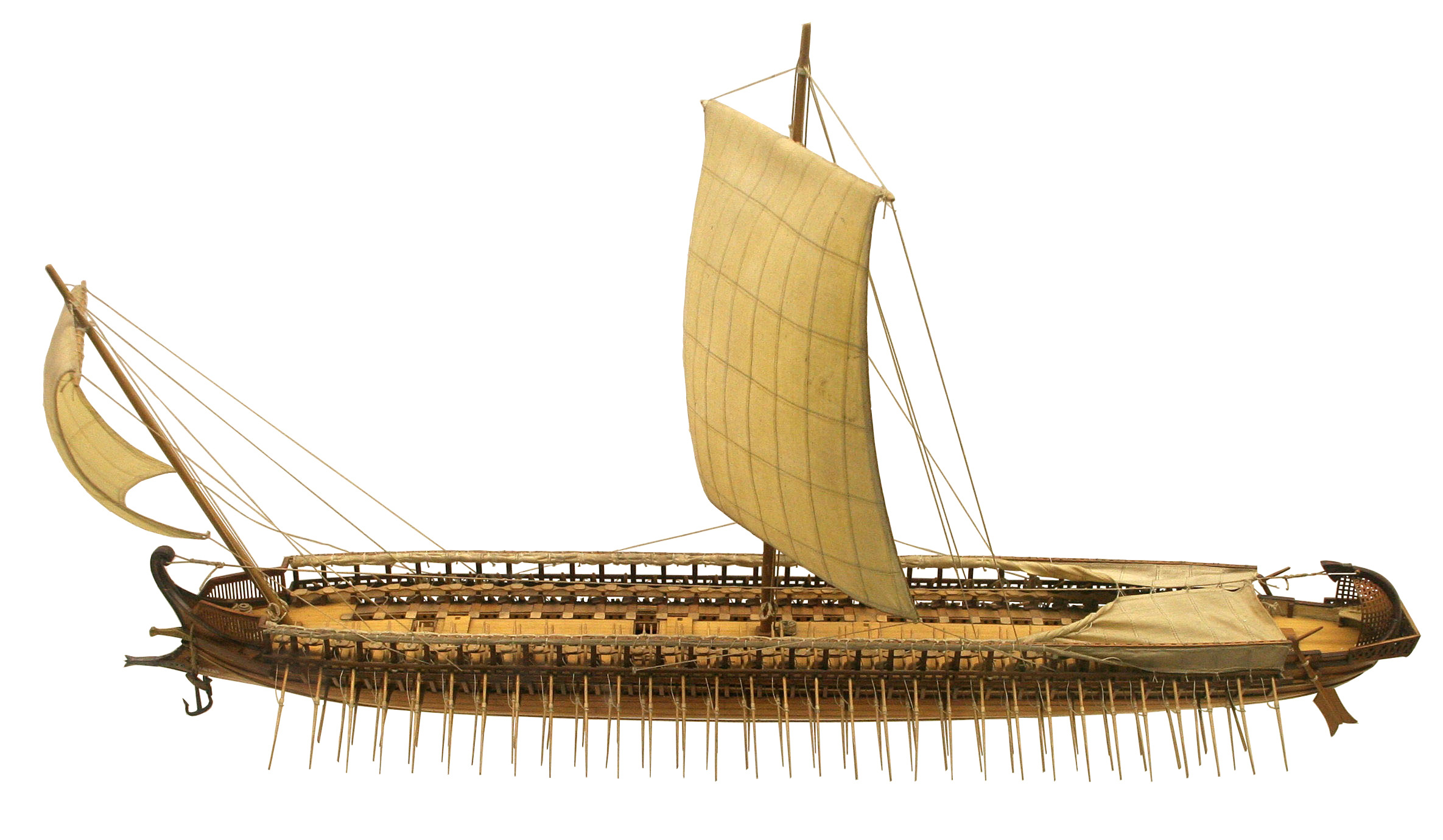
Model of trireme, the ships used by the Greek and Persian fleets
When the new Persian army arrived, the insurgents were defeated and forced to lift the siege of Memphis. The Athenians fled to the island of Prosopitis, in the Nile Delta, where they moored their fleet. The Persians besieged the island for 18 months. At the end, they managed to connect the island to the continent by building channels to drain the river, enabling them to cross. The Greeks were defeated and massacred: only a few survivors managed to flee to Cyrene, from where they returned to Athens by sea.
A new Greek army, sent from Athens to help the fighters besieged in Prosopitis, was also destroyed.
Inaros, defeated and wounded, fled to Papremis, his last fortress in the Nile Delta marshes. After keeping up the resistance for one year, he was defeated and captured. He was imprisoned in Susa, capital of the Persian Empire, where he was executed in 454.
Conclusion
Despite its final failure, Inaros’ insurgency was the largest Egyptian uprising against Persian occupation. Greek historian Herodotus claims that Inaros did more harm to the Persians than anyone else before him.
Inaros’ defeat caused a panic in Greece, leading the Delian League to relocate their treasure from the island of Delos to Athens.
Around sixty years later, the Egyptian Prince Amyrtaeus (who might have been a descendant of Inaros’ ally) defeated the Persians and restored Egyptian sovereignty. He became Pharaoh and founded a new dynasty.
The Canal of the Pharaohs was an ancient channel that connected the Nile to the Red Sea. Originally started by the ancient Pharaohs, the building of this channel was probably finished by the Persian Emperor Darius the Great, after the Persian conquest of Egypt.
Approximate itinerary of the Canal of the Pharaohs
The first Egyptian Pharaoh who tried to build a channel between the Nile and the Red sea was Sesostris (1878-1839), a Pharaoh of the 12th dynasty. He was however faced with the insurmountable obstacle of the difference between the water levels of the river and the sea, which led him to abandon the project.
Later on, the construction project was restarted by Pharaoh Necho II (610-595). Ancient sources diverge on whether he actually finished building the channel. Even if he did, his channel didn’t last long.
Fragment of the Chalouf Stele, one of the monuments commemorating the building of the channel by Darius
After the Persian conquest of Egypt, Emperor Darius the Great decided to finish (or to rebuild) the channel. Five major Egyptian monuments commemorate the building of the channel by Darius. The propaganda around this project aims to present Darius as a building Emperor, who continued the work of the ancient Pharaohs.
But did Darius actually finish building the channel? His monuments claim that he did; but several ancient authors, like Aristotle, Strabo and Pliny the Elder, say that he didn’t. Anyway, it is certain that his project was more advanced that his predecessors’.
Fortress built by Diocletian to protect the entrance to the channel
After Alexander the Great died, the new Greek King of Egypt Ptolemy II also started working on the channel. He was the first one to solve the problem of the different water levels, by building water locks. The channel was again rebuilt by Roman Emperor Trajan. Emperor Diocletian built a fortress to protect its entrance.
At the time of the Islamic conquest of Egypt, the channel was silted with sand, until Amr ibn Al-As reopened it. Its entrance to the Red Sea was definitively closed in 767, so that it couldn’t be used to deliver supplies to the Alid rebellion in Mecca. The section close to the Nile, called Khalil, remained in use as part of the water infrastructure system of the city of Cairo, until it was fully covered in 1890. It is now the Port Said Street, in Cairo.
In the 5th Century BCE, Cyrenaica briefly came under the domination of the Persian Empire. From this time on, various researchers have noted a growing presence of new cultual elements linked to fire in the Greek temples of Cyrene and other cities of the region. This might be an influence of Eastern cults, maybe of the official religion of the Persian Empire.
Sacred fire in a Zoroastrian temple
Mazdeism, the official religion of the Persian Empire, was centered on worship of the sacred fire, a symbol of purification. In the fire temples, a sacred fire burned permanently. Other cults of the sacred fire existed in other Eastern regions. A form of this religion, Zoroastrism, inspired by the preaching of the Persian prophet Zarathustra, still exists in Iran today.
Unlike neighboring Egypt, Cyrenaica wasn’t occupied by the Persians. The kings of Cyrene continued reigning as Persian vassals. The Persians imposed a flexible political and economic domination. The Cyrenaican Greek elite probably had links with the Persian Imperial court, and they might have been influenced by Persian religious practices. At the same time, Persian traders, and maybe even priests, came to Cyrenaica via Egypt. In a region at the crossroads of civilisations, that had always been very open to a diversity of religious and philosophical ideas, Eastern cults of the sacred fire easily found their place.
A Mazdean presence in Cyrenaica seems unlikely. No fire temple has been found in Libya up to today. However, recent research showed that certain cultual elements linked to fire or light appeared at this time. Professor Robert G. Goodchild, one of the pioneers of archaeology in Cyrenaica, notes that in some sanctuaries, developments linked to ritual fire, like hearths or circular altars, might reflect cults with a strong symbolic of light or purification. (The Sanctuary of Apollo at Cyrene, magazine Libyan Studies) In Apollonia, some temples even present an interior architecture adapted to maintaining a continual fire. Those cultual uses of fire were uncommon in classical Greek religion. This is an example of syncretistic influence of Eastern cults, maybe of Persian Mazdeism, on traditional Greek religion.
After the Persian conquest of Egypt, in 525, the Persian Emperor Cambyses II sent an army of 50.000 men to take control of the Siwa oasis. His army never reached the oasis: it was entirely lost in the desert, without a trace.
Itinerary of the army of Cambyses
According to Greek historian Herodotus, Cambyses wanted to take control of the oracle of Ammon, in Siwa. His army left Thebes (Luxor), traveled through the desert for seven days, and was last seen in the Dakhla Oasis. As they were half-way to Siwa, an immense sandstorm buried them all. This narrative is not fully historical: no sandstorm can submerge such a large army! The legend of the sandstorm might have been invented by the inhabitants of Siwa themselves, as a sign of divine protection.
Several expeditions in the Egyptian desert have recently tried to find traces of this lost army. The most well-known expedition, in 1983-1984, was led by American journalist Gary Chafetz, who was supported by Harvard University and The National Geographic Society. He discovered around 500 burial mounds, some of them containing bones, which were dated around 1.500 BCE, around 1.000 years before the Persian invasion of Egypt. The only timely element is a sphinx statuette found in the Sitra Oasis (East of Siwa), which seems to be of Persian provenance. However, nothing indicates that this sphinx was left there by the lost army of Cambyses.
In Summer 2000, a team of geologists from the University of Helwan, in Cairo, while looking for oil, found metal fragments looking like weapons and human remains that they believed to be the lost army of Cambyses. The Egyptian Supreme Council of Antiquities announced an expedition to study this site. However, no further information has been published since.
Some specialists also believe that this army cannot be found because if was never lost. It is possible that is was trapped and defeated by the Egyptian rebel chief Petubastis. Later on, the Persian Emperor Darius, who defeated Petubastis, invented the legend of the sandstorm to hide this defeat.
Egypt, the oldest and most prestigious nation in the ancient world, was invaded by several foreign nations during its thousand-year-old history, including the Hyksos, the Libyans, and the Nubians. Those foreign invaders were usually quickly assimilated into the Egyptian nation. In the 6th Century BCE, the powerful Persian Empire, which already extended over the Middle East, and all the way to India, also aspired to conquer the Kingdom of the Pharaohs.
The Persian invasion
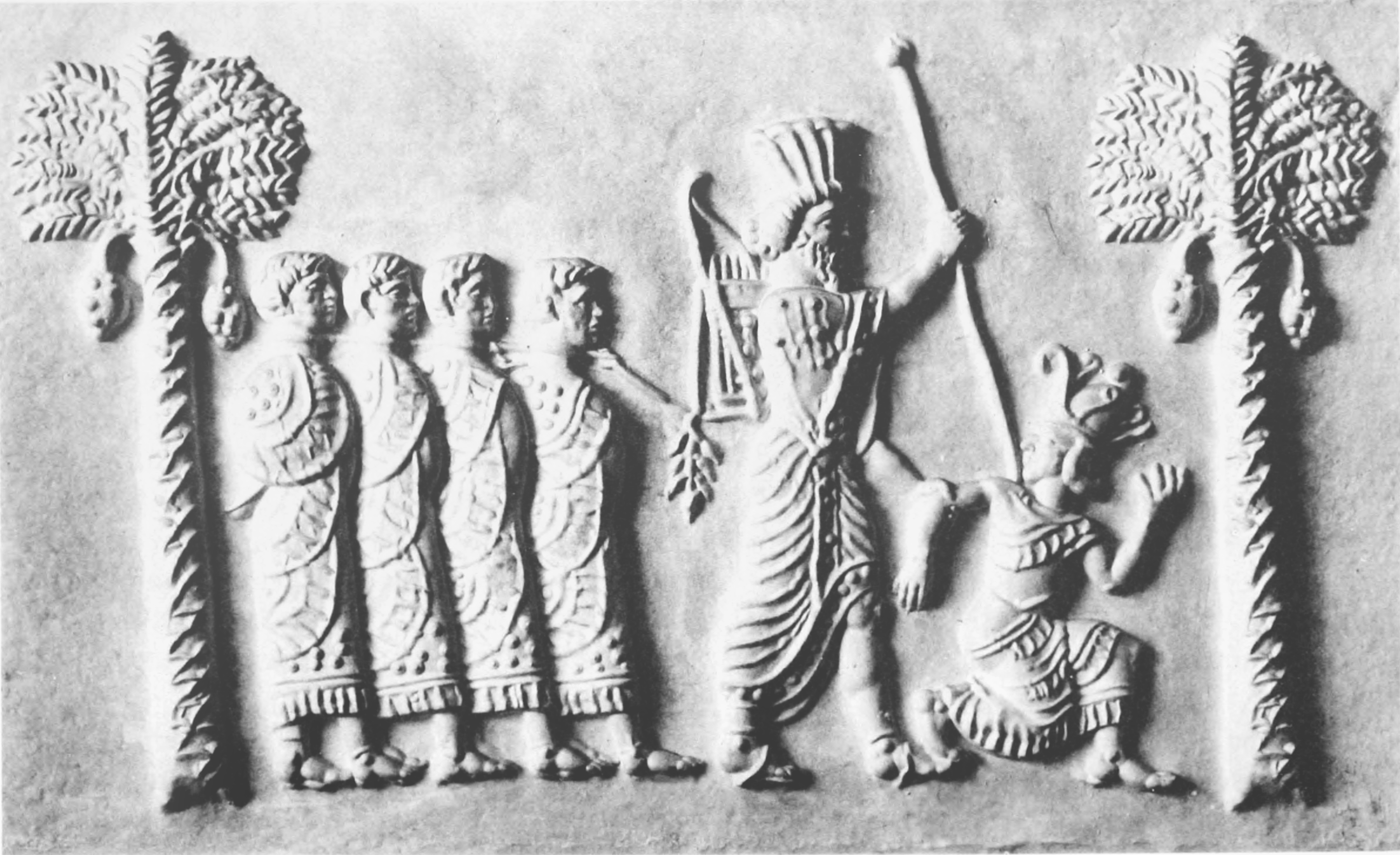
The Zvenigorodsky Seal : the Persian Emperor thrusts his spear on the Egyptian Pharaoh, while holding four Egyptian prisoners
According to Greek historian Herodotus, the conflict between Persia and Egypt started after the Persian Emperor Cyrus the Great asked Pharaoh Amasis II to send him an Egyptian ophthalmologist for his court. To satisfy this request, Amasis forced one of his physicians to go to Persia, leaving his family behind. To avenge himself, this ophthalmologist took advantage of his proximity with Cambyses II, Cyrus’ son and successor, to turn him against the Pharaoh.
The ophthalmologist first convinced Cambyses to ask for the Pharaoh’s daughter’s hand in marriage, in order to strengthen his relations with Egypt. Amasis, who didn’t want his daughter to become a concubine of the Emperor of Persia, but also did not dare to openly defy his powerful neighbor, decided to instead send him the daughter of his predecessor Apries, whom he had killed. When Cambyses discovered the truth, he was furious about this betrayal, and invaded Egypt. Amasis himself died before having to fight the Persian army, but his son Psamtik III was easily defeated by Cambyses.
The first satrapy (525-404)
The Persian Empire conquered Egypt in 525 BCE. Cambyses and his successors reigned over Egypt with the title of Pharaohs – the 27th Pharaonic dynasty. As they weren’t always in Egypt, they were represented by a satrap. Despite their efforts to respect the Egyptian culture and traditions, the Persians were unpopular in Egypt. Especially, Cambyses’ decision that the Egyptian people should no longer pay taxes to support the temples earned him the hostility of the Egyptian priests.
An Egyptian rebellion started after the death of Cambyses, in 522. Petubastis III, a heir of the former Pharaonic dynasty, overthrew the satrap Aryandes and proclaimed himself Pharaoh. The new Emperor Darius intervened, suppressed the rebellion and reestablished Aryandes in 521.
In 497, the satrap Aryandes, who had been governing Egypt since the beginning of the Persian conquest, was deposed and executed by Darius, apparently because he tried to declare the l’independence of Egypt, under his authority.
During this whole era, the Egyptians regularly rebelled against the Persians. These repeated insurrections would finally successfully break the Persian domination: in 404, Emperor Darius II was expelled from Egypt by Amyrtaeus, a descendant of the ancient Pharaohs. His son Artaxerxes II would try unsuccessfully to reestablish his control over Egypt.
Egypt recovers its sovereignty (404-343)
Amyrtaeus proclaimed himself Pharaoh and reestablished the Kingdom of his ancestors. The 28th, 29th, and 30th Pharaonic dynasties were Egyptian.
The second satrapy (343-332)
Artaxerxes III as Pharaoh
The Persians never gave up on their ambition of reconquering Egypt.
Emperor Artaxerxes III (359-338) would make this his first priority. After a first failed attempt in 351, followed by several years of careful preparation, he returned in 343, at the head of an army with a large war fleet and many Greek mercenaries. This time, Egypt submitted.
Artaxerxes proclaimed himself Pharaoh: the 31st Pharaonic dynasty was Persian.
After Alexander the Great conquered Egypt in 332, he founded a new Egyptian city, Alexandria, which he wished to make the capital of his Empire. Two years later, Darius III (336-330), the last Emperor of Persia, was defeated by Alexander the Great.
From Samos, he recruited an army to help him come back to power. He consulted the Delphic oracle, which predicted that he would be successful, but also warned him that if he treated his subjects with cruelty, he wouldn’t reign long on them. He indeed managed to come back to power in Cyrene and to exile his adversaries.
Out of fear of retaliation, the king left Cyrene for the neighboring city of Barca (Marj), leaving his mother behind as regent. Alazir, the governor of Barca, from an Amazigh tribe allied with the Cyreneans, was also the father of the king’s wife. One day, while in the Barca market place, he was recognized by a group of exiled Cyreneans, who killed him, together with Alazir.
The Persian invasion
After Arcesilaus’ death, his mother Pheretima called on the Persian governor of Egypt to avenge him, claiming that he had been killed because of his loyalty to the Persians. The Persian army besieged Barca and deported its population, and then entered Cyrene, on Pheretima’s invitation.
Pheretima soon died, of a skin disease. Battus IV (515-465), the new king of Cyrene, became a client of the Persian Empire, just like his son Arcesilaus IV (465-440). After his death, Cyrene became a Republic, still under Persian sovereignty.
Unlike Egypt, Cyrenaica was never occupied by the Persian army: the Persians exerted their power indirectly, by controlling the local elite.