

Français – عربي – ⵜⴰⵎⴰⵣⵉⵖⵜ – English
Traditional North African cuisine, while considerably enriched by later influences, is still largely similar to the food eaten by our first ancestors, thousands of years ago. Older forms of couscous and tajine were already known to the Numids of King Massinissa, and even earlier. In this article, we will discover the history of those two emblematic dishes of our region.
Couscous
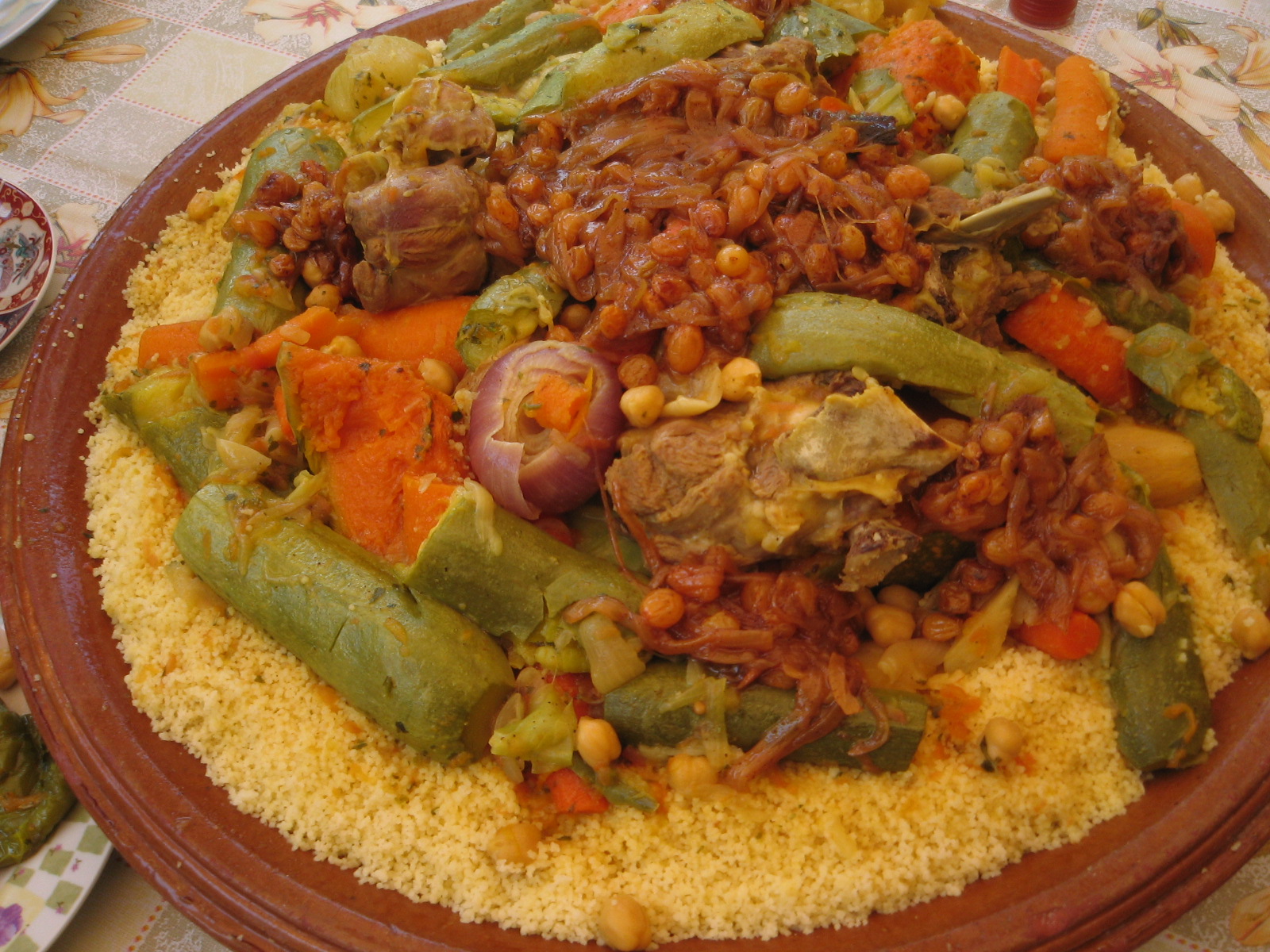
Wheat and barley were largely cultivated all over North Africa, and their semolina was probably the staple food for the first North Africans. They ate it raw, with goat or sheep milk. It was called seksou (ⵙⴽⵙⵓ), from the verb kaskasa, to grind.
Steamed couscous grain probably appeared in the Kingdom of Numidia. Primitive couscoussiers have been found in tombs dating back to the reign of Massinissa.
After the Arab conquests, the indigenous populations of all North Africa were still eating seksou. The couscous recipe, as we know it today, seems to fave been developed around the 12th Century: the dish is not mentioned during the Zirid dynasty (972-1148), but it is mentioned during the Almohad Caliphate (1121-1269). Around the same time, an Arab cooking book written by an Ayyubid (an Egyptian sultanate, 1171-1260) author, contains three recipes of couscous. 12th-Century couscoussiers, the oldest since Massinissa, have been found in the Moroccan Souss.
Couscous probably spread to Spain with the Moorish conquests, even though it is no longer found in traditional Spanish cuisine today. However, it is still made in Trapani, Sicily, according to an old Andalusian recipe.
Tajine

Meat and vegetables braised in an earthen pot was certainly the oldest and most common cooking method in all North Africa. The oldest tajine fragments date back to the Kingdom of Numidia. More surprising: pieces of North African pottery, including a primitive form of tajine, have been found… in Scotland, along the Antonine Wall! This pottery was probably brought there by North African soldiers in the Roman army, who were stationed there; Quintus Lollius Urbicus, governor of Roman Britain from 139 to 142, had a Numidian background.
Originally from the Atlas mountains, tajine was apparently adopted by the Arabs during the rein of Harun al-Rashid (786-809), the greatest Abbassid caliph. Tajine is mentioned in the Thousand and One Nights. It is found today all over the Middle East.
