Ce site présente l'histoire de l'Afrique du Nord avant les conquêtes arabes – This website presents the history of North Africa before the Arab conquests – يعرض هذا الموقع تاريخ شمال إفريقيا قبل الفتوحات العربية
The catacombs of Sousse, Tunisia, are underground galleries that, during the roman era, were used by the city’s Christian community as meeting places and underground burial grounds. The catacombs of Sousse are unique in North Africa, and contain about 15.000 tombs, with engravings that go back to the time when Christians still practiced their faith in clandestinity.
During the first centuries of the Christian era, Christianity was a minority religion and faced persecution. Most early Christians were from the poorest categories of society. As their meetings were illegal, they gathered for worship in the catacombs, underground galleries that had been dug underneath the Roman cities to bury the dead. With time, the Christian community also started burying their dead in the catacombs where the Christians met for worship. These Christian tombs are covered with writings and engravings, a rare glimpse into the artistic expression of a clandestine community.
Good Shepherd, Christian engraving in the catacombs of Sousse
The catacombs of Hadrumetum, the old city of Sousse, are spread over 5 kilometers underneath the medina of Sousse. The 240 galleries contain close to 15.000 tombs. The symbols and writings engraved on these tombs can be considered as the oldest Christian art in North Africa. Most of those engravings are kept at the Sousse Archaeological Museum.
Three catacombs, out of four that exist, have been entirely excavated. The most famous are the Catacombs of the Good Shepherd, that spread over 1.6 kilometers and contain 6.000 tombs. The tombs are dug into the walls, over several floors.
The catacombs of Sousse had long been lost, until they were discovered in 1888. While they were in a very good state of conservation at the time of their discovery, they quickly eroded since they were excavated, due to the effect of dripping water.
The Catacombs of the Good Shepherd, the only catacombs that used to be open to the public, were closed several years ago for restoration works. As the works were finished recently, it can be hoped that the catacombs will now soon be open for visits again.
Since the 1st Century, a new religion, Christianity, quickly spread around the whole Roman Empire. North Africa, from its large, cosmopolitan cities to its most remote rural areas, proved to be an especially fertile ground for the Christian Gospel. Carthage, the capital of Roman Africa, became an influential Christian center.
The Carthaginian church was probably founded from Rome. According to Christian tradition, the first bishop of Carthage was Crispus, followed by Epenetus, two believers mentioned in the Christian Scriptures as members of the church of Rome. Speratus, one of the Scillitan (Kasserine) martyrs, is sometimes mentioned as a bishop of Carthage, but this is uncertain. The first officially documented bishop of Carthage was Agrippinus, around 240.
Tertullian
Tertullian, the first Christian writer in the Latin language, was born in Carthage around 155, in a Romanized Amazigh family. He had a career as a lawyer and rhetorician. After his conversion to Christianity, he decided to put his rhetorical skills at the service of his faith. His passionate writings defended Christianity against the attacks of the people of his time.
The most influential bishop of Carthage was Cyprian. Born in 210, in a rich, pagan family, he studied law and became a lawyer. After he became a Christian at around 35 years of age, he gave away his wealth to the poor, as the Church taught for rich believers. In 248, he was elected bishop of Carthage. He wrote several books of Christian doctrine. He was martyred in 258.
Augustine of Hippo, the greatest theologian of the Roman-African church, also lived several years in Carthage.
During the episcopate of Cyprian and his successors, the church of Carthage started having a strong influence on the Christian community in all Roman Africa, especially through the regional church councils that were organised in Carthage, with the participation of the bishops of other African cities.
Carthage and the surrounding region probably had a majority-Christian population by the end of the 3rd Century, before Roman Emperor Constantine’s conversion, while the new faith was still persecuted. Christianity spread from Carthage through all North Africa.
During the first centuries of the Christian era, North Africa, from its large, cosmopolitan cities to its most remote rural areas, proved to be an especially fertile ground for the Christian Gospel. The first translation of the Bible into Latin, the official language of the Roman Empire, was probably made in North Africa.
The first Christians read the Bible in Greek. The Gospels and the other New Testament books were written in Greek. As for the Old Testament, the Christians borrowed the Septuagint, the Greek translation of the Hebrew Bible by the Alexandrian Jewish community.
Greek was spoken mostly in the Eastern regions of the Roman Empire, from Greece to Syria and Egypt. In Rome and Italy, while the most common language was Latin, most understood Greek. This was not the case in North Africa and Spain, where the inhabitants spoke Latin, next to their regional languages. The Christians in these regions translated the Bible into Latin.
Quite little is known of those first Latin translations of the Bible. There wasn’t one single translation, but several manuscripts translated separately in various regions. The first mention of a Latin Bible comes from Tertullian of Carthage, in the beginning of the 3rd Century, which seems to indicate that it was translated in the region of Carthage.
At the end of the 4th Century, the Christian theologian Jerome of Stridon translated the whole Bible into Latin. Unlike the older translations, Jerome of Stridon didn’t base himself on the Septuagint, but on the original Hebrew text of the Old Testament. His translation, known as the Vulgate, quickly became the official translation of the Latin Church. The other translations lost their importance after that.
The manuscripts of the Latin Bible before the Vulgate are collectively called Vetus Latina (ancient Latin). The oldest manuscript that still exists today dates from 350.
Since the 1st Century, a new religion, Christianity, quickly spread around the whole Roman Empire. North Africa, from its large, cosmopolitan cities to its most remote rural areas, proved to be an especially fertile ground for the Christian Gospel. The first North African city to be reached by the Christian message was Cyrene.
Mark the Evangelist
According to Christian tradition, the Christian message was preached in Cyrene by Mark, the author of one of the Gospels. Mark, who was originally from Cyrene, preached there, and then continued to Alexandria. At the time, there was a strong Jewish community in Cyrene, of which Mark himself was a member, and he certainly first preached to them. Like in the whole Roman world, many of the first Christian converts were from a Jewish background.
Simon of Cyrene carries the cross of Christ
The Christian holy books mention several other Christians from Cyrene. Simon of Cyrene, a Cyrenean Jew who was in Jerusalem at the time of Christ’s crucifixion, was ordered to help him carry his cross to the place of his execution. The way in which he is mentioned, with his two sons Alexander and Rufus, shows that they were well-known in the first Christian community.
The Christian preaching was originally addressed only to the Jewish communities in the various cities. The first believers who preached the Gospel also to Greeks, in Antioch, Syria, were originally from Cyprus and Cyrene. Those Jewish believers from Cyrene were from a Greek city and had lived all their lives among Greeks, so they didn’t hesitate to reach out to them.
One of the leaders of the Antiochian church, Lucius, was from Cyrene. We don’t know if he was Jewish or Greek. According to Christian tradition, Lucius later became the first bishop of Cyrene.
Another leader of the church of Antioch was Simeon, also called Niger, which means “Black”, probably because he had black skin. Some traditions identified him to Simon of Cyrene. However, the inhabitants of Cyrene at the time weren’t Black. Simeon probably wasn’t from Cyrene, but from Subsaharan Africa, maybe from Ethiopia.
After the 1st Century, the next bishop of Cyrene to be known by name is Theodore, who was martyred in 303, during the Emperor Diocletian’s persecution.
From Cyrene, the Christian message spread to the whole region. The bishops Basilides of Ptolemais (Tolmeita), Ammon of Berenice (Benghazi), and Euphranor of Apollonia (Marsa Susa) are mentioned around 260, in letters written by the bishop of Alexandria. Sabellius, a Christian theologian who taught in Rome around the same time, was native from Cyrenaica. Arius, the founder of the Arian heresy, was from Ptolemais. Bishops Zopyrus of Barca (El Marj), Serapion of Antipyrgos (Tobruk), and Titus of Paraetonium (Marsa Matruh) took part in the Council of Nicea, in 325. Synesius of Cyrene was bishop of Ptolemais at the beginning of the 5th Century.
The Byzantine Church of Al Athrun
Christianity also prospered in Cyrenaica in the Byzantine era. The ancient city of Olbia (Qasr Libya), between Barca (Marj) and Balagrae (Al-Bayda), still contains two Byzantine churches, with around 50 mosaics considered as among the most beautiful in the world. Another well-preserved Byzantine church is in Erythrum (Al Athrun), close to Derna.
In all the Roman world, the rapid growth of Christianity and its radically new dogma caused much hostility. While North Africa was an especially fertile field for the Christian gospel, persecutions were also particularly strong there. During the first centuries of the Christian era, many North African Christians paid their lives for their faith.
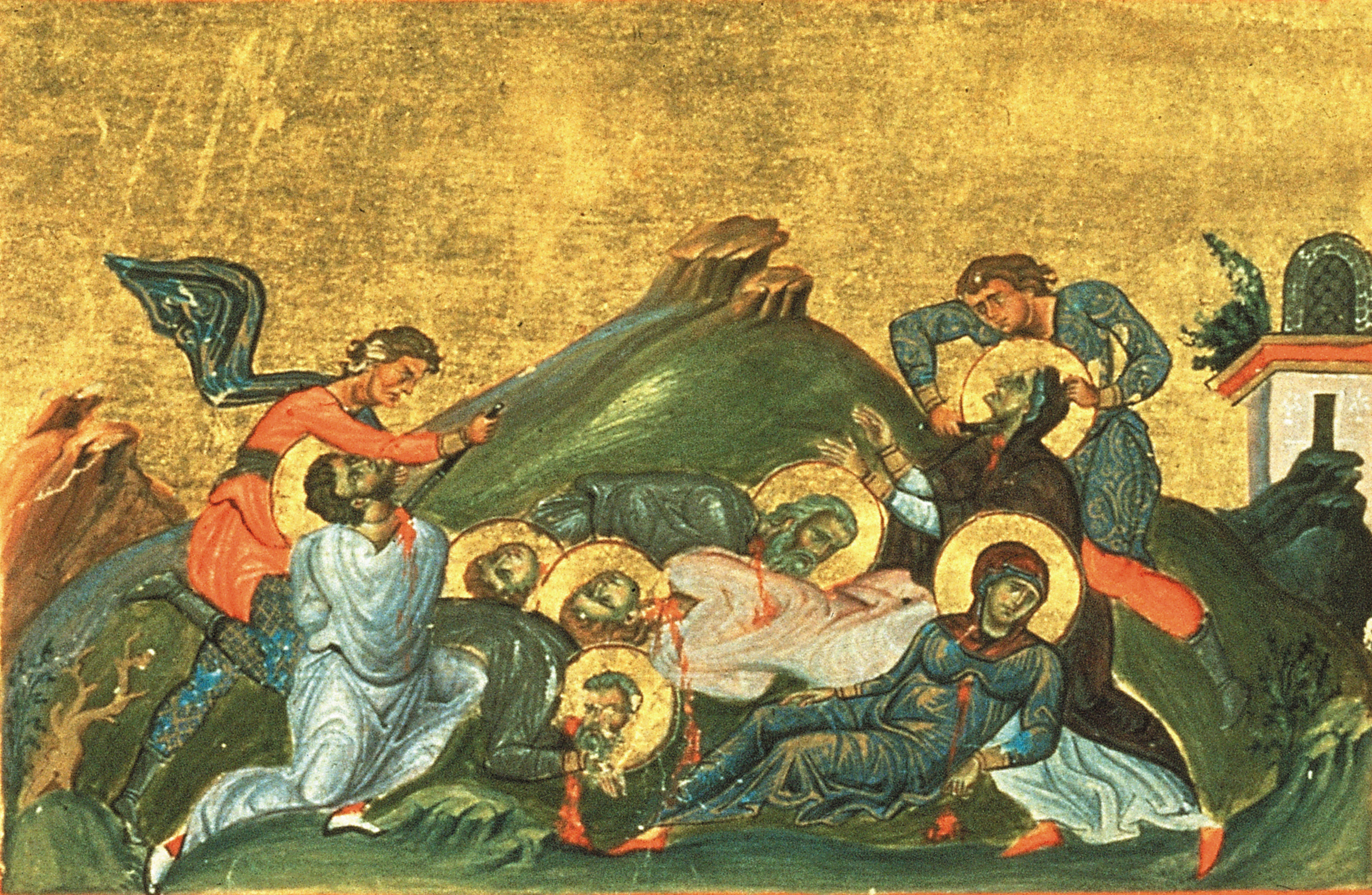
Martyr of Perpetua and Felicity
Context
Why were the Roman authorities persecuting the first Christians?
Roman society was polytheistic and quite tolerant in terms of religion: the Romans had their own gods, but they also “borrowed” the gods of the other people they conquered. The problem with Christianity was its exclusivity: the Christians irritated their pagan contemporaries by proclaiming that their God was the one true God and all other gods were nothing but idols.
Another problem was the imperial cult: while the Emperor was considered divine, and acted as an intermediary between gods and men, Christians (and Jews) refused to worship a mere man. In a society where ceremonies and sacrifices in honor of the Emperor were the base of civil life, not taking part was both a political and religious crime. Finally, the Christian idea that all men were equal before God was a threat to the ancient social order.
When the Roman authorities arrested Christians, they commanded them to deny their faith by offering a sacrifice to the Emperor. If they refused, they could be executed for rebellion against the Emperor. However, Christians weren’t afraid of dying: death was the fulfillment of their hope, their entry into eternal life.
The first North African martyrs
The first Christian martyrs in North Africa were a group of 12 believers who were put to death in Scillium (Kasserine, modern-day Tunisia) in 180. A 4th-Century letter written to bishop Augustine of Hippo mentions four other believers who were reportedly martyred in Madaura (M’daourouch, modern-day Algeria), around the same time. However, this is a late source, which makes it doubtful.
The Scillitan martyrs were seven men: Speratus, Nartzalus, Cittinus, Veturius, Felix, Aquilinus and Laetantius, and five women: Januaria, Generosa, Vestia, Donata and Secunda. Their names show that they had Amazigh, Punic and Roman origins, the three main groups composing the North African society.
The story of their martyrdom can be read online on this page. It is the oldest North African Christian text. When interrogated by the Roman civil authorities, the group of Christians – Speratus was their speaker – insisted that they were good citizens, who paid taxes and didn’t harm anyone. Their answer to the Roman proconsul who commanded them to sacrifice to the Emperor sums up the spirit of so many other Christian martyrs after them: “We honor Caesar as Caesar, but we fear only God.” As they refused, they were killed.
The Carthaginian martyrs
Basilica Majorum, Carthage, where Perpetua and Felicity are buried
Among the most famous of all martyrs, Perpetua and her slave Felicity were put to death in Carthage around 203. Perpetua was a young, 22-year-old noblewoman and the mother of a newborn child, while Felicity was pregnant. We don’t know how the two women became Christian, but the story of their martyrdom clearly shows that since they shared the same faith, they no longer saw each other as mistress and slave, but as two sisters.
The story of their martyrdom starts with a visit of Perpetua’s father, a local dignitary, to his daughter in prison, to beseech her to renounce her faith. Perpetua refuses to let herself be swayed by her father’s cries or by her worries for her own child: her faith in Christ was so strong that not even death would separate her from him.
Before her execution, she had a vision: she saw herself climb a ladder, with a serpent at the feet of the ladder, but the serpent did not harm her. When she arrived to the top of the ladder, she found herself in a beautiful garden. She understood that she would die for her faith, but then enter paradise after her death.
Finally, Perpetua and Felicity, together with other believers, were devoured by wild animals in the arena.
Other North African martyrs
The bishop Cyprian of Carthage was martyred in 259, followed by eight other Christians, Montanus, Lucius, Flavian, Julian, Victoricus, Primolus, Rhenus and Donatian.
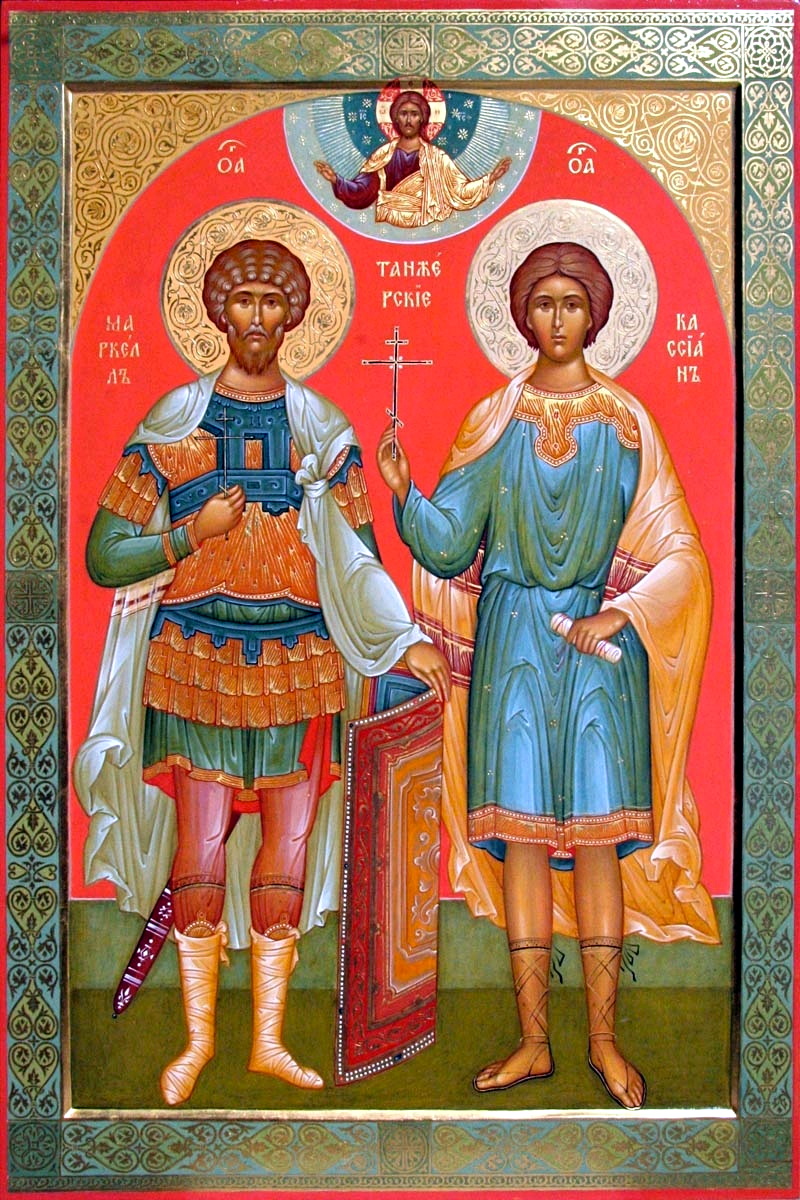
Icon of Saint Marcellus and Saint Cassian, Russian Orthodox Church of Rabat
Marcellus was a centurion in the Roman army, based in Tingis (Tangier). In 298, because of his Christian faith, he refused to take part in the ceremonies organised for the birthday of Emperor Maximian. He was judged by a military court, sentenced to death and beheaded. Cassian, the court clerk, was so much impressed by his courage that he converted during the trial, refused to write down the unjust sentence, and was executed together with Marcellus.
Victor the Moor, a Christian soldier from Mauretania, who was serving in the Praetorian Guard, was martyred in 304, in Milano, Italy.
Saint-Salsa Basilica, Tipaza
Later during the 4th Century, Fabia Salsa, a young, 14-year-old Christian girl, was killed for her faith in Tipasa, modern-day Algeria. According to the legend, her pagan parents brought her to a celebration in honor of a local god, represented by a bronze dragon. Seeing such idolatry made her so furious that during the night, she threw the dragon’s head into the sea. The next day, she was stoned and her body thrown into the sea, but a Gaulish seaman who happened to be passing by found her body and buried her. This legend is more recent, and thus certainly less historical than older martyrs’ accounts, but there is no reason to doubt that this young girl was indeed killed for her faith in Tipasa. The Saint-Salsa Basilica exists in Tipaza today.
Finally, after the Vandal conquest of North Africa, the Vandals, who adhered to the Arian doctrine, also persecuted the North African Christians. Several hundreds, including many bishops, but also ordinary believers, were put to death for their faith. One of those martyrs of the Vandal era, Olivia, gave her name to the Zitouna Mosque, in Tunis, which is built on her tomb.
The blood of the martyrs: a seed
The unshakable faith of the Christian martyrs, who were ready to die rather than recant, impressed all those who saw them and won new souls to their faith. The Christian author Tertullian of Carthage expressed it this way: “The blood of the martyrs is the seed of the Church.”
Alexandria, the Ptolemaic capital of Egypt and a vibrant hub of Greek culture, also boasted a significant Jewish population. This community, situated at the crossroads of Judaism and Hellenism, played a pivotal role in translating the Hebrew Bible into Greek. Subsequently, Alexandria emerged as a prominent Christian center, renowned for its famous ancient theological school.
The Jewish community of Alexandria
Origins
According to the Jewish historian Flavius Josephus, there have been Jews in Alexandria since its foundation.
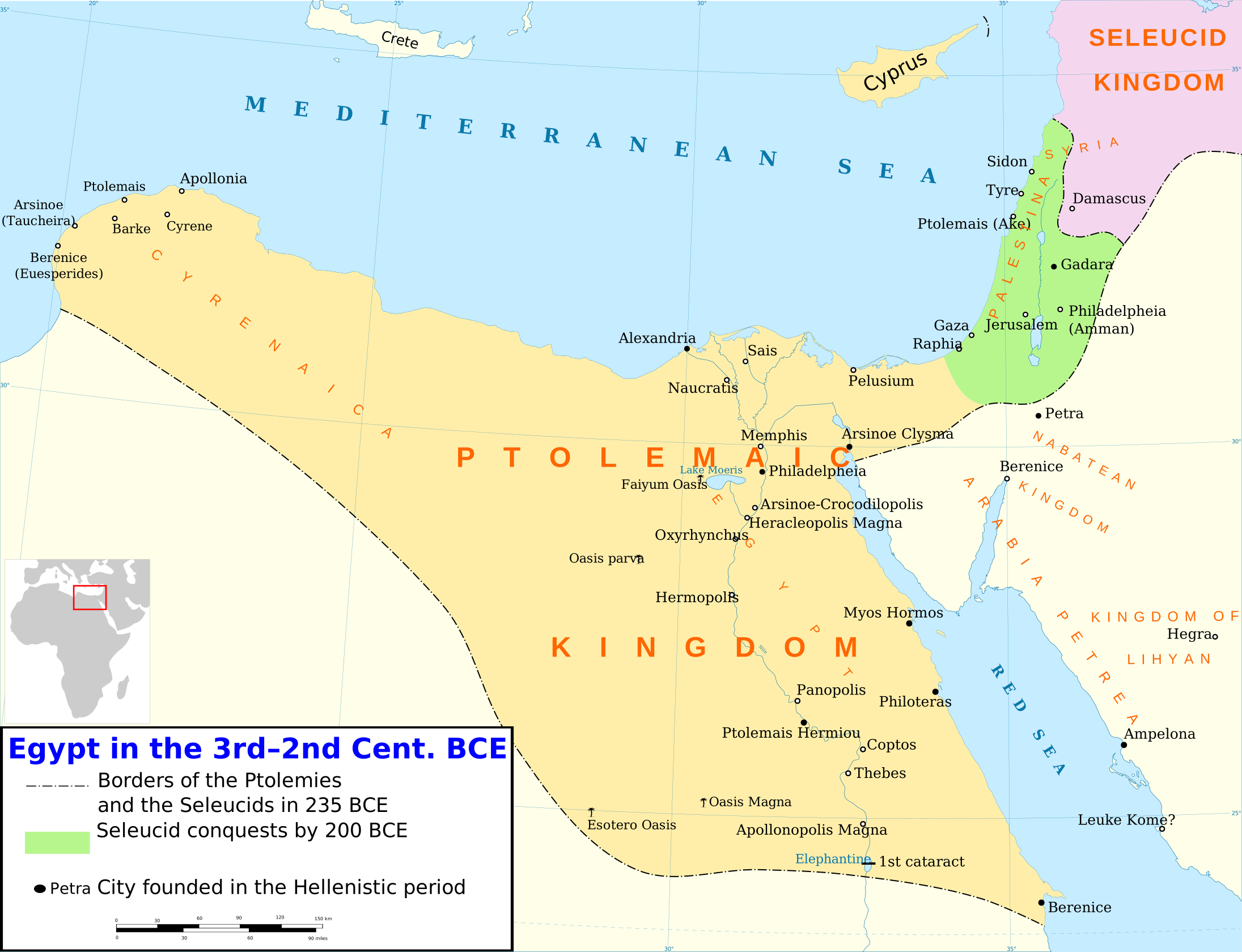
Ptolemaic Egypt, with Palestine
After Alexander the Great’s death, his Empire was divided among his generals. Palestine, known at the time as Yehoud Medinata (the Land of Judah), was contested between the Seleucid Empire (Syria) and the Ptolemaic Kingdom of Egypt, initially favoring the latter. Ptolemy I Soter deported Jews to Alexandria and throughout Egypt, including Cyrenaica; others followed as economic migrants.
The Ptolemies pursued a policy of religious and community tolerance. To ensure the Jewish community’s ability to practice their faith freely, a Jewish quarter was established within Alexandria. This provided a space where they could observe their religious laws without facing interference.
Alexandria’s Jewish community exerted significant influence on the city’s economic and social life. Jewish merchants and moneylenders played prominent roles in the city’s commerce, while the prestigious position of alabarch, responsible for overseeing tax collection, particularly customs duties at the port of Alexandria, was traditionally held by a member of the Jewish community.
In Roman times, Alexandrian Jews faced growing hostility from the rest of the city’s population, who regarded them as privileged isolationists.
The Septuagint: A Greek translation of the Hebrew Bible
The 3rd century BC witnessed a significant event in Jewish history: the translation of the Hebrew Bible into Greek. While tradition attributes this monumental undertaking to the behest of Ptolemy II Philadelphus for his renowned Library of Alexandria, it is more likely that it was primarily driven by the initiative of the Alexandrian Jewish community itself.
Aristaeus’ letter to Philocrates, recounting the Septuagint legend
The legend surrounding the Septuagint translation is a fascinating tale. It describes a group of 72 scholars, six from each of the 12 tribes of Israel, who were sent from Jerusalem to translate the Hebrew Bible into Greek. Each scholar worked in isolation for 72 days, and miraculously, their 72 translations were identical. The Greek Bible came to be known as the Septuagint, referring to the 72 translators.
The Septuagint marks a fundamental theological break in Jewish theology: with the translation of its sacred writings into Greek, the vernacular of the Mediterranean world, Judaism moved from a tribal religion, centered on divine revelation granted to a single people, to a universal religion, whose message is addressed to all men.
The Septuagint was quickly adopted throughout the Jewish diaspora, which often no longer understood Hebrew, for reading in synagogues. It was also adopted by the Christian Church.
Jewish Alexandrian authors
Alexandria, as a place of interaction between Jewish faith and Greek culture, also produced several influential Jewish theologians and thinkers.
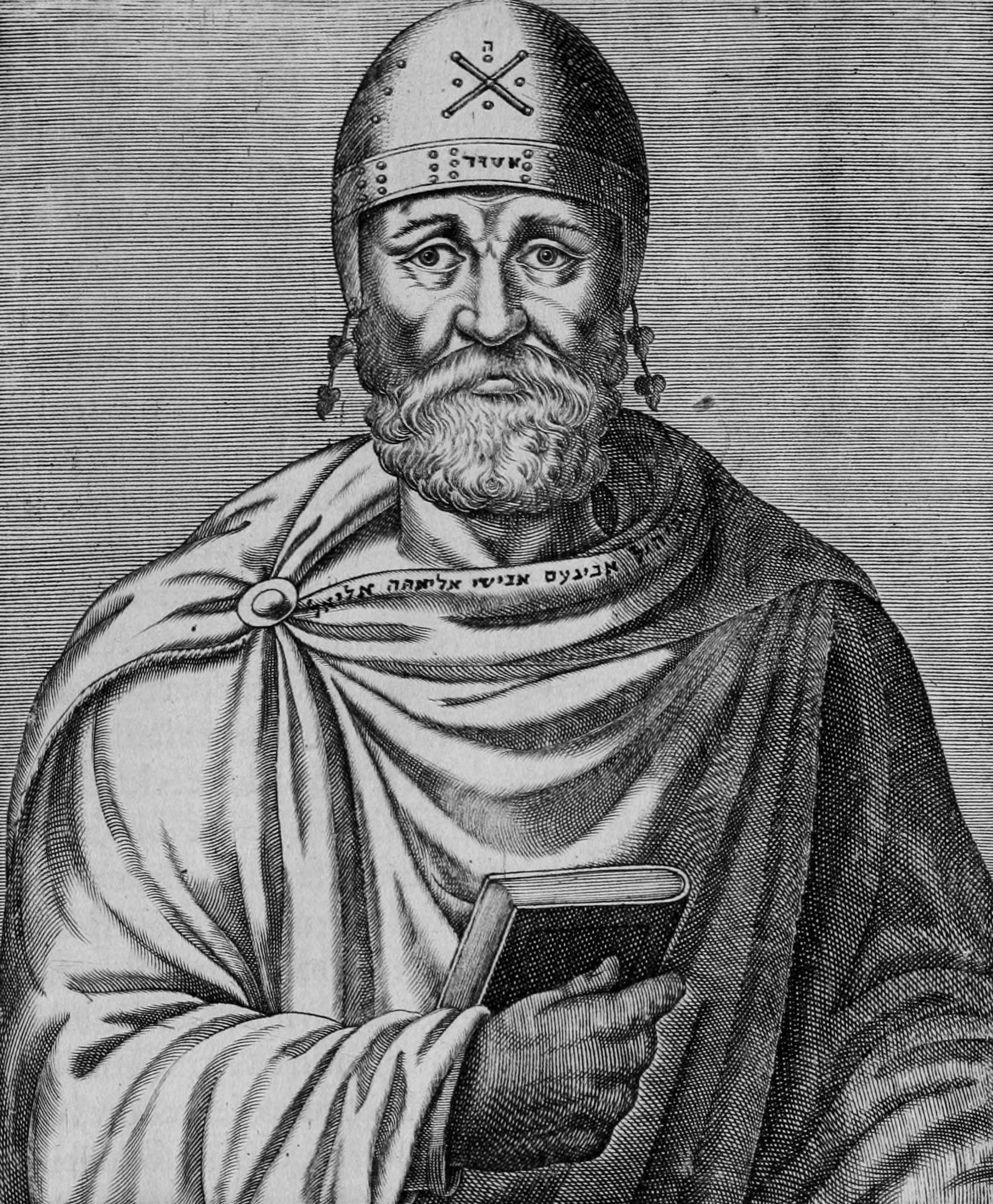
Philo of Alexandria
Philo of Alexandria, a prominent Jewish philosopher from a wealthy and influential Alexandrian family (his brother was the Alabarch), was born around 20 BC and died around 40 AD. Renowned for his extensive commentaries on the Torah, Philo pioneered an allegorical approach to sacred texts, seeking deeper spiritual meaning beyond their literal interpretation.
Philo’s philosophical thought represents a unique synthesis of Jewish theology and Greek philosophy, notably Platonic thought. In this regard, his work bears resemblance to that of Averroes (Ibn Rushd), who similarly sought to reconcile Islamic theology with Aristotelian philosophy. Philo viewed reason as a divine gift, conceiving of the “Logos” – divine reason – as the instrument through which creation came into being.He believed that philosophy, through the contemplation of the world and the exercise of reason, allows humans to gain a deeper understanding of this divine creation.
The Christian community of Alexandria
Origins
The St-Mark Church in Alexandria
Christianity arrived in Alexandria in the early decades of the Christian era, during the time of the apostles. Christian tradition holds that Mark, the author of one of the Gospels, proclaimed the Christian message in his native Cyrene, and later in Alexandria. The Coptic Church of Egypt, now the largest Christian community in the Muslim world, traces its origins back to Mark’s preaching in Alexandria.
Jewish roots
The first recipients of Christian preaching were certainly the Jews of Alexandria. As throughout the Roman world, a high proportion of the first converts to Christianity were of Jewish origin.
Philo of Alexandria likely died before Christianity reached Alexandria. While some Christian sources claim his late-life conversion, this is improbable. However, his disciples may have joined the burgeoning Alexandrian Christian community, and the influential preacher Apollos, mentioned in the Bible, might have been among them.
The theological school of Alexandria
Alexandria, a prominent intellectual center within the Roman Empire, became home to a renowned Christian theological school. Here, aspiring Christian scholars delved into the interpretation of sacred texts and engaged with the profound ideas of Greek philosophy. Notably, these Alexandrian theologians embraced Philo of Alexandria’s allegorical approach to understanding scripture, seeking deeper spiritual meaning beyond the literal text.
The Alexandrian theological school, founded by Mark, gained significant prominence under the leadership of Pantaenus, a Stoic philosopher who embraced Christianity while residing in Alexandria. Before his passing, Pantene embarked on a missionary journey to India. His successor, Clement of Alexandria, authored a series of three influential works that reinterpreted Greek mythology and philosophy through a Christian lens.
Origen of Alexandria
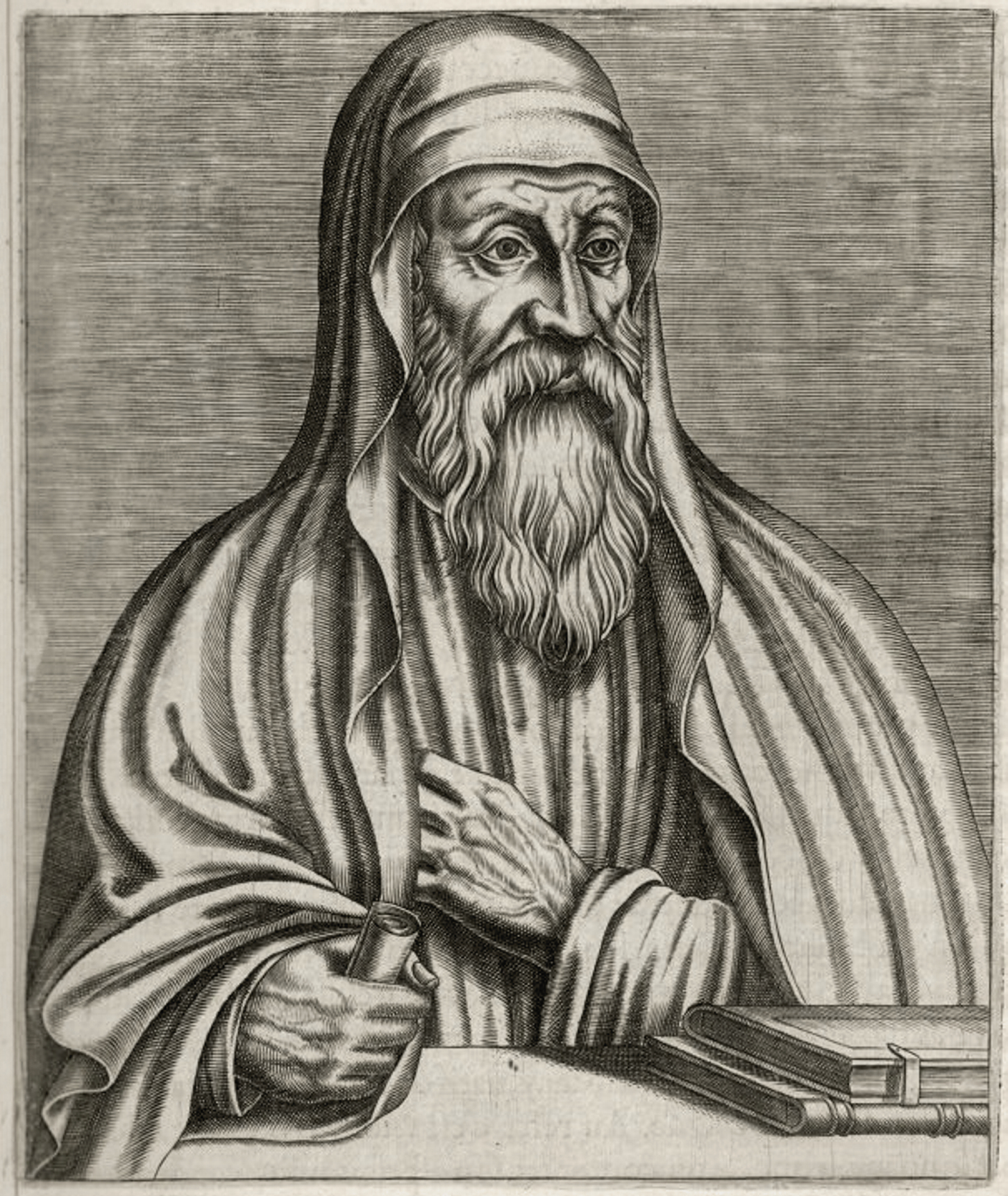
Origen, the preeminent figure of the Alexandrian school and a pioneer of biblical exegesis, authored commentaries on nearly all biblical books. He expanded upon Philo’s allegorical interpretation, proposing three levels of meaning: literal (acknowledging both historical and fictional elements), moral (emphasizing practical guidance), and spiritual (revealing profound truths about God).
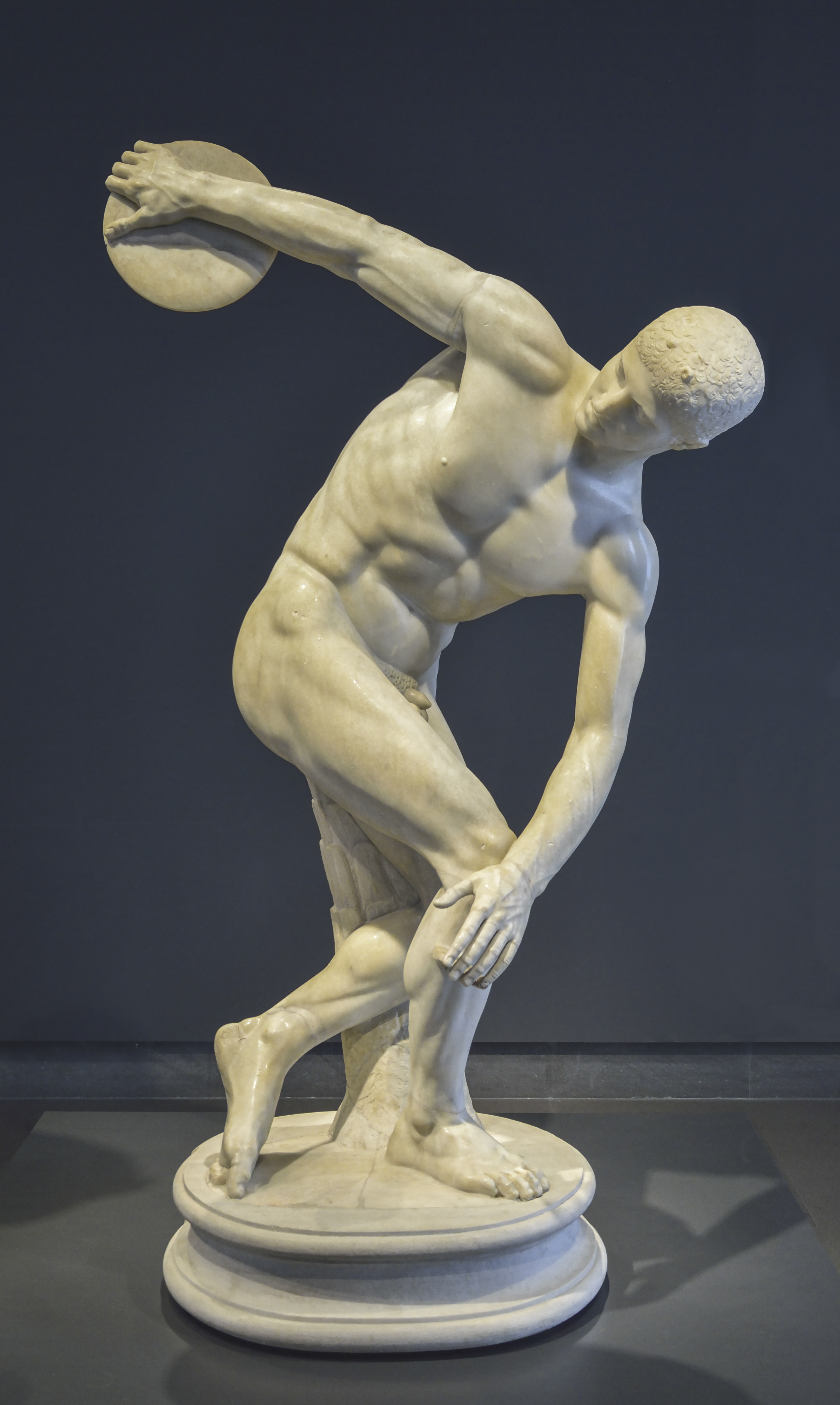
The Olympic Games, organised every 4 years in Olympia, Greece, were the main sport competition in the ancient world. The only full list of winners of the Olympic Games that came down to our times was recorded by a 3rd-Century North African author.
The Olympic Games and the Olympiads
The first Olympic Games were organised in 776 BCE. The first thirteen editions had only one event: the stadion, a race all around a stadium, over 600 feet (about 150 meters). Later on, other events were added.
After the death of Alexander the Great, the Greeks started using Olympiads, the time period between two Olympic Games, as a calendar unit: the First Olympiad is the period from 776 to 772 BCE, the Second Olympiad, from 772 to 768, etc. This calendar allowed them to date historical events much more precisely than before.
The list of winners, transmitted by Julius Africanus
Sextus Julius Africanus was born around 160, in Palestine, but his family was originally from Roman Africa. At the time, after the Romans had expelled the Jews from Palestine, new populations from all over the Empire were moving there. Julius Africanus’ family were part of this migration.
At some point in his life, Julius Africanus converted to Christianity, a religion that was still a small minority at the time. After his conversion, he moved to Alexandria, to study at the Christian theological school there.
His writings are mostly historical. He wrote a chronicle of world history, from its creation; the first universal chronicle, covering the history of all mankind, while previous chroniclers all wrote about one specific people group. He also was the first writer on history in a Christian perspective, and he strongly influenced Christian historians after him.
Julius Africanus’ Chronicle includes a list of winners of the Olympic Games, over almost 1.000 years of time, from the First (776 BCE) to the 249th Olympiad (217 CE). The winners at the next editions, until the Games were abolished in 394, are known through other sources. This is the only full list we have today!
So it is thanks to a North African historian that we know the names of all the winners of the Olympic Games. The fact that such a precious information on the ancient world was transmitted by a North African should be a huge source of pride for North Africa!
At the peak of Roman power, a new religion, born in Palestine, quickly spread around the whole Empire. Its holy books talked about the one true God and about a sacrifice to redeem mankind, and its preachers taught love, forgiveness, and that all men were equal before God. North Africa, from its large, cosmopolitan cities to its most remote rural areas, proved to be an especially fertile ground for the Christian Gospel.
In North Africa, Christianity first came to Cyrenaica and Egypt, already during the apostolic era. According to Christian tradition, Mark, the author of one of the Gospels, preached the Christian message in Cyrene, his birth town, and then in Alexandria. Both cities had a numerous, rich and influential Jewish community, who were certainly the first recipients of his preaching. The Egyptian Coptic Church, the largest Christian community in the Islamic world today, goes back to Mark’s preaching in Alexandria.
There were already large Jewish communities living in North Africa. Just like in the whole Roman world, many of the first Christian converts were from a Jewish background. Those believers understood the Gospel as the accomplishment of the hope of their forefathers.
Augustine of Hippo
Several of the most influential Christian theologians and writers during the first centuries were North African. We will mention Tertullian, the first Latin Christian writer, Cyprian, bishop of Carthage from 248 to 258, and Augustine, bishop of Hippo (Annaba), the greatest theologian of the Roman Church. If including Egypt, Origen, the father of biblical exegesis, may be added.
The rapid growth of Christianity, with its radically new dogma, also caused hostility. Persecution, common everywhere, was particularly strong in North Africa. The bold faith of Christians who were ready to pay the price with their lives impressed their fellow citizens, and won new souls for their faith. As Tertullian of Carthage expressed it: “The blood of the martyrs is a seed of Christians.”
Martyrdom of Perpetua and Felicity
The first Christian martyrs in North Africa were a group of 12 believers, seven men and five women, who were put to death in Scillium (Kasserine) in 180. Their names indicate Amazigh, Punic, and Roman origins, the three main groups in North African society. 4 other believers might have been martyred in Madaura (M’daourouch), Numidia, around the same time, but the sources mentioning them are uncertain. The most famous North African martyrs are certainly the Carthaginian martyrs, executed in 203. Among them was Perpetua, a 22-year-old noblewoman and the mother of a newborn child, with her slave Felicity, who was pregnant. Marcellus, a Roman centurion based in Tingis (Tangier), was martyred there in 298.