Christianity in North Africa

The plague of Cyprian: an epidemic named after a North African bishop

Français – عربي – ⵜⴰⵎⴰⵣⵉⵖⵜ – English

Diseases and epidemics were very common and often devastating in Antiquity. One of the most mortal epidemics that ravaged the Roman world is known as the “plague of Cyprian”, after the name of a bishop of Carthage who mentions it in his writings.

Group of Roman doctors

Roman medicine was one of the most advanced in the old world. The Romans had learned a lot from Greek medicine, and had a very good knowledge of human anatomy. However, as they didn’t know about the existence of germs, they were vulnerable to infectious diseases. The rich and powerful were hit by illness as well as the poorest. The worst of all epidemics, which ravaged the Roman Empire for 15 years, from 165 to 180, killed 10 million people, about one quarter of the population, including Emperor Marcus Aurelius himself.

Another epidemic, which lasted around 20 years, from 250 to 270, is known to historians under the name “plague of Cyprian”. It is estimated that over half the population of Alexandria, the first city to be affected, died. In Rome, at the peak of the epidemic, there were 5.000 deaths every day. We don’t know for sure what the disease was: maybe smallpox, measles, or a viral hemorrhagic fever like Ebola.

Cyprian of Carthage

Cyprian of Carthage, the Christian bishop of the capital of Roman Africa at the time, wrote about this epidemic. The Christian community was just as hardly affected as the rest of the population, many Christians died. Also, the pagans were accusing them of being responsible for the plague, which they saw as a divine punishment for those who turned their backs on the Roman religion. However, the Christians’ attitude was radically different from that of their contemporaries: while all those who had the means were trying to flee the infected cities, the Christians chose to stay and take care of the sick, whether they shared their faith or not. In his book On mortality, Cyprian explains the reasons for this difference.

Cyprian gives a detailed description of the symptoms: “The bowels, relaxed into a constant flux, discharge the bodily strength; a fire originated in the marrow ferments into wounds of the fauces; the intestines are shaken with a continual vomiting; the eyes are on fire with the injected blood; in some cases the feet or some parts of the limbs are taken off by the contagion of diseased putrefaction; from the weakness arising by the maiming and loss of the body, either the gait is enfeebled, or the hearing is obstructed, or the sight darkened.”

So why did the Christians choose to stay? Because their faith had freed them from the fear of death: “laying aside the fear of death, let us think on the immortality which follows.” Also, this epidemic was an ideal opportunity for them to put into practice Christ’s first commandment to love their neighbor, by caring for the sick and for those who had lost loved ones, in the Christian community and beyond. Testimonies mention that the Christians were visiting the ill and taking care of them. Through their exposition to the virus, many of those visitors were probably immune – and their resistance to sickness might well have seemed miraculous for those who saw it!

In the same book, Cyprian also answers the question that always returns in difficult times: why does God allow all this suffering? “And further, beloved brethren, what is it, what a great thing is it, how pertinent, how necessary, that pestilence and plague which seems horrible and deadly, searches out the righteousness of each one, and examines the minds of the human race, to see whether they who are in health tend the sick; whether relations affectionately love their kindred; whether masters pity their languishing servants; whether physicians do not forsake the beseeching patients; whether the fierce suppress their violence; whether the rapacious can quench the ever insatiable ardour of their raging avarice even by the fear of death; whether the haughty bend their neck; whether the wicked soften their boldness; whether, when their dear ones perish, the rich, even then bestow anything, and give, when they are to die without heirs. Even although this mortality conferred nothing else, it has done this benefit to Christians and to God’s servants, that we begin gladly to desire martyrdom as we learn not to fear death. These are trainings for us, not deaths: they give the mind the glory of fortitude; by contempt of death they prepare for the crown.”

Christian and pagan sources both confirm that the Christian attitude during the epidemic impressed those who saw it and won many new believers for their faith.

Christianity in North Africa, The three great North African Christian figures

The three great North African Christian figures: Cyprian, bishop of Carthage

Français – عربي – ⵜⴰⵎⴰⵣⵉⵖⵜ – English

During the first centuries of the Christian era, North Africa, from its large, cosmopolitan cities to its most remote rural areas, proved to be an especially fertile ground for the Christian Gospel. Three of the greatest Christian figures of this time were North African. In this article, we will discover the life of Cyprian, the greatest bishop of Carthage.

Cyprian of Carthage

Thascius Caecilius Cyprianus was born in Carthage, around 210, in a wealthy family of Amazigh origins. As a young man, he studied law, became a lawyer, and taught rhetoric. Before his conversion, he was known as an influential member of a Carthaginian legal fraternity.

He became a Christian around 35 years of age. After his baptism, he sold his house and gave the money to the poor, following church teaching for rich believers. His friends were so impressed by this that they bought back the house and returned it to him.

Two years after his conversion, around 248, the bishop of Carthage died and Cyprian was chosen to succeed him. He originally refused, as he saw himself as unworthy of this responsibility, but then finally accepted. While he was very popular with the faithful, the Carthaginian clergy disapproved the nomination of a recent convert, who hadn’t served with them for many years. They would continue to oppose him during his episcopate. Despite this, Cyprian became one of the most influential bishops of his time.

Shortly after his nomination, persecution broke out: the new Emperor Decius ordered all his subjects to sacrifice to the Roman gods, leaving Christians the choice between denying their faith or martyrdom. Cyprian went into hiding, while still writing letters encouraging the believers to stand firm in their faith. When accused of being a coward, he argued that he hadn’t fled to save his own life, but so that the believers would not remain without a shepherd in the middle of persecution.

After each wave of persecution, the Christian church was faced with a difficult decision: what should be done of the lapsi (“fallen”), the believers who had given in to pressure and denied their faith, but who now regretted it and wished to be restored by the church? To find an agreement, Cyprian decided to convene a church council, bringing together all the bishops in Roman Africa to discuss this issue. The council chose a middle way between the more lenient party, who wished to immediately restore the lapsi as soon as they repented, and the intransigent party, who refused any possibility of restoration: the lapsi would need to undergo a longer or shorter time of penance, during which their bishop would follow up with them, to make sure that they were sincere. This decision allowed Cyprian and the other bishops to manage each situation on a case by case basis. Cyprian specifically insisted on the distinction between those who recanted to save their life, their family, or to escape torture, and those who sacrificed to the idols of their own free will, while they were not in danger. The council also ruled that those who repented and were restored would never again be allowed to have responsibilities in the church.

At this time, groups of Christians who disagreed with Cyprian, on the lapsi or on other issues, started meeting outside the official church. For Cyprian, those schismatics broke the unity of the Church and thus separated themselves from the truth, as he wrote in one of his main books, On the unity of the Church : “Nobody can have God as a father if he does not also have the Church as a mother.” For this reason, he chose to re-baptize believers who left those independent churches to join the established church, because he believed that baptisms administered outside the established church were invalid. On this issue, he got in conflict with bishop Stephen of Rome, who held the view that those believers were already baptized and thus could be immediately admitted into the established church. Cyprian defended his position firmly, both out of doctrinal conviction and because he refused to let another bishop impinge on his prerogatives.

Cyprian’s position on this issue is based on his understanding of the Church as a sacred institution established by Christ himself, from which one could not separate oneself without incurring God’s wrath. He did not distinguish the universal Church, composed of all believers worldwide, and the institutional church, with its bishops and administrative structures. Cyprian’s teaching remains fundamental to Catholic theology today.

Cyprian also played a major role in church institutionalization: while before, Christian churches were rather informal assemblies where every member could contribute according to his gifts, Cyprian put in place a hierarchy and structured administration, strongly inspired from Roman administration, with at its head the bishop, seen as Christ’s representative. However, Cyprian strongly believed in the autonomy of the church in every city and region: he saw all bishops as equals and believed none of them had authority over others, not even the bishop of a great city like Carthage over other African bishops. His conflict with Stephen of Rome shows that he would have refused any claim by the bishop of the imperial capital to the status of universal bishop.

Apart from persecution, Cyprian’s episcopate was marked by another major crisis: the plague. While the population of Carthage and the whole Empire was decimated, Cyprian and the Christians in the city were helping the sick, whether they were Christian or not. Cyprian also wrote a book, On mortality, to explain why God allows men to be hit by such epidemics. Cyprian’s behavior during the plague contributed a lot to his popularity.

St-Cyprian Basilica, in Carthage, was built on the site where Cyprian was martyred

By the end of 256, persecution started again. Cyprian appeared before the Roman proconsul, and refused to deny his faith by sacrificing to idols. He was exiled to Curubis (Korba), from where he continued to encourage and comfort the faithful. After one year, he was allowed to return to Carthage, only to be imprisoned in his own house. Finally, after a new imperial edict ordering the execution of all Christian bishops was published, he was condemned to be beheaded, and publicly executed on 14 September 258. A large crowd had come together for his execution, to honor him. Before he died, he gave 25 gold coins to his executioner.

Christianity in North Africa

Minucius Felix : a North African Christian apologist

Français – عربي – ⵜⴰⵎⴰⵣⵉⵖⵜ – English

During the first centuries of the Christian era, North Africa, from its large, cosmopolitan cities to its most remote rural areas, proved to be an especially fertile ground for the Christian Gospel. Minucius Felix, a Roman African Christian, wrote one of the first Christian apologies against Roman paganism.

Marcus Minucius Felix was born around 180, in Thiava, close to Thagaste (Souk Ahras), Numidia. While he had Amazigh origins, his name shows that he was related to the gens Minucia, an old Roman family. He worked as a lawyer in Rome under Emperor Septimius Severus. Originally a pagan, he became a Christian close to the end of his life.

He wrote Octavius, a fictional dialogue between a Christian and a pagan. This book was written for an educated pagan public, in order to convince them of the truth of Christianity. The arguments are mostly inspired from Cicero, as well as from older Greek apologists; a Stoic influence can also be perceived. The author tries to demonstrate that Christianity is compatible with philosophy, by explaining how the truth, the object of the quest of all philosophers, which they all approached without fully finding it, is now revealed in Christ.

Minucius Felix’ Octavius is the first Christian text to condemn abortion.

Minucius Felix’ Octavius might be the oldest Christian apology written in Latin. Tertullian of Carthage‘s Apologetica was written at about the same time, and there are many similarities between both works, which shows that one of the two authors used the other as an inspiration; but we don’t know which one of them wrote first. In both cases, as Tertullian was also African, it is certain that the first Latin-language Christian apology was written by a North African author.

Christianity in North Africa

A Forgotten Heritage: Churches and Other Christian Buildings of Ancient North Africa (3/3 – Algeria and Morocco)

Français – عربي – ⵜⴰⵎⴰⵣⵉⵖⵜ – English

Since the 1st Century, a new religion, Christianity, quickly spread around the whole Roman Empire. North Africa, from its large, cosmopolitan cities to its most remote rural areas, proved to be an especially fertile ground for the Christian Gospel. In this article, we will discover the main churches and other Christian archaeological remains that still exist today in Algeria and Morocco.

Series: Churches and Other Christian Buildings of Ancient North Africa – TunisiaLibyaAlgeria and Morocco

Algeria

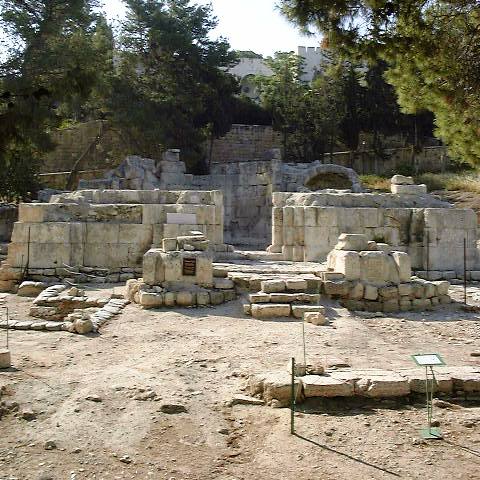
Ruins of the church of Hippo

The oldest Christian center in modern-day Algeria was Cirta (Constantine), capital of Numidia. The city probably had a Christian majority by the end of the 3rd Century. However, no remains of an ancient Christian church building have been found in Constantine.

Later on, the city of Hippo (Annaba) became the main Christian center in Numidia, due to the influence of its bishop, the famous Augustine. The ruins of the church of Hippo, where Augustine preached, are still visible today.

St-Crispina’s Basilica, Tebessa

Further South, St-Crispina’s Basilica, in Tebessa (formerly Theveste), is a particularly well-preserved Christian church, built on the site of the martyrdom of Crispine, a Christian woman who was beheaded for her faith in Theveste in 304. In the same region, the churches of Madaura (M’daourouch) and Thagaste (Souk Ahras), where Augustine was born, sadly have not survived to our time.

Donatist Church of Bishop Optatus, Thamugadi

In Timgad (formerly Thamugadi), the ruins of the Church of Bishop Optatus, one of the leaders of the Donatist movement, can be seen.

The ruins of the old city of Sitifis (Setif) contain two Christian Basilicas. The neighboring town of Cuicul (Djemila) also has Christian remains: two churches and a baptistery.

St-Salsa’s Basilica, Tipasa

In Tipaza (formerly Tipasa), St-Salsa’s Basilica is consecrated to a 14-year old Christian girl who was killed for her faith by the city’s inhabitants. Tipasa also has catacombs, less well-known than those of Sousse.

Caesarea (Cherchell), capital of Mauretania Caesariensis, was largely destroyed by the Vandals. While no church building survived their pillage, the city contains several Christian inscriptions, that can be seen at the Cherchell National Museum.

Morocco

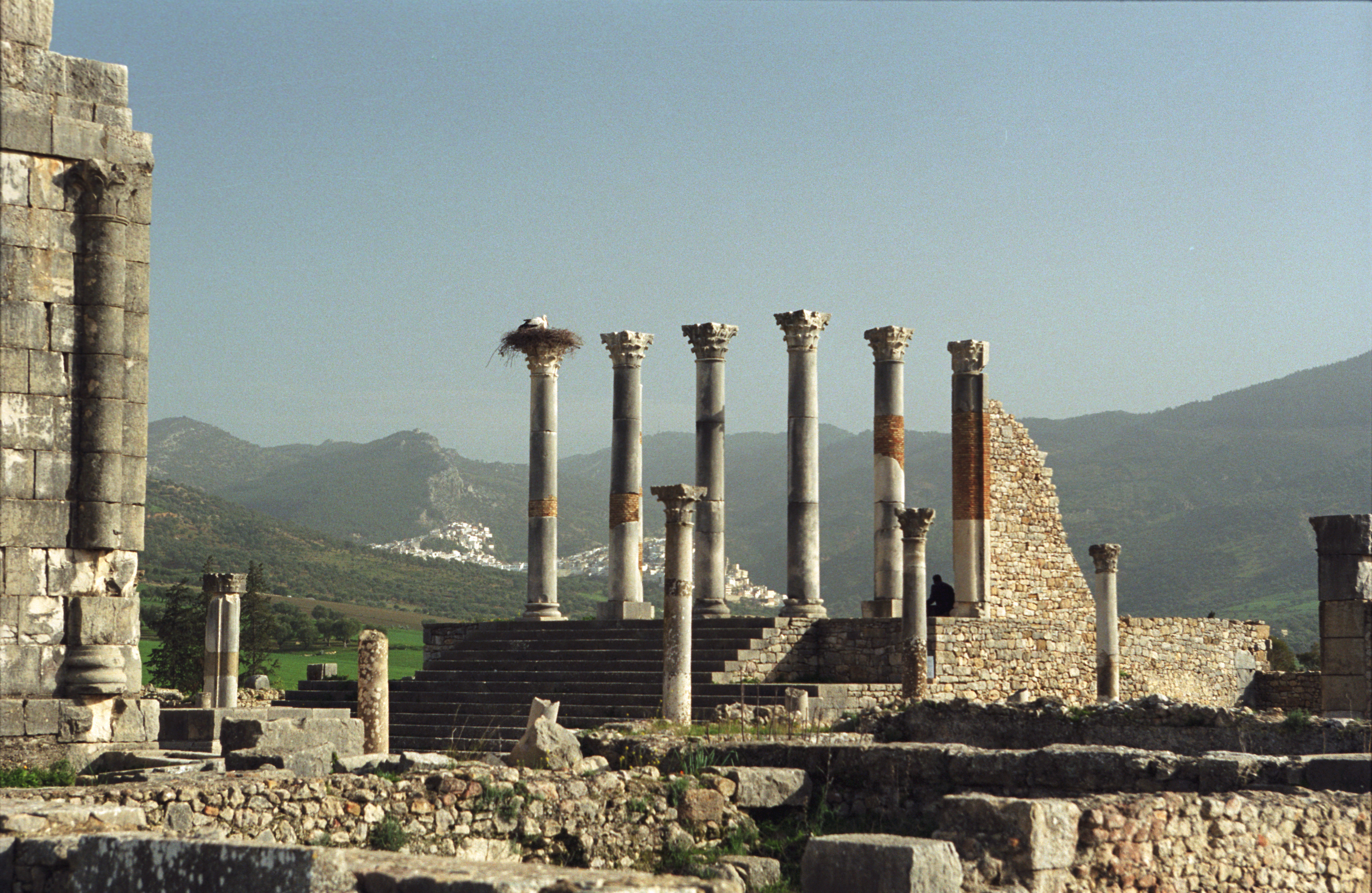
The archaeological site of Volubilis contains Christian remains

In modern-day Morocco, the oldest archaeological trace of a Christian presence is a 3rd-Centyry pottery engraved with an anchor, that was found at Souk El Arbaa: the anchor is a Christian symbol of the assurance the believers have when they face the storms of life. (Source)

The archaeological site of Volubilis contains Christian inscriptions. The site of the Christian Basilica of Volubilis is known, and its foundations are still visible, but the building itself has disappeared.

The ruins of Lixus (close to Larache) contain the oldest church in modern-day Morocco

In Lixus (Larache), the other major archaeological site that goes back to Roman Antiquity, the ruins of the old church of Lixus are still visible. Christian inscriptions and artifacts with crosses have also been found.

In Tangier (formerly Tingis), while no remains of a pre-Islamic church building have survived until today, Christian tombs have been found.

Ruins of Zilil

Zilil (Dchar Jdid) is a Roman colony, founded by Emperor Augustus for veterans of the Actium War. The city was located between Tangier and Asilah. A large ancient structure, dated from the 4th or the 5th Century, might be a church, but this is not sure. Its plan conforms to other Roman African churches. Potteries with crosses and other Christian symbols have also been found.

Finally, the Chellah archaeological site, close to Rabat, is mostly of Islamic (Merinid) origin, but excavations have enabled archaeologists to find 5th-Century Christian tombs, and maybe even the foundations of a pre-Islamic church building.

Sidi Yahya ben Younes: a Christian saint in Oudja?
Sidi Yahya ben Younes is the patron saint of the city of Oudja, in Eastern Morocco. His mausoleum is in the city, in the oasis of Sidi Yahya.
According to local legends, Sidi Yahya is actually Saint John the Baptist! This prophet, the cousin and forerunner of Jesus Christ, is mentioned in the Quran as Yahya ibn Zakaria. After his execution by King Herod Antipas of Judea, he was reportedly buried in Oujda.
Christianity in North Africa

A Forgotten Heritage: Churches and Other Christian Buildings of Ancient North Africa (2/3 – Libya)

Français – عربي – ⵜⴰⵎⴰⵣⵉⵖⵜ – English

Since the 1st Century, a new religion, Christianity, quickly spread around the whole Roman Empire. North Africa, from its large, cosmopolitan cities to its most remote rural areas, proved to be an especially fertile ground for the Christian Gospel. In this article, we will discover the main churches and other Christian archaeological remains that still exist today in Libya.

Series: Churches and Other Christian Buildings of Ancient North Africa – TunisiaLibyaAlgeria and Morocco

Tripolitania

Byzantine church of Leptis Magna

The archaeological site of Leptis Magna contains remains of a very well-preserved ancient Christian Church, with two naves. The Basilica Severiana, one of the city’s emblematic buildings, originally built by Septimius Severus, was also transformed into a church during the Byzantine era.

The ruins of the Byzantine Church of Oea (Tripoli) can be seen close to the Old Medina of Tripoli.

Apuleius’ Basilica

Apuleius’ Basilica, in Sabratha, is the city’s former Roman Basilica (law court), which was transformed into a church in 440. Its name comes from the Numidian writer Apuleius, the author of the novel The Golden Ass, who was accused of sorcery and judged in Sabratha. Another church, Justinian’s Basilica, was built after the Byzantine reconquest.

In Ghadames, Christian tombs and inscriptions were discovered.

Cyrenaica

Central Church of Apollonia (Source)

Cyrenaica, the first North African region where Christianity propagated, has some of the most beautiful and best-preserved Roman African Christian remains. Sadly, they are hard to access due to political instability.

The old city of Cyrene contains several churches. One, which has three naves, is located just next to the Forum. However, the main Cyrenean church was in Apollonia, the port city.

Fortified Church of Ptolemais

Ptolemais (Tolmeita), the new capital of Cyrenaica, also contains the ruins of several churches. Its main church, the Fortified Church, is one of the largest Christian churches in North Africa. This is where Synesius of Cyrene served as a bishop.

In Taucheira (Tocra), the Byzantine Church of the Palace has beautiful mosaics, which can be seen on this page.

The Asclepium of Balagrae (Al-Bayda), an important sanctury of Asclepius, the Greek god of medicine, where the sick went on pilgrimage in order to be healed, was transformed into a church.

Byzantine Church of El Athroun

Two other beautiful Byzantine churches can be found in the Derna region: in Erythron (El Athroun), and in Naustathmus (Ras al-Hillal). The Church of Naustathmus can be seen on the cover picture of this article.

The ancient city of Olbia (Qasr Libya), which was rebuilt in the Byzantine era, by order of Empress Theodora, contains two Byzantine churches, with around fifty mosaics that are considered among the most beautiful in the world.

Byzantine mosaics of Olbia (Source)
Christianity in North Africa

A Forgotten Heritage: Churches and Other Christian Buildings of Ancient North Africa (1/3 – Tunisia)

Français – عربي – ⵜⴰⵎⴰⵣⵉⵖⵜ – English

Since the 1st Century, a new religion, Christianity, quickly spread around the whole Roman Empire. North Africa, from its large, cosmopolitan cities to its most remote rural areas, proved to be an especially fertile ground for the Christian Gospel. In this article, we will discover the main churches and other Christian archaeological remains that still exist today in Tunisia.

Series: Churches and Other Christian Buildings of Ancient North Africa – TunisiaLibyaAlgeria and Morocco

Damous el-Karita Basilica, Carthage

The Damous el-Karita Basilica, in Carthage, was the oldest and largest Christian church in the African capital. It is located in the Archaeological Site of Carthage, on the Odeon Hill. Its Arabic name, Damous el-Karita (داموس الكريطة), is probably a deformation of the Latin name domus caritatis, “house of charity”. The French historian and archaeologist Noël Duval describes this basilica as one of the “most famous ancient Christian monuments” in North Africa, but also one of the “most mistreated and badly known”, as it was excavated “incompletely [and] in disastrous conditions” (Noël Duval, Études d’architecture chrétienne nord-africaine). This is despite the fact that several very important episodes in the history of the Christian Church occurred here, including the Carthage III Council, in 397, which gave the final definition of the Biblical Canon (the books that were to be considered as sacred).

St-Cyprian’s Basilica

Three other important Carthagian churches are St-Cyprian’s Basilica, built at the place where Bishop Cyprian of Carthage was martyred, Basilica Majorum, which was destroyed, but later rebuilt identically in 1930, and the Bir el-Knissia Basilica.

The Bardo Museum, in Tunis, contains a vast collection of ancient Christian artifacts, that were found in Carthage and all over Tunisia. One of the main ones is the Mosaica of Daniel in the Lion’s Den, a rare example of African Christian monumental art, which can be seen on the cover picture of this article.

Henchir Rhira Basilica

Christian archaeological remains are not limited to the region around Carthage, or even to major cities! Some churches have even been found on isolated sites in rural areas, like Henchir Rhira Basilica, in the Beja region. Its ruins are impressive, despite its isolation.

Victoria’s Church, Dougga

In Dougga, Victoria’s Church is the only Christian monument that has been discovered on this site up to now. This church was built on a former pagan cemetery. It is located over the Temple of Saturn.

The Thuburbo Majus archaeological site, close to Zaghouan, also contains a Christian church, built on the remains of a former Pagan temple. Its cross-shaped baptistery is typical of North African Christianity.

Good Shepherd, Christian engraving in the Catacombs of Sousse

In Sousse, the Catacombs of the Good Shepherd contain close to 15.000 Christian tombs, with engravings that go back to the time when Christians practiced their faith in clandestinity.

In Bekalta, in the region of Monastir, a beautiful baptistery, richly adorned with mosaics, was found in 1993. It is now kept at the Sousse Archaeological Museum, where is constitutes one of the main pieces at the Department of Ancient Christianity. Another baptistery, found at the Church of Priest Felix, in Demna, close to Kelibia, is now kept at the Bardo Museum, in Tunis.

Baptisteries: Bekalta (right) and Kelibia (left)

The Makhtar Basilica is the city’s former Roman Basilica (court of law), that was transformed into a church. Former civil buildings transformed into churches are common all around the Roman world; the main church of a Roman city, which served as siege of the bishop, was called Basilica, like the civil building.

Vandal church, Henchir el Gousset (Source : Zaher Kammoun)

The Vandals are a Germanic people who dominated Africa from 439 to 533. They were Christian, but followed the Arian doctrine, which was considered heretical by the indigenous North African Church. Henchir el Gousset, close to Thelepte, in the Kasserine Governorate, is the only Vandal city that remains until today. It church, which was inaugurated in 521, under the Vandal King Thrasamund, is one of the few Vandal churches in North Africa. Another Vandal church is the Basilica of Hildeguns, in Makhtar.

St-Peter’s Basilica, El Kef

St-Peter’s Basilica, in El Kef, also known as Dar El Kous, is a 5th-Century church in El Kef. It is dedicated to St-Peter, an apostle of Christ. This ancient church is so remarkably well-preserved that it was put into new use as a place of worship during the French Protectorate.

Donatist church of Servus, Sbeitla

The ruins of the ancient city of Sufetula (Sbeitla) contain several churches: the Bellator, Vitalis, and St-Sylvanus and Fortunatus Basilicas, the (probably Donatist) Church of Servus, and the Jucundus Chapel.

Finally, the Byzantine site of Ammaedra (Haidra), at the Tunisian-Algerian border, contains several churches. The biggest ist the Melleus Basilica.

There are many other sites, but we chose to select the main ones in order to avoid overcharging this article.

Christianity in North Africa, The three great North African Christian figures

The three great North African Christian figures: Tertullian, the father of the Latin church

Français – عربي – ⵜⴰⵎⴰⵣⵉⵖⵜ – English

During the first centuries of the Christian era, North Africa, from its large, cosmopolitan cities to its most remote rural areas, proved to be an especially fertile ground for the Christian Gospel. Three of the greatest Christian figures of this time were North African. In this article, we will discover the life of Tertullian of Carthage, the first Latin Christian writer.

Quintus Septimius Florens Tertullianus was born around 155 in Carthage. His nomen (family name) Septimius shows that he was from the gens Septimia, a prominent Romanized African family, which means he was distantly related to the Emperor Septimius Severus. His father was a centurion in the Roman army. His ethnic background is debated: while he describes himself as “Punic among the Romans”, many Amazigh in the area of Carthage had adopted the Punic language and culture. Anyway, while his family was Romanized and he studied in Latin, he was not of Roman blood.

Tertullian studied Roman law in Carthage, to become a lawyer and a rhetorician. At this time, Roman Africa was famous for its great rhetoricians.

He became a Christian around 197-198, at about 40 years of age. The circumstances of his conversion are unknown, but the way he refers to it in his writings shows that it was sudden and radical. Two of his books are addressed to his wife, who was also a Christian, maybe already before him.

After his conversion, he decided to put his talents as a writer and rhetorician at the service of his faith. He wrote over 30 books, both for a pagan public, as a defense of Christianity (Apologetica, To the nations), and to a Christian public, on doctrinal questions (Concerning baptism, Concerning prayer) and moral issues (Concerning spectacles, Concerning modesty), as well as refutations of various heresies (Against Marcion, Against Valentinian). His fiery writing style reflects his passionate character. He was the first Christian writer to write in the Latin language. He also was the first to use the term “Trinity”.

Close to the end of his life, Tertullian was drawn to the teaching of Montanism, a Christian movement that was later considered heretical. His later works show a strict moral rigor, characteristic of the Montanists. Among other things, he was against the remarriage of widows, as he believed it was adultery against the dead spouse. More surprising: in his book On the veiling of the virgins, he mentions the full-face veil, which was already carried by Arab women at his time, several centuries before Islam1. Tertullien, far from finding this strange, admires them, and seems almost to encourage Christian women to imitate them! Of course this teaching was not at all typical of Christianity at this time: Tertullian’s opinion was very marginal.

Martyrdom of Perpetua and Felicity

Tertullian’s most famous quote is: “The blood of the martyrs is the seed of the church.” Tertullian witnessed the death of many Christian men and women, some of them in Carthage, who were ready to sacrifice their life rather than denying their faith. He also saw how their unshakable faith impressed all those who saw them and won new souls to their faith.

  1. “Arabia’s heathen females will be your judges, who cover not only the head, but the face also, so entirely, that they are content, with one eye free, to enjoy rather half the light than to prostitute the entire face. A female would rather see than be seen. And for this reason a certain Roman queen [Messalina, wife of Roman emperor Claudius] said that they were most unhappy, in that they could more easily fall in love than be fallen in love with; whereas they are rather happy in their immunity from that second (and indeed more frequent) infelicity, that females are more apt to be fallen in love with than to fall in love. And the modesty of heathen discipline, indeed, is more simple, and, so to say, more barbaric.” (On the veiling of virgins, chapter 17) ↩︎
Christianity in North Africa

Julius Africanus: a North African Christian scholar at the Imperial court

Français – عربي – ⵜⴰⵎⴰⵣⵉⵖⵜ – English

Julius Africanus was a Roman African soldier, diplomat and writer, who professed the Christian religion, and served in the administration of the Roman Emperor Septimius Severus and his successors. While he served under pagan Roman Emperors, his skills were so valuable for his masters that he was never troubled for his faith.

Life of Julius Africanus

Late portrait of Julius Africanus

Sextus Julius Africanus was born around 160, in Aelia Capitolina, the new Roman city built on the site of Jerusalem. At the time, after the Romans had expelled the Jews from Palestine, new populations from all over the Empire were moving there. Julius Africanus’ family, who hailed from Roman Africa, were part of this migration.

As a young man, Julius Africanus joined the Roman army. As a military officer, he took part in Emperor Septimius Severus‘ campaign against the Persians. Septimius Severus, who was of North African origin himself, wished to promote a new Roman-African elite, of which Julius Africanus was a member.

At some point in his life, we don’t know exactly when, Julius Africanus converted to Christianity, a religion that was still a small minority at the time. After his conversion, he moved to Alexandria, to study at the Christian theological school there. Julius Africanus represents a new Christian elite, who had received an excellent education and showed perfect knowledge of their Greek-Roman cultural heritage. While he served under Emperors who were known for their hostility toward Christianity, he was never troubled for his faith.

The Kingdom of Osrhoene and its neighbors

In 212, the new Emperor Caracalla entrusted him the most important mission of his lifetime: he named him Ambassador to the Kingdom of Osrhoene. King Abgar VIII of Osrhoene had just died, and his son and successor Abgar IX had grown up as a hostage in Rome. The main role of the Roman Ambassador was to give account to Rome on the new king’s loyalty. Also, since Abgar VIII’s conversion around 200, Osrhoene had become the first officially Christian nation in history, over a century before Rome. This certainly influenced the Emperor’s choice of the Christian Julius Africanus as his Ambassador.

During his time in Edessa (Şanlıurfa, modern-day Turkey), the capital of Osrhoene, Julius Africanus could devote himself fully to his passion: scientific and literary research. The city was a major Syriac cultural center, as well as a major Christian theological center. There, Julius Africanus met Bardaisan, the first known Syriac-language writer, who wrote both philosophical and historical books. He also traveled further, to Persia.

In 213, Abgar IX was ordered to Rome and killed by Caracalla, allowing the Roman Empire to take over Osrhoene. Julius Africanus moved to Palestine, where he devoted himself to writing.

Emmaus-Nicopolis

Little is known of his life after leaving Edessa. We don’t know if he took part in Caracalla’s military campaign against the Persians, in 218. He wrote a letter to the Christian theologian Origen of Alexandria, in which we calls him “my son”. He led an embassy of citizens of the city of Emmaus, where he was living, to the Emperor Elagabalus (218-222), in order to ask for the restoration of their city; the city would indeed be restored, and renamed Nicopolis. One of his works, the Kestoi, is dedicated to Emperor Severus Alexander (222-235). Under his reign, he apparently opened a public library at the Pantheon in Rome. He died during the reign of Emperor Gordian (238-244).

Works

Julius Africanus was fluent in Greek, Latin, Punic, Hebrew, and Syriac. He wrote in Greek.

His writings are mostly historical. He wrote a chronicle of world history, from its creation; the first universal chronicle, covering the history of all mankind, while previous chroniclers all wrote about one specific people group. He also was the first writer on history in a Christian perspective, and he strongly influenced Christian historians after him.

Julius Africanus’ Chronicle includes a list of winners of the Olympic Games, over almost 1.000 years of time, from the First (776 BCE) to the 249th Olympiad (217 CE). This is the only known full list of winners of the Olympic Games still available today.

Another important work are the Kestoi, an encyclopedia of all knowledge, in many diverse fields, from agriculture to natural science to military strategy. In this book, the parts on the art of war are especially surprising: to him, the ends justify the means, and the only thing that counts is a method’s efficiency, not its morality. He condones methods like poisoning wells and scorched earth policies to achieve victory. The violence of the methods he describes might be the reason why latter Christian authors, who were shocked by what he wrote, didn’t use the Kestoi much.

Christianity in North Africa

The Seven Sleepers: an universal legend

Français – عربي – ⵜⴰⵎⴰⵣⵉⵖⵜ – English

The legend of the Seven Sleepers tells the story of seven saints who fell asleep in a cave, and woke up several centuries later. While originally Christian, this legend is mentioned in the Quran. It can be found, with some variations, in many regions of the world. It is especially popular in Southern Tunisia, where a mosque in the Tataouine region is dedicated to the Seven Sleepers.

The Seven Sleepers in their cave

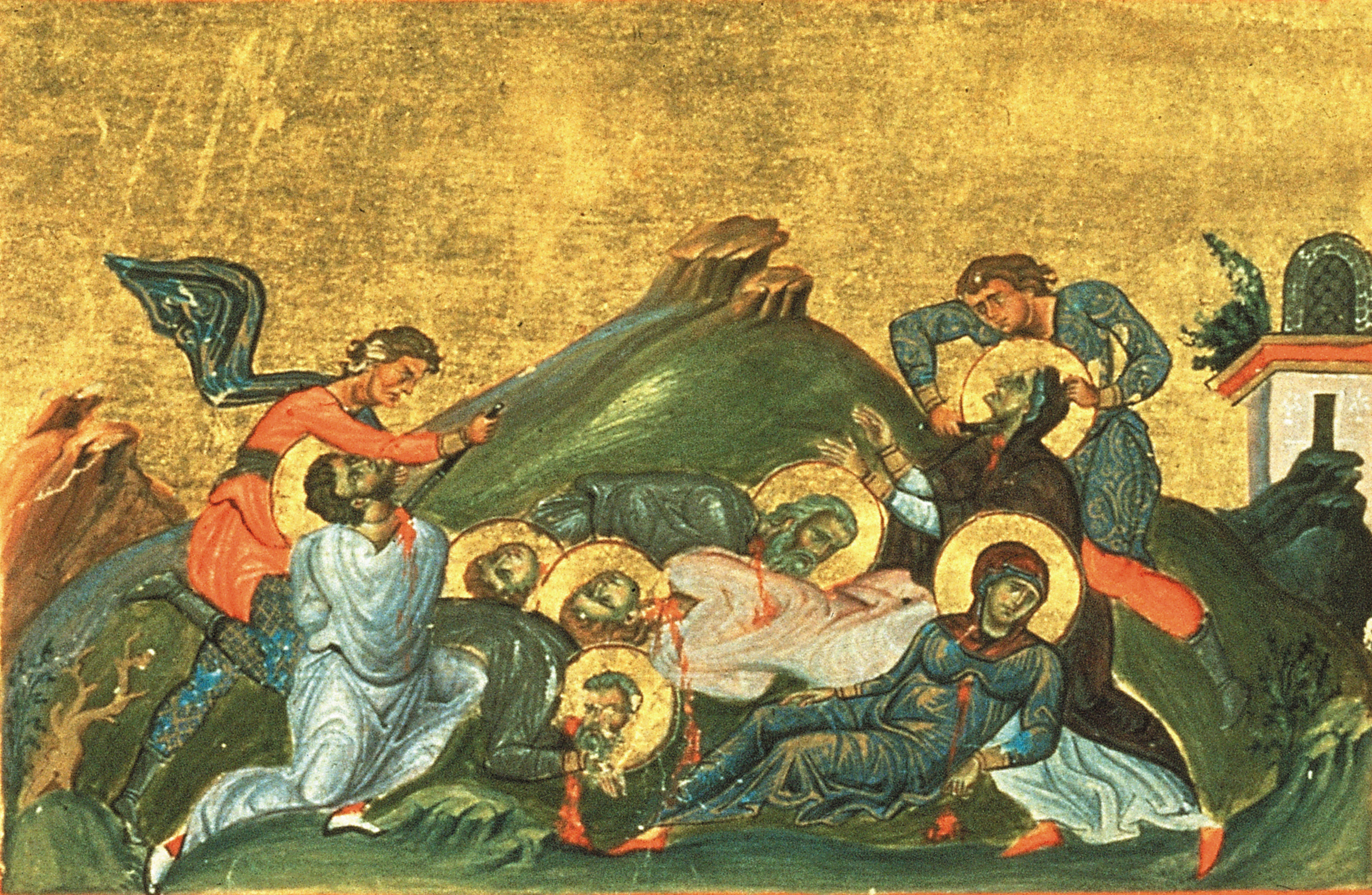
The original legend appeared in Ephesus, modern-day Turkey. During the Roman era, seven young Christian men who were persecuted for their faith took refuge in a cave, where they fell asleep. The Roman authorities sealed the cave. The young men woke up several centuries later, when the sealed cave was reopened. The society they were living in had changed in the meantime: the Roman Empire, that had been persecuting them for their faith, was now Christian. Those young men were miraculously preserved by God, to witness the triumph of their faith.

In the Quran, the Seven Sleepers are called Ahl al-Kahf (أهل الكهف), the people of the cave. Surah 18 The Cave (Al-Kahf الكهف) recounts their story. The Seven Sleepers are often presented as universal saints, who bring together different religious traditions around a common ideal.

The legend of the Seven Sleepers is especially popular in Southern Tunisia, where it is a remnant of the region’s Christian past: the Seven Sleepers certainly were already venerated before Islam arrived. Southern Tunisia was one of the last Christian regions in North Africa, the local population remained Christian several centuries after the Islamic conquests.

Seven Sleepers Mosque, Chenini – picture taken by the author when visiting the site

Several sites in Southern Tunisia are dedicated to the Seven Sleepers. The most famous is the Seven Sleepers Mosque, in Chenini, close to Tataouine. This mosque, which is partly underground, was built upon an older sanctuary carved out from the mountain. At the feet of the mosque are around ten close to 5 meter long tombs. The origin of the tombs is unexplained until today. According to a local legend, persecuted Christians from the area fell asleep here and woke up in the Islamic era, and then converted to Islam, died and were buried there. Their bodies kept growing during all their long sleep, which explains the size of the tombs. (Source)

Other sites can be found in the Tozeur region: inTaqyus (Degache), Mides and El-Ouidane. Those sites are very old: they are often caves or rocks that served as Amazigh of Punic sanctuaries, on which Roman temples, Christian churches and Islamic mosques were later built. Traditional rites around those sites seem to have a pre-Islamic origin.

Christianity in North Africa

Christians in Roman Africa

Français – عربي – ⵜⴰⵎⴰⵣⵉⵖⵜ – English

Since the 1st Century, a new religion, Christianity, quickly spread around the whole Roman Empire. North Africa, from its large, cosmopolitan cities to its most remote rural areas, proved to be an especially fertile ground for the Christian Gospel. In this article, we will discover how Christianity spread in the various Roman provinces of North Africa.

Africa Proconsularis

Good Shepherd, Christian engraving in the catacombs of Hadrumetum (Sousse)

Carthage, the capital of Roman Africa, was an influential Christian center. Christianity spread from Carthage through all North Africa. We wrote a detailed article on Christianity in Carthage.

In the 2nd Century, Christianity was already present in other cities of Africa Proconsularis. The first Christian martyrs in North Africa were put to death for their faith in Scillium (Kasserine) in 180. The catacombs of Hadrumetum (Sousse) contain the graves of about 15.000 Christians from the city. The Christian communities of Utica, Hippo Diarrhytus (Bizerte), Taparura (Sfax), Sicca (El Kef), and Sufetula (Sbeitla) are also documented.

In the 3rd Century, the Carthagian church started regional church councils, in which the bishops of other Roman African cities were participating, to discuss questions that concerned all the churches. The list of participants at those councils gives us the names of the first North African Christian bishops.

Tripolitania

Pulpit of the Basilica of Septimius Severus, after it was transformed into a church

Christianity spread to Tripolitania from Carthage. The bishop of Oea (Tripoli) took part in a regional church council in Carthage in 255, and spoke in the name of his colleagues of Leptis Magna and Sabratha, which shows that there were well-established Christian communities in the three cities.

Around the 6th Century, Christian preachers from Tripolitania preached the Christian message to the Garamantes in the Fezzan, who then converted.

In 533, the Basilica of Septimius Severus, an emblematic building of Leptis Magna, was transformed into a church. (Source)

Numidia

Next to Carthage, Cirta (Constantine) was the main Christian center in Roman Africa. As in Carthage, the majority of the population was probably Christian by the end of the 3rd Century. The church in Cirta suffered a lot during Emperor Diocletian’s persecution, at the beginning of the 4th Century.

Church ruins, Hippo

The Christian church in Hippo was founded in the middle of the 3rd Century. The city’s first bishop, Theogenes, was martyred in 259. The church of Hippo gained influence in the 4th Century, when Augustine, the most influential North African Christian figure, became its bishop.

There were also Christian communities in Madaura (M’daourouch), Thagaste (Souk Ahras, the birth city of Augustine of Hippo), and further South, in Theveste (Tebessa), Lambaesis (Tazoult), and Thamugadi (Timgad).

Mauretania

Saint-Salsa Basilica, Tipaza

Christianity spread in Mauretania Caesariensis during the 3rd Century, first in Caesarea (Cherchell) and Sitifis (Setif), then in the smaller towns and rural areas. Christian epitaphs were found in Auzia (Sour El Ghozlane), dating from 227, in Tipasa (238), in Lalla Maghnia (273), and in the Oran area (302). (Source)

The ruins of Lixus (close to Larache) contain the oldest church building in modern-day Morocco

In Mauretania Tingitana, the oldest archaeological remnant of a Christian presence is a 3rd-Century piece of pottery engraved with an anchor, that was found in Souk El Arbaa: the anchor is a Christian symbol representing the believer’s assurance when he faces life’s storms. (Source) We don’t know whether Christianity first arrived by land, from Mauretania Caesariensis, or by sea, via the port of Tingis (Tangier). Whatever the case, Christianity was especially strong in the Romanized cities of Tingis and Lixus; the ruins of the old church of Lixus are still visible today. There are also Christian inscriptions in Volubilis, which show links with the Christian community in the Oran area rather than Tingis. (Source)

Sidi Yahya ben Younes: a Christian saint in Oudja?
Sidi Yahya ben Younes is the patron saint of the city of Oudja, in Eastern Morocco. His mausoleum is in the city, in the oasis of Sidi Yahya.
According to local legends, Sidi Yahya is actually Saint John the Baptist! This prophet, the cousin and forerunner of Jesus Christ, is mentioned in the Quran as Yahya ibn Zakaria. After his execution by King Herod Antipas of Judea, he was reportedly buried in Oujda.