Christianity in North Africa

The Desert Fathers: the first Christian monks

Français – عربي – ⵜⴰⵎⴰⵣⵉⵖⵜ – English

At the time when Christianity started becoming more and more influential in Roman society, some believers, disappointed by the Church’s worldliness, started going to live in the desert, seeking a more authentic spiritual life. The lived apart from society, alone or in community, and devoted themselves to prayer and meditation. Born in Egypt, this movement spread to all North Africa and the whole Roman world.

The pioneers

Saint-Paul’s Monastery, built on the cave where Paul of Thebes lived

The first Christian ascetics appeared in the Egyptian desert. The lived a life of solitude and voluntary poverty, devoted to prayer. They were called the Desert Fathers.

Paul of Thebes

Paul of Thebes was born around 227, in Thebaid. After his parents died, his sister’s husband denounced him as a Christian to the Roman authorities, in order to obtain his share of inheritance. Paul fled into the desert around 250, at the height of persecution. He lived in a cave in the middle of the desert, and survived by eating only the fruit of a palm tree that was close by, and dressing himself only with the palm leaves. He lived this life for almost one hundred years: he reportedly was 113 years old when he died! In his lifetime, others followed his example.

Coptic icon of Anthony the Great

Paul of Thebes was the first Desert Father, but the most influential figure of the movement was Anthony the Great. Born around 250, in Koma (Qiman al-Arus), Upper Egypt, in a wealthy Christian family, he was around 20 years old when his parents died. Shortly after their death, he was challenged by Christ’s words: “If you want to be perfect, go, sell your possessions and give to the poor, and you will have treasure in heaven. Then come, follow me.” He decided to sell his inheritance, distributed the money to the poor, and then went to live the rest of his life in the desert. A legend says that a crow brought him a piece of bread daily. There are many other legendary stories about the temptations he underwent and the miracles he accomplished. He shortly left his solitude in 338, when he went to Alexandria to contribute to the fight against the Arian heresy. Bishop Athanasius of Alexandria admired him a lot and wrote his biography. Anthony died at the age of 105.

Portrait of the Desert Father Onuphrius

During Anthony the Great’s lifetime, Roman society deeply changed. When Anthony went to the desert, the Christian religion was still officially forbidden, and Christians were violently persecuted under Emperor Diocletian. But then, in 312, the new Emperor Constantine converted to Christianity himself. From there on, the Christian Church was associated with the power structures of the Roman Empire and became very rich. Crowds of people, who were often ignorant of the sacred texts, started coming to the churches. At the same time, many young men, inspired by the example of Anthony and others, abandoned the churches and went to the desert. While they were often rich, they gave up their fortune to answer the call of Christ to an authentic Christian life.
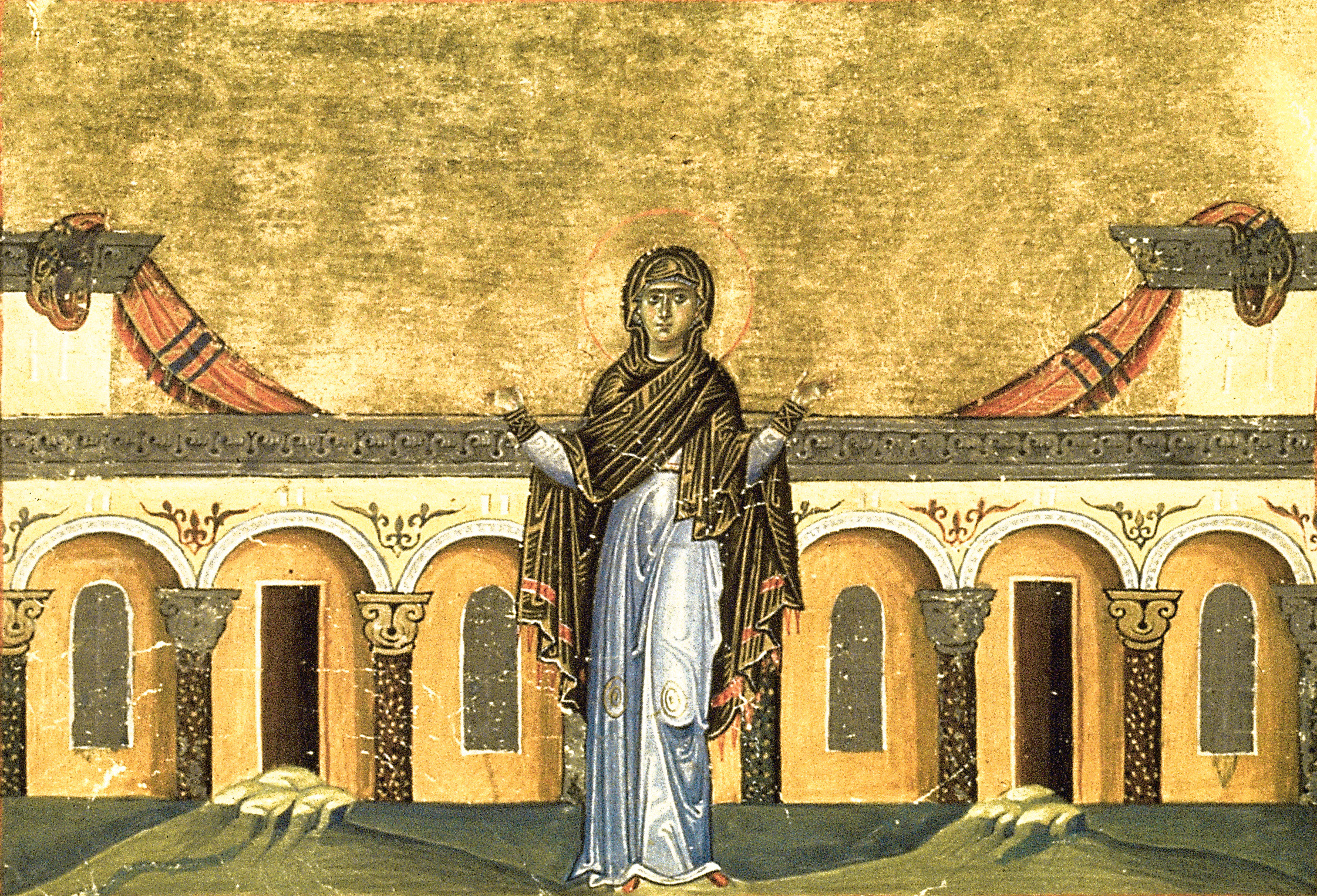
Syncletica of Alexandria

The movement also extended to women. The most famous Desert Mother was Syncletica of Alexandria. Originally from Macedonia, she was from a noble family whose fortune came from renting trade ships. After her parents died, she gave her fortune to the poor, cut her hair and went to live in a small cell outside the city of Alexandria, with her sister, who was blind. With time, other young women settled close to her cell, attracted by her teaching.
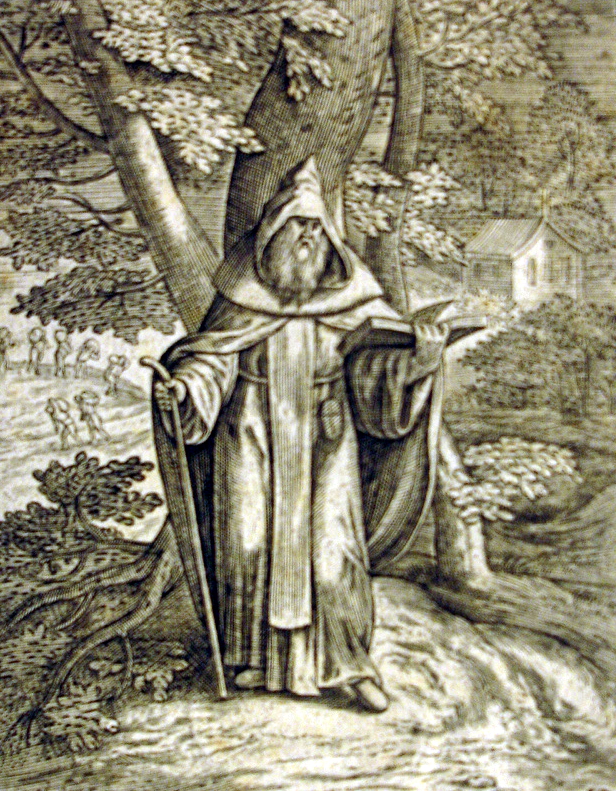
Paphnutius of Thebes

Paphnutius of Thebes, a disciple of Anthony the Great, lived as a monk in the desert for several years before becoming bishop of Thebes. A victim of persecution during the reign of Emperor Maximinus Daza, he was tortured for his faith: he lost his left eye and the tendon of his right foot was cut. He later took part in the Council of Nicaea, where he was honored by Emperor Constantine and by all the participants for the tortures he suffered for Christ. He also opposed the intention of some bishops to make celibacy mandatory for the whole Christian clergy, affirming the dignity of marriage and that celibacy was only the vocation of some, not of all.

Pachomius the Great

The first Christian ascetics lived a solitary life (anchorites). At the beginning of the 4th Century, Pachomius the Great started founding communities where about a hundred monks lived together, under the leadership of a spiritual leader called the abbot. These monastic communities followed a strict discipline, with collective prayers and fasts at fixed times. The monks spent the rest of their time doing manual work (usually agriculture) and in silent meditation. The first monastery was established by Pachomius around 318. Women’s monasteries were also established, under the leadership of Theodora of Alexandria, who fled into the desert, dressed as a man, to join a monastic community. Others lived in small groups of 2-6 men or women, meeting with other groups weekly.
Macarius the Great

The last major figure of Egyptian monasticism was Macarius the Great. He was born in Lower Egypt around 300. As a young man, he went to live in the desert, making straw baskets to earn a living. Shortly after, a pregnant woman accused him of raping her. Macarius chose not to defend himself against this false accusation. When the time came for the woman to give birth, she had a very difficult labor, and could not give birth to her child before she confessed that Macarius was innocent. A crowd assembled to ask for his forgiveness, but Macarius fled into the Nitrian Desert. There, he founded a monastic center in Wadi el Natrun, a region which remains at the heart of monastic life in Egypt until today.

Next to the Christian Gospels, the monastic movement was also influenced by the ascetic practices of certain Greek philosophical schools like the Pythagorean, Cynics and Stoics, as well as by Manichaeism.

In Africa and beyond

Coptic necropolis in the Libyan desert (Source)
Saint-Catherine’s Monastery

From Egypt, monasticism spread into other regions. The most ancient monastery still in activity today is Saint-Catherine’s Monastery, founded in 565 at the feet of Mount Sinai, where Moses received from God the revelation of the Ten Commandments. This monastery is consecrated to Catherine of Alexandria, a young woman who died as a martyr at the beginning of the 4th Century. The Codex Sinaiticus, the oldest manuscript of the Christian Bible, is kept at Saint-Catherine’s Monastery.

Stylites

In Syria, a new form of monasticism developed: Stylites, who lived on columns, using a basket attached to a rope to pull up food, and preaching to the crowds who came to see them. The founder of the movement, Simeon Stylites, lived on top of a column for 36 years. He is known for preaching Christianity to the Arab nomadic tribes of the Syrian desert.

In North Africa, monasteries were founded in the Libyan desert, and then in Numidia and Mauretania. Augustine of Hippo lived several years in a monastic community in his family house in Thagaste (Souk Ahras) before becoming a bishop. His sister was the abbess of a women’s convent in Hippo (Annaba). In the 5th Century, Fulgentius of Ruspe, who fought the Arian doctrine imposed by the Vandal occupiers, was a monk. In the 11th Century, Constantine the African, a Christian from Carthage and a medical doctor by training, became the abbot of a monastery in Italy and translated the works of the masters of Arabic medicine into Latin. He played a crucial role in the development of medieval European medicine. (Source)

Tawadros II

Monasticism plays a very important role in the Egyptian Coptic Church until today, especially in Wadi el Natrun. The Coptic Pope Tawadros II was originally a monk in a monastery of Wadi el Natrun, just like his influential predecessor Shenouda III. The strength of monastic life certainly played an important role in the survival of the Coptic Church through the centuries of Islamic domination.

Christianity in North Africa

Sidi Yahya ben Younes: a Christian saint buried in Oudja?

Français – عربي – ⵜⴰⵎⴰⵣⵉⵖⵜ – English

Sidi Yahya ben Younes is the patron saint of the Moroccan city of Oudja. His mausoleum can be found in the oasis of Sidi Yahya. According to a local legend, Sidi Yahya is actually John the Baptist, a prophet mentioned in the Gospel as the cousin of Jesus Christ!

Mausoleum of Sidi Yahya ben Younes

Sidi Yahya, patron saint of Oujda

Oujda, the capital of the Oriental region of Morocco, was founded in 994, by Ziri ibn Attia, the chief of the Maghrawa Zeneta tribe. The city is located in the Angad plain, the territory of the Arab Ahl Angad tribe, who live on both sides of the Moroccan-Algerian border. The region always had close connections with neighboring Algeria: former Algerian President Abdelaziz Bouteflika was born in Oujda.

The patron saint of Oujda is Sidi Yahya ben Younes. The oasis of Sidi Yahya, 5 km from the town center, contains the mausoleum of the saint. Several other saints are buried close by. Their presence is supposed to bring baraka to the city.

The oasis of Sidi Yahya is a popular relaxation place for Oujdis. The writer and poet Yahya Amara, originally from Oujda, tells how “during the 1960s and 1970s, much water was flowing in Sidi Yahya, and all the inhabitants of Oujda came to refresh themselves during the summer season. Sidi Yahya was a marina for the poor, who couldn’t afford to go to the port town of Saidia. Back then, Sidi Yahya was our sea of the poor.” (Source)

Sidi Yahya ben Younes’ historical background remains a mystery. For the Jews in the region, Sidi Yahya was a rabbi who moved from Spain to Oujda in 1391. Other sources, both Christian and Muslim, claim he is actually the prophet John the Baptist, the cousin and forerunner of Jesus Christ!

John the Baptist, a prophet

John the Baptist preaches in the desert

John the Baptist was the cousin of Jesus, and a prophet who was sent to announce the imminent advent of the Messiah. According to the Gospel, while his father, the priest Zachariah, was serving in the Temple, an angel appeared to him and proclaimed that he would have a son – while he and his wife Elisabeth were already too old to have children. Because he didn’t believe in this promise, God punished him by striking him with dumbness. He recovered his speech after the child was born, and called him John.

As an adult, John went into the desert, where he preached to the Jews and called them to repentance. As a sign of their changed life, he baptized his disciples in the river Jordan, which is why he was called John the Baptist. He also announced that another prophet would come after him, who would be the long-awaited Messiah. When Jesus came to him to be baptized by him, John testified that he was the one whom he had been talking about and told his disciples to follow him now.

John the Baptist is mentioned in the Quran as Yahya ibn Zakaria.

John the Baptist and Sidi Yahya

John the Baptist’s head on a platter

Still according to the Gospel, John the Baptist was imprisoned, and later executed by King Herod Antipas of Judea, for denouncing his adulterous marriage with his brother’s wife.

Legend has it that Herod Antipas was so afraid that John the Baptist would rise again from the dead, that he ordered for his head and body to be buried separately. From then on, relics of John the Baptist can be found dispersed all around the Mediterranean basin: his head is reportedly buried in Rome or Damascus, while the Topkapi Palace, in Istanbul, contains bones considered to be John the Baptist’s. (Source)

Finally, some believe that John the Baptist (or part of his body) is buried in Oujda, in the Mausoleum of Sidi Yahya ben Younes. Although nobody can explain how it got there, or how “ibn Zakaria” became “ben Younes”, this idea is firmly rooted in the inhabitants’ mind, and is part of the city’s cultural and spiritual heritage.

Even though it is very unlikely, in a historical perspective, that the oasis of Sidi Yahya indeed contains the tomb of John the Baptist, the tradition that such an important figure of the Christian religion was buried in Morocco, an Islamic country, still reflects the region’s multicultural and multireligious heritage. The Mausoleum of Sidi Yahya, in Oujda, is a symbol of coexistence between the various Muslim, Jewish, and Christian communities who lived in the city at various times. (Source)

Christianity in North Africa

Arius the Libyan: an alternative Christian theology

Français – عربي – ⵜⴰⵎⴰⵣⵉⵖⵜ – English

At the beginning of the 4th Century, as Christianity was starting to establish itself as the new dominant religion in the Roman Empire, an important controversy broke out in the Church, over the question of the nature of Christ. Arius, the founder of the Arian doctrine, was Libyan.

Context

Tertullian of Carthage, the first author to mention the Trinity

The Christians in the first few centuries believed that Jesus-Christ was God who became man: this is the doctrine of Incarnation. The sacred texts use the expression “Son of God” – not in a physical sense, as if God had a child with a human woman, but in the sense of origin and identity, just like a citizen of a nation can be called “son of the fatherland”. The doctrine of the Trinity is based on this double nature of Christ. The term Trinity was first used by the Amazigh Christian author Tertullian of Carthage.
Understanding the Trinity

The Gospels present Christ as God, the Creator, who chose to become one of us, to enter his creation in order to show his creatures the way of salvation: this is the doctrine of Incarnation. Even in his humanity, his miraculous birth, from a woman, Mary, who was a virgin, is a proof of his divinity. When he became man, he never ceased to be God. Being God, he existed of all eternity, and the world was created through him; being a man, he was in every way like us, he experienced hunger, thirst, tiredness and suffering. Because he was a man, he faced all the temptations we face, and thus he understands our weakness; because he is God, he lived a perfect life without ever sinning. He then died on the cross, as the perfect sacrifice for the redemption of humankind. By his resurrection from the dead, he defeated death, and opened the way to eternal life for all who believe in him.

To illustrate the relationship between God the Father, Christ the Son and the Holy Spirit of God, both one and distinct, the first Christian theologians developed the doctrine of the Trinity (Tri-Unity). The word Trinity does’t appear in the Bible, but the doctrine itself is clearly expressed. The first to use this word to sum up the biblical teaching was the Amazigh Christian author Tertullian of Carthage.

All the Christian authors of the first three centuries believed in this doctrine.
Some of them, mostly of Greek culture, put a heavier focus on the unity of Christ with God the Father: he is not like the many “sons of gods” of mythology, but he is both fully God and fully man, the Only God, Eternal and All-Powerful, who became flesh.
Others, especially the Antiochian theological school, insisted more on the distinction between the persons of the Trinity: God the Father is the Source of the divine plan, the Son is the Fulfiller through his Incarnation, and the Holy Spirit is the one who reveals this plan.
Others wrote about the relationship between Christ’s divinity and his humanity: Christ is God; but, during his earthly life, he submitted to human limitations, like a King who chooses to leave his palace and live among his subjects would still be King, but would be unable to use his royal authority. This explains why he prayed, fasted, and lived in dependency of God.
All those theological currents agree that Christ was God made man.

The life of Arius

Arius

Arius was born around 250, in Ptolemais, a city of Roman Cyrenaica, one of the most strongly Christian areas in the Empire. He was from a Christian family of Amazigh origin. His name could be the Latin form of the Amazigh name Ariuc. His father was called Ammonius, a common name in Egypt and Cyrenaica at this time, which refers to the Egyptian god Ammon, meaning he probably was from a pagan background.

As a child, Arius read the sacred books with his father and was already eager to learn. As a young man, he went to continue his studies in Syria. He studied Christian theology under Lucian of Antioch, an influential teacher who was martyred in 312. He probably also received a philosophical training: his doctrine might have been influenced by popular Neo-Platonist thinkers of his time, like Iamblichus, who lived in Syria.

Martyrdom of Mark

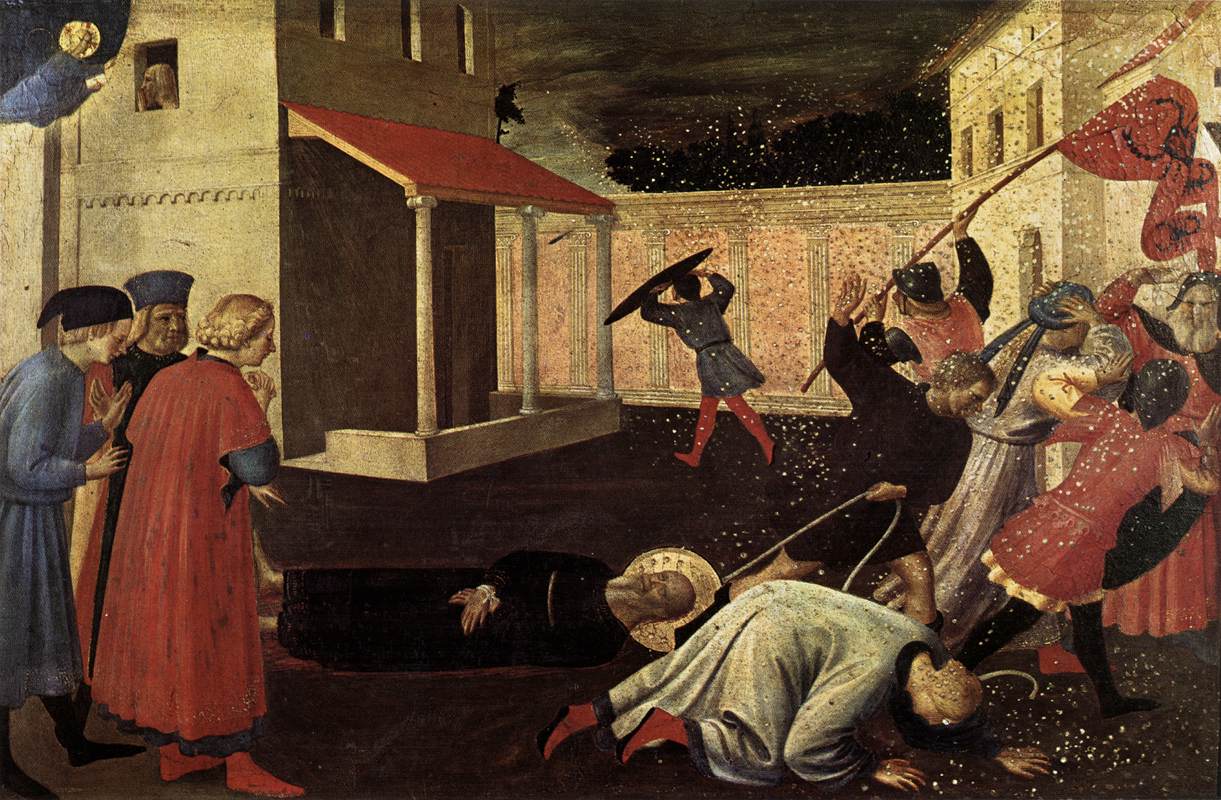
Arius then settled in Alexandria, where he took responsibilities in the Christian community. During the persecution of Diocletian, he became known for his courage in the face of Roman hostility. In 313, he became a priest in the Church of Alexandria. He served in the district of Baucalis, close to the port of Alexandria, where Mark the Evangelist was put to death. He became a popular teacher with an ascetic reputation. His popularity allowed him to spread his ideas. In 318, he started opposing Bishop Alexander of Alexandria openly on the doctrine of Trinity.

While the life of Arius is known only from his enemies, even the hostile portrait they make of him still shows that he was a godly, pure and righteous man, with an excellent knowledge of the sacred texts, and a profound thinker, who knew how to clearly explain his ideas in a convincing way. He is described as tall, with a soft voice, and always dressed in simple clothes: a short cloak and a sleeveless tunic.

The American writer Nathan Chapman Kouns wrote a historical novel, Arius the Libyan, inspired by the life of Arius. His novel brilliantly brings to life the cultural and historical landscape of ancient North Africa. It can be read online on this page.

The Arian doctrine

Arius believed that Christ is the first being created by God before he created the world, but he still is a creature, distinct from God, and not God himself. Consequently, he existed in heaven with God already before his Incarnation, but he is not eternal: he was created, and there was a time when he didn’t exist. He lived a perfect human life, by the help of God, not through his own divine nature. Christ is “divine” because God shared part of his divinity with him, but he is not God himself.

This doctrine is inspired from the teaching of the Antiochian theological school, which insisted on the distinction between the persons of the Trinity and on the Son’s subordination to the Father. Arius goes even further, denying that the Father and the Son are one. Some specialists believe that the real author of the Arian doctrine was Lucian of Antioch, who taught it to Arius.

Three sources written by Arius, in which he explains his doctrine, are still available today: his confession of faith addressed to the bishop of Alexandria, his confession of faith addressed to Emperor Constantine, and a letter to the bishop Eusebius of Nicomedia. His other writings were burned after his condemnation.

A violent controversy

Portrait of Arius at the Council of Nicaea

Arius’ views oppose the Trinitarian doctrine, which was accepted with certain nuances by the whole Christian Church before him. It poses a problem which threatens to undermine the very foundations of the Christian faith: if Christ is not God, how can he be the perfect Redeemer that humanity needs?

Because of this, Arius faced strong opposition. He was condemned by a Council of Alexandrian priests, but by then, his doctrine had already spread far beyond his city, to the whole Eastern part of the Roman world, as Arius had put his ideas into verse on the melody of popular songs. Arianism was especially popular in Cyrenaica, Arius’ native region. Several influential bishops were supporting Arius, including Eusebius of Nicomedia (Izmit, modern-day Turkey), the capital of the Eastern Roman Empire before the founding of Constantinople.

Emperor Constantine

The controversy became so strong that Emperor Constantine, who converted to Christianity in 312, decided to intervene. The Emperor was not particularly interested in the theological debate, but he wished to preserve the unity of the Christian Church for political reasons. In 325, he convened a Council in Nicaea (Iznik, modern-day Turkey) to solve the question.

Over 300 bishops from all over the Empire took part in this Council to debate the question. The discussions were led by bishop Hosius of Cordoba, Spain. Contrary to common perception, the Emperor never tried to coerce the Council to accept his own doctrine: he played only a minor role in the deliberations, just encouraging the bishops to find an agreement in order to avoid division.

Nicholas of Myra slaps Arius

The Council of Nicaea lasted over two months. A moderate faction, led by the bishop and church historian Eusebius of Caesarea, suggested an intermediary formulation on which Arius’ supporters and opponents could agree upon; but the anti-Arians refused, as they saw the question as too crucial for such a compromise. According to a legend, the bishop Nicholas of Myra, in Lycia (South-West of modern-day Turkey), slapped Arius at the Council. Anecdotically, Nicholas of Myra became the historical figure behind Father Christmas.

The Credo of Nicaea

At the end of the discussion, the Council of Nicaea adopted a confession of faith that clearly affirms the Trinitarian doctrine. Arianism was condemned as heretical. Of the over 300 bishops who were present, only two, both from Cyrenaica, refused to accept this confession of faith: Secundus of Ptolemais and Theonas of Marmarica. Bishop Zopyrus of Barca (El-Marj) accepted the confession of faith, but refused to sign the condemnation of Arius. The Credo of Nicaea remains a common confession of faith for all Christian churches until today.

After the Council of Nicaea, Arius was exiled and fled to Palestine.

After the Council

Athanasius of Alexandria

Bishop Alexander of Alexandria, the original author of the condemnation of Arius, died in 327. His successor, Athanasius, became the champion of the Nicaean doctrine, the main opponent of Arianism in the following decades, both before and after the death of Arius.

During the following years, Emperor Constantine, wanting to appease tensions, allowed Arius’ supporters to return home from exile. Arius himself was restored into Church communion in 336, after agreeing to reformulate some of his most problematic ideas. Bishop Athanasius of Alexandria, who opposed his readmission, was exiled.

Arius died in 336, shortly before his formal readmission into the Church. It is possible that he was poisoned.

Arianism after Arius

Baptism of Constantine

The Arian doctrine still didn’t disappear. Bishop Eusebius of Nicomedia, who accepted the Credo of Nicaea only under pressure from the Emperor, continued to defend the Arian doctrine. The two men knew each other since their youth: they studied together under Lucian of Antioch. Emperor Constantine chose the Arian bishop Eusebius of Nicomedia to baptize him on his death bed in 337.

Eusebius of Nicomedia

Constantius II (337-361), the son and successor of Constantine, was an Arian. With the help of Eusebius of Nicomedia, he tried to impose Arianism in his whole Empire. Athanasius of Alexandria was exiled five times, spending 17 years in exile. By the end of the reign of Constantius II, the Arian doctrine was a majority in the Eastern part of the Empire. However, in the West, where Arianism had never been very popular, the bishops, led by Hosius of Cordoba, remained true to the Nicaean doctrine, refusing to let the Emperor dictate their theology. In North Africa, Arianism was almost nonexistent outside Cyrenaica. The Amazigh bishop Augustine of Hippo wrote a book against Arianism.

Julian, the successor of Constantius II (361-363), tried unsuccessfully to reestablish paganism in his Empire. Emperor Theodosius (379-395) established Christianity as the official religion of the Empire in 380. The following year, the Arian doctrine was again condemned by the Council of Constantinople. From this time on, Arianism gradually disappeared in the Roman world. In Cyrenaica, is had apparently already disappeared in the early 5th Century, when Synesius of Cyrene became bishop of Ptolemais.

The Vandal Arian church of Henchir el Gousset, Tunisia (Source: Zaher Kammoun)

Arianism survived outside the Roman borders: Ulfilas, a disciple of Eusebius of Nicomedia, preached Arian Christianity to the Goths and translated the Bible into their language. Under the influence of the Goths, other Germanic people converted to Arianism. The Vandals, who invaded North Africa in 429, were Arian and persecuted the indigenous North African Christians.

In North Africa, Arianism, linked to the Vandals, probably disappeared in the Byzantine era, before the arrival of Islam. In Europe, the last Arians were the Spanish Visigoths, who converted to Nicaean Christianity in 589, and the Lombards of Northern Italy, who converted in 671.

Nowadays, the doctrine of the Jehovah’s Witnesses is close to Arianism.

Arius and Islam

Arius as a Muslim – Image created by ChatGTP

In the Muslim world, Arius is often seen as a precursor of Islam, a defender of pure monotheism, who believed in Christ as a human Prophet, fought the idolatry of a Church that worshiped him as God, and opposed the Trinity as “polytheism” (shirk).

Arius’ beliefs were actually very different from Islam. He believed that Christ existed in heaven with God before his earthly birth, even before the creation of the world. He also believed that he died on the cross for the redemption of humankind, and that he resurrected. The Quran denies Christ’s death and resurrection.

Ironically, the Arian doctrine, which makes Christ some kind of half-god, a divine being next to God, is much closer to polytheism than the Trinitarian doctrine which he fought!

Christianity in North Africa

The North African bishops of Rome

Français – عربي – ⵜⴰⵎⴰⵣⵉⵖⵜ – English

The bishops of Rome, the imperial capital, were always particularly influential in the ancient Christian church. With time, this influence became a formal authority. Several bishops of Rome during the first centuries were from Roman Africa.

The first North African bishop of Rome was Victor, by the end of the 2nd Century (189-199), who was born in Leptis Magna (like Septimius Severus, who became Emperor in 192) and was previously bishop of Leptis Magna. He is known mostly for his conflict with the churches in Asia, about Easter: for about a century, the Christians in Rome always celebrated Easter on a Sunday, while those in Asia celebrated it any day of the week. Victor wanted to enforce his custom on the churches in Asia, but he backed out because of strong opposition from other European bishops, like Irenaeus of Lugdunum (Lyon), who argued that this difference had existed for close to a century without ever justifying a break in communion between the churches. This was the first time a bishop of Rome tried to enforce his authority on other churches, a first step into the direction of Roman primacy.

Another North African bishop of Rome was Miltiades (311-314), who was chosen as bishop just after the end of the persecutions and led the Church in its crucial years of adaptation to its new role as the religion favored by the Imperial administration. Emperor Constantine, who had recently converted to Christianity, gave Miltiades the Lateran Palace (see cover picture), the former palace of Empress Fausta, as a residence for the bishop of Rome. Miltiades’ episcopate was marked by the Donatist controversy. Miltiades opposed the Donatists, a North African Christian movement that refused the compromises the Roman church had made with the political power.

The last North African bishop of Rome was Gelasius (492-496), who was born in Roman Africa and fled to Rome after the Vandal invasion. Before becoming bishop, he was the closest collaborator and the secretary of his predecessor. At a time when the Roman Empire had ceased to exist and the whole European political landscape was undergoing many changes, Gelasius fought to preserve the church’s autonomy from political power.

Christianity in North Africa, The three great North African Christian figures

The three great North African Christian figures: Augustine of Hippo, the Doctor of Grace

Français – عربي – ⵜⴰⵎⴰⵣⵉⵖⵜ – English

During the first centuries of the Christian era, North Africa, from its large, cosmopolitan cities to its most remote rural areas, proved to be an especially fertile ground for the Christian Gospel. Three of the greatest Christian figures of this time were North African. In this article, we will discover the life of Augustine of Hippo, the greatest theologian of the Latin church, nicknamed the “Doctor of grace”.

His life

Augustine of Hippo

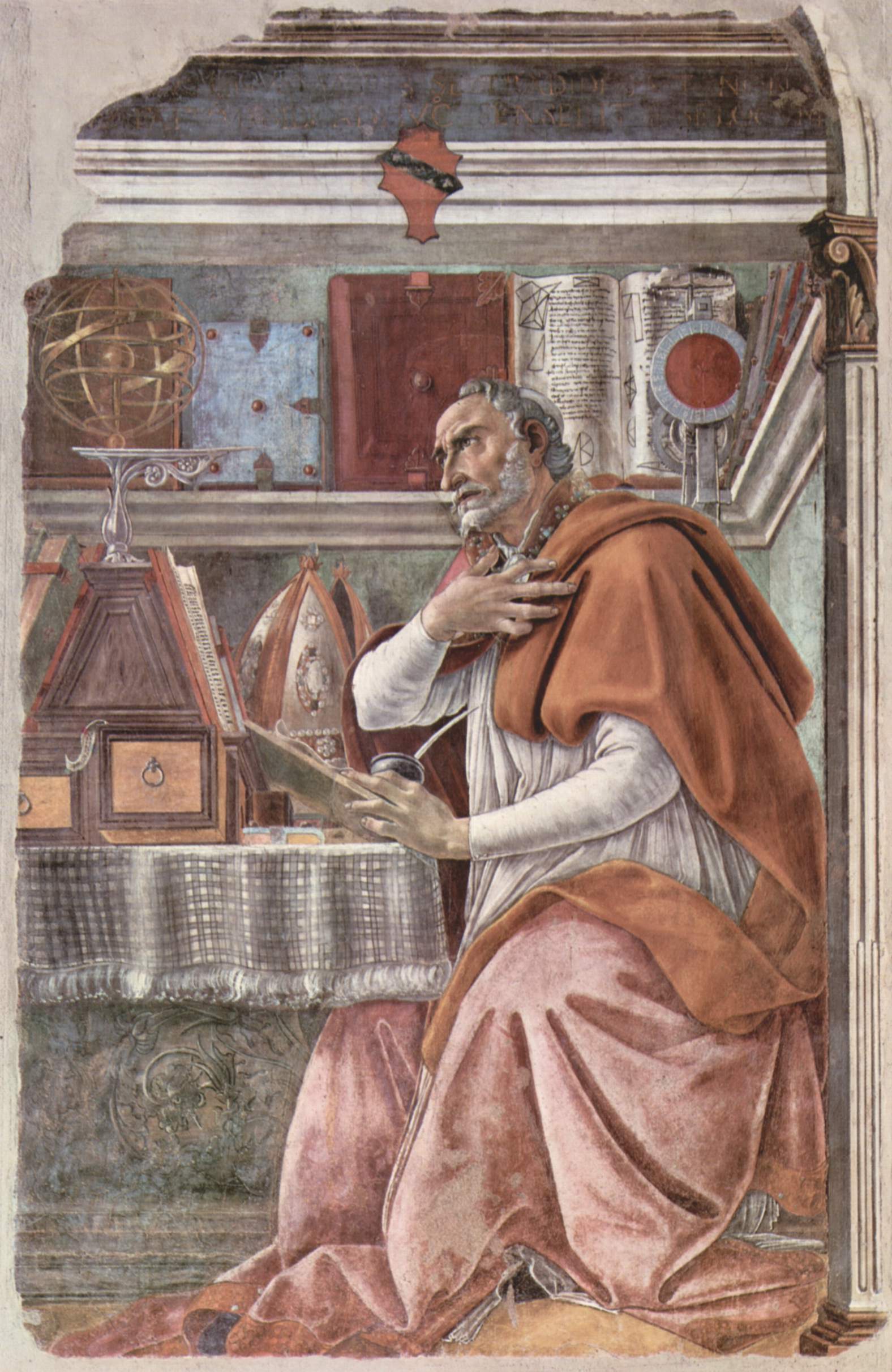
Aurelius Augustinus Hipponensis was born on 13 November 354, in Thagaste (Souk Ahras), Roman Numidia. His father Patricius, a decurion (junior officer) in the Roman army, owned a modest domain in Thagaste. His mother Monica was of Amazigh background and was a fervent Christian, while his father was a pagan.

Concerning Augustine’s ethnic background, it is generally acknowledged that his father was Roman and his mother Amazigh. His mother’s name, Monica, comes from the Amazigh language, and is the only common modern name with Amazigh roots. While Augustine’s family was strongly Romanized, he still spoke proudly of his African origins and his links with other Roman African authors, like Apuleius or Marius Victorinus. His first language was probably Latin, but he was also fluent in Lybic (Tamazight). He never became fluent in Greek, because of a difficult relationship with his Greek teacher when he was young.

Young Augustine at school, by Niccolo di Pietro

At 11 years of age, his father sent him to study in Madaura (M’daourouch), where he discovered Latin literature. At the age of 17, he went to study rhetoric in Carthage. Despite his mother’s warnings, he started keeping bad company and living a dissolute life. In 372, he had a son, Adeodatus (gift of God). The child’s mother, who lived in Carthage, remained his lover for over 15 years, but he never married her.

While studying in Carthage, he read Cicero’s dialogue Hortensius, and this reading gave birth to a deep love for philosophy. Around the same time, he converted to Manichaeism, a new Eastern religion. He remained a Manichean for 10 years, before abandoning this doctrine.

In 373, he returned to Thagaste and taught rhetoric there for one year. Then, he opened his own rhetoric school in Carthage. In 383, he moved to Rome, where he was hoping to find the best rhetoricians, but he was disappointed by his students’ lack of seriousness. While in Rome, he gradually turned away from Manichaeism.

Shortly after arriving in Rome, he met Symmachus, the city prefect. In 384, he was chosen as a professor of rhetoric at the imperial court, which was based in Milan at the time. At 30 years of age, he now occupied the most prestigious academic function in the Roman world.

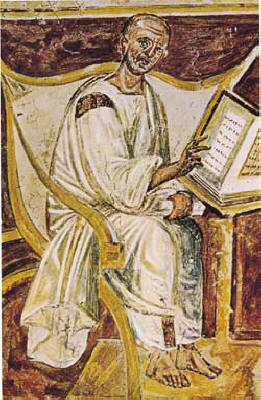
Oldest known portrait of Augustine, 6th Century, Rome

In Milan, he discovered Neoplatonism by reading Plotinus and Porphyry’s works, translated into Latin by his African countryman Marius Victorinus. He visited Ambrosius, the Christian bishop of Milan, after hearing of his reputation as a great speaker. The two men became so close that after his father died, Augustine would come to consider Ambrosius as a new father. His study of the neoplatonic philosophy and his friendship with Ambrosius led him to a serious interest in Christianity for the first time, although he had know this faith all his life, as his mother was a Christian.

Augustine’s family, who followed him to Milan, were now pushing him to find a respectable wife. For this, he first needed to separate from his lover, with whom he had a child. This separation broke his heart: while he couldn’t marry her officially due to her being of a lower social status, he saw their relationship as equivalent to marriage.

In August 386, he had a spiritual experience that led him to convert to Christianity: after hearing a child’s voice saying: “Take and read”, he opened his biblical manuscripts and read a verse of Saint-Paul’s epistle to the Romans: “Let us behave decently, as in the daytime, not in carousing and drunkenness, not in sexual immorality and debauchery, not in dissension and jealousy. Rather, clothe yourselves with the Lord Jesus Christ, and do not think about how to gratify the desires of the flesh.” He immediately committed himself to Christ.

Baptism of Augustine, by Benozzo Gozzoli

Augustine and his son Adeodatus were baptized together at Easter of the following year, in 387. His mother, who had never stopped praying for her son’s conversion, was very happy.

After his conversion, Augustine gave up his job as a rhetorician to dedicate himself to preaching. He also decided to cancel his wedding projects and remain celibate.

In 387, after his baptism, Augustine and his family decided to return to Africa. His mother Monica died on their way back. Not long after they arrived in Thagaste, his son Adeodatus also died. Augustine, who was very much affected, sold the family domain and gave away the money to the poor. He only kept the house, and lived there with a group of Christian friends, as a spiritual community.

Saint-Augustine Basilica, Annaba

In 391, Augustine was ordained priest in Hippo (Annaba). He wanted to put his philosophical and rhetorical knowledge to use for deeper study and better preaching of the sacred texts. In 395, he became bishop of Hippo. He remained in this city for the rest of his life.

Shortly before Augustine’s death, the Vandals arrived in North Africa. In spring 430, they besieged Hippo. Augustine fell ill and died during the siege. He spent his last few days in prayer. After his death, the Vandals took the city and burned it completely, except for Augustine’s church and library, which they left intact. Saint-Augustine’s Basilica, in Annaba, was built in 1881, close to the remains of his church.

Works

Manuscript of The City of God

Apart for Christ and the apostles themselves, noone else had such a strong impact on the Christian church as the North African Augustine of Hippo.

He started writing immediately after his conversion. After he returned to Africa, he wrote several books criticizing the Manicheans, to fight this new religion’s growing influence. As the bishop of Hippo, he had a series of public debates with the city’s Manichean community. He also wrote a book to refute Faustus of Milevis, the leader of the Manicheans in Africa, whom he had known in Carthage back when he was a Manichean himself.

His two main works are The Confessions and The City of God.

Manuscript of The Confessions

The Confessions, written around the year 400, is the story of his life. In this book, he examines his spiritual journey, until his conversion. This book can be considered as the first autobiography in history. Its particularity, however, is that it addresses God directly: to him the author confesses his life, his faults, his wanderings, and the lessons he learned from it all.

The City of God is by far Augustine’s most influential writing. This work in 22 books, written over a period of 14 years, describes his view of an ideal Christian society, based on divine law. Even more than in his other works, he abundantly quotes Greek-Roman classical authors, in order to show how the Christian teaching surpasses them all.

He also wrote biblical commentaries, doctrinal books (On Christian doctrine), philosophical books, and polemical books against various Christian heresies and against the Jews.

Finally, he is famous just as much for his sermons as for his written works: he preached around 6.000 sermons in his lifetime, 500 of them are still available today.

The Egyptian film director Samir Seif produced the movie Augustine: son of her tears, on the life of Augustine, in partnership with the Algerian Ministry of Culture. The title is a reference to the tears of Augustine’s mother when she was praying for her son’s conversion. The main role is played by the Algerian actor Imad Benchenni. We are sharing this movie here.

Christianity in North Africa

Lactantius: Defending Religious Tolerance in the Roman World

Français – عربي – ⵜⴰⵎⴰⵣⵉⵖⵜ – English

Translation: Ibrahim Ait Dami

Lactantius was a North African writer and rhetorician of the 4th Century. After beginning his career in his native Africa, he went on to become a counselor to the Roman Emperor Constantine. Having himself been a victim, as a Christian, of religious persecution under Constantine’s predecessors, he exerted significant influence on the policies of the first Christian emperor, encouraging him to adopt religious tolerance toward all his subjects—Christians, Jews, and pagans alike.

The Life of Lactantius

Lactantius

Lucius Caecilius Firmianus, known as Lactantius, was born around 250 in Roman Africa, into a family of Amazigh or Punic origin, depending on the sources. His birthplace is unknown: an inscription discovered at Cirta (modern Constantine) mentions an individual named L. Caecilius Firmianus, but it is uncertain whether this refers to him.

In his youth, he studied rhetoric under Arnobius of Sicca. It is not known whether he converted to Christianity under Arnobius’ influence or whether he was already a Christian beforehand. He later taught rhetoric in his native city.

Around the year 300, the Roman Emperor Diocletian recruited him to teach rhetoric at the imperial court. There he came into contact with many high-ranking figures, including the future Emperor Constantine. In 303, Diocletian issued an edict against Christians, ordering the destruction of their places of worship, the burning of their sacred texts, the prohibition of their assemblies, and the exclusion of all Christians serving in the imperial administration. Lactantius, having foreseen the publication of this edict, resigned from his position at court shortly before it was issued. In the years that followed, more than three thousand Christians throughout the Empire—many of them in Africa—were put to death for their faith. Lactantius witnessed this persecution and would later write a book on the subject.

Diocletian abdicated in 305. His successor, Galerius, continued the persecution of Christians. Under increasing pressure from Constantine, he was eventually forced to issue an edict of tolerance in 311, just days before his death. For the first time in Roman history, Christianity became a legally recognized religion.

At the Court of Constantine

Constantine

The new emperor, Constantine, himself converted to Christianity in 312. His interest in the new religion dated back earlier: as early as 310, at the height of the persecution, he had chosen the Christian Lactantius as tutor to his son. After the emperor’s conversion, Lactantius became his main adviser on matters of religious policy.

The context in which Lactantius exercised these responsibilities was highly unusual. Christians were no longer persecuted, and the imperial administration even favored the new religion; yet the majority of the Empire’s population was still pagan. The elite, in particular, remained attached to ancient religious traditions. In this new situation, the emperor wondered how he should treat subjects who did not share his faith. Should he attempt to impose it by force, persecuting pagans as his pagan predecessors had persecuted Christians? Lactantius, on the contrary, advised him to pursue a policy of religious tolerance, based on the voluntary nature of worship offered to God: coercion does not create new believers, only hypocrites.

Manuscrit des Institutions divines

Lactantius set out his vision of religious tolerance in Book V of his Divine Institutes. The following excerpts summarize his thought: “Force must not be used, since religion must be free. Words should be employed rather than blows, so that those who embrace it may do so willingly. […] There is an extreme difference between cruelty and piety. Truth and justice are incompatible with harshness and violence. […] Religion must be defended not by killing others, but by dying for it; not by the severity of punishments, but by patience; not by crimes, but by faith. Since religion is good, it does not wish to be defended by evil. If you undertake to defend it by shedding blood, by exercising cruelty, and by committing crimes, far from defending it, you violate it. There is nothing so voluntary as religion, and it is entirely destroyed as soon as the freedom of the one who offers sacrifice is constrained. The best way to defend religion is to die for it. In this way it is upheld before human beings, and at the same time fidelity is kept to God. […] The faith we keep toward God is followed by a reward all the more solid and glorious in that it lasts not only as long as the present life, which is very short, but as long as the future life, which is eternal.”

Lactantius’s argument is based on the Christian conception of God and of man as His creature, called to worship Him in justice and in truth, ae God is justice and truth. True worship offered to God must be voluntary: if it is coerced, it will not be sincere and therefore will have no value. Moreover, by persecuting Christians, pagans have thereby shown that they are in error, since violence is contrary to the justice of God.

Constantine sought to put these principles into practice in his religious policy. His laws and official speeches regularly affirm the truth of Christianity, yet no penalties are imposed on those who refused to accept it. Christians who abused their new influence by treating Jews or pagans unjustly were punished. This is not religious neutrality in the sense of Western secularism, but rather religious freedom, founded on the right to error.

The same principle is found in the Qur’an: “لَآ إِكْرَاهَ فِى ٱلدِّينِ قَد تَّبَيَّنَ ٱلرُّشْدُ مِنَ ٱلْغَىِّ “There is no compulsion in religion; the right path has become distinct from error.” (Qur’an 2:256) The Pact of ʿUmar, concluded between the second Caliph, ʿUmar ibn al-Khaṭṭāb, and the Christian and Jewish communities of Syria, applies this principle by recognizing the rights of religious minorities in Islamic lands. Lactantius, however, goes even further by affirming that religion is entirely a matter of individual conscience, not merely a communal one—thus excluding, for example, the prohibition of apostasy.

The Obligation of Fasting during Ramadan: A Recurrent Point of Tension in North African Societies

Nowadays, as increasing numbers of North Africans living abroad choose to return home because of growing discrimination against Muslims in the West, while more and more voices are calling for the respect of individual freedoms and the right to choose one’s religion in our countries, the reflections of our North African “compatriot” Lactantius offer us another model of tolerance and coexistence among fellow citizens with differing convictions and ways of life.

Christianity in North Africa

Arnobius of Sicca: the conversion of a rhetorician

Français – عربي – ⵜⴰⵎⴰⵣⵉⵖⵜ – English

Arnobius of Sicca was a famous Numidian rhetorician, who was teaching in Sicca (El Kef). By the end of his life, he caused much surprise in the local Christian community, when he announced his conversion to Christianity, a religion he had fought all his life. To appease the fears of those who doubted his sincerity, he undertook to write a book refuting his former pagan beliefs.

Late portrait of Arnobius

Arnobius was born around 240, in Civitas Popthensis (Henchir Kssiba, close to Ouled Moumen, in the Algerian wilaya of Souk Ahras). After brilliant studies in Latin literature, he taught rhetoric in Sicca (El Kef) and became known around the region for his vast learning. The city of Sicca was very proud of their famous resident.

Despite his Latin education, Arnobius was a worthy son of North Africa, very proud of his Amazigh origins, who saw the Roman conquest of Africa as an accident of history. His writings are full of references to the region’s natural beauty, to the rich harvests, to the flocks of sheep grazing in the mountains and the olive trees growing in the plains, but also to the droughts and the locust invasions ravaging the crops.

At this time, Sicca, like all North African towns, had a quite strong Christian community. Arnobius despised the Christians: he thought they were ignorant, and didn’t hesitate to attack their faith in his speeches. The local Christian leaders, probably uneducated farmers or craftsmen, were unable to answer the arguments of such a formidable adversary.

Ruins of Sicca

However, around 295, when he was already quite old, Arnobius surprised the Christian community in Sicca by announcing his conversion! Instead of rejoicing that such an illustrious man had joined their faith after fighting it for so many years, the Christians first refused to believe that he was sincere: they feared he was trying to infiltrate them and destroy them from inside. The bishop of Sicca even refused to baptize him.

Arnobius was so eager to be accepted by the Christian community that he decided to write a vast apologetic book to refute his former pagan beliefs. The result, Against the nations, is a passionate plea for the Christian faith and against the lies of pagan mythology and philosophy. However, to Arnobius himself, is was just as much about convincing the Christians that his faith was sincere than about convincing the pagans of the truth of Christianity. It is also very possible that his book recounts his own spiritual journey, the reasons that led him to abandon his former beliefs and become a Christian – he mentions how several dreams he had decided him to convert.

The heart of Arnobius’ argumentation is that true religion necessarily combines both spiritual power and moral virtue. He knew both the African and the Greek-Roman pagan cults very well, with all their ceremonies and sacrifices, as he had practiced them for so many years. While he was deeply aware of the very real spiritual power wielded by the pagan priests and rites, he found nothing good, no virtue in them. Quite the opposite: mythology was full of stories of deeply immoral gods, who were adulterous and violent murderers. The city of Sicca was actually famous for its temple of Venus, which was full of priestesses practicing prostitution! Philosophy, on the other hand, taught admirable moral principles, but then left man powerless to overcome his egoistic nature and actually practice those virtues.

Christian tombstone in Sicca

At this point, Arnobius discovered Christ, whose miracles show a spiritual power greater than that of the pagan priests, while his teaching, on love for our enemies and refusing vengeance, is even more virtuous than the finest philosophy. Finally, through Christ’s resurrection, Christians had a certain hope of eternal life – the quest of all philosophers, although none of them had found it.

Arnobius wrote his book while he was still very newly converted, to defend a faith he hardly knew. His writing is passionate, cultured, and imaginative, but his arguments certainly could have been refined if he had taken more time to think them through.

It took Arnobius several years to write this book, which was still unfinished at his death. After some time, the Christians in Sicca finally accepted him as their brother. One of his students, Lactantius, who was also a Christian, later became an advisor of Emperor Constantine.

Learn more (in French)

Christianity in North Africa, Roman North Africa

Firmus of Thagaste: asylum in Roman Africa

Français – عربي – ⵜⴰⵎⴰⵣⵉⵖⵜ – English

In the 3rd Century, bishop Firmus of Thagaste welcomed a man in his house who was wanted by Roman Emperor Maximian. When the Emperor sent his troops to arrest the man, Firmus refused to deliver him to them, despite the risk for himself. The Emperor was so impressed by his courage that he pardoned the man. This episode inspired the modern-day principle of right of asylum.

Firmus was the first know bishop of Thagaste (Souk Ahras), a Numidian city that would later become famous as the birthplace of Augustine of Hippo. He welcomed this refugee in 289, during the reign of Emperor Maximian. At this time, Christianity was probably the majority religion in large parts of Roman Africa, but the new faith was not yet recognized, and Christians were still regularly persecuted. Firmus himself died as a martyr several years later.

Augustine of Hippo tells us: “This is what a bishop of Thagaste – Firmus was his name, and he was even more firm in his will – did a long time ago: when the bailiffs gave him the imperial order to deliver a man they were looking for and who was hiding in his house, where he had fled; then the bishop, with all the restraint he was able of, answered those who were asking for the man that he could not lie or deliver this man to them, and whatever torture he might suffer (as the Emperors were not yet Christian), he persisted in his resolution. He was then led before the Emperor, and seemed so worthy of admiration that he easily obtained the pardon of the man he had welcomed in his house.”

Nothing more is known about this fugitive or the reasons why the Emperor wanted to capture him. The fact that he fled to a bishop shows that he was probably Christian, but this does not necessarily mean that he was persecuted for his faith. Firmus may also be inspired by a tradition of asylum in Amazigh customary law.

In the following centuries, this episode became a source of inspiration for the Christian tradition of asylum, especially the inviolability of places of worship.

Christianity in North Africa

Maximilian of Theveste: the first conscientious objector

Français – عربي – ⵜⴰⵎⴰⵣⵉⵖⵜ – English

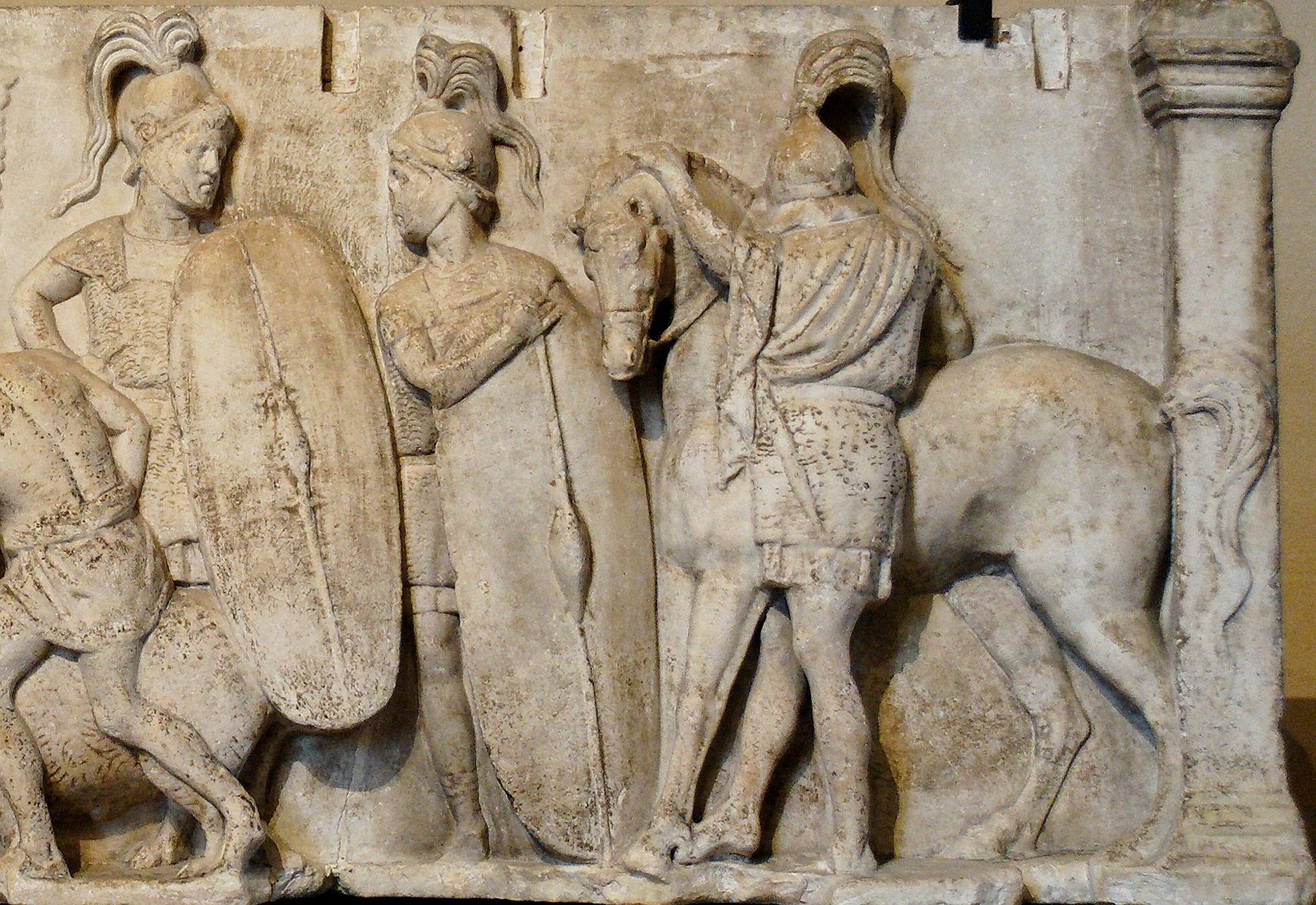
The heart of the Roman Empire’s power was its formidable army, which was both very well-armed and highly disciplined. It is estimated that at its peak, the Roman army was composed of around 450.000 soldiers. Close to the end of the 3rd Century, Maximilian, a Christian from the city of Theveste (Tebessa), Numidia, was executed for refusing to serve in the army. He is considered as the first conscientious objector, an inspiration for all those who, after him, refused to bear arms and kill for a cause they didn’t believe in.

Maximilian of Theveste was born in 274, in Theveste (modern-day Tebessa, Algeria). His father, Fabius Victor, was a veteran of the Roman army. As the son of a former soldier, Maximilian was obliged by Roman law to enroll in the army at the age of 21.

At this time, the Christian attitude towards military service varied a lot. Next to the use of violence, the sacrifices at military ceremonies were another problem to the Christian conscience. Generally speaking, Christians who were already baptized were usually not allowed to (or at least discouraged from) enrolling in the army, while soldiers who converted to Christianity could continue their service. Some Christians, like Julius Africanus, who served as a military officer under Septimius Severus, had a much more favorable view of the military vocation. During the reign of Diocletian, who restored a stricter military discipline, the Christian Church took a firmly anti-militarist stance.

On 12 March 295, his 21st birthday, Maximilian’s father led him in front of the proconsul of Africa, to be enrolled in the army. His father was himself a Christian, and obviously saw no contradiction between his faith and the military vocation. However, Maximilian refused to serve in the army: “I cannot serve, I cannot do evil, I an a Christian.” He also didn’t want to wear a medal with the effigy of Emperor Diocletian around his neck, an obligation for all conscripts, because he saw this as a betrayal of Christ.

Due to his refusal, Maximilian was arrested and imprisoned. When the proconsul interrogated him on why he refused to enroll, he answered that he believed the Christian Gospel forbid all kind of violence, and, consequently, it was against his conscience to serve in the army. The proconsul threatened to sentence him to death if he persisted, but he answered: “I will not serve, even if you cut my head; I am not a soldier in the army of this world, but in the army of my God.” The proconsul, fearing that other Christians would follow his example, had him beheaded. A Christian matrone called Pompeiana obtained his body and buried him in Carthage.

Maximilian of Theveste is remembered as the first conscientious objector. There were certainly other Christians executed around the same time for refusing to serve in the army. During the Vietnam War, a group of American religious leaders who opposed the war took the name of Order of Maximilian, in memory of their glorious North African predecessor.