

Français – عربي – ⵜⴰⵎⴰⵣⵉⵖⵜ – English
The bishops of Rome, the imperial capital, were always particularly influential in the ancient Christian church. With time, this influence became a formal authority. Several bishops of Rome during the first centuries were from Roman Africa.
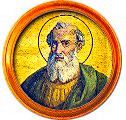
The first North African bishop of Rome was Victor, by the end of the 2nd Century (189-199), who was born in Leptis Magna (like Septimius Severus, who became Emperor in 192) and was previously bishop of Leptis Magna. He is known mostly for his conflict with the churches in Asia, about Easter: for about a century, the Christians in Rome always celebrated Easter on a Sunday, while those in Asia celebrated it any day of the week. Victor wanted to enforce his custom on the churches in Asia, but he backed out because of strong opposition from other European bishops, like Irenaeus of Lugdunum (Lyon), who argued that this difference had existed for close to a century without ever justifying a break in communion between the churches. This was the first time a bishop of Rome tried to enforce his authority on other churches, a first step into the direction of Roman primacy.

Another North African bishop of Rome was Miltiades (311-314), who was chosen as bishop just after the end of the persecutions and led the Church in its crucial years of adaptation to its new role as the religion favored by the Imperial administration. Emperor Constantine, who had recently converted to Christianity, gave Miltiades the Lateran Palace (see cover picture), the former palace of Empress Fausta, as a residence for the bishop of Rome. Miltiades’ episcopate was marked by the Donatist controversy. Miltiades opposed the Donatists, a North African Christian movement that refused the compromises the Roman church had made with the political power.

The last North African bishop of Rome was Gelasius (492-496), who was born in Roman Africa and fled to Rome after the Vandal invasion. Before becoming bishop, he was the closest collaborator and the secretary of his predecessor. At a time when the Roman Empire had ceased to exist and the whole European political landscape was undergoing many changes, Gelasius fought to preserve the church’s autonomy from political power.
