

Français – عربي – ⵜⴰⵎⴰⵣⵉⵖⵜ – English
The heart of the Roman Empire’s power was its formidable army, which was both very well-armed and highly disciplined. It is estimated that at its peak, the Roman army was composed of around 450.000 soldiers. Close to the end of the 3rd Century, Maximilian, a Christian from the city of Theveste (Tebessa), Numidia, was executed for refusing to serve in the army. He is considered as the first conscientious objector, an inspiration for all those who, after him, refused to bear arms and kill for a cause they didn’t believe in.

Maximilian of Theveste was born in 274, in Theveste (modern-day Tebessa, Algeria). His father, Fabius Victor, was a veteran of the Roman army. As the son of a former soldier, Maximilian was obliged by Roman law to enroll in the army at the age of 21.

At this time, the Christian attitude towards military service varied a lot. Next to the use of violence, the sacrifices at military ceremonies were another problem to the Christian conscience. Generally speaking, Christians who were already baptized were usually not allowed to (or at least discouraged from) enrolling in the army, while soldiers who converted to Christianity could continue their service. Some Christians, like Julius Africanus, who served as a military officer under Septimius Severus, had a much more favorable view of the military vocation. During the reign of Diocletian, who restored a stricter military discipline, the Christian Church took a firmly anti-militarist stance.
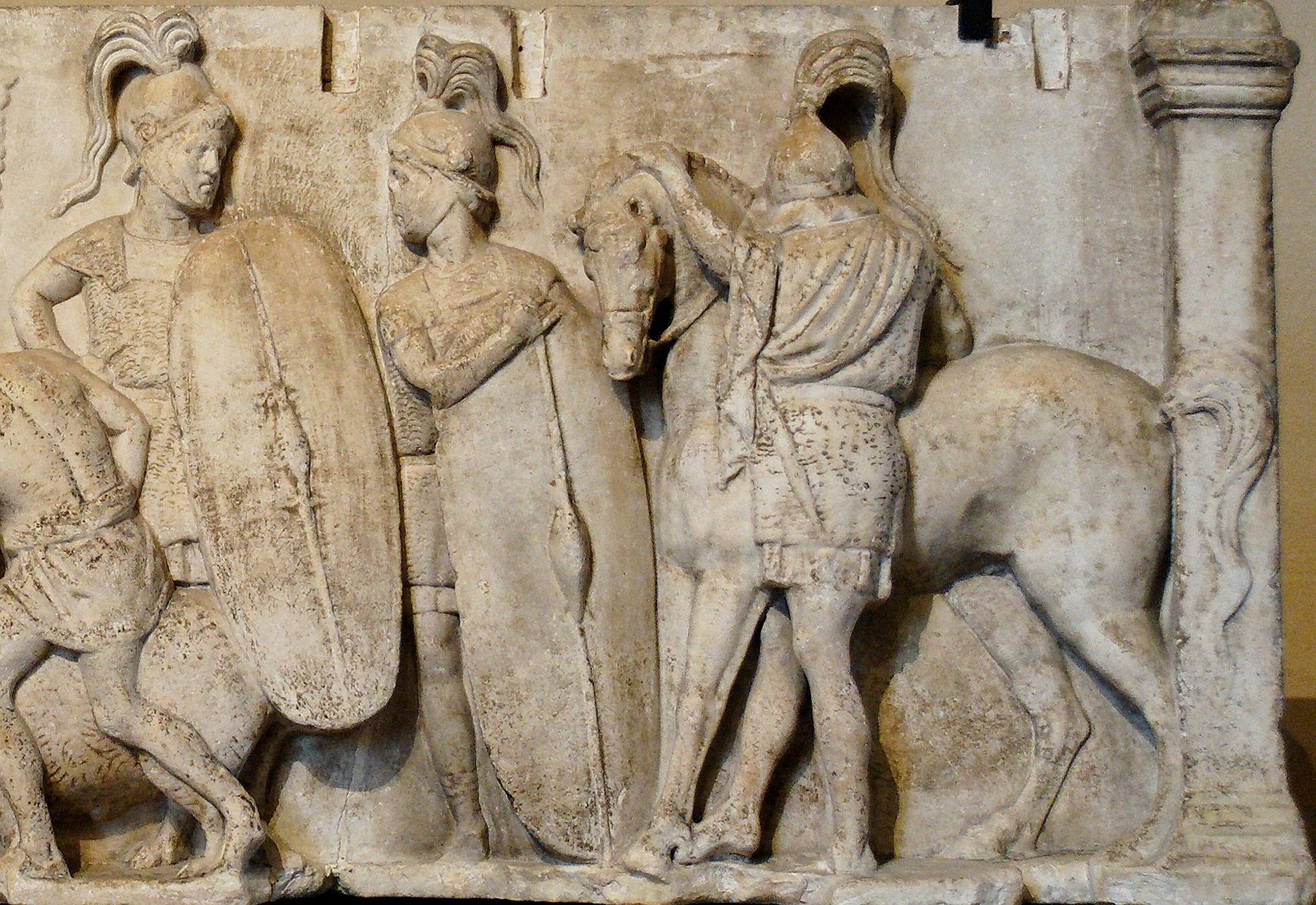
On 12 March 295, his 21st birthday, Maximilian’s father led him in front of the proconsul of Africa, to be enrolled in the army. His father was himself a Christian, and obviously saw no contradiction between his faith and the military vocation. However, Maximilian refused to serve in the army: “I cannot serve, I cannot do evil, I an a Christian.” He also didn’t want to wear a medal with the effigy of Emperor Diocletian around his neck, an obligation for all conscripts, because he saw this as a betrayal of Christ.

Due to his refusal, Maximilian was arrested and imprisoned. When the proconsul interrogated him on why he refused to enroll, he answered that he believed the Christian Gospel forbid all kind of violence, and, consequently, it was against his conscience to serve in the army. The proconsul threatened to sentence him to death if he persisted, but he answered: “I will not serve, even if you cut my head; I am not a soldier in the army of this world, but in the army of my God.” The proconsul, fearing that other Christians would follow his example, had him beheaded. A Christian matrone called Pompeiana obtained his body and buried him in Carthage.
Maximilian of Theveste is remembered as the first conscientious objector. There were certainly other Christians executed around the same time for refusing to serve in the army. During the Vietnam War, a group of American religious leaders who opposed the war took the name of Order of Maximilian, in memory of their glorious North African predecessor.
