

Français – عربي – ⵜⴰⵎⴰⵣⵉⵖⵜ – English
Following the Roman conquest of North Africa, many figures of North African origin, from families of the Romanized Amazigh elite, assumed responsibilities in the imperial administration. There even were several Emperors of North African origin.
A first claimant

Decimus Clodius Albinus was born around 150, in Hadrumetum (Sousse), Roman Africa. He was from an aristocratic Roman family. His cognomen (nickname) Albinus comes from his albinism.
Albinus served in the army under the Emperors Marcus Aurelius and Commodus, and became governor of Roman Britain.
Emperor Commodus was assassinated in December 192. The Praetorian Prefect Quintus Aemilius Laetus, who took part in the plot against him, was an African, from Thenae (Thyna, close to Sfax, modern-day Tunisia).
The army chose Senator Pertinax to succeed Commodus, but he reigned only three months before being also assassinated. The Praetorian Guard then sold the imperial throne to the rich senator Didius Julianus (who also had links with Africa, as his mother was from a Roman family that had settled in Hadrumetum (Sousse)). The army was scandalized that the throne had been auctioned, and revolted. That year, several soldiers claimed the imperial throne. Albinus was one of them, and he had the support of the Roman legions in Britain.
In the civil war that followed, Albinus formed an alliance with another soldier who also had African origins: Septimius Severus. Albinus first agreed to serve as Septimius Severus’ Caesar (vice-Emperor), with authority over the Western part of the Empire. After the other claimants were defeated, Septimius Severus, who was now resolved to become the sole master of the Empire, decided to eliminate his rival. Albinus was killed in 197.
Septimius Severus (193-211)
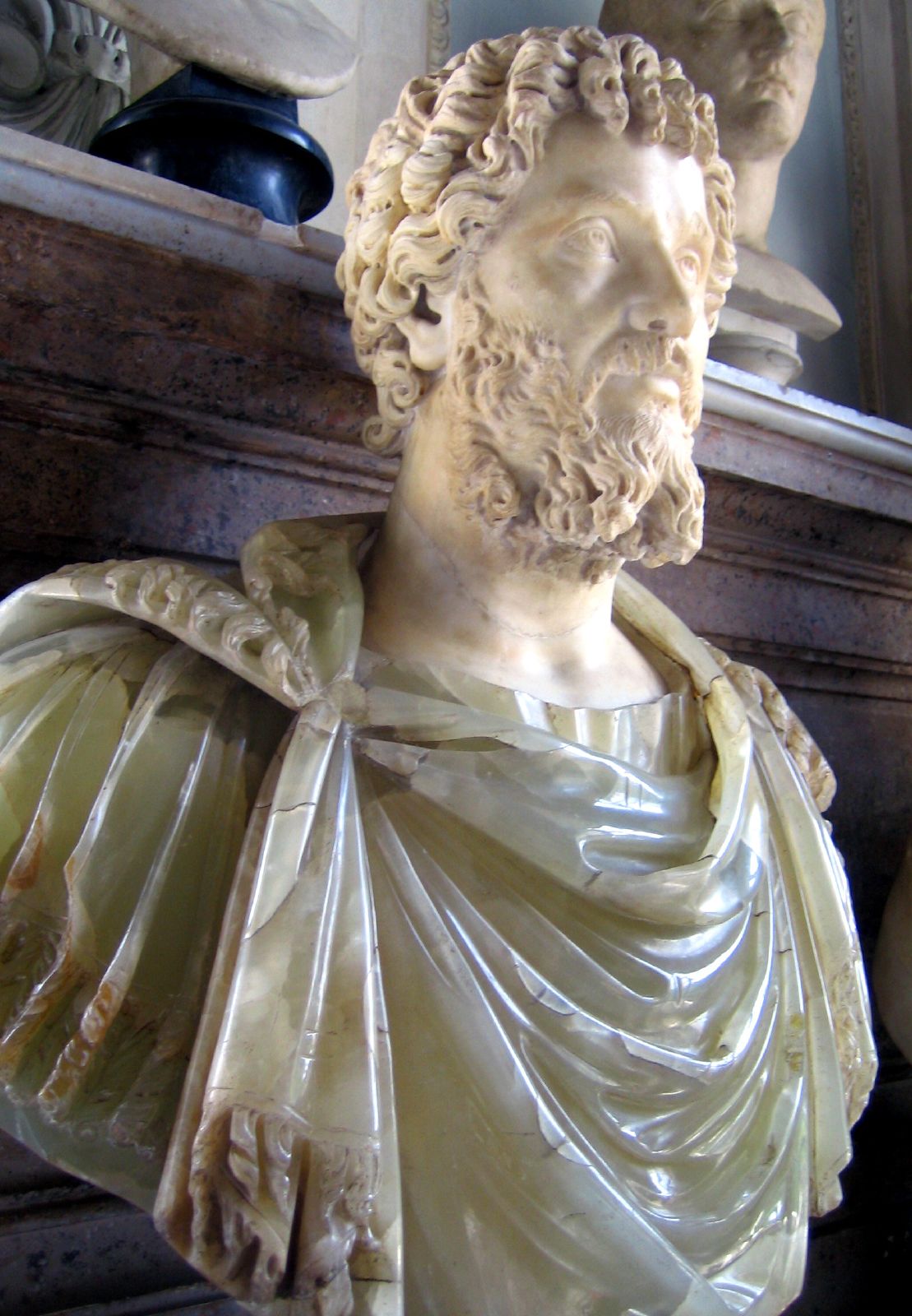
Septimius Severus was the first and greatest Roman Emperor of African origin, and the founder of the Severan dynasty, which reigned for 30 years. He was born in Leptis Magna, Libya, where he built several prestigious buildings (including the Arc of Septimius Severus, on the cover picture of this article). His reign was the climax of Roman African power in the imperial administration. His conquests grew Roman territory considerably, so that when he died, the Empire had achieved the vastest extent in history. Among others, he conquered the Garamantes. We wrote a detailed article on him.
The successors of Septimius Severus

After Septimius Severus’ death, he was succeeded by his sons Caracalla and Geta. While Septimius Severus wanted them to reign together, they proved themselves unable to share power. Finally, Caracalla had his brother assassinated so he could reign alone.
Caracalla (211-217) was of African origin through his father, and of Syrian origin through his mother, and he was born in Lugdunum (Lyon), Gaul. His biographies mention that, during his reign, he incarnated the best qualities of these three people groups. He is known mostly for giving Roman citizenship to all free men in the Empire.
After Caracalla was murdered, his praetorian prefect Macrinus became Emperor (217-218). He also had African origins: he was born in Caesarea (Cherchell), in an Amazigh family.
After losing power, the Severan family supported Elagabalus, the son of a cousin of Caracalla, whose mother claimed that he was the assassinated Emperor’s illegitimate son. Most modern historians doubt that Caracalla really was his father. Macrinus was killed and Elagabalus succeeded him (218-222). His reign was characterized by religious scandal: he refused to worship the Roman gods, preferring a Syrian divinity.
The Praetorian Guard was hostile to Elagabalus, and decided to overthrow him and proclaim his cousin Severus Alexander (222-235) Emperor in his stead. Severus Alexander was the last Emperor of the Severan dynasty. His murder was the end of the dynasty.
The Gordian dynasty

While the three Gordian (father, son and grandson) didn’t have African origins, they had strong links with Africa. Gordian I was the proconsul of Roman Africa before being proclaimed Emperor by the African population, and then acknowledged by the Senate. He reigned a few weeks in Carthage, together with his son Gordian II, before he was killed by a supporter of his predecessor. His grandson Gordian III (238-244) was probably born in Thysdrus (El Jem) and is the likely builder of the city’s amphitheater, the largest and the best preserved in Roman Africa. Detailed article
| Which Emperors were proconsuls of Africa? Like Gordian I, several other Emperors served as proconsuls (governors) of Roman Africa. Galba, who reigned for a few months in 67-68, was proconsul of Africa around 45, under Emperor Claudius (41-54). Vitellius was proconsul of Africa in 60 or 61, under Nero. Pertinax and Didius Julianus, the two predecessors of Septimius Severus, were proconsuls of Africa under Commodus (180-192), shortly before they became Emperors. This function doesn’t imply that they had African origins, or even any connections with Africa. The proconsulate of Africa was highly coveted by the Roman elite; only the greatest administrators were nominated to this role. |
The last African Emperor

The last Roman Emperor of African origin, Aemilianus, was born in Djerba, but he had Moorish origins. He reigned for three months, in 257. Detailed article
Finally, there were also several North African Empresses.
| The North African usurpers Next to these Emperors, other North Africans also claimed the Imperial throne unsuccessfully. The first North African usurper was Albinus, whom we already mentioned in this article. Originally from Hadrumetum (Sousse), he proclaimed himself Emperor in 193, and was defeated by Septimius Severus. In 240, when Emperor Gordian III was only 15 years old, the African proconsul Sabinianus, from Acholla (Ras Botria, North of Sfax), proclaimed himself Emperor instead of him. He was based in Carthage and had control over Africa, but he was not recognized elsewhere in the Empire. His rebellion was short-lived: he was quickly eliminated by those loyal to Gordian III. The Historia Augusta, a collection of biographies of Roman Emperors written in the 4th Century, mentions a certain Celsus, a military tribune based in Roman Africa, who proclaimed himself Emperor during the reign of Gallienus (253-268). Most modern historians believe this usurper never existed. Around 308, in the middle of a civil war between Imperial claimants, one of those claimants, Maxentius, wanted to be recognized in Africa. Domitius Alexander, the governor-general of Roman Africa, refused and proclaimed himself Emperor. He was defeated and killed by Maxentius after two years. Finally, in 413, Heraclianus, the governor-general of Roman Africa, revolted against Emperor Honorius. To claim the throne, he crossed the sea to Italy, but he was defeated. |
