

Français – عربي – ⵜⴰⵎⴰⵣⵉⵖⵜ – English
Following the Roman conquest of North Africa, many figures of North African origin, from families of the Romanized Amazigh elite, assumed responsibilities in the imperial administration. Next to the African Emperors we already mentioned, there were also North African Empresses, which we will discover in this article.
Fulvia Plautilla: the wife of Caracalla

Caracalla, the son of the first North African Emperor Septimius Severus, first reigned together with his father, and then alone after his father’s death.
In April 202, while Caracalla was 14 years old, his father arranged his marriage to Fulvia Plautilla. The father of the new Empress, Gaius Fulvius Plautianus, was the prefect of the Praetorian Guard. He was a cousin and close ally of Septimius Severus, who was from Leptis Magna like the Emperor. His daughter’s marriage to the young Emperor mas meant to strengthen their alliance.
The forced marriage of Caracalla and Fulvia Plautilla was very unhappy: Caracalla despised his wife. The Latin historian Cassius Dio claimed that the new Empress led a life of profligacy, although this is probably propaganda meant to tarnish her image. Writings on certain coins seem to indicate that they had a daughter, but it is more likely that their marriage was never consummated.
In 205, Gaius Fulvius Plautianus was executed for treason. Fulvia Plautilla was exiled to Sicily with her brother. After the death of Septimius Severus, in 211, Caracalla had them killed.
The wife of Macrinus
Macrinus, the Praetorian Prefect of Caracalla, who reigned briefly after his master’s death, was from Caesarea (Cherchell). Almost nothing is know about his wife, whom later, unreliable sources call Nonia Celsa. If this name is authentic, this could mean that she also was African: the name Nonia was common in Numidia and Mauretania, but also in Spain.
The wives of Elagabalus

Elagabalus was the son of Julia Soaemias, a cousin of Caracalla. After Caracalla died, his mother brought him to power by claiming that he was the illegitimate son of the late Emperor. Most modern historians doubt that Caracalla really was his father.
Elagabalus had Syrian origins: his mother was from the royal house of Emesa (Homs). In order to symbolize the unity of his Empire, he was encouraged to take a wife from the Western provinces. While two of his wives are sometimes described as having North African origins, their true links with Africa are tenuous.
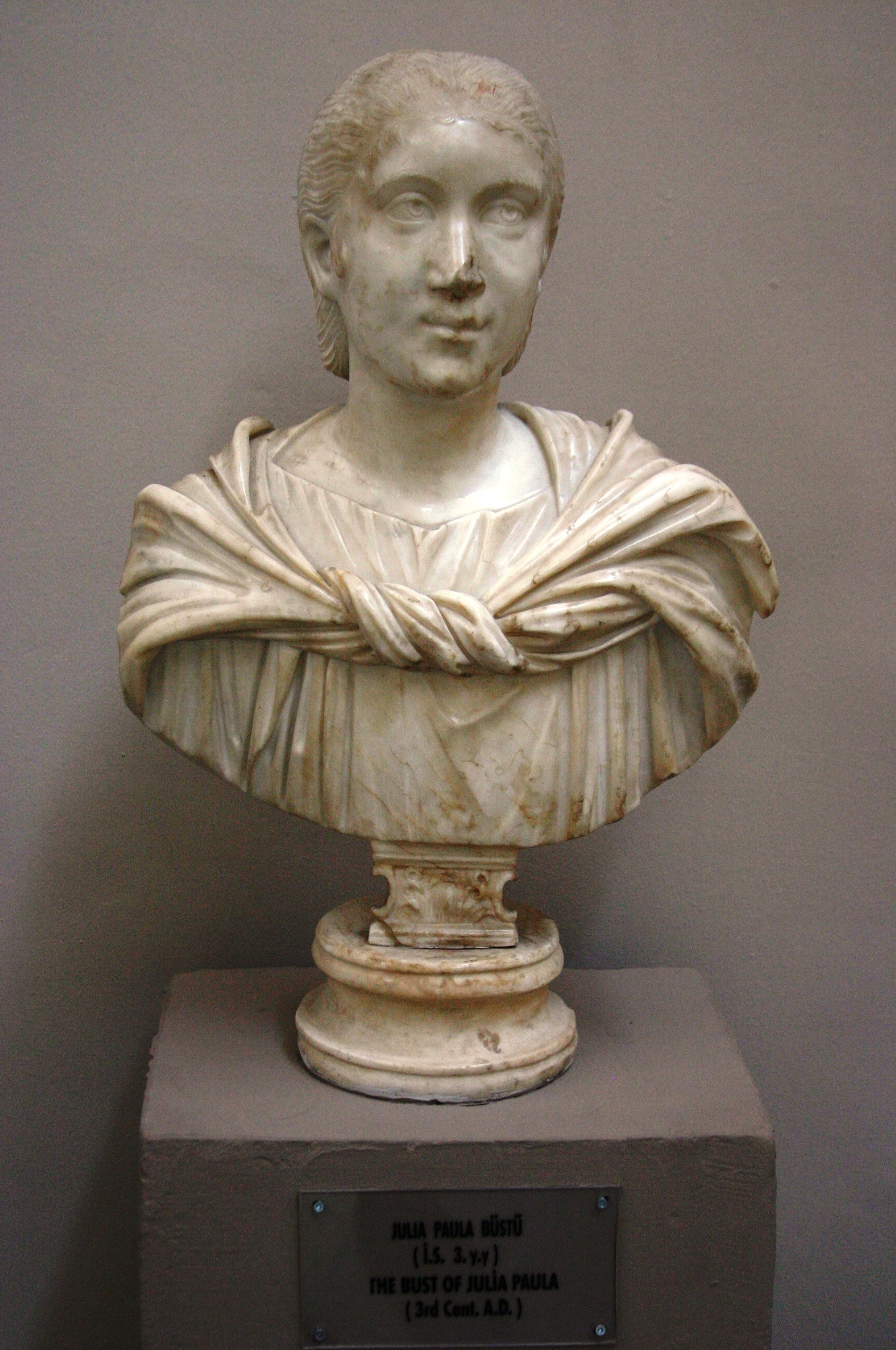
Elagabalus’ first wife Julia Cornelia Paula was from an old Roman noble family. It is known that her family owned land in Africa, and some family members settled there. However, there is nothing to indicate that Julia Cornelia Paula herself had connections with Africa.
In 220, Elagabalus divorced Julia Cornelia Paula to marry Aquilia Severa. This marriage caused a huge scandal in Rome: the new Empress was a Vestal priestess! The Vestals, guardians of the sacred fire of the goddess Vesta, made a vow to remain virgins. A Vestal who lost her virginity was buried alive. Some sources claim that Elagabalus raped Aquilia Severa before forcing her to marry him to escape the punishment for losing her virginity. To Elagabalus, their marriage symbolized the union between Elagabaal, a Syrian sun god of whom he was the priest, and the Roman goddess Vesta: he was thus hoping to be able to proclaim the cult of Elagabaal as his Empire’s the new official religion.
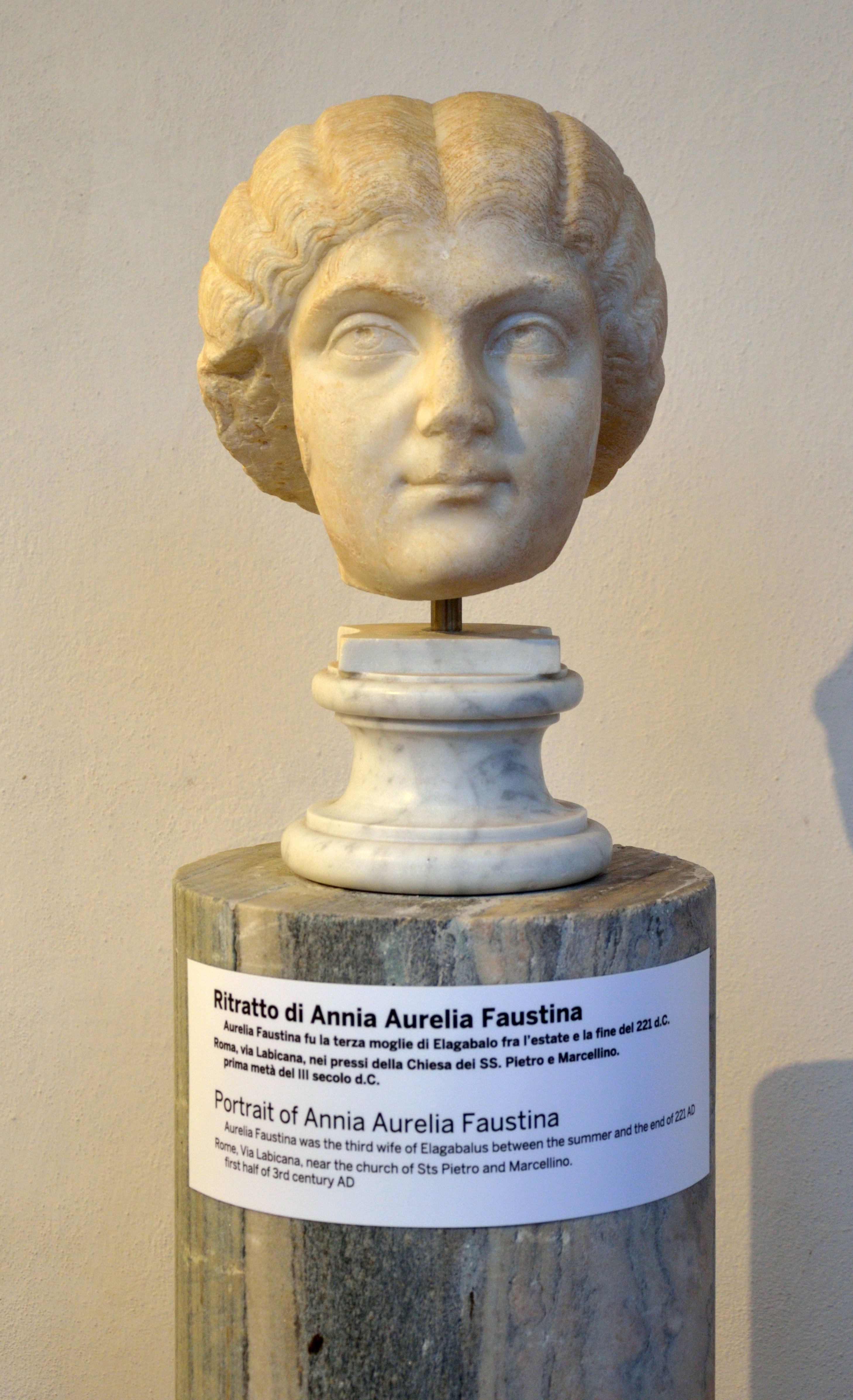
Due to the pressure of his court, Elagabalus divorced Aquilia Severa after less than a year, and married Annia Faustina, a widow whose first husband, Pomponius Bassus, had just been executed for treason. Annia Faustina was a much more acceptable Empress to the Roman elite: she was the great-granddaughter of Marcus-Aurelius and a descendant of the old Imperial dynasty that had reigned before the Severan dynasty. Her mother had a vast domain in Pisidia (modern-day Turkey), where she grew up. Just like Julia Cornelia Paula, she is sometimes described as having African origins because some members of her family owned land in Africa, but there is nothing to suggest she had a deeper link with the region.
Elagabalus’ marriage to Annia Faustina was even shorter than his previous marriage: after a few months, Elagabalus divorced and returned with Aquilia Severa, arguing that their divorce wasn’t valid. He was assassinated shortly after.
Elagabalus was never close to any of his wives: he was homosexual and had a relationship with his chariot driver.
Cornelia Supera: the wife of Aemilianus

Aemilianus was a soldier from the island of Djerba, and reigned for three months in 253. His wife, Cornelia Supera, was also African. They probably got married while Aemilianus was still living in Africa.
