

Français – عربي – ⵜⴰⵎⴰⵣⵉⵖⵜ – English
According to the Historia Augusta, a collection of Imperial biographies written in the 4th Century, a certain Celsus, who was a military tribune based in Roman Africa, proclaimed himself Emperor during the reign of Gallienus (253-268). The Historia Augusta is not considered a reliable historical source: most modern historians believe that this usurper never existed.
Context
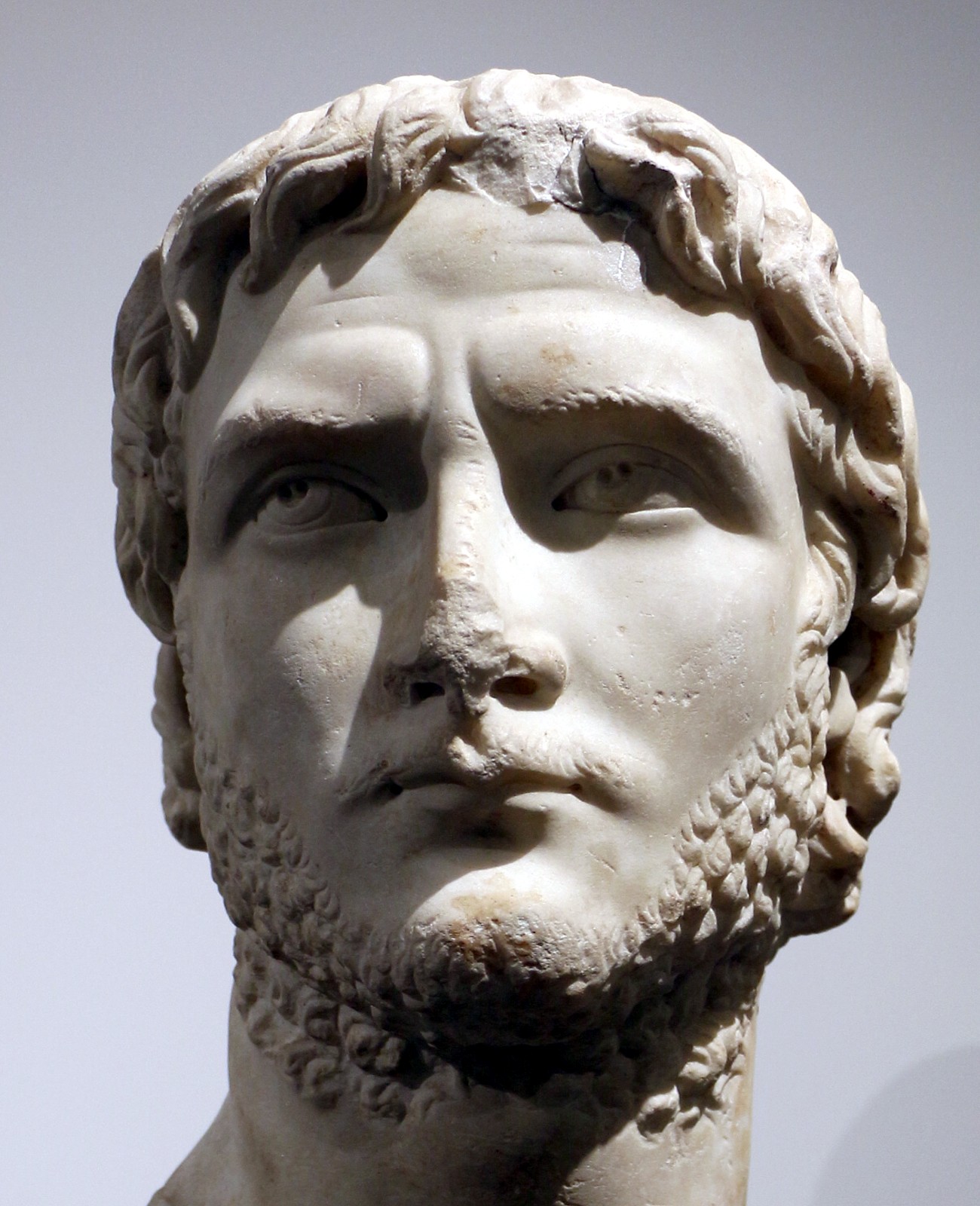
During the 3rd Century, the Roman Empire was shattered by the longest crisis in its history. In 260, the Emperor Valerian was captured in battle against the Persians. He spent the last years of his life as a prisoner in Persia. He had never been to Rome during his whole reign. The imprisonment of their Emperor was a deep humiliation for the Romans.
His son Gallienus, who succeeded him, was facing usurpers who wanted to take advantage of the situation to contest his throne. One of them, Postumus, governor of the province of Germania, took control of Gaul and Britain, where he established a rival Empire.
Before his exile, Valerian had launched a ferocious persecution campaign against the Christians of his Empire, in which bishop Cyprian of Carthage died as a martyr. The Christians saw Valerian’s capture by the Persians as a divine judgment. Gallienus was sensitive to this idea, and gave the Christians religious freedom.
Celsus’ rebellion
The Historia Augusta mentions thirty usurpers during the reign of Gallienus. While there certainly were many usurpers, this number is exaggerated in order to obtain a parallel with the thirty tyrants of Athens, in the 5th Century BCE. Several names mentioned in the Historia Augusta never claimed the Imperial throne, and some are simply fictitious.

According to the Historia Augusta, Celsus was a simple military tribune, living quietly on his estates close to Sicca (El Kef), in Roman Africa, when he was suddenly proclaimed Emperor by the African proconsul and the general who was guarding the Libyan border. His nomination was so unexpected that he couldn’t procure himself the ensigns of power, and had to put on a robe that had been taken from the statue of a goddess. His fall was just as fast: he was killed after seven days, and his body was devoured by dogs. After he died, the inhabitants of Sicca showed their loyalty to Emperor Gallienus by hanging the effigy of his rival to a cross and carrying it through their city.
This episode is fictional. It would be very surprising for the African proconsul to choose to support such a lowly claimant to the Imperial throne, instead of claiming the throne himself. It is probably an invention by the author of the Historia Augusta, to reach the symbolic number of thirty usurpers.
