

Français – عربي – ⵜⴰⵎⴰⵣⵉⵖⵜ – English
The Amphitheater of El Jem, in the province of Mahdia, Tunisia, is the largest and best-preserved Roman amphitheater in North Africa, as well as one of the best-preserved Roman ruins worldwide. It was built during the 3rd Century, and could host up to 35.000 spectators. It is the most emblematic site of Roman Africa.
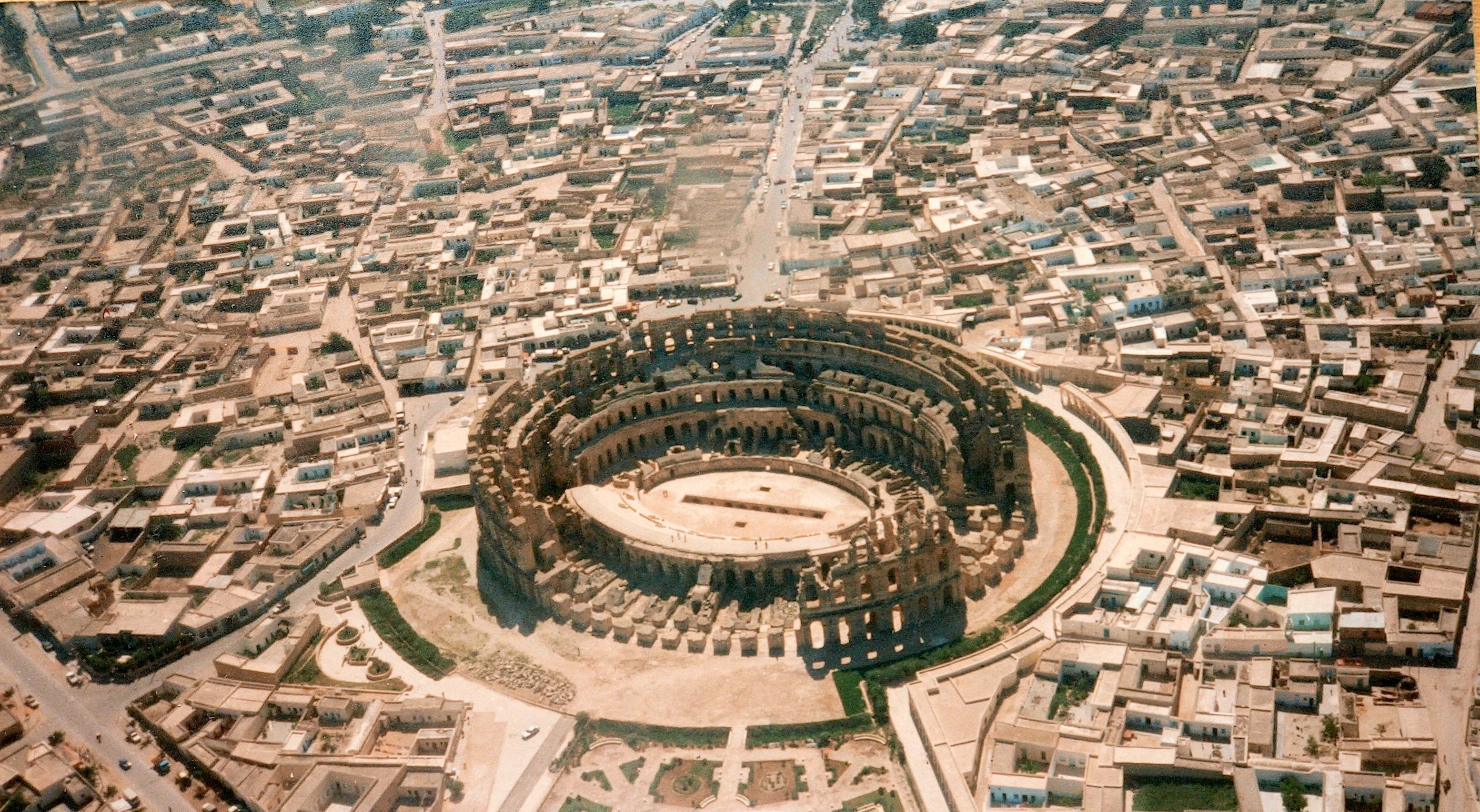
In the Roman era, El Jem was called Thysdrus. The former Punic city had become a Roman colony. In the early 3rd Century, it was in competition with Hadrumetum (Sousse) to become the second city in the province of Africa, after Carthage. Just like today, the area was an important center of olive oil production.

The exact date when the amphitheater was built is uncertain. It had long been assumed that it was built by Emperor Gordian I, who was the proconsul of Africa before ascending the Imperial throne, together with his son Gordian II, who served as his father’s legate in Thysdrus before his father chose him as co-Emperor. However, their short reign (22 days) would not have given them enough time for such an enterprise. It is therefore more likely that it was built by Gordian III (238-244), grandson of Gordian I. This theory presumes that Gordian III was born in Thysdrus, and that, like Septimius Severus in Leptis Magna, he felt called to embellish his birth city. However, this is just a supposition, there is no archaeological proof to confirm it. Also, older structures show that the amphitheater was built on the vestiges of a more ancient amphitheater.

The amphitheater has an elliptical shape. It is 148 meter long and 122 meter wide. The arena is 65 meter long and 39 meter wide. The building has 64 arcades, on three floors. The walls are 36 meter high. Its capacity is estimated between 27.000 and 45.000 seats. This makes it not only the largest Roman amphitheater in Africa (larger than the one in Carthage!), but also one of the largest worldwide.

In addition to its size, the amphitheater of El Jem is also amazingly well preserved. It is the only Roman amphitheater, together with the Coliseum in Rome, with one facade that remained wholly intact on all its three levels of galleries. Its attic (upper part that crowns the building) is lost, but it was probably similar to the Coliseum’s.

When the city was at its climax, the Thysdrus Amphitheater hosted the entertainment performances that were so popular all over the Roman world: gladiator fights, wild beast fights, races, and other circus games. Reenactments of big cat hunts were especially popular. The amphitheater was also used as a place of execution, where prisoners were killed by gladiators or eaten by wild beasts. Christian martyrs were among those put to death in the arena.
During Dihya (Kahina)’s resistance war against the Arab invaders, her army took refuge in the El Jem Amphitheater.
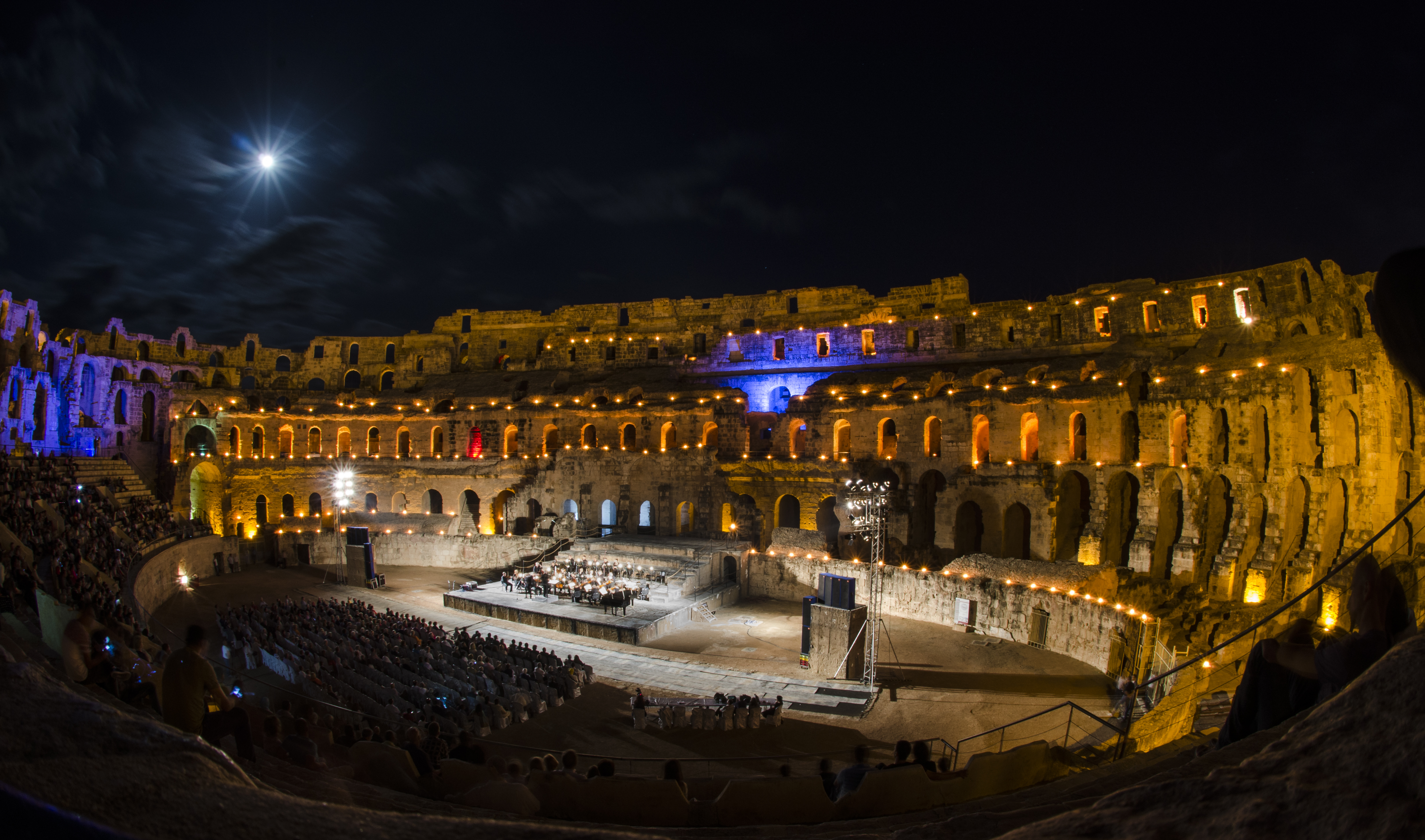
This extraordinary site is listed on the UNESCO World Heritage list since 1979. After this decision, a restoration and conservation campaign was launched. The restoration of the stands enabled the Amphitheater to again reach a seating capacity of up to 500 people, for concerts and other cultural events. Since 1985, it hosts the El Jem International Festival of Symphonic Music, founded by former Tunisian President Mohamed Ennaceur, who was born in El Jem.
In addition to its amphitheater, Thysdrus also had a circus (chariot race circuit), almost as large as Circus Maximus in Rome, with a capacity of up to 30.000 people.
