

Français – عربي – ⵜⴰⵎⴰⵣⵉⵖⵜ – English
At the beginning of the 4th Century, the Roman Empire was torn by a series of civil wars between claimants to the Imperial throne. In this context, Domitius Alexander, the vicar of the Roman provinces of North Africa, briefly proclaimed himself Emperor.
Context
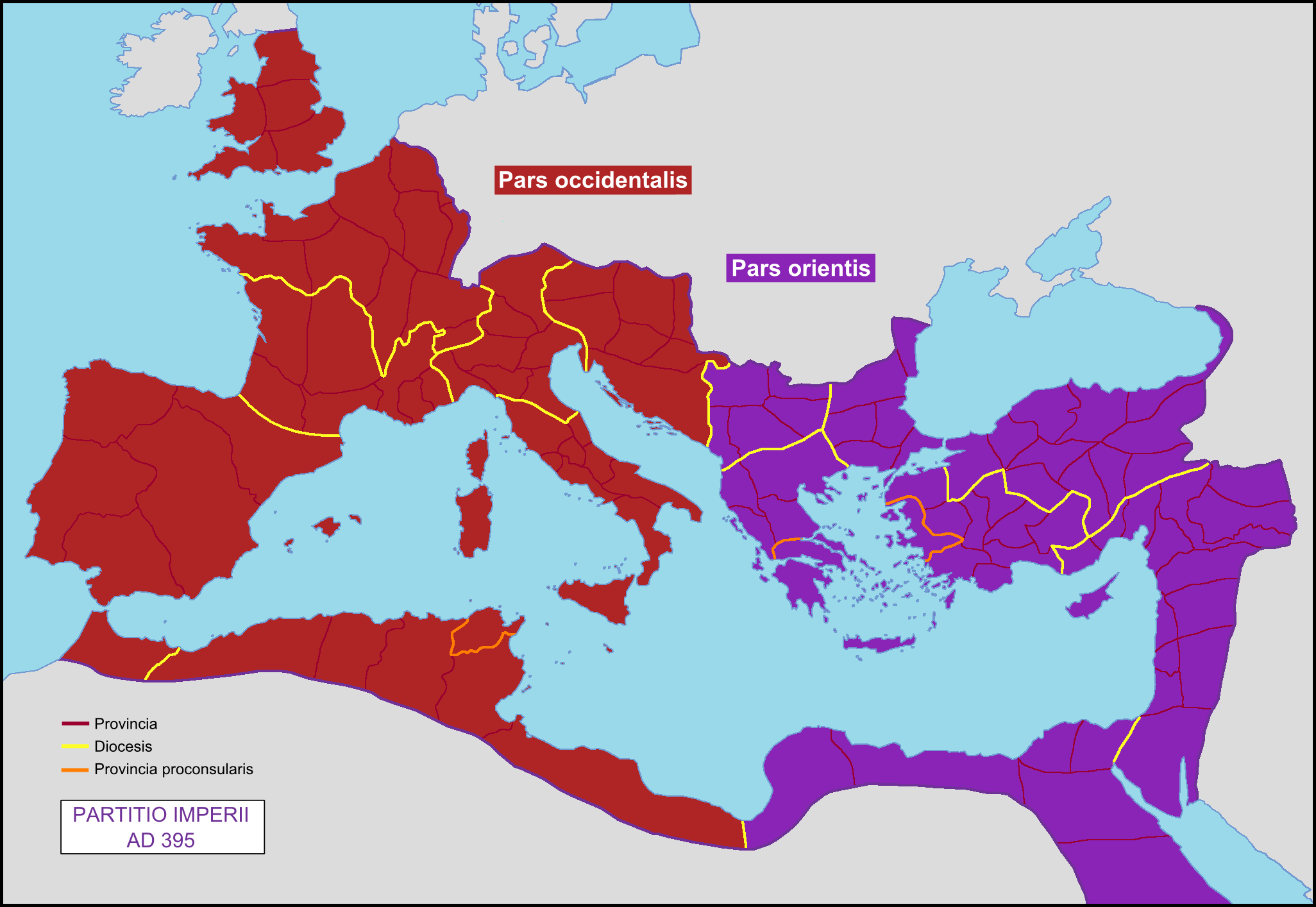
In 293, Emperor Diocletian implemented a deep reform of the Imperial administration. The Empire was divided, with Diocletian as Emperor in the East, and Maximian in the West. Both of the two Emperors were assisted by a Caesar (auxiliary Emperor), who was destined to succeed them. This Tetrarchy (power of four men) was meant to give the political powers more capacity to act. Diocletian also wished to abolish hereditary succession, in favor of the choice of the best.
This power sharing regime would fail because of the ambition of each of the leaders, who all wanted to reign alone. In 305, Diocletian voluntarily abdicated in favor of his Caesar, Galerius, and coerced Maximian to do the same. However, Maximian did not want to give up power. After the death of Constantius Chlorus, Maximian’s Caesar and successor, in 306, a civil war broke out in the Western part of the Empire, between Constantius Chlorus’ designated successor Severus, his son Constantine, who had the support of his father’s troops, and Maximian’s son Maxentius. Diocletian, discouraged by the failure of the system he had tried to implement, killed himself in 311.
Domitius Alexander’s revolt

Domitius Alexander was the vicar (governor-general) of the diocese of Africa, that brought together the North African Roman provinces (except Mauretania Tingitana, which was part of the diocese of Hispania). He did not have African origins himself.
Around 308, Maxentius, one of the claimants to the Imperial throne in the West, sent his portrait to Africa, to be acknowledged as Emperor there. The Roman troops stationed in Carthage refused to comply. Maxentius then ordered Domitius Alexander to send his son as a hostage to Rome. Domitius Alexander refused, and had himself proclaimed Emperor by his army.
Domitius Alexander had an excellent means of pressuring Rome, as the African provinces were the capital’s wheat suppliers. With Maxentius in power in Italy, Domitius Alexander made an alliance with Constantine, who controlled Britain and Gaul.
In 310, Maxentius sent an army to Africa, that easily defeated Domitius Alexander’s troops without strong resistance. Carthage and Cirta were pillaged during this war. Domitius Alexander himself was killed.
Later on
In 312, Constantine won a decisive victory against Maxentius in Italy, at the Battle of the Milvian Bridge, and became the sole master of the Western Roman Empire. Constantine attributed his victory to Christ and converted to Christianity, becoming the first Christian Roman Emperor.
After his victory, Constantine rebuilt Cirta, as the city had been largely destroyed after Domitius Alexander’s revolt, and renamed it Constantine.
Around 10 years later, Constantine built a “new Rome” on the Bosphorus, that was to become the capital of his Empire: Constantinople, the city of Constantine.
