

Category: Non classé

Twelve remarkable women in the ancient history of North Africa
Français – عربي – ⵜⴰⵎⴰⵣⵉⵖⵜ – English
From Dido (Elissa), the legendary founding Queen of Carthage, to Cleopatra of Mauretania, to Dihya (Kahina), the Queen of the Aures, and, more recently, from the Almoravid Queen Zeynab Nefzaouia, to Sayyida al-Hurra from Tetouan, to the anti-colonialist fighter Lalla Fatma N’Soumer, women always played an important role in the history of the people and nations of North Africa. In this article, published for International Women’s Day, we will discover twelve remarkable women from our history.
Dido (Elissa): the founder of Carthage

Dido, or Elissa, is the legendary Queen who founded Carthage. She was the sister of King Pygmalion of Tyre, and married to Acerbas (Zakarbaal), the city’s high priest. When her brother killed her husband, Dido and her allies fled Phoenicia and established themselves in North Africa, where they founded Carthage. Detailed article
The Libyan Amazons: women warriors from Libya
The Amazons are a legendary people of female warriors, who lived on the Island of Hespera, in Lake Triton (probably Chott el-Djerid, modern-day Tunisia). Their society was made only of women: they met men only occasionally, for reproductive purposes. They raised their girls according to their customs, but killed the boys. The Amazons appear frequently in Greek mythology. Detailed article
The mother of Massinissa: a queen and a prophetess
Amazigh legends contain many stories of women who could foresee the future, charismatic leaders with a powerful baraka, and mother figures who protected their people and guided them towards liberty. The mother of Massinissa, the greatest of the ancient Kings of Numidia, was such a Queen-Prophetess, who predicted her son’s glorious destiny already before he was born. Detailed article
Sophonisba: the sacrificed queen

Sophonisba, the daughter of an influential Carthaginian general, was engaged to the Numidian prince Massinissa. When Massinissa made an alliance with the Romans, the Carthaginians gave Sophonisba in marriage to Syphax, the king of a rival Numidian tribe. However, Massinissa’s heart still belonged to his fiancee: after he was victorious, he took back Sophonisba and married her. When the Romans required that she would be taken prisoner and brought to Rome for their triumph, Sophonisba, preferring death to dishonor, drank a cup of poison, which she received from the hand of her beloved Massinissa. Detailed article
Aretaphila: the liberator of Cyrene
In the 1st Century BCE, a tyrant called Nicocrates came to power in Cyrene and brutalized the population. Aretaphila, a woman of the city, was forced to marry him after he killed her first husband. Aretaphila fought all her life to free her people from the violence of the tyrant Nicocrates and his brother Leander, who succeeded him. In the ancient world, Aretaphila was considered as a model virtuous woman, because of her brave fight to free her countrymen. Detailed article
Cleopatra and Cleopatra Selene: the Queens of Egypt and Mauretania

Cleopatra, the last heir of the glorious Ptolemaic dynasty of Alexandria, devoted her life to the preservation of her native Egypt’s sovereignty against the major Mediterranean powers. She led an army to war against her own brother, who was contesting her throne. She was also a skilled negotiator, who spoke nine languages fluently and entertained diplomatic relations with all the sovereigns of her time – including Julius Caesar, with whom she had a child.
Her daughter Cleopatra Selene married King Juba II of Mauretania. As the Queen of Mauretania, she worked hard to revive her mother’s heritage in her new capital, Caesarea (Cherchell). She built a lighthouse, modeled on that of Alexandria, in the port of Caesarea, as well as many temples dedicated to Roman and Egyptian deities. Detailed article
Perpetua and Felicity: the Christian martyrs of Carthage
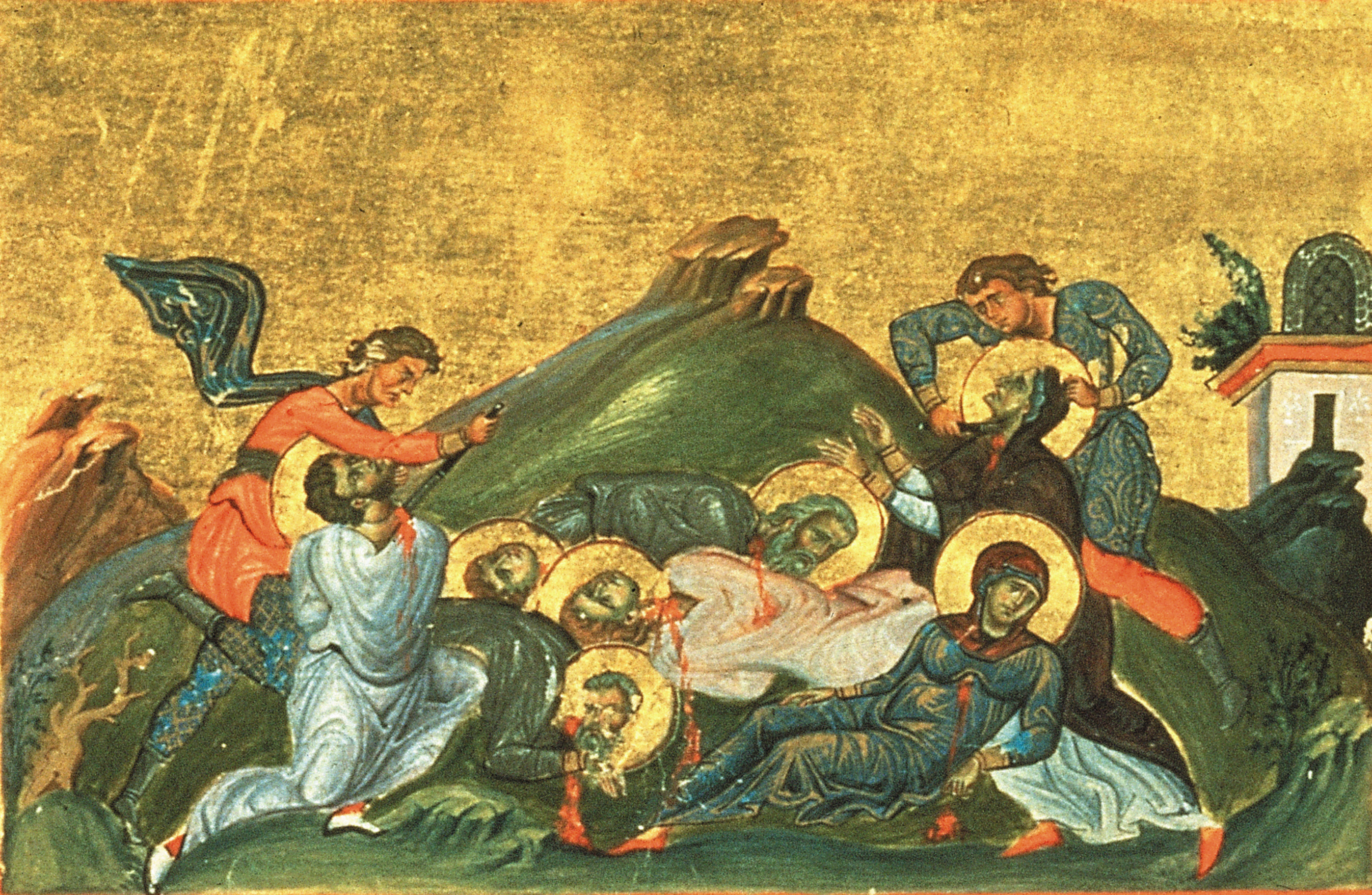
During the first centuries of the Christian era, while North Africa showed itself a very fertile ground for the new faith, many North African Christians were persecuted by the Roman authorities and paid their faith with their lives. In Carthage, Perpetua, a 22-year-old noblewoman and the mother of a new-born child, was put to death together with her slave Felicity, who was pregnant. Because they chose to remain faithful until death, they were eaten by wild animals in the arena. The Carthaginian Christian writer Tertullian wrote about them: “The blood of the martyrs is the seed of the Church.” Detailed article
Tin Hinan: the Queen of the Tuareg

Tin Hinan, the legendary Queen of the Tuareg, lived in the 4th Century. Her name can be translated as “mother of us all”. According to Tuareg legend, she was a fugitive princess, and her caravan was about to die of hunger in the desert, when she found grain in anthills. Her children became the ancestors of the Tuareg. The tomb of Tin Hinan, discovered in 1925, is located in the Abalessa oasis, in the Hoggar Mountains of Southern Algeria. Detailed article
Monica: a mother’s prayers

Monica, the mother of Augustine of Hippo, was an Amazigh woman from Thagaste (Souk Ahras), and a devout Christian, while her husband Patricius was a pagan of Roman origin. When his son, seduced by the passions of youth, made bad choices in his life, she remained at his side and continued praying relentlessly, often with tears, for him to find the right path. Her perseverance was rewarded: Augustine, the “son of her tears”, became bishop of Hippo (Annaba) and the most influential theologian of the Roman Church. After his mother died, Augustine always spoke with much tenderness about her. Detailed article
Cyria: the Amazigh warrior

In the 4th Century, Firmus, chief of the Amazigh Jubaleni (Zouaoua) tribe in modern-day Kabylie, proclaimed himself Emperor of Africa and rebelled against the Romans. His sister Cyria led his army to war. For five years, this intrepid warrior stood up to the Roman legions, a worthy predecessor of the other Amazigh heroines, from Dihya to Lalla Fatma N’Soumer, who fought for the freedom of their people and the land of their ancestors. Detailed article
Hypatia: the last philosopher of Alexandria

Hypatia of Alexandria was a 4th-5th Century Neo-Platonist philosopher, mathematician and astronomer, and the leader of the Neo-Platonist school in Alexandria. She was a pagan, but she had many Christian students, including future bishops. She was famous for her knowledge, and highly respected for her wisdom. She even was a counselor of the governor of Alexandria. Sadly, she became a victim of political intrigues, and was put to death by a furious crowd in March 415. Detailed article
Dihya (Kahina): the last free Amazigh queen

Dihya, whom the Arabs called Kahina (“priestess” or “seer”), was the Queen of the Aures and the last leader of the Amazigh resistance against the Arab invaders. The story of this woman, who united the Amazigh tribes and stood up to the troops of the Caliphate for 15 years, is so robed in legend that its historical core is hard to determine, but her existence is beyond doubt. She was finally defeated by the Umayyad commander Hassan ibn Numan, at the Battle of Tabarka. Detailed article (to be published)