

Français – عربي – ⵜⴰⵎⴰⵣⵉⵖⵜ – English
Egypt, the oldest and most prestigious nation in the ancient world, was invaded by several foreign nations during its thousand-year-old history, including the Hyksos, the Libyans, and the Nubians. Those foreign invaders were usually quickly assimilated into the Egyptian nation. In the 6th Century BCE, the powerful Persian Empire, which already extended over the Middle East, and all the way to India, also aspired to conquer the Kingdom of the Pharaohs.
The Persian invasion
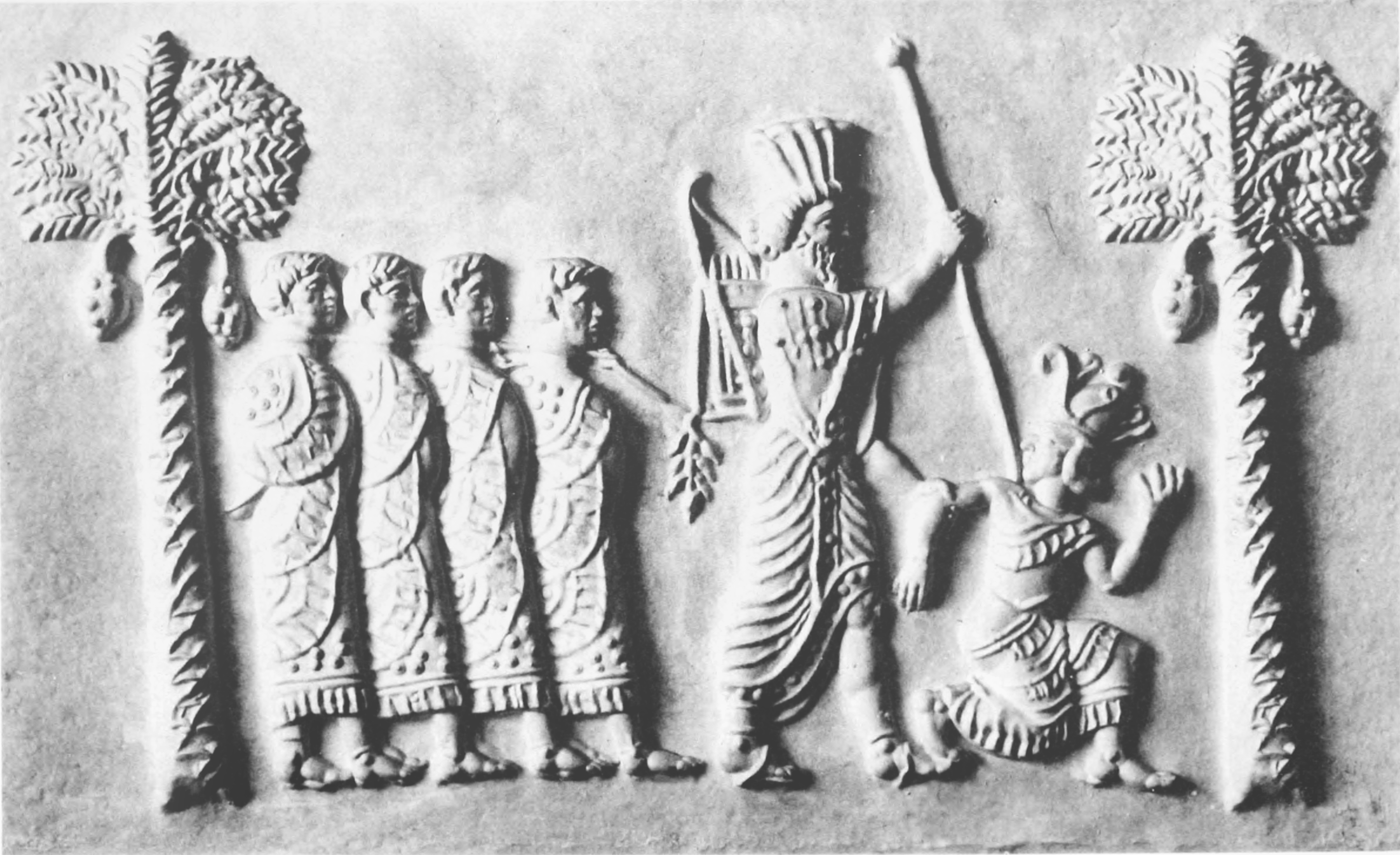
According to Greek historian Herodotus, the conflict between Persia and Egypt started after the Persian Emperor Cyrus the Great asked Pharaoh Amasis II to send him an Egyptian ophthalmologist for his court. To satisfy this request, Amasis forced one of his physicians to go to Persia, leaving his family behind. To avenge himself, this ophthalmologist took advantage of his proximity with Cambyses II, Cyrus’ son and successor, to turn him against the Pharaoh.
The ophthalmologist first convinced Cambyses to ask for the Pharaoh’s daughter’s hand in marriage, in order to strengthen his relations with Egypt. Amasis, who didn’t want his daughter to become a concubine of the Emperor of Persia, but also did not dare to openly defy his powerful neighbor, decided to instead send him the daughter of his predecessor Apries, whom he had killed. When Cambyses discovered the truth, he was furious about this betrayal, and invaded Egypt. Amasis himself died before having to fight the Persian army, but his son Psamtik III was easily defeated by Cambyses.
The first satrapy (525-404)
The Persian Empire conquered Egypt in 525 BCE. Cambyses and his successors reigned over Egypt with the title of Pharaohs – the 27th Pharaonic dynasty. As they weren’t always in Egypt, they were represented by a satrap. Despite their efforts to respect the Egyptian culture and traditions, the Persians were unpopular in Egypt. Especially, Cambyses’ decision that the Egyptian people should no longer pay taxes to support the temples earned him the hostility of the Egyptian priests.
After conquering Egypt, Cambyses sent an army of 50.000 men to take control of the Siwa oasis. His army never reached the oasis: it was entirely lost in the desert, without a trace.
An Egyptian rebellion started after the death of Cambyses, in 522. Petubastis III, a heir of the former Pharaonic dynasty, overthrew the satrap Aryandes and proclaimed himself Pharaoh. The new Emperor Darius intervened, suppressed the rebellion and reestablished Aryandes in 521.

During his reign, Darius imported Egyptian craftsmen and workers to Persia, to build him palaces. He also built a channel connecting the Nile to the Red Sea.
In 497, the satrap Aryandes, who had been governing Egypt since the beginning of the Persian conquest, was deposed and executed by Darius, apparently because he tried to declare the l’independence of Egypt, under his authority.
A new Egyptian rebellion started after the death of Darius, in 486. The new Emperor Xerxes suppressed it and established his brother Achaemenes as a satrap. Xerxes is known mostly for his failed attempt to conquer Greece.
During the reign of Emperor Artaxerxes (465-424), the Libyan chief Inaros, a descendant of the ancient Pharaohs, managed to take control of a part of Egypt, with the support of the Greeks from the Delian League. He was defeated and killed in 454.
During this whole era, the Egyptians regularly rebelled against the Persians. These repeated insurrections would finally successfully break the Persian domination: in 404, Emperor Darius II was expelled from Egypt by Amyrtaeus, a descendant of the ancient Pharaohs. His son Artaxerxes II would try unsuccessfully to reestablish his control over Egypt.
Egypt recovers its sovereignty (404-343)
Amyrtaeus proclaimed himself Pharaoh and reestablished the Kingdom of his ancestors. The 28th, 29th, and 30th Pharaonic dynasties were Egyptian.
The second satrapy (343-332)

The Persians never gave up on their ambition of reconquering Egypt.
Emperor Artaxerxes III (359-338) would make this his first priority. After a first failed attempt in 351, followed by several years of careful preparation, he returned in 343, at the head of an army with a large war fleet and many Greek mercenaries. This time, Egypt submitted.
Artaxerxes proclaimed himself Pharaoh: the 31st Pharaonic dynasty was Persian.
After Alexander the Great conquered Egypt in 332, he founded a new Egyptian city, Alexandria, which he wished to make the capital of his Empire. Two years later, Darius III (336-330), the last Emperor of Persia, was defeated by Alexander the Great.

2 thoughts on “The Persian conquest of Egypt”