

Français – عربي – ⵜⴰⵎⴰⵣⵉⵖⵜ – English
The Roman domination over North Africa, after lasting for over four centuries, finally crumbled when the Vandals, a Germanic people, invaded the region. The Vandals founded a new Kingdom, with Carthage as its capital.
Cover picture: ruins of the Vandal fortress of Henchir et Gousset, Zaher Kammoun. Used with permission
The Vandal invasion

At the beginning of the 4th Century, the Roman Empire was under threat from Germanic tribes, originally from modern-day Germany, invading its territory and looting its cities. One of these tribes, the Vandals, was occupying Spain since 409.
In 429, the Vandals crossed the Straight of Gibraltar, took Tingis (Tangier), and started their conquest of North Africa. In less than a year, they took control of all Mauretania, and attacked Numidia. In 430, they inflicted a severe defeat on the Roman troops led by general Bonifatius, at the battle of Calama (Guelma). Then, they besieged Hippo (Annaba) and destroyed the city; its bishop, Augustine of Hippo, died during the siege. In 435, they signed a peace treaty with the Romans, in exchange for Roman recognition of their control over Mauretania and Numidia.
In 439, the Vandals attacked Carthage and took the city without resistance. In 442, they extended their domination over Sicily, Byzacena (Southern Tunisia), and Tripolitania; the city of Hadrumetum (Sousse) was renamed Hunericopolis in honor of their King Huneric.
The Vandal Kingdom

The Vandals established their Kingdom in North Africa, with Carthage as its capital. Their first King was Gaiseric, who led his people in the conquest of Africa. Five other kings succeeded him on the Vandal throne.
The Vandals were only a small minority in their Kingdom: the vast majority of its population was Roman and Amazigh.
While they were present in the region for one hundred years, the Vandals left almost no traces. One of the few Vandal fortresses that still exists today is Henchir el Gousset, close to Thelepte, Kasserine governorate, Tunisia (on the cover picture of this article).
The Vandals are known mostly for looting and destroying many cities they conquered, so that today, “vandalism” means the intentional destruction of others’ belongings. However, most modern historians believe that this reputation is exaggerated.
The Vandals were Christian, but followed a heretical brand of the religion known as Arianism. North African Christians were distraught by this new doctrine which they had never been confronted with yet: while Augustine of Hippo had written a book against Arianism, only few were still fluent enough in Latin to read it.

The Vandals persecuted North African Christians, both Catholics and Donatists. After their conquest of Carthage, bishop Quodvultdeus (his name means “what God wants”) was exiled to Italy with most North African bishops. Those bishops were embarked on an old ship without sales or ores, that luckily managed to cross the sea and reach Naples. The exiled bishops settled in Italy. One of them, Gaudiosus, later became bishop of Naples.

Other bishops, like Fulgentius of Ruspe (Henchir Sbia), remained and led the resistance against Arianism, sometimes at the cost of their life. Bishop Victor of Vita (Beni Derraj) wrote a chronicle of the persecutions at this time.
The Vandals however were very favorable to the North African Jews, who enjoyed unprecedented religious freedom. According to certain sources, the Vandal King Gaiseric, after pillaging Rome in 455, took the sacred utensils of the Temple of Jerusalem, that were kept in the Roman treasure, back to Carthage with him. After the Byzantines reconquered Carthage in 533, they transported them to Constantinople, from where they were sent back to Jerusalem.
After the Vandals conquered Carthage, the city was cut off from the Roman world, causing an insurgency of the now ruined Carthaginian merchants.
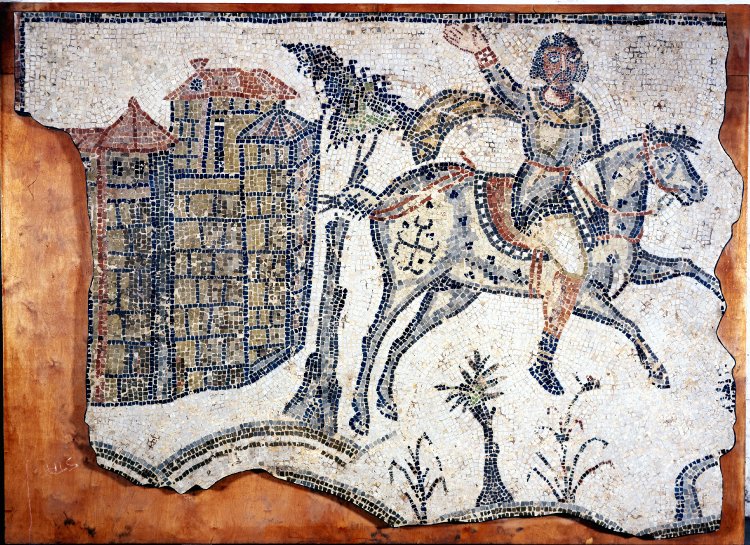
By the end of the Vandal era, their Kingdom would nevertheless go through a time of prosperity and cultural flourishment.
In 533, an army of 15.000 Byzantine soldiers, led by general Belisarius, landed in North Africa. The Byzantines, supported by the local Amazigh tribes, took control of the whole Vandal territory in a few months: the Vandal Kingdom of Carthage had fallen.

1 thought on “The Vandal conquest: a Germanic people in North Africa”