

Français – عربي – ⵜⴰⵎⴰⵣⵉⵖⵜ – English
Translation: Souliman El Abdellaoui
Following the Roman conquest of North Africa, Roman Africans—including merchants, soldiers, and civil servants—migrated across the Empire. By the 3rd century, Moorish soldiers were stationed in Britain, defending the Empire’s frontiers.
Britain, conquered by Rome in the 1st century, lay at the far reaches of the Empire. Britain, meanwhile, was never fully subdued—despite repeated campaigns, Rome never controlled the island’s North. The Roman frontier in Britain roughly followed what is now the England-Scotland border, while Ireland remained entirely beyond Roman dominion.

To defend Roman Britain from relentless attacks by northern tribes, Emperor Hadrian ordered the construction of a fortified border wall in 122 CE. Two decades later, his successor Antoninus commissioned a second wall further North. The project was overseen by Quintus Lollius Urbicus, governor of Britain and a native of Tiddis in Numidia (modern-day Beni Hamidane, Constantine Province).
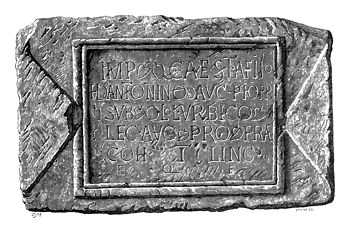
During his governorship, Quintus Lollius Urbicus initiated the deployment of North African military garrisons to Britain. Approximately 500 of these soldiers – later known in English as the ‘Aurelian Moors’ (after Emperor Marcus Aurelius, Antoninus’ successor) – were stationed at Aballava Fortress (modern Burgh-by-Sands) along Hadrian’s Wall. British historians recognize them as the first African community in Britain, distinct from earlier Carthaginian traders who likely never established permanent settlements.
Among the remains left behind by these Moorish soldiers in Britain are pottery items, including a primitive form of tajine.
