

Français – عربي – ⵜⴰⵎⴰⵣⵉⵖⵜ – English

The khamsa, an open hand, as a sign of protection, is an ubiquitous symbol all over North Africa, also found elsewhere in the Mediterranean basin. It can be seen in all colors and shapes, on door wings and house walls, on clothes, and, of course, as jewels. It is said that it brings good luck to those who carry it, and protects against the evil eye. Muslims call it hand of Fatima, or hand of Myriam for the Jews. In this article, we will discover the history of this iconic lucky charm.
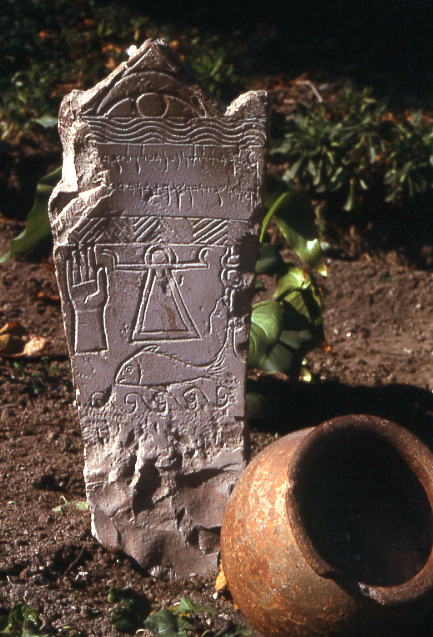
Historically, the symbol of a protective hand seems to have first appeared in Mesopotamia, on amulets consecrated to the Assyrian goddess Ishtar. From there, it spread across all the Near Eastern region, and then North Africa, on board of the Phoenician ships. It was found frequently in Carthage, as well as in the Phoenician colonies in Spain, often in association with the signs of the Punic gods Tanith and Baal Hammon. It was supposed to protect women, especially through better fertility and healthy pregnancies. The Amazigh later borrowed it from the Carthaginians, and popularised its use all across North Africa, long before the monotheistic religions arrived.
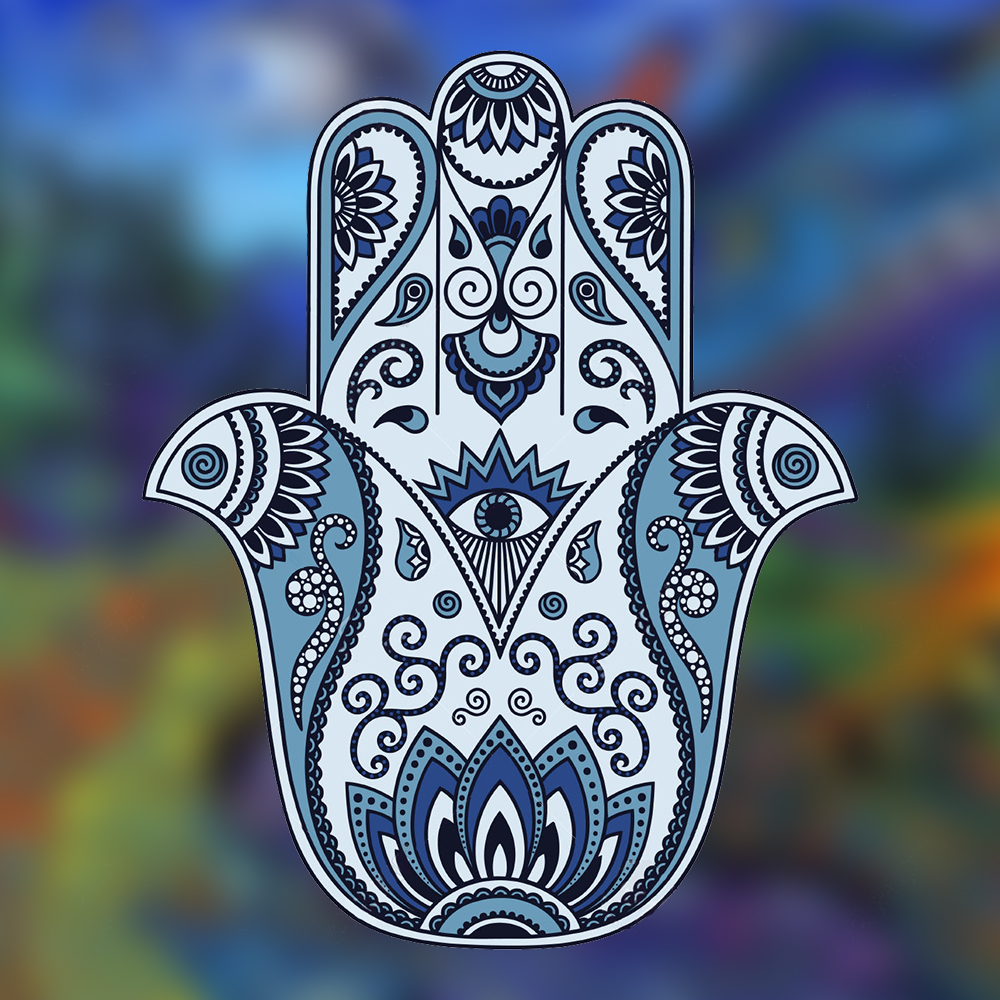
Its traditional shape is wholly symmetrical, with two hands turned outward. The hand can be oriented upwards or downwards. It is often blue, a “lucky colour”, as can be seen at the entirely blue painted houses found across the region, from Chefchaouen to Sidi Bou Saïd. Finally, for even more power, it can be used together with other symbols, placed at its center, in the palm of the hand. The most common associated symbol is the eye, a reminiscence of an old Egyptien symbol: the eye of Horus.

In Islam, the hand became the hand of Fatima, daughter of the Prophet Mohammed, considered as the most virtuous of women. Actually, the expression “hand of Fatima” probably has a colonial origin, which doesn’t prevent it from being frequently used by non-Arab-speaking Muslims today. In Arabic, the name “khamsa”, for the 5 fingers, is preferred. The four schools of Sunni Islam condemn the khamsa as a pre-Islamic superstition. Despite of this, it remains very present in popular religion. Muslim hands are often ornated with the shahada.

Jews, for their part, call it the hand of Myriam, the sister of Moses. According to a North African Jewish tradition, the Hebrews, before they left Egypt, drew a bloody hand on the doors of their houses, to protect them against the angel of death. While the Torah does mention how God ordered them to cover theirs doors with the blood of the lamb they sacrificed for Easter, the text doesn’t mention a specific form.
In Spain, a country long occupied by Moorish Muslims, there also were Christian hands, called “hands of Mary”, the mother of Jesus. 30 years after the end of Islamic domination, they were still so common that Emperor Charles V was forced to forbid them, because of their lack or grounding in the Christian sacred Scriptures.

More recently in history, several North African national liberation movements and nationalist political parties adopted the khamsa on their flag, as a symbol of their fight. See, for example, this flag of the Algerian national movement.

Beyond religions, the open, usually feminine, hand, as a sign of protection or prosperity, is a universal symbol, found in many civilisations all around the world. The khamsa, in its modern form, is clearly linked to North Africa, even though it can also be found elsewhere in the Mediterranean basin. It does not belong to a specific religion, nation or ethnic identity, but it is a common heritage, shared by all North Africans, beyond their differences. Learn more
To conclude, here are a some khamsa images which we wind particularly beautiful or original.


And our favorite…

